Susie Porter and Annie Dibo stayed at Mrs. Jacobs’ place from April 30 until August 27, 1909. The stayed at Mrs. Jacobs’ “delightful home” in Oak Lane until June, and then they made her way to the cottage in Ocean City, near the beach where Nora Printup died.
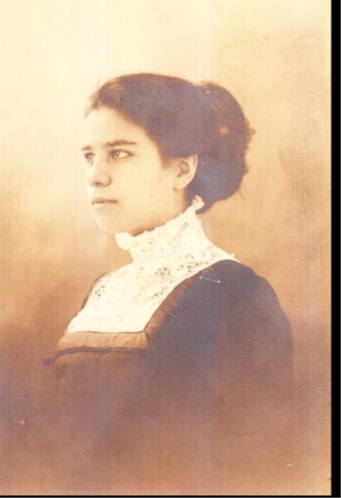
Both students’ files are pretty thin. Annie arrived at Carlisle from the Mohawk Akwesasne reservation in September of 1906 and stayed until June of 1911 when she graduated. She seems to have returned for one more year of training in nursing later that year, as a twenty-year old. We know little about her home life, though her file does contain her Mohawk name, rendered phonetically by one of the school’s clerks as “ha-nau-ka-rou-to-ra-ta.” Likewise, we know little of her life after she left Carlisle. She may have been the same “Annie Diabo” who, in 1947, received word that her son, a World War II veteran and a high steel worker in California’s Bay Area, was struck by a car while he crossed Highway 1 after a night of drinking. Diabo is a common Mohawk name, and Mohawks are known for their work in high steel.
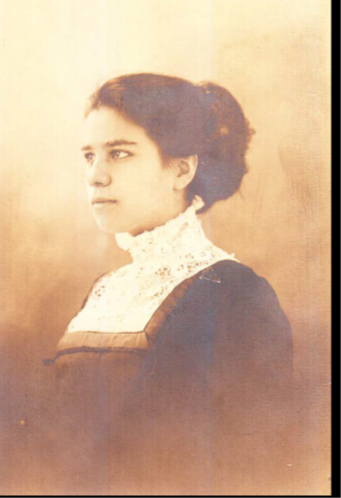
A photo of Annie Dibo, 1911, in her Student File
Susie Porter came to Carlisle from the White Earth Reservation in Minnesota. She was 17 years old when she arrived in 1907. She married shortly after her return home in 1912. She was described during her stay at Mrs. Jacobs’ place as “a good trust-worthy girl, neat about her work, a good waitress, very satisfactory.”
One way to get at the experiences of these young women while they were at Carlisle is to search for their names in the school newspaper, The Arrow. Both girls were active in the Mercers and both were members of the YWCA. Annie gave a number of “Recitations,” on various subjects, while Susie seems to have loved to debate. She took the affirmative position in a debate on the proposition “that iron is more beneficial to man than gold” and the negative position on the proposition “that foreign immigration to the United States should be restricted.” Susie was a far more visible student than Annie. In the art room, Susie made “the most handsome blanket,” following a Pueblo design. “The soft colors, so carefully blended, for a color plan that is both pleasant and restful to the eye.” I wish I could see what it looked like.
There is a story in The Arrow that gives us our only glimpse into the life of the girls who stayed at Mrs. Jacobs’ place in Ocean City. It is easy to imagine that Nora Printup loved it there. Her life could not have been that different from Susie and Annie, who arrived four years after her death. Katherine Wolf, a Cherokee, was placed for her outing at a home in Ocean City not far from Mrs. Jacobs. Katherine found Susie and Annie, and the girls became friends. Susie, Annie and Katherine “went bathing almost every afternoon” and, “in the evening,” Katherine wrote, “we generally took a walk along the beach.”
Annie kept in touch with Carlisle after she left, but it is impossible to tell how much and to what extent. Susie left Carlisle, first for Wisconsin to keep house for her father, and then to Minnesota. She married, and continued to write to the school. She returned for graduation in 1912, and she sent letters asking for sheet music from the Carlisle song book that she wished to play at church. She was a devoted Christian, and a devoted Carlisle alum.
Margaret Pickett, from Crow Agency, Montana, was Julia Peña’s roommate at Mrs. Jacobs’ place. Maggie, as she was called, stayed with Mrs. Jacobs from June until late in August in 1913. Born two decades after the defeat of George Armstrong Custer’s force at the Battle of the Greasy Grass, or Little Bighorn, Margaret was eighteen years old when she arrived at Carlisle in March of 1912. She would remain a Carlisle student for just under three years.
There’s a lot going on in Maggie Pickett’s student file. While she was at school her mother, and her only surviving parent, died of a “paralytic stroke.” In April of 1914, her aunt, Mrs. Little Daylight, requested that Carlisle send Maggie home to the Crow Reservation. She needed help. “My husband died last month,” she wrote, “and I have not been well since then after all my hardships and sorrow.”
O.H. Lipps was Carlisle’s superintendent. He told Mrs. Little Daylight that Maggie “desires to do whatever she can to be of assistance to you.” Prior to sending Maggie home, however, Mrs. Little Daylight must obtain the permission of the reservation agent, a petty tyrant named Evan Estep. He reported to Lipps that “I am inclined to think there is a sinister purpose behind the scheme to get Maggie to come to them.” Estep thought Maggie had been doing well at school and he hated the idea “to have her come here and go back to the old Indian life.” Furthermore, Estep said, “She has no people here.” Her mother and father were dead, and her brothers had all left the reservation. For these reasons, Lipps decided to refuse Mrs. Little Daylight’s request.
That was April of 1914. One month later, Maggie began working at Todd Hospital in the City of Carlisle. She was learning to be a nurse. She would stick it out at Carlisle, but she wanted Estep to know that she would like to return home, and help her people, as soon as a position opened up on the reservation.
Todd Hospital, Carlisle PA.
Lipps was impressed by what he heard about Maggie’s work, so he recommended her to Estep in January of 1915. “It is Margaret’s desire to do something for the people at her home in a capacity similar to that of a Field Matron.” She was young for so important a job, Lipps admitted, but her nurse’s training worked in her favor and “She is competent, energetic, and willing.”
Perhaps Maggie asked Lipps to enquire once again about opportunities at home because conditions at Todd Hospital had become unbearable for her. Mrs. Wile, the “Chairman of the Board of Managers” at the hospital, reported that Maggie “had not been doing as well as they knew she could do.” Maggie, Mrs. Wile reported, “was not on good terms with the head nurse, Miss Kruger,” and one other nurse on the hospital staff. They accused her of writing a threatening letter to that nurse, and said that Maggie “received boys from the school as visitors.”
Maggie defended herself. She told Lipps that she did not threaten anyone. She was going to report the nurse for some type of misconduct. She said that, yes, boys from the school visited her, “but it was only as any lady would receive calls.” These letters were exchanged during the third week of February in 1915. Things moved quickly. My the 28th of February, Maggie was at last on her way home to Crow Agency.
Whatever the reason for her departure, Maggie’s supporters at Carlisle had high hopes for her success. She seems quickly to have disappointed them. Within a month of her arrival in Montana, Maggie married Thomas Tobacco. Estep sent word of the ceremony for inclusion in the Carlisle Arrow. In a separate note addressed to Lipps, Estep shared his thoughts more freely. “There is certainly ample room,” Estep wrote, for Maggie “to do some ‘up-lift’ work on her husband, who is a long-haired worthless piece of humanity.” Thomas had been in and out of jail, and Maggie had made a mistake in marrying him. “I believe she hit bottom the quickest of any returned student I ever knew,” Estep wrote, “but if she was to hit it at all I suppose she had just as well go the limit and have it over.”
Estep is an unlikable bigot. He was determined to control the Crows on the reservation even after it was clear he lacked the power to do so. His disdain for the people whose lives he supervised is transparent. Lipps, however, valued his insight. He passed Estep’s note along to have read to the Carlisle girls during the evening prayer meeting. “There was not a more promising girl at Carlisle last year than Margaret,” Lipps wrote. “She frequently assured me of her ambition to be an example of worthy imitation and a force for the up-lift of her people.” He had expected her to return to Carlisle in the fall, continue her studies, and work at Todd Hospital. “I am grieved and disappointed by the way she has turned out.” Maggie, he had hoped, would “prove that the Crow Indians, who are proverbally [sic] a bad lot, were not all bad or worthless.” That Maggie “has yielded to he first temptation,” he concluded, “should be an example to the other girls.”
I am not certain that Maggie knew how much she disappointed Lipps. Three weeks after her marriage, she wrote “to inform you that I have started in to do four ourselves.” Her husband was the son of Tillie Eagle, an ex-Carlisle student. She asked that Lipps send her the money in her school bank account. She was not coming back to Carlisle.
Lipps set her the money, but he could not help but mention the marriage. “When you left here you seemed to be sincere in your desire to continue the same ideals that made you one of the most promising girls Carlisle has had enrolled.” Her marriage to Tom Tobacco while wearing Indian dress “was so prompt a dropping of your ideals that I cannot understand at all.”
No more letters appear in Maggie’s file until February of 1917, almost two years later. “I am getting along nicely and hope every body their [sic] at Carlisle are the same.” She mentioned the cold weather, and the Crow delegation in Washington, fighting attempts to allot the reservation (You can read about those efforts in Chapter 8 of Native America. Maggie said she had some bad news. “Our home was filled with grief over the death of our dear little baby girl the 20th of January.” She was less than a month old when she died from pneumonia. “Mr. Lipps,” she wrote, “I think that days was the saddest days of my life.” She signed her letter “Mrs. Thomas Tobacco.”
Maggie Pickett was training at Todd Hospital to become a nurse. She had wanted to return even before she began working at the hospital. Conflict developed with the other nurses. She went home, married, had a child. She does not show up much after 1917. Her husband Thomas still got in trouble on occasion, but he also was a leading member of the Peyote religion at Crow. She was criticized by Lipps, most harshly behind her back. She worked at making a living on the reservation. She buried a child. But still she took the time to write to Carlisle to wish her fellow students well.
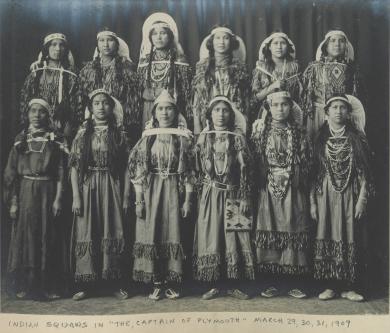
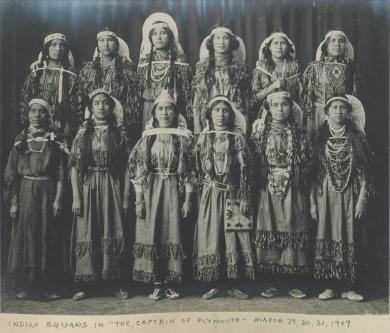
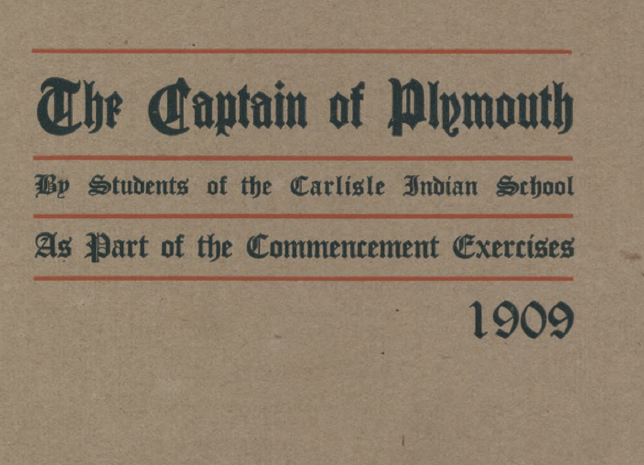
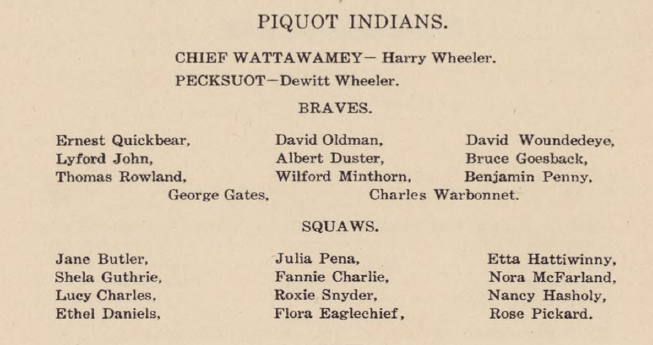
Julia Peña was part of the ensemble cast of The Captain of Plymouth. Like Ethel Daniels, she played one of the “squaws” in the 1909 Carlisle Graduation pageant.
The “Squaws” in The Captain of Plymouth. One of these women is Esther Daniels, and another is Julia Peña. I do not know which ones.
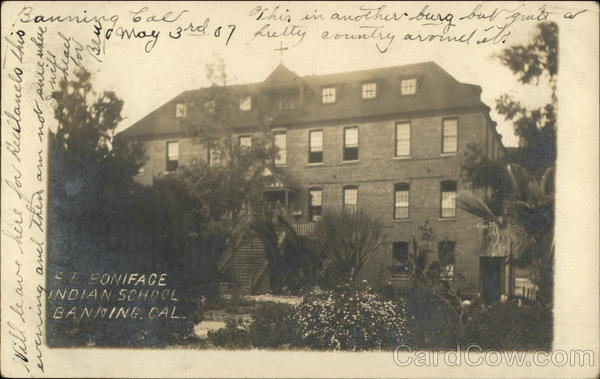
Julia, a “Mission Indian” from Southern California, had a lot of experience with boarding schools. At the age of 8, she began attending the St. Boniface Indian School in Banning. She was there from 1900 until 1907. She spent one year at the day school in Pala, California, before traveling across North America to begin attending Carlisle in 1909. It was a family affair. Julia’s older brother Nicholas had attended Carlisle from 1895 until 1905. Years later, in 1913, he was known as the “best Indian farmer in Pala.”
Julia’s story is similar to that of the other young women who attended Carlisle, and who passed through Mrs. Jacobs’ house. She was active in student organization at Carlisle, playing a leading role in the Girls Holy Names Society. She performed in school plays, and attended sporting events from her outing placements when she had the time. The year before she arrived at Mrs. Jacobs’ house, Julia wrote to one of her teachers, Miss Georgenson, to announce “that she has a very pleasant home near the Susquehanna,” and that “everything is so pleasant that a person just can’t help enjoying life.”
Some of her patrons were satisfied with Julia, and others were disappointed. She stayed with the Engles family in Moorestown, New Jersey, from September 1909 until the end of August in 1910. To Mrs. Engles, Julia was “not satisfactory.” At times she did good work, but “at other times, careless, rude and impertinent, not honest.” Julia had apparently stolen some things from the Engles. Because she apologized, the patron would keep her through August but no longer. Another patron, one year later, though that Julia “is willing and tries.” She was a good worker, but her vision was so poor that she needed glasses badly. Once fitted, she wore her glasses all the time and performed much better work. We don’t know what Mrs. Jacobs thought of her.
Julia, like most of Mrs. Jacobs’ girls, missed Carlisle once she left. On her way home she sent postcards from the places she passed through to her former classmates and teachers. When she moved from Pala to San Diego, she continued to send postcards to her friends in Pennsylvania. She sent to Carlisle a dollar so that she could join the Carlisle Alumni Association. In April of 1915, now married and back in Pala, she wrote that “I am getting along very well at my new home. I used to live in San Diego, but I like it better here, as I am living on a farm. I am always glad to hear about the progress Carlisle is making, and I hope it will continue. I will close with best wishes for success to the Alumni Association, not forgetting all my classmates.”
Another student who left Carlisle, stayed in touch, and continued to support the school’s programs. Carlisle, as it did for Ethel Daniels and Esther Reed, made a huge difference in Julia Peña’s life.
Ethel Daniels was Esther Reed‘s roommate at Mrs. Jacobs’ house between April and August of 1908. Ethel, a Ute from White Rock, had arrived at Carlisle in 1904 when she was twelve years old. She graduated in 1909 and immediately returned home. Mrs. Jacobs’ house was her last outing placement.
Ethel started sending postcards to friends at Carlisle on her way home. She missed the school as soon as she left it. As soon as she got home she reported that she “is enjoying western life” and that her brother Albert “is now a proud father of a cute little boy.”
Why share these details of her personal life? Ethel wrote to the school’s superintendent, Moses Friedman, and he would place excerpts of her letters in the Carlisle Arrow, the school’s weekly student newspaper. The Arrow was filled with small pieces of news like this from her and from many other students. At one level these updates served as propaganda–Carlisle graduates were succeeding when they returned home–but it seems to me that this is an explanation that is incomplete and ultimately unsatisfying. Students who returned home wrote back to Carlisle in numbers that at first surprised me, letting people back in Pennsylvania know what they had been up to. Ethel quite clearly loved her time at Carlisle. She said it time and again. So did so many other former students. She was proud, she wrote Friedman, to think that she had been the first president at Carlisle of the “Mercers Literary Society.” In that capacity she practiced her oratory. She was a student in the school’s art department, and was skilled enough as an artist that an Albany businessman purchased a rug that she made. She participated in a musical pageant, “The Captain of Plymouth,” in which she played one of a number of unnamed “Squaws.” Carlisle was an important part of her life.
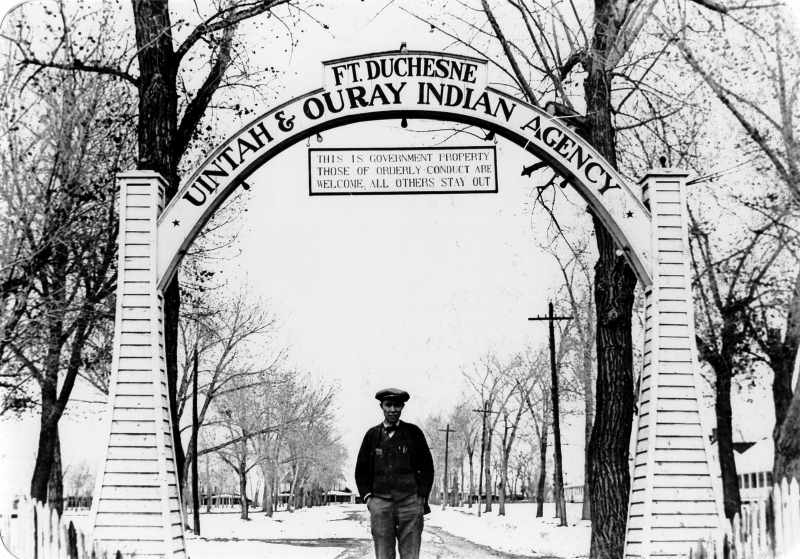
By August of 1910, Ethel was engaged, living on a ranch with her mother, with “forty acres of land, one team, two riding ponies,” and “eleven head of cattle.” She asked that the staff at Carlisle continue to send her copies of The Arrow. She updated students at Carlisle on her family life. She married Donald Cobbs, and soon gave birth to sons named Loyde and Manferd. In 1914, she was living at Fort Duschesne in Utah, and let Superintendent Friedman know that she and the family were well, and that she was “always anxious for the dear Arrow to read the news of dear Old Carlisle.”
A photograph from Fort Duschesne late in the 19th century.
She reported in a letter to Friedman that she, Daniel, and the boys were preparing to move to a new allotment. “We have taken another allotment up away from the River bottom,” she wrote. They had bought a new team, after the old team died. “We felt lost with out a team but we just kept courage up, and now we have another team I am glad to say.” Her kids were cute, and she lived near her brother and his family, too. Ranching was hard work but she seemed happy. She reminded Friedman once again to send the Arrow. “It has so many news of how dear old Carlisle is improving.”
Files like Ethel Daniels’ are not uncommon. They do not square easily with the horror stories unearthed at Canadian residential schools, and they do not square easily with the accounts given today of American boarding schools. There is ample evidence of cruelty, neglect, illness and sadness at Carlisle, and we shall get to those stories in the coming segments. But there were also many Indigenous peoples for whom Carlisle provided exciting opportunities, a community of friends, a chance to learn a trade, to perform, to play sports, to make art. Carlisle changed lives, to be sure. Sometimes it devastated, and sometimes it transformed, but it always left a powerful impression on the lives of those who attended.
Esther Reed came to Carlisle in 1903 from the Siletz community in Oregon. The Carlisle agents who enrolled her wrote down that her blood was “1/4.” She stayed at Mrs. Jacobs’ house in the Philadelphia suburbs from April until the end of August in 1908. Then she graduated, left Carlisle on the 8th of September, 1908 and headed west. She enrolled at the Chemawa Indian School in Salem, Oregon, now potentially the subject of an federal investigation.
Esther stayed at Chemawa for a only short time, from April until the end of July in 1909. She left likely because she married Joseph A. Dick in 1909 and, she reported to the administrators at Carlisle, things were looking up. “My present home,” she wrote in a questionnaire, “is situated near a large lake called Devil’s Lake and our home is about a mile from the Pacific Ocean.” She and Joseph owned thirty-four acres. They raised horses and cattle, “and we raise all our own grain and vegetables.” She was very happy, she said. Her husband treated her well and, she added, “we have a nice little baby girl about eleven months old and we are very proud of her.”
The School’s 1908 Commencement Program. Esther Reed received a Certificate in Housekeeping in 1908. The swastika imagery was unfortunately used in a variety of materials associated with Indigenous peoples prior to the rise of the Nazi Party in German in the 1930s.
Esther was a Carlisle booster. Indeed, she wrote to the superintendent asking him to send a Carlisle pennant for her wall. She subscribed to the Carlisle Arrow. She asked for copies of the Carlisle Catalog. She had handed out all her other copies and still had friends who wanted to learn about the school. She wrote to the school’s superintendent in 1916, O. H. Lipps, asking for some blank applications. She hoped her young brother might attend, “as I know it is a fine school.”
Esther never had a chance to visit Carlisle after she left, but she really wanted to go. She had thought about returning to Carlisle in 1912 to attend the school’s commencement ceremonies. But someone had to stay and take care of the farm and the animals. Could not get away from them. And, besides, she wrote, he have had very bad luck.” She told Lipps that the baby girl she was so proud of “took sick and died, which is a very great loss to us.” The girl’s name was Ernestine. After the loss of her child, she continued to work to persuade parents she knew to send their children to Carlisle. The school, and her time there, mattered to her a great deal. Esther loved Carlisle.
I am not sure how much came of her efforts. She may have been the last Siletz to attend Carlisle. She lived in Otis, which was not far from the Siletz community. The idea of Indigenous peoples on the Oregon coast poring through publications from an Indian school two thousand miles away is an arresting one.
I did not follow Esther for the rest of her life. Her brother did not attend Carlisle. I know she liked to sing. She shows up in a quick newspaper search singing at small social gatherings–a friend’s twenty-fifth wedding anniversary, for instance. She was active in civic groups like the Red Cross, and she contributed to war bond drives. She and her husband seem to have done well. They can be seen in the newspapers buying and selling land in western Oregon. I wish I had the time to learn more.
This small picture of Esther Reed, yet another of the girls who stayed with Mrs. Jacobs, once again ought to complicate our image of the Carlisle School. For some, the Carlisle School was undoubtedly a lonely and traumatizing place. For others, like Esther, it was an institution they were proud to have attended, for which they felt great affection, and which they hoped their friends and family might attend. In one of the letters in her small student file, she wrote that she had an opportunity to meet the school’s founder, Col. Richard Henry Pratt. She was delighted that she saw him, “shook hands with him and had quite a talk with him. ” Esther thought “often of Carlisle and my school mates,” she wrote, ” was glad I had the privilege to attend school there.”
There was a story that appeared in Indian Country Today a while back authored by Louellyn White, an Akwesasne scholar who teaches at Concordia University in Canada. White is descended from former Carlisle school students, and she is at work in an enterprise to recover information about “more than forty children and young adults who died on outings from the Carlisle Indian Industrial School in Carlisle, Pennsylvania.” White asks her readers to “help us find their families.”
One of the names on that list was Nora Printup, a seventeen-year-old Tonawanda Seneca girl. I have put a fair amount of time into investigating the histories of those Onondaga young people who attended Carlisle and other boarding schools. I have written about some of them on this blog (here and here). Printup’s appearance on that list sparked my curiosity, so I decided to look into her story.
According to White, Nora was buried at Seaside Cemetery in Ocean City, New Jersey. Nora died during her outing placement in Ocean City in 1905. The “outing system” was fundamental to the educational program at Carlisle. Carlisle placed students in the households and “under the influence of good, moral, economical, painstaking, and consecrated white people.” Indigenous young people who attended Carlisle thus interacted frequently with non-natives, and learned much about the mores and values of the American middle class. They knew much more about white people than white people knew about them. Effectively isolated from their classmates, the students lived and worked in white households where they could apply the lessons learned in school and, Carlisle’s promoter hoped, absorb as their own the values of the white middle class. While outing, according to Carlisle’s promoters, aided the students, the patrons who hosted gained the benefit of the help the student might provide that family. And the school did not have to pay to feed students who were not staying at Carlisle.
A student’s file from Carlisle contains the places where they did outings, and the name of their patrons. Sometimes, a student’s file contains write-ups describing the outing placement—a description of the household, the student’s quarters, and a brief description of the patron. Carlisle sent out agents to visit the outing locations, though they do not appear in the files for each student or for each outing placement.
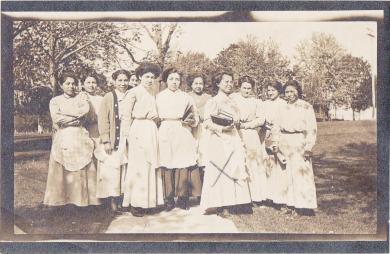
At the time of her death, Nora stayed in the home of Mrs. C. H. Jacobs, of Ocean City. Nora was nineteen at the time, not seventeen. Mrs. Jacobs had an abundance of experience serving as a host for Carlisle students. Between April of 1901 and September of 1915, she housed twenty-one young women from the school. She often had more than one student at a time. Dora LaBelle from the Rosebud Sioux Reservation was in her home in 1901 with Eunice Baird, an Oneida, and Francis Halftown, a Seneca from Cattaraugus. Esther Reed, from Siletz, and Ester Daniels, a Ute, were together at Mrs. Jacobs’ place in 1908; Annie Dibo from Akwesasne, and Susie Porter from White Earth were there in 1909; Grace Burnett and Helen Kimmel, both from Rosebud, lived at Mrs. Jacobs’ house together in 1910; Julia Peña, a Mission Indian from Agua Caliente in California and Margaret Pickett, a Crow from Montana, were there in 1913; and Della John, a Seneca, and Ella Israel, a Cherokee, stayed there in 1915. Carlisle closed a couple of years later, and Mrs. Jacobs did not house any Carlisle kids after 1915.
Annie Dibo
We do know that both Nora and her sister Lily attended the state’s Thomas Indian School for a year beginning in 1891. Nora is not entirely visible in the record, but Lilly made the Buffalo News. The paper ran a story about the violent abuse and excessive punishments meted out by the Thomas School’s superintendent John Van Valkenburg, who was put on trial for impregnating a student, physically abusing others, and mismanaging state finances. The Reverend M. F. Trippe of Salamanca, in his testimony, said that “it was in the fall of 1882,” he thought, “that I noticed a girl by the name of Lily Printup, whose ears and necks were black and blue.” Lily told Rev. Trippe that she had been punished by Mr. and Mrs. Van Valkenburg on a Tuesday. On the following Sunday, Trippe said, the girl’s injuries still looked fresh.
Lily did not go to Carlisle, but Nora did. She arrived at Carlisle in 1897. She spent much of the period from November of 1899 to September of 1902 at outing placements in Gettysburg. She learned laundering and sewing and was well behaved. She arrived at Mrs. Jacob’s place in June of 1905. She went to the beach one day, a couple of weeks after she arrived. It would not have been far from where she lived to the water’s edge. The Carlisle school superintendent sent a letter to the Commissioner of Indian Affairs. “It is my sad duty to report the drowning at Ocean City, NJ, of Nora Printup, an Indian girl from the Seneca tribe,” he wrote. Details were sketchy, but it seemed “that she remained in the water until she became exhausted, got out beyond her depth, and was drowned before she could be rescued.” He reported that “persistent efforts were made to resuscitate her but without success,” and that her father, John Printup, had been notified.
The Indian Country Today story said that Nora was buried at Seaside Cemetery, but that does not appear to have been the case. Nora’s student file states that her body was sent home to the Tonawanda Reservation. The superintendent of Carlisle sought reimbursement from the Commissioner of Indian Affairs for $26.00, the cost of sending Nora’s body home to Alabama, NY. That business proved more complicated and costly than the officials at Carlisle anticipated. “As to the express charges,” he wrote, “I wish to state that the railroad company not only refused to give the Indian school rate for transportation of the remains on a ticket, but also declined to transport the same unless accompanied by some representative of the school.” Under these difficult circumstances, he wrote, “it was deemed best to have the remains shipped by express.”
Professor White, in the Indian Country Today story said that Nora was buried in the Seaside Cemetery in Ocean City. That conflicts with the information in her file. A phone call to the cemetery last week confirmed, after a thorough check of the records, that no one named Nora Printup was every buried there. The existing evidence says that Nora’s body was returned to Tonawanda.
I can only imagine how hard it must have been for John Printup to lose a child, especially one who died far from home. Whatever its effects on him, however, Nora’s death seems not to have soured John on Carlisle. He sent three more of his children to Carlisle after Nora’s death. Bessie Printup attended from 1908 until 1909. Mary, who arrived in 1903, stayed until 1907, even after her sister’s death. And young Cody Printup arrived in 1906. He was eleven. His father, according to the school’s superintendent, expressed in a letter that he had some “anxiety …on account of the boy’s welfare.” Mr. Printup specifically did not want Cody placed in an outing assignment. He wrote to the Commissioner of Indian Affairs, Francis Leupp. “I do not approve of such a little boy working out,” he wrote. “Will you kindly authorize me to bring him home if [the superintendent] does not take him back to school.” The Superintendent wrote to John to assuage his fears. “Cody asked to go out, and there is nothing we can do for the pupils better than to have them spend the summer in a good family.” These kids, he continued, “get excellent food, like the change from the routine work here and are very anxious to be out.” Cody was working as an errand boy, “in-doors and out,” and was “doing no hard work and is getting good care.” Cody remained at Carlisle.
John Printup did not object to his children staying at Carlisle. His concern was whether his son could handle the work he might be assigned while out on assignment. He would have preferred for his son to be at Carlisle rather than out on placement. If one looks through the files of the other women who lodged with Mrs. Jacobs, you see a similar refrain. Several years after she returned home, Esther Reed wrote for copies of the school newspaper, The Arrow, and hoped to have her younger brother attend Carlisle “because it is a fine school.” Esther Daniels also asked for copies of the newspaper. Grace Burnett left Carlisle because her mother died. In 1911, the year after her departure, she wrote that her grandmother had died, too. She was now without female relatives, and that despite doing well on her farm, she wished to return to Carlisle to complete her schooling. Julia Peña said of Carlisle that “I miss it very much.” Ella Israel, who attended Carlisle because she was “too far advanced to continue to attend rural district school and there is no high school near,” upon her return home began recruiting children from her community to attend Carlisle.
The story of Nora Printup, her sister, and the young women who stayed in the home of Mrs. Jacobs, highlights the ambivalent history of Carlisle. The school’s stated intent was to eradicate the indigenous culture of the students who attended. In its early years, Carlisle’s leaders boasted of their ability to “civilize” “savages,” to “kill the Indian and save the man.” That was always a lie. The students who came to Carlisle overwhelmingly were fluent in English. Many of them wrote the language with grace and style. Many of them were members of Christian congregations, and came from families where they farmed much like the white people in neighboring communities. Carlisle was funded and fueled by propaganda that boasted of the school’s achievements.
The Carlisle experience was an important part of these young people’s lives. While there was undoubtedly suffering solitude, sickness and, as in Nora’s case, an occasional death, many former students looked back fondly on their time at Carlisle. They, and their parents, valued the institution and what it did for them. The stories of Nora Printup and her contemporaries gets at the complexities of Carlisle. Occasionally children at the school died. They succumbed to illness. Some of them were buried on the school grounds, or in municipal and churchyard cemeteries near their outing placements. And some were sent home, which appears to have been the case with Nora Printup. The young women who attended Carlisle, and made it home afterwards, were so much more powerful, as individuals and as members of Indigenous nations, than the forces that aimed at their destruction.
THEY WERE JUST KIDS. That is something that leaps off the page when you look at their student files. Delia and Florence Edwards, two Onondaga sisters, arrived at the Carlisle Indian Industrial School in December of 1909 and May of 1910, respectively. Delia was fourteen years old, Florence 13.
They were not dragged to Carlisle. State officials did not forcefully remove them from their homes. Like many of the young people who came to Carlisle, a parent signed them up. The girls attended the Onondaga Nation School for a couple of years, and then the Mindenville School District in the Mohawk Valley before they came to Carlisle. By the time the girls arrived, Carlisle required all students to have had several years of prior schooling and fluency in English. David Russel Hill, an Onondaga chief, the leader of the Onondaga Indian Band, and an advocate for Indian education, wrote on both of the girls’ applications that they had “advanced beyond the required studies.” If they wished to continue their schooling, he suggested, Carlisle may have been the best and the only opportunity open to them.
RECENT MONTHS have witnessed the discovery of more than 1300 unmarked graves at the site of a number of Canadian residential schools. The discoveries, according to a story that ran in the Ottawa Citizen, are proof of what First Nations people have been saying for a long time: “That Canada’s Indian Residential Schools spent nearly a century overseeing shockingly high rates of death among their students, with the bodies of the dead routinely withheld from their families and home communities.” In part because of the outcry these discoveries sparked, the American Secretary of the Interior Deb Haaland announced an initiative to “address the inter-generational impact of Indian boarding schools to shed light on the unspoken traumas of the past, no matter how hard it will be.” Haaland cautioned that the work would be difficult and time-consuming. Nothing, she said, will “undo the heartbreak and loss we feel.” Nonetheless, she said, “only by acknowledging the past can we work toward a future that we’re all proud of.”
The Federal Indian Boarding School Initiative will investigate “the loss of human life and the lasting consequences of residential Indian boarding schools.” These schools, said Bryan Newland, the Principal Deputy Assistant for Indian Affairs, were intended to “culturally assimilate Indigenous children by forcibly relocating them from their families and communities to distant residential facilities where their American Indian, Alaska Native, and Native Hawaiian identities, languages, and beliefs were to be forcibly suppressed.” “Hundreds of thousands” of Indian children, Newland said, were taken from their communities. The Interior Department will work to collect the relevant documents, locate possible burial sites, and try to set the record straight.”
This is a worthwhile project, one of the only times in American history where an agency of the federal government has pledged to take an honest look at its history, collect the evidence, and allow for a true accounting of this part of the nation’s past. It is stunning, really. Having spent much of my work time the last year or so reading through Carlisle student files, this will be complicated and in many ways difficult work. And it may force many people to reconsider what they know to be true about Indian boarding schools.
CARLISLE WAS ABOUT 250 MILES south of the Onondaga Nation Territory, so Delia and Florence traveled less far than most of the 10,000 students who attended the school between 1879, when it opened, and 1918, when it closed.
It is difficult to discern much about the girls’ lives before Carlisle. Their Onondaga mother had died from heart disease, and they were being raised by their Mohawk father on the Nation Territory. We know which schools they attended, and that they were Protestants, though the denomination is not clear.
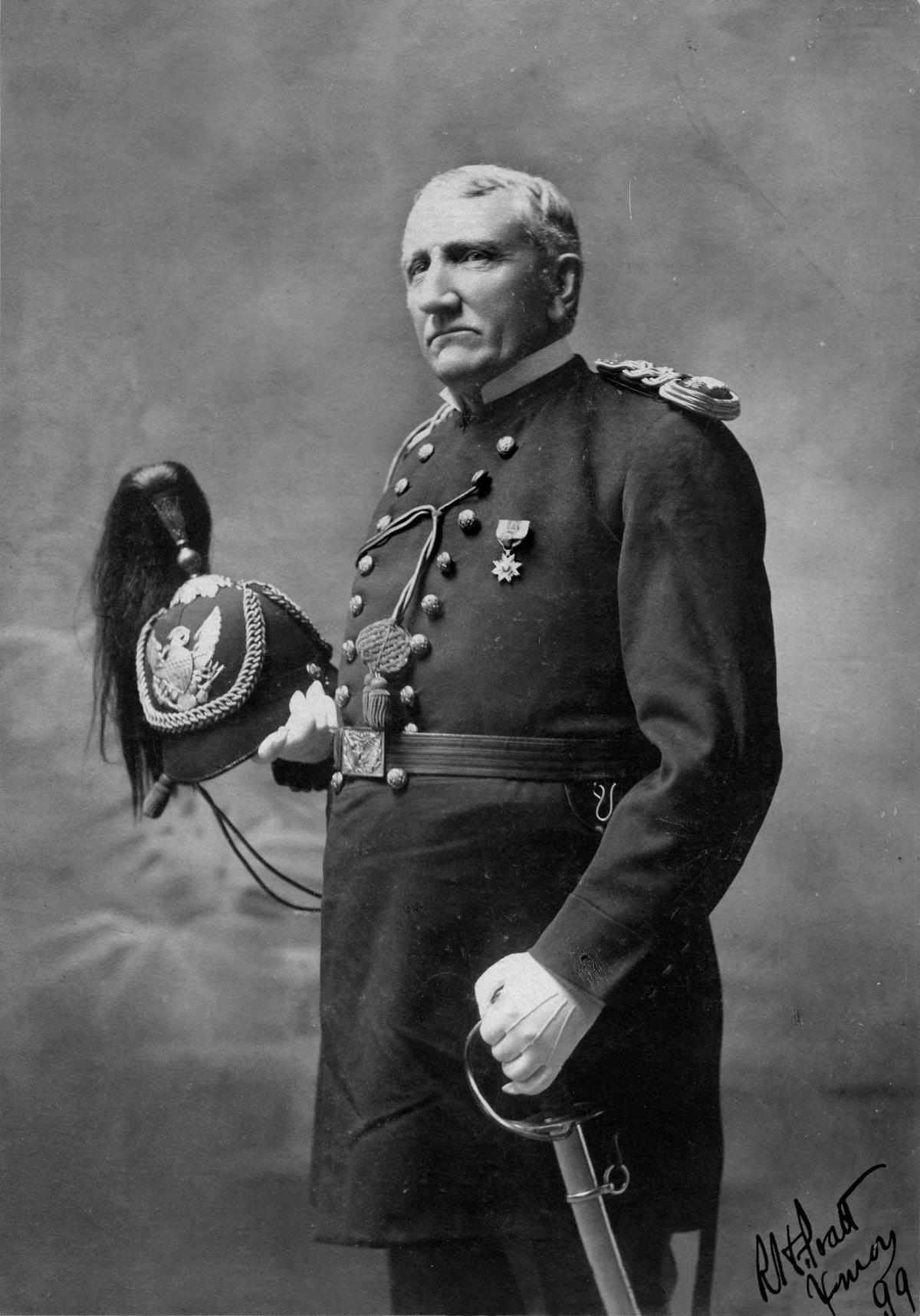
A military officer named Richard Henry Pratt founded the school to “kill the Indians and save the man.” Speaking to a gathering of Baptist ministers in 1883, Pratt said that “in Indian Civilization, I am a Baptist, because I believe in immersing the Indians in our civilization and when we get them under holding them until they are thoroughly soaked.” The best that Pratt could see in the thousands of young Native Americans who attended Carlisle was that with proper training they might be formed into something else, and he boasted of his ability to do just that.
Carlisle’s Founder, Richard Henry Pratt
Pratt was an energetic and effective promoter of the school. He produced before and after photographs of Carlisle students, the first depicting the child in their traditional dress, the second with their hair cut, their faces cleaned, and dressed in Carlisle’s school uniform. Pratt claimed that Carlisle took “savage” and “wild” Indians and transformed them into civilized individuals, ready for citizenship and productive employment in the American republic. His school, according to a newspaper article announcing its opening, “will endeavor to save the Indians from extermination by educating young Indians, who can grow up to be leaders of their people and direct them to civilization.” In reality, the largest numbers of students came from Iroquois communities, eastern Cherokees, and the Oneidas in Wisconsin. These young people spoke and wrote in English when they arrived, were members of Christian denominations, and familiar with farming.
Pratt needed to promote his efforts. Contrary to popular belief, policy-makers began to criticize off-reservation boarding schools as educational institutions. Early twentieth century commissioners of Indian Affairs and secretaries of the interior, for instance, much preferred reservation day schools, which were less expensive because they allowed children to return home at the end of the day, and because they better prepared the students for life in American society. Francis Leupp, Commissioner of Indian Affairs, wrote in 1905 that “it is a great mistake to try, as many good persons of bad judgment have tried, to start the little ones in the path of civilization by snapping all the ties of affection between them and their parents, and teaching them to despise the aged and nonprogressive members of their families.” Pratt retired five years before the Edwards sisters arrived, at a time when boarding schools faced a steady drumbeat of criticism from reformers, political leaders, and of course Native peoples themselves, who viewed them as retrograde institutions, dated and of questionable value compared to the benefits of schools closer to home.
Students at Carlisle spent only some of their time on school grounds. Much of their time was spent on their various “Outing” placements, where they were sent to live with white families to learn a craft or a trade or, in the case of women, basic housewifery. If they were old enough, they attended schools near their patrons’ home. Delia attended Moorestown High School in New Jersey, and Florence attended Haddonfield High.
Delia’s patrons found her “headstrong and self-willed,” but capable of doing well when she tried. Another thought she was “a great child and tries to please.” Florence spent time in Jenkinstown and Kennet Square, Pennsylvania, and at a couple of sites in New Jersey. One of her patrons, in 1910, told the Carlisle field agent, whose job it was to check in on students, that “Florence is not satisfactory, she is not very strong, is at a critical period in her life.” The thirteen year old was “willing,” but just not capable, in the eyes of her patron, to provide enough help. “She is very untidy about her person & work.” A year later, however, a new patron in Beverley, New Jersey, reported that she was very fond of Florence, and found her “a good obedient child, a little slow, but tries and is improving.”
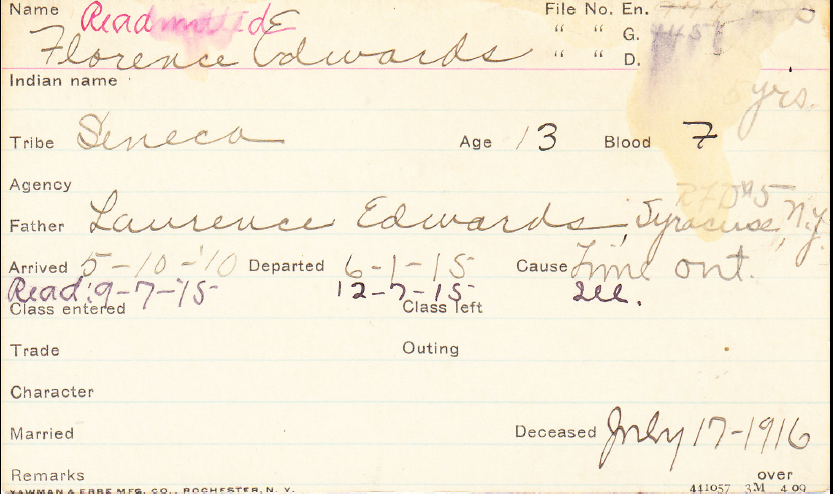
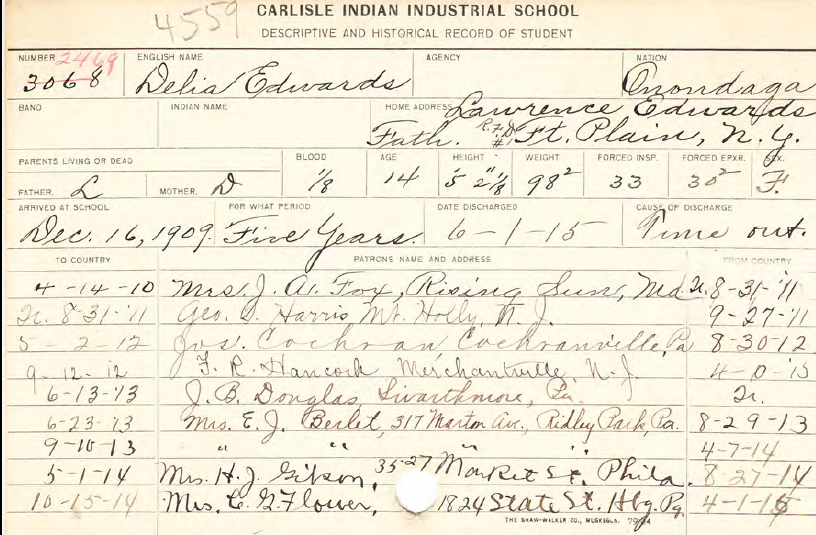
One of Delia Edwards’ records cards, listing her outing assignments and patrons’ addresses.
Florence may have struggled at times during her placements, but she took advantage of the opportunities Carlisle presented. She wrote for the student newspaper. She received a prize for one of her essays from the Commissioner of Indian Affairs. She was an active member of Carlisle’s YWCA chapter, and at one meeting led the students in a lecture on “the heroes of the Bible.” She was also a member of the Mercers, where she practiced “Declamation.” IN 1914, she gave a reading in the auditorium of her essay, “Is it Worth While?” (The paper gave no sense of what “it” was). In January of 1915 she led the Protestant service at the school “and also gave a fine little talk.” She must have been a magnetic figure, filled with charisma. People liked her.
Both of the girls went home for the summer of 1915. By September they were back at school and both had moved on to their next placements. In October of 1915, the Carlisle Arrow ran a report of students staying in the school’s hospital. Florence “who came in from the county,” was one of them. She was “now up,” and, according to Agnes Owl, “was only lonesome for Carlisle.”
Turned out it was much more serious. Florence had contracted tuberculosis, the dread disease that killed 194 out of every 100,000 Americans at the beginning of the twentieth century. Lawrence Edwards, her father, began to hear that his daughter was ill. In November he wrote to the school’s superintendent, asking for information. He had heard nothing from Florence, but “others are telling me she is sick.” Two weeks later, on the sixth of December in 1915, the Superintendent wrote back. Florence was cured, but he told Mr. Edwards that he thought it advisable “to let your daughter…have a complete rest in order that she regain her physical strength.” He was sending her home to Onondaga.
Delia, it turned out, was sick as well. Mrs. Lippincott, one of her patrons, sent Delia to the hospital. She complained of abdominal pain. It was appendicitis, and she had surgery in November. She recovered well. While Florence journeyed home to rest, Delia returned to her patron. She wanted to go back to Carlisle. She wrote to her friend Lucy Lenoir, a Chippewa student. The letters are wonderful. Delia was a relentless kidder, always ready to affectionately tease her friend. And she was bored to tears at times doing housework for her patron. “I wish we could be there for the social which will be the last Saturday” of January. Earlier, she told Lucy, she had broken up with her boyfriend. “We certainly would make a hit on some swell guys,” she wrote. But getting back to Carlisle was more difficult than it should have been. The superintendent saw no reason for her to return to the school. Her patrons reported that her work was good, and that she was succeeding in her studies. Delia told Lucy that “I am so darn sick of country life I believe I’d die if I stay here much longer.” Maybe, she wrote, “I’ll play sick and see if I can’t go back to Carlisle.” She missed her friends. A short time later she wrote to Lucy again, saying “Dearie, I have no idea where I will be when you open this letter, but if I am not in my grave I will be at dear old Carlisle.”
Delia would not make it back to Carlisle until June. In May of 1916, Lawrence wrote to the superintendent. “My daughter Florence is very low now and I wish to have Delia come to her before anything happens.” Delia was summoned back to the school, where she arrived on the First of June. She returned home to the Nation Territory on June 6.
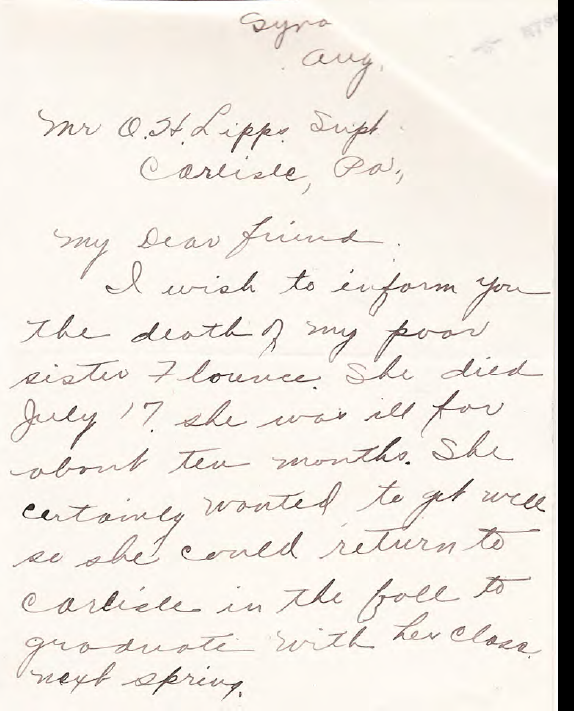
One month later, Florence died. “She had been ill for about ten months,” Delia wrote. “She certainly wanted to get well so she could return to Carlisle in the fall to graduate with her class next spring.” She told the superintendent that it was hard for her to lose a sister. “Father and I are trying our best to bear it,” she wrote, “but life is not ours so we will have to take things as they come.” Her sister had returned to Carlisle from her outing assignment with a fatal illness. The school’s records document the names of the children who died there. Still, Delia could not wait to return. Like many of the Onondagas who attended Carlisle, she missed the school when she was not there. She was nineteen years old. In the very same letter in which she expressed her grief at her sister’s death, she told the Superintendent that “I will try to return the latter part of September to Carlisle to continue my studies.” She wanted to “be placed with the graduating class as I certainly worked hard this winter with my studies at the Moorestown High School.” She wanted confirmation that she could return, so she asked the superintendent to “let me know if I can be entered in the ‘Fourth Year vocational’ class and I will return just as soon as I can before I get too far behind with my studies.” She hoped as well that the school would consider admitting her stepsister Elsie. Carlisle mattered to Delia.
The last letter in Delia’s Carlisle file, announcing Florence’s death, and how she wanted to recover well enough to return.
She never returned to “dear old Carlisle.” She was told that she did not have “sufficient credits to enter the class which is to complete the course in another year.” She should return to Moorestown High School and then, at “the opening of the year you will be given the opportunity to take whatever work for which you are prepared.” Her last date of attendance was listed as May 31, 1916. It is not hard to believe that when Carlisle closed a short time later, she may have seen this as a loss for her people. As Onondaga chief Jesse Lyon asked, “Why was Carlisle closed? Nobody know,” he said. “Too good for Indian, maybe, but that is what Indian needs.”
THE STORY OF CARLISLE is not a simple one. As historians we know to be attuned to ambiguity and ambivalence. It is proper to view boarding schools as American institutions directed toward cultural genocide—the erasure of Native American culture, values, and beliefs. It attempted to play that role. But it did not always succeed. Students were homesick, at times. Some ran away from the school, especially the boys. Some returned to their communities feeling as if they no longer belonged. Yet there were Onondagas who ran away from home to get to Carlisle. Some of those runaways were not heading home, but to visit girlfriends. It is proper then, to view Carlisle as well as a flawed institution which Native American students attended to receive an education and learn crafts and trades, or to play sports or to play music, opportunities that were often closed to them elsewhere. More than one thing can be true at a time. Carlisle took and it gave, but it neither destroyed nor erased, the Onondagas who attended it between 1879 and 1918. The Interior Department’s Boarding School Initiative will need to be attuned to the school’s ambivalent legacy.
And about that college in Montana. It is not that the people in my department did not care about my research. It’s that they saw any small success that came my way as something to resent. Sometimes I told myself that they saw my work through a lens of insecurity, that my productivity reflected on their own lack of productivity. But I was not all that productive in Montana. Anyways, I know now that this was never the case. They were just mean-spirited bastards, and I let those assholes get under my skin.
I have thought about this a lot in light of the Netflix show “The Chair.” I saw someone on twitter ask about Bob Balaban’s character, the starchy and elitist professor of American literature Elliot Rentz. Pembroke University, the fictional setting for “The Chair,” looks like paradise compared to MSU-Billings, which at the time I taught there was a demoralizing hellscape led by a dunce of a President and a dumbbell Dean.
My department consisted of two Jeopardy Champions. One, who was working on a bibliography of lynching, insisted that the infamous Willy Horton advertisement was perfectly acceptable and had nothing to do with race in America. The other was a Harvard-trained historian of the French Revolution who had been denied tenure at two other institutions before he landed in Billings. He did not drive, and relied on students to drive him around. He liked to hang around the dorms. When I left Billings, he warmly congratulated me, told me how great my new department chair was, and then scurried off to tell him how awful I was. My new chair assured me that this reflected badly on everyone in Montana but not on me.
There was also in the department an Iraqi Seventh-Day Adventist who believed that African Americans were moving to Billings because it was an easy place to commit crimes, and a Missouri-Synod Lutheran pastor who proudly claimed that being a professor “was the best part time job in the world.”
There are all sorts of people in the United States who do not want to hear anything bad about the American past. These people can make our jobs difficult. What I think is often overlooked, however, are the barriers to doing the work we do inside the academic institution: administrators who don’t want to draw the dangerous attention of dingbats in the legislature or on the Board of Trustees by discussing controversial subjects; penny-pinching college leaders unwilling to make the investments, personally and financially, to make the college a welcoming space for Indigenous students; and students, even in areas where Native Americans are the largest minority group of campus, who sometimes care nothing at all and Indigenous peoples and their communities. Racism of these stripes was a genuine repressive force in Billings.
I taught there for four years, in an era when it seemed the internet was still in its infancy, without cell phones, and with no computer provided by the college. And because I was a single parent for three of my four years, I could easily stay out of the loop. I was really busy, and Billings felt far away from everything. The right-wingers like Lynne Cheney and Pat Buchanan who, at that time, denounced “politically correct” history, really did not affect me much at all. Not directly, anyways. What mattered more was teaching a subject that was considered provocative, in a bad way, at an institution presided over by leaders who actively discouraged discussions raising challenging questions about the American past.
I was hired to teach the history of Early America, from the colonial period through the “Age of Jackson.” It just so happened that not only had my predecessor left, but another guy, who taught Native American history was retiring. During my on-campus interview, he drove me forty miles to a bar in Columbus, Montana, where we split a six pack of Budweiser. He was a good guy, I think. He left me a ton of books. He taught the subject as little more than the history of the Plains Wars.
The New Atlas Bar, Columbus MT.
That wasn’t me. I focused my research on the seventeenth century. I was turning my dissertation into a book. I had a much broader coverage in mind. What do to, then, when the Dean of the College of Liberal Arts, in a meeting after my first contract renewal, told me that she wanted to see more “relevant” and “applied” research? No one in Montana cared about the history of the Chesapeake or New England, she seemed to suggest.
Contract renewals were tough. Each year my contract came up for renewal. Each year, the two Jeopardy champions voted to fire me. Each year, the Pastor and the Seventh-Day Adventist voted to keep me around. One student member of the committee, God bless them, voted each year to save my job. It was tense, and I needed every ally I could get.
So I tried to play ball. I started speaking with some of my students who drove to Billings from the Crow Reservation. I learned a lot, things I had read in no scholarly monograph. What came from these conversations was the racism these students faced–in high school in Hardin, Montana, in the city of Billings, and in classrooms at my college. Perhaps there was a story to tell here.
I cannot remember the details. There had been some event at Hardin High. The non-Indigenous students stayed home from some sort of cultural awareness day, their truancy excused by their parents. The Crow kids, as kids will do, made some noise about racism. The next day, distributed throughout Hardin, were copies of some white nationalist text like The White Man’s Bible. I went down to Hardin. I tried to learn more. I tried to blend in and listen. I talked to a few people about racism in Hardin. I had gathered some great insights about racism in a reservation border town. This struck me as immediately significant and relevant to life in Montana and in a host of western states. In the end, it was too difficult to do the research. I would have had to spend a lot of time in Hardin, an hour’s drive from where I lived, and my family life would not permit that. But the bigger barrier was the Dean, who somehow had become the Provost, or something like that. I ran into her, somewhere on campus, whcih almost never happened, and told her about the project. I could see clearly from her reaction that this was not what she had in mind at all.
I left Billings in 1998. At Geneseo, where I have taught pretty much ever since, I have been able to do what I wanted to do. We do not have a lot of money, but in every other way my research has been supported.
And that’s the key point. To do research requires a network of support. It is easier for us to do our work when we have interested colleagues who encourage us and provide pointed criticism, administrators who recognize the value of what we do. With that assistance, we can stand up to the racists, the haters, the bigots and trolls. That part of the job becomes easy. It’s when these things are missing that our academic lives can be miserable.
During a cross-country drive last month, we stopped in Billings, Montana, where I lived in the mid-1990s. It was at Montana State University-Billings where I began my career as a professor in the fall of 1994. We drove around the town, looked at the houses where we used to live. It was clear that the city had changed a lot in the more than twenty years since I last had been there.
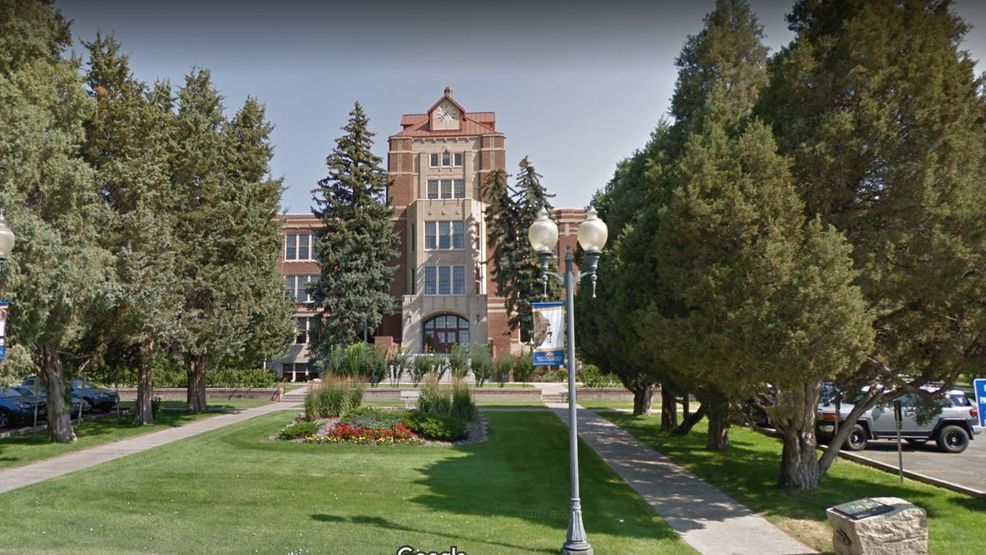
I was eager to see the campus. I left my family at the hotel—they all wanted to hang out by the pool—and I drove up 27th Street North to the campus. I struggled to find my bearings. It had been a long time. An addition to the science building had taken over what formerly had been a faculty parking lot. I headed toward the Liberal Arts Building. My office had been on the eighth floor, I believe, and all the classes I taught were held in that imposing edifice. I spent some time walking around the campus on a quiet Sunday evening. All the buildings were locked, so I could not go see my old office or the classrooms where I taught.
More Daunting than Mordor
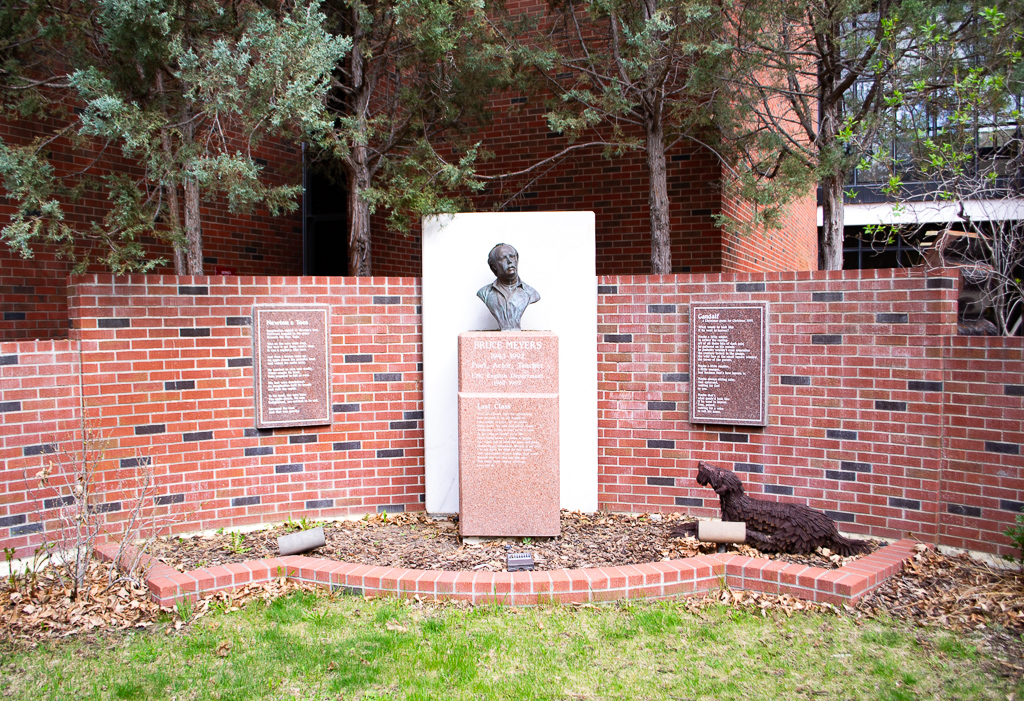
Much had changed, so much that I felt a bit lost. Buildings had grown. It seemed like a very different place, and I noticed things I had forgotten over the years, especially the small garden that stands in the shadow of the Liberal Arts Building. The garden was named after an English professor named Bruce Myers, who had died young—younger than I am now—two years before I arrived in Billings. A centerpiece in the garden was a poem Myers wrote shortly before his death:
“Last Class”
Seeds are floating from the cottonwoods
And the wind is up. All around us
Poets gather on grass the air carries
White puffs. We read each other’s words
Wondering if this as close as we’ll come
To the flight of clouds? Or is this
What flying means—sitting in Spring
Our bodies, full of birds and grass and words,
Wondering as cottonwoods whisper at our ears?
I do not know the word for this vision
This congregation of poet bodies, poet words
Beneath this tree. But last this once
This single sunlit singing afternoon
Love will do.
What a perfect statement of the depth of the joy that teaching can bring.
I learned a lot from teaching in Montana. It was the first time in my career where I had significant numbers of Native American students in my classes. They drove in from Crow and from the Northern Cheyenne Reservation. I learned from these students things that put my academic and scholarly concerns in perspective. Many of the debates that dominate the field of Native American Studies and Native American History on college campuses simply do not carry much register in Native American communities on the Northern Plains.
I learned a lot, but I spent much of my time at Billings trying to find a job someplace else. I was in a deeply dysfunctional department on a struggling campus, where more people left than went up for tenure. The Dean of the College of Liberal Arts had no respect for what I did and said that whatever research I produced should be “relevant” and “applied.” I asked her what she thought that meant, and I never really got a good answer, but it was clear that unless she thought it was important and relevant, today, to her, that it would not count for much. Bruce Myers’ words meant nothing to her.
I would like to think that things are better in the field of Native American history than they were in the 1990s, and that the field is booming. A tremendous amount of scholarship is produced each year. Native American history no longer exists on the margins of the field. But the same day I arrived in Billings last month, I read on Twitter of a bill introduced into the Texas legislature by one of the Lone Star Republic’s many East Texas lunatics. He sought, in his effort to combat what he saw as the mortal threat posed by “Critical Race Theory,” to remove from the state’s social studies standards a requirement that students learn about “the history of Native Americans.” If we do not talk about the bad things, they never happened.
Erasure.
When it appears this baldly, it puts our academic and interpretive debates in perspective. We argue about interpretations, evidence, and approaches, and then there are those who could not care less about any of this. “Cast all this aside,” they seem to say. History must be a celebration of White Christian America’s greatness. Nothing else matters.
I began teaching in Montana in 1994. That same semester conservatives worried about the spectre of political correctness. Lynne Cheney had recently gone on a crusade against the National History Standards. Liberal professors, she argued, were out to indoctrinate American students, to teach them that America’s story was one of racism, oppression, and greed. They were teaching “multiculturalism” and emphasizing the bad parts of American history. It is an old, old, argument, a tried-and-true Conservative tactic to avoid talking about historical moments that challenge their cherished and largely fictional narrative of the American past. Some of my colleagues in the department, too, shared Cheney’s concerns. They attempted, and to my embarrassment succeeded, in making my life miserable because I was newly hired on a tenure-track gig. I made the mistake of caring what these old racists thought. I hold no malice towards them now: they are retired, dead, or out of the academy, and I have spoken to none of them since the Clinton years. But they did not see Native American history as central to the American story.
I have been at this for thirty years and there always have been people who claim to know something about my line of work that do not want to hear anything that is not a celebration of American greatness. I have friends who find it exhausting, the feeling of always having to justify their work. I am sympathetic. I felt that way during my four years in Montana, before I got out. As I walked around the quiet and empty campus, I realized how much I have changed. I have great faith in the power of teaching still, like Professor Myers, and I can view encounters with those who reject what I do as teachable moments, as opportunities for dialogue and engagement. I feel like I must. Of course, there are those who do not want this, and recoil from dialogue, who retreat from any situation in which their cherished notions of the past are called into question. I have no control over that. So I work to keep my mind open, to exclude no one, to keep working with Indigenous communities, as I have done for the past 23 years, and to keep trying to produce scholarship as well. Doing good work in this field means trying to get it in front of as many eyes and into as many ears as possible.
I learned from my time in Billings that in academia, as in so many other things, one must learn to accept that there are things beyond our control. Accepting that brutal fact will help you sleep at night. The job market in higher education is, well, not much of a market at all. Administrators can be cruel or obtuse, colleagues selfish and petty, and students, sometimes, just are not able to care. There are those out there who reject everything we do without reading a word of what we write or listening to a word of what we say. Some of them are open to reason. You can engage with them. But others will not listen no matter what you say. Why let those people get to you?
I do my work. I teach classes. I do service, on campus and off. I am fortunate to be able to work with, for, and in Indigenous communities. I write books and articles, knowing full well that more people will read this post on my obscure little blog than anything that appears in a scholarly journal.
The first time an English-speaking writer put pen to paper to try to understand the Native American past and the Native American present on its own terms, there were English-speaking readers who not only rejected this work, but actively tried to discredit the author. Some tried to keep others from reading that author’s work. The textbook policing of those little men who crusade against CRT—they are nothing new. Their assault on higher education, against free inquiry of any kind—may seem like a pernicious and unprecedented threat. It is not unprecedented at all. Remember what the anti-racists say. The rot is deep, and it goes to the core. It is fundamental. There have always been white loudmouths crying “Patriotism” and “Love of Country” and “MAGA!” as wittingly or unwittingly they seek to exclude, marginalize, and erase.
Don’t laugh at these people. Don’t ignore them. Have the courage to engage them when the opportunity presents itself (and you absolutely should seek out those opportunities). Ask them questions. Hold their feet to the fire. Accept that this may be frustrating. They may be too fragile to engage you in dialogue. And that is the way it always has been. Take care of yourself, but do not give up and do not retreat. Peace.
I really admired the work of the historian Calvin Luther Martin. When I was only just beginning my career as a graduate student at Cal State Long Beach in the late 1980s, my adviser directed me to a piece he wrote in The History Teacher, a journal published in the CSULB History Department. It seemed to me an entirely different way of looking at Native American History, one that could free me from the focus on “Indian Policy” that governed much of the historical writing on the subject at the time. Instead of writing about what white people did or did not do to solve a series of “Indian Problems,” Martin focused on Native Peoples themselves, their ways of understanding human and other-than-human beings.At some point I read his Keepers of the Game, and I familiarized myself as well with some of the critiques this award-winning book generated, notably those from the anthropologist J. Shepherd Krech.
As my Master’s thesis neared completion, and I began to seek out Ph.D. programs to which I might apply, I wrote to many historians who were doing what I thought I wanted to do. Though my thesis on the Cherokee Cases bore little resemblance to the work that Martin had done, he responded generously and enthusiastically enough that I sought out an opportunity to meet with him while I visited my parents on the east coast. My folks lived in DC at the time, and Martin, I believe, lived in Baltimore. We met there, and he bought me a very nice lunch. We had a good, and a heavy conversation. I remember feeling out of my league, with a bit of what later might be called “imposter syndrome.” He was super smart. Maybe I was not ready for the big leagues. I cannot remember all that we talked about, but I know I left our conversation with my mind racing, contemplating questions that I had not contemplated before. That’s what we want, right?
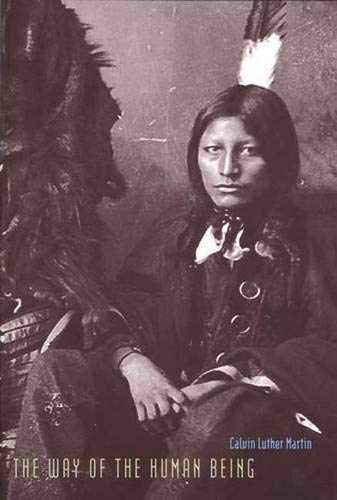
I am not certain if I applied to Rutgers, where Martin taught. If I did, I was either admitted with funding inadequate to allow me to attend, or my application was rejected. I went to Syracuse instead, which paid for everything, and where I also met with a very warm reception. But I kept Martin’s work in mind. A couple of years later, after I started my teaching career at the Montana State University at Billings, and where I first taught significant numbers of Native American students, I wrote to thank him for that meeting, and to tell him how his work informed my courses. And for several years after I arrived in Geneseo, I used his The Way of the Human Being as the first reading in my Native American survey course.
For a time, I loved that book.
Students loved that book.
It moved them.
It moved me.
The Way of the Human Being expanded upon themes present in Martin’s earlier work, but also included an autobiographical tale, of Martin’s own disenchantment with academia and his decision, after spending time teaching in Indigenous communities in Alaska, to leave the college classroom and the historical profession altogether. We historians were, he asserted, asking wrong questions that failed to cut to the vibrant and real heart of Native America.
Somehow I came to know that Martin had moved with his wife to Malone, on the northern edge of the Adirondacks way up in New York’s north country. He may have mentioned that in the preface to The Way of the Human Being. One of my students, who found something in that book that spoke to him in a time of great need, called Martin on the phone, and talked with him for several hours. Some time later I wrote to Martin again. I am pretty sure I thanked him for the book. I know I invited him to come to Geneseo to talk with my students. He very politely declined, explained why he did not do that sort of work anymore, and I believe included a copy of his most recent book, a self-published brief work called The Great Forgetting. I read it in one sitting. I never thought of using it in class, but it did reiterate some of the fundamental ideas of The Way of the Human Being. It was simple, powerful, and showed a breadth of reading that I found invigorating. I appreciated what he had to say in this letter. I was still a fan.
I stopped using The Way of the Human Being several years ago. This saddens me, because I have not found a book that so gently clears the deck, so to speak, and opens the students’ eyes to new ways of thinking and knowing and understanding the relationship between human and other-than-human beings in Indigenous America. If you have read the opening chapter to Native America, you will see me trying to fill that void. I felt I had to abandon the book. Some of the people about whom Martin wrote were made-up. He admitted this in the preface, but still, it gave me pause. Indigenous women, who had served prison time in Alaska, were creatures of his imagination, tragic characters created by a non-native writer to describe the dysfunction and difficulty in a community suffering because it was so out of touch with its core beliefs. This made me deeply uncomfortable. There is a long history, after all, of white writers putting words in the mouths of the Indigenous people they write about. This seemed like too great a blurring of fact and fiction, and it raised for me troubling issues about veracity, accuracy and voice in teaching a class on Native American history to mostly first-year students who had learned virtually nothing accurate about Indigenous peoples at earlier points in their educational careers.
One of the people about whom Martin wrote who unquestionably was real was Sergeant Warren Tanner of the Alaska State Troopers. Martin described Tanner sympathetically, a non-Indian law enforcement officer who dealt with the wreckage that came to a community disconnected from the way of the human being. Tanner was compassionate and wise in Martin’s book. He could not have known that Tanner was not all he seemed to be. Tanner later plead guilty to two counts of sexual abuse committed on a minor. That abuse was taking place during the time that Martin lived in Alaska. I get it. People are complicated. But if some of the most important characters in the book are the fictional creations of the author, or a dangerous pedophile, this presented difficulties that rendered the book more trouble than it was worth. The problems with the book began to outweigh the benefits.
Nonetheless, I continued to read what Martin wrote. Some of the essays he posted on his website I found interesting, even when I did not find his arguments persuasive, and even when I dismissed them as existing on some sort of pseudo-scientific fringe. He wrote frequently, for instance, about the dangers of “Big Wind” and the health consequences that could follow from living close to wind turbines. He and his wife spoke and wrote about Wind Turbine Syndrome. I was not convinced, but I had bigger fish to fry. But recently, after I began subscribing to Martin’s blog posts, I found myself deeply troubled and repelled by Martin’s embrace of anti-vaccine arguments in the midst of a lethal pandemic had has killed more than 620,000 Americans.
IT HAS BEEN A ROUGH EIGHTEEN MONTHS FOR MANY OF US. I understand that millions of people have it worse than me. I have come to accept that I can say this and also say that it has been bad for me, too. My mom, in a rehab facility in March of 2020, suffered a serious stroke at the outset of all this suffering, and the isolation required to combat the virus doubtless limited her prospects for recovery. All of us got sick late last year, the disease likely brought home from one of our kids who worked on the medical front lines in a local hospital. We made it through, but I would not wish Covid on my worst enemy. The pandemic has not hurt us financially, as it has hurt so many others, but otherwise this has been, and remains, difficult. I so want this suffering and madness to end.
Just before I picked up a pencil to being drafting this post, I drove by a crowd of people outside a local strip mall protesting possible vaccine requirements. Vaccines should be a personal choice, the signs said, and these protestors said that they did not want to be unwilling subjects in a corporate medical trial. They were not terribly happy about masks, either. A couple of weeks ago, I was visiting a friend in Long Beach. One of his roommates was not vaccinated. Not putting any of that crap in his body, he said, as he ate shrink-wrapped, grocery store sushi.
I am not an expert on vaccines. I will not claim, as Martin does, to have any expertise in immunology. But I trust the family doctor I have seen for twenty years, and I do know that we live in a country with enough vaccines for everybody, that vaccination has been delayed by unreasoned and emotional opposition, and that this passage of time has allowed the virus to develop new “variants” that are especially contagious. I see no reason to doubt that additional variants are going to develop, and that they could do even more damage. Vaccines, in my view, are not a personal choice. They are an obligation placed on anyone who wants to live in community with others in a civil society. Like the cigarette smokers of the 1980s and 1990s who insisted on their right to smoke anywhere, and the slaveowners who insisted on the right to carry their human property wherever they wanted, Anti-Vaxxers care about nobody but themselves and the small circle of people who share their beliefs. They engage in science-talk and rights-talk to justify what is, in my view, their toxic selfishness. And there are just enough of these lethal fools in this country to ensure that nobody is safe.
I thought it would be chickenshit to write this post without reaching out to Martin. I posted a comment on his website, respecting the request to “please be polite.” I wrote that
“I have respected your work for a very long time. But I have no wish to engage with this turn towards ‘Anti-vax.’ The costs of the past 18 months have been too great, for myself, my family, my friends and neighbors. The decision by too many Americans to not vaccinate has had lethal consequences.”
I told Martin that I was done. I had no wish to read his newsletter any longer. Maybe I was not as polite as I might have been. I will take the blame for that.
Martin’s response came swiftly. He wrote that he refused to “countenance Covid and vaccine fascism, especially when I have graduate credentials (2.5 years at the Ph.D. level) in the subject and I’m married to an MD.” He told me to get as many jabs as I wanted, but said
“don’t lecture me in a subject you know nothing about: that’s offensive and frankly stupid. Call me an anti-vaxxer if you wish; that is, flatten this into epithets. Should I then call you a fascist fool? That gets us nowhere.”
No. It doesn’t.
Martin mentioned that he read the peer-reviewed literature. He asked, rhetorically, if I had read that scholarship and if I could understand it. He mentioned that he was going to delete me from his mailing list, which I appreciated, and said that “it’s time to stand up to people like you who think you’re being virtuous in forcing this insanity on the rest of us.” He closed with eight pointed words: “I find you frightening. Respectfully, we are done.”
Not virtuous, and not frightening. Afraid of getting sick again to be sure. And exhausted by eighteen months of suffering.
I thanked him for taking the time to respond. I acknowledged our disagreement. It was probably a mistake to have replied, for he wasn’t done. He urged me to read the scientific literature. And, he wrote, “don’t think for a moment that you can foist this on the rest of us.” He told me that I am ignorant, that I should keep my ignorance to myself and not “turn it into mandated genocide, which is what this is.”
Like a lot of historians, I like to argue. I like to debate. Like a lot of people, I do not like being insulted. How did I feel at the end of this exchange? Not angry. Not hurt. Just really, really disappointed.
THERE WAS A POINT IN TIME when Calvin Luther Martin wrote books and articles that I valued and from which I learned a great deal. For a time, I loved The Way of the Human Being. Now, he writes words that I find dangerous, hysterical, a little unhinged. I am not certain if I am the only historian who has grown really attached to a book, only to cast it aside after a long reconsideration. Those of you who are historians will remember the job we did in readings courses, where our professors carefully tossed a well-chosen book into the middle of the pit to watch us tear it to shreds. We were hardly sentimental about the work of others. The tone of Martin’s reply to my messages did not bother me. What bothered me was the trajectory he had followed over these many decades. This, as I said above, saddened me. The ideas he expresses now–and I base this on the advice of the medical professionals I know and trust—I believe have actively endangered me, my elderly parents, and my family, including my youngest child, too young still for the vaccine. People change. I know that. Some of us get cranky, forgetful, embittered, or embarrassing. Some of us after searching for so long find ourselves. We come to a place of contentment and calm, with quiet hearts. And some of us cast off the real world altogether. Let us not judge, I tell myself. Respect the burdens people carry, rather than criticize how they carry them. I tell myself this as well. I shake my head. Time to change the channel, I thought. Time to walk away. I am okay with that.