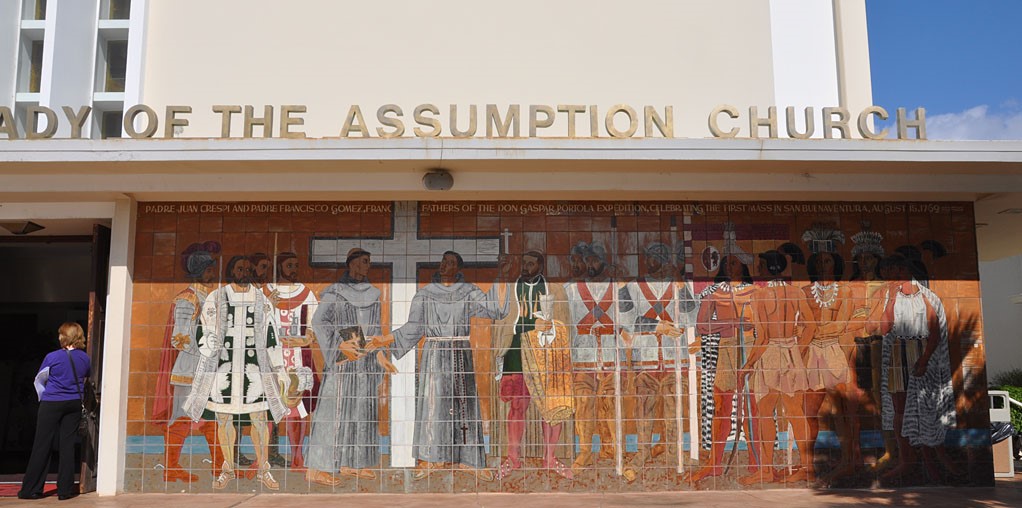
Late last month, Douglas J. Lucia, the Catholic bishop of the Diocese of Syracuse, expressed the hope that he might meet with the pope to discuss the 15th-century papal donation granting the Catholic powers the right to colonize the Americas. He wanted to obtain “a public acknowledgment from the Holy Father of the harm these [papal] bulls have done to the Indigenous population.”
Bishop Lucia’s announcement was greeted favorably. Doing away with the papal bulls would be an important symbolic gesture. But that’s all it is. The Catholic Church has destroyed the lives of millions of Indian people and justified the destruction of many, many more. Lucia’s action does not begin to address the historic and continuing damage his church has caused Indigenous peoples across the American continents, and across parts of seven different centuries.
Though significant, the papal bulls were hardly the worst crime committed by agents acting in the name of the Catholic Church, and we’re making too much of the resulting “Discovery Doctrine.” The French who settled what came to be known as Canada, after all, did not care what the Pope told the Iberians. The English, who described the Pope as the “Anti-Christ” and the “Scarlet Whore of Babylon,” could not have cared less what he told Spanish and Portuguese monarchs. The English, in fact, were remarkably unintellectual about colonization, a process they viewed as a fait accompli, the only justification needed that it might make them rich and provide an opportunity to stick it to their abundant Catholic enemies. The entire history of European colonization in the Americans involved Europeans ignoring each other’s New World claims. Were there no papal donation, there is little reason to believe that English and French colonization would have followed a different course. The most enlightened English colonizers believed that Indigenous peoples just might have the capacity to abandon their savagery and become like them. They were often shouted down by other colonists who saw Indigenous peoples as “errors of nature, of inhumane birth/ the very dregs, garbage, and spawne of the earth.” People with beliefs like that could kill Indians and dispossess them with a staggering brutality.
If we want to understand the Indigenous past, we should spend less time talking about what white people did or did not do and focus instead on the native peoples who confronted their would-be colonizers. What the pope said did not matter to them one bit, and let’s not underestimate the longevity of Indigenous power on this continent. The Jesuits who first attempted to plant a mission at Onondaga Lake in the 1650s, for example, despite their high hopes, realized too late that they served merely as hostages who insulated the Onondagas from French assault and attracted Catholic Wendats to enter the Longhouse through its smoke hole and settle under the Tree of Peace at Onondaga. When the Jesuits were no longer useful, they realized their lives were in danger. They constructed the boats they used to flee in the one place they knew Onondagas would never see them: inside of their church. Three centuries after the papal donation, Haudenosaunee peoples, including Onondagas, entered into a treaty at Canandaigua that recognized their right to the “free use and enjoyment” of their lands, over which the United States neither claimed or exercised any real power at all.
Though Chief Justice John Marshall’s racist opinion in Johnson v. McIntosh in 1823 made use of what has come to be known as the “discovery doctrine” in a flawed and lazy effort to bring some order to a chaotic process characterized by viciousness, avarice and deceit, and though his toxic ruling has had a devastating effect on the field of American Indian law since 1823, his sloppy historical work was a justification for dispossession, and not its cause.
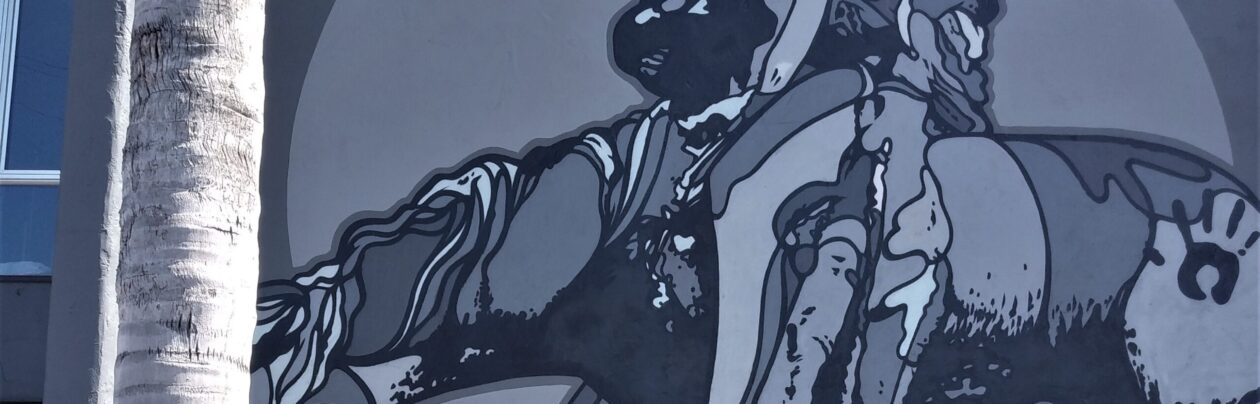
And from the Pueblos sexually mutilated on the order of Franciscan priests in the seventeenth century, to those Indigenous Californians enslaved in missions founded by the sainted Father Junipero Serra, to the children who have died in the century past in Canadian residential schools, and the ongoing occupation of the sacred site at Mount Graham, the sins of the church in which I was raised are great.
Indigenous peoples have faced efforts to take their souls, steal their lands, burn their homes and eradicate their culture. Catholics and other Christians have for much of their history sanctioned and engaged in these genocidal policies. But native peoples always resisted. Maybe Bishop Lucia deserves praise for calling out the historic conduct of the Catholic Church. But for an adequate penance it is going to take much more than the empty symbolism of repealing an ineffective legal doctrine that nobody in early North America during the first three and a half centuries of European colonization cared about at all.
This essay appeared originally in the Syracuse.com on July 19, 2021.
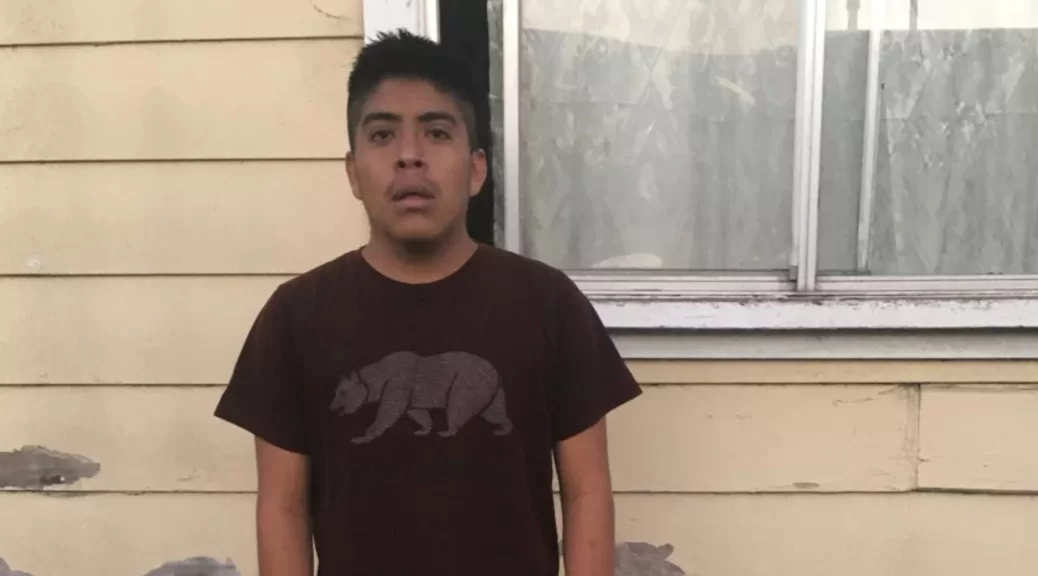
On July 16 in Salinas, California, police gunned down a nineteen-year-old man named Gerardo Martinez. A neighbor called and said that Martinez was very drunk, and that Martinez had threatened him with a black handgun. But the neighbor was not sure, and later in the 911 call said that he thought the weapon was a BB gun and that Martinez may have been under the influence of methamphetamines.
The police responded. They attempted to negotiate with Martinez in Spanish. But Martinez did not speak Spanish. He spoke only the Mexican Indian language of Zapotec, according to Latin American Indigenous Activists who issued a statement a week after the shooting. “As a monolingual Zapoteco speaker, he did not understand the command to come out of his home and raise your arms,” they said.
The Salinas Police Department disputed this assessment. “We now know the deceased spoke conversant Spanish based on a body-worn camera from a prior contact with law enforcement,” a police spokesperson said. They did not elaborate, and they did not provide evidence.
Both of these sources cannot be right, making it difficult to sort out what happened on the night of July 16. According to the LA Times, in a story that appeared on August 3rd, a 2010 survey indicated that there were nearly 165,000 Indigenous farm workers and family members within the state of California, “many of whom have only a basic grasp of Spanish.” That was more than ten years ago. It is easy to imagine that those numbers have increased over the course of the past decade.
Police in a number of communities, including Salinas in the aftermath of Martinez’s killing, have begun to undertake efforts to reach out to the Indigenous community. They are doing so in Ventura County, where I am now, with the help of non-profit groups like the Mixteco-Indigena Organizing Project based in Oxnard. Arcenio Lopez, its executive director, said “these are populations that are in constant fear of law enforcement because of previous experiences in their own countries–there is no trust.” The toxic climate towards Mexican immigrants in the United States cannot help this situation.
This is a tragic case. A young men came to the United States from the small town of San Vicente Coatlan in Oaxaca. A bad night, far from home, and the police are called, shots are fired, and a young man is killed. One more casualty resulting from the proliferation of guns in America. But in this case the question lingers as to whether the victim even understood what the police were asking him to do.
Martinez is dead, to a great degree, because police believed that he could not possibly be monolingual, that as a Mexican he must speak and understand enough Spanish to respond to their commands.
Settler colonialism is premised on the disappearance of Indigenous peoples, along with their culture, their values, and their language. Sometimes Indigenous people show up in places, and in ways, that are unexpected to non-Indians. The resulting surprise can get people killed. Martinez’s case shows that this is as true today as it has been throughout this country’s long and violent history.
It was a long drive to Gnadenhütten. It was Thursday, last week, and the weather seemed cooler than usual. The rain fell for much of the drive from Rochester. It was a dark day most of the way as we traveled along the Lake Erie shore, and cut south into Ohio.
I listened to National Public Radio on the drive, searching for a new station each time I moved out of range of the one I had been listening to before. Stories repeated over the course of the day. Because different NPR stations run different shows at different times of the day, some stories repeated several times: the end of testimony in the Derek Chauvin murder trial, for instance, and his decision not to testify in his own defense; the arraignment of the police officer who killed Daunte Wright when she pulled out her pistol rather than the taser that she intended to use; and the killing of 13-year-old Adam Toledo by a Chicago police officer in a back alley. The child had been carrying a weapon, but when he turned toward the officer who pursued him–showing his hands as he had been instructed to do–the officer shot and killed him. Three people of color killed by white policemen dominated the news.
I am sure part of the problem is that police fear that everyone has guns. There are too many guns, and that needs to be part of the discussion about disarming or abolishing the police. Unless you are a hunter, you will never convince me that you need a gun. Owning a weapon is a choice made by those who want to control or threaten others or, for reasons I do not pretend to understand, those who need a killing machine to feel secure in their manhood, or for those who choose to live in fear.
Several months back, I dropped by daughter off at a gym about twenty minutes from our house. Attached to the workout facility was a large hockey center with a couple of rinks where youth leagues played their games. Because the workout lasted for only an hour, I always brought work, and waited outside in the car, doing reading for classes. One time I parked next to one of those over-sized pickup trucks that have become an all-too-common blight on our roadways. You have seen them, decorated with NRA stickers, or some form of The Punisher, or a blue line flag. The driver got out of his truck. He reached back in for something and as he stretched to do so, I could see that he was carrying a holstered gun on his hip. He pulled his black hoodie over belly, bullets and belt, and went inside to watch his kid play hockey, armed and ready for action. Many of the kids going into that rink must have been about thirteen.
Like Adam Toledo. I watched the video of his shooting, placed on an official Chicago website. It happened really fast. So fast. But he was shot and he went down and I saw the blood pouring out of his mouth or nose. I turned it off.
When we reached Gnadenhütten, right there beside the Tuscarawas River, the museum was closed. I called the two numbers on the locked door. The first went to voice mail. I dialed the second number. Tom answered. He drove over from his house, a very short distance away, let us in, and showed us around the museum. Lots of arrowheads. Lots of pictures of the site taken over the years since 1782, when American soldiers murdered the Christian Indians gathered there. Books that had belonged to the missionary David Zeisberger. But what really interested me was outside. The small grave where were buried the “martyrs” (to what cause?). A reconstruction of the Mission House. A site that echoes with the screams of children.
If we are to understand Native American history in all its complexity, I believe that we must confront the lacerating violence of events like Gnadenhütten. We must do so whether we are on the Right or the Left or in the middle. I would contend that an honest rendering of this event would not differ widely on the basis of who taught it. We might differ in terms of its broader meaning. Last week, after a long drive, I saw it in the same light as I see the murder of George Floyd, the shooting of Adam Toledo, and the killing of Daunte Wright. Examples all of America’s long-enduring race war.
The frontier, we must remember, was a violent and at times a frightening place. No historian would dispute that, no matter what their politics, unless they chose to ignore the evidence completely. Many Anglo-American settlers living on war-ravaged frontiers simply could not trust their Indian neighbors. Settlers in the Ohio country, for example, experienced the horrors of warfare just as did Indians. Some of them witnessed the death of friends and neighbors in Indian attacks. More of them heard horrifying stories of Indian attack. These settlers had occasion to fear Indians. They acted, with violence and decision, to save themselves. But settlers found in their fears justification for horrible acts of terror. They could, as did Ohio country settlers in 1782, conclude that the singing of psalms by Christian Indians at the Moravian mission at Gnadenhütten was not the pious expression of praise to the One God but the ranting and boasts of savages who had wet their hands in the settlers’ blood.
Native peoples had their own fears, of course. When Kentucky militiamen attacked a cluster of villages in northern Indiana where Potawatomis and many other native peoples lived, they threatened them with extermination. If native peoples refused to make peace, Brigadier General Charles Scott said, “your warriors will be slaughtered, your towns and villages ransacked and destroyed, your wives and children carried into captivity.” Read Jeffrey Ostler’s excellent piece in the William and Mary Quarterly from 2015 and his more recent award-winning book. Indians feared genocidal violence from white Americans, and you cannot miss the expressions of that genocidal intent in the writings and statements of American officials. Words and deeds combined, a frightening mix. Many native peoples who lived in the Ohio country saw in the United States and its citizens, whatever its claims to desire peace, an existential threat to their existence. Gnadenhütten. The white soldiers, these guardians of their communities, held a vote on whether or not to kill the 100 Christian Indians they had taken captive. This was, for native peoples, American democracy at work. As the Christians sang the last hymns they would sing, savage militiamen began to murder them, thirty men, three dozen women, and thirty-two children in all. Kids. Almost three dozen.
Tom, the guy who drove over to open up the museum, gave me a pamphlet reproduction of “The History of the Gnadenhütten Massacre,” written in 1843. It tells the story of the “Blackest Page in History of Northwest Territory.” It opens with a poem:
Alas! Alas! For treachery! The bestial white man came
With weapons of destruction, the sword of lurid flame;
And while the poor defenseless ones together bowed in prayer,
Unpitying they smote them all while kneeling meekly there.
The cry of slaughtered innocence went loudly up to heaven;
And can ye hope, ye murdering bands, ever to be forgiven?
We know not, --yet we ween for you the latest lingering prayer
That trembled on your victims' lips, was 'God forgive and spare!"
The pamphlet closed with the following:
May the memory of our red brethren, who at Gnadenhütten sealed their faith with their pious confessions of the Savior in their sufferings, their meek endurance, and triumphant Christian death, bear testimony to the Truth as it is in Jesus, as long as the memory of the atrocious deed shall last.
Just a couple of blocks away, in the center of Main Street, the head of the “Brave” who serves as the mascot for Indian Valley High School is painted in the middle of the intersection. Images inspired by James Earle Fraser’s “End of the Trail” sculpture appear at the entrance to the site and on a hardware store on Main Street. The large obelisk at the site of the Gnadenhütten massacre indicates that the Indians were victorious in their deaths. But they weren’t, were they? They lost before the lost everything. Statements that they prevailed over their murderers might make white people feel better, that the pious converts “went to a better place,” and you can believe that if you want to. I am inclined to believe that they were slaughtered, tossed in a mass grave, under a small mound that stands feet a way from the small gravel parking lot, surrounded on three sides by the graves of the village’s white residents. It is such a sad, sad, place.
I am so conscious that what I do as a historian and educator is viewed with suspicion by those who do not share my political beliefs. I have been told that I teach “children” to hate America, that I emphasize the negative rather than the positive aspects of American history. There is a student at my college–in my classes–who has made himself a polarizing figure on campus by loudly and stridently proclaiming his contrarian conservative politics. Among many things, he has accused those who teach him of being Marxists, Anti-Christian, Anti-American and, implicitly, demonic.
I was tired by the time I arrived at Gnadenhütten. We still had a couple of hours to go to get to Cincinnati. For me, it is a place that forces reflection. What else can one do while standing on the ground where American soldiers murdered nearly a hundred Christian Indians?
The locals remember the massacre at Gnadenhütten as a black mark in their history. But in the small museum on the site, there is little real discussion of the horrible crime itself. There are relics–a large collection of arrowheads harvested from farmers’ fields once worked by Shawnee women. There is plenty of information about the mission and the missionaries. But far less about the murders that took place a short walk from the front door. You learn who lived there, but not how it was that soldiers felt the need to slaughter children.
We thanked Tom for letting us in to the museum. We thanked him for his time and his hospitality. We dropped a small donation in the box, and walked back to the car. I am glad we stopped. I am glad we called him and took him up on his invitation to show us the collections. I took a last look again at the grounds, walked once more around the burial mound. Then I got back in my car, started the engine, and drove away. We saw the giant warrior’s head in the center of Main Street. The hourly news update came on before we left town, indicating that city officials in Brooklyn Center expected another night of protest in the aftermath of the killing of Daunte Wright, the latest battle in a race war that has gone on seemingly without end.
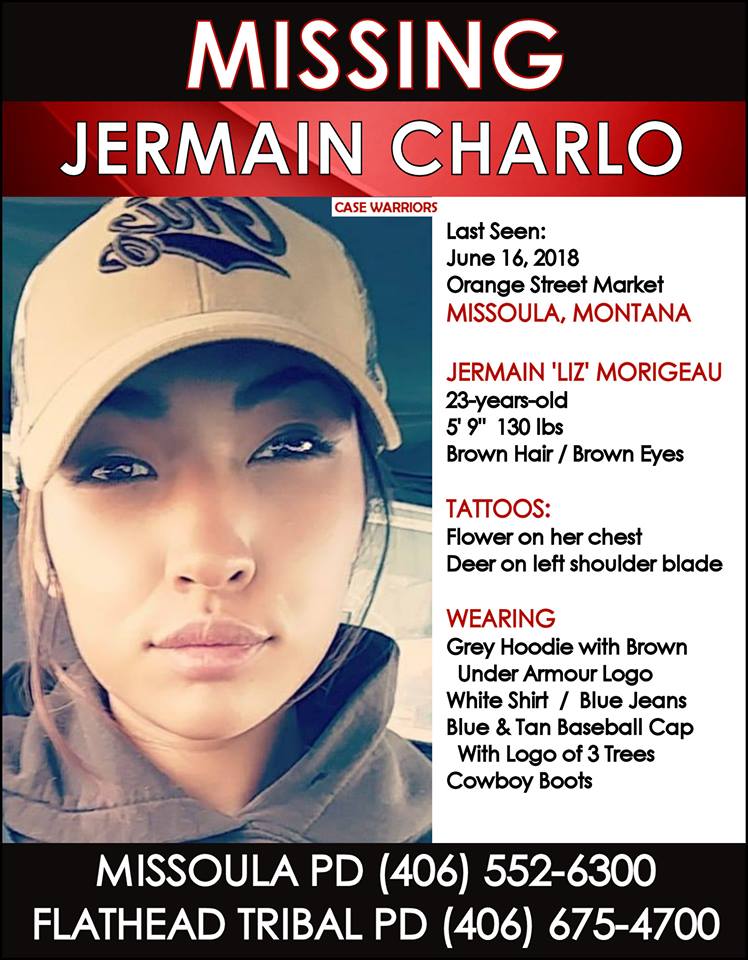
Sometimes I feel like a am teaching America’s original sin. I have felt that way a lot recently. Over the past week I have listened to the first six episodes of Connie Walker’s excellent new podcast, “Stolen: The Search for Jermain.” She focuses on the disappearance, and also the life, of Jermain Charlo, a 23-year-old woman from the Flathead Reservation in northwestern Montana who disappeared from Missoula in the summer of 2018.
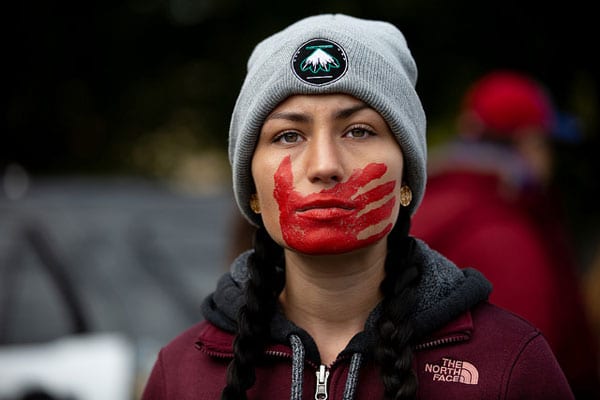
During the final year of the Trump Administration, the President designated May 5th as “Missing and Murdered American Indians and Alaska Natives Awareness Day,” and he established by executive order “Operation Lady Justice,” a task force given the charge to work toward solutions to this incredibly difficult problem. Crimes against humanity are taking place, and even the buffoons in the Trump Administration had to act, even if it was nothing more than an attempt to lure Native American votes in advance of the election. It did not work. Just this week, Secretary of the Interior Deb Haaland announced the formation of a special unit within the Bureau of Indian Affairs. to investigate crimes against Indigenous women. Native American women are murdered at a rate more than ten times the national average.
The national media widely reported on Haaland’s announcement, a refreshing change. More Americans are becoming aware of the pain and grief the #MMIW crisis is provoking in Native American communities, on reservations and off. As Connie Walker pointed out in an interview on NPR, “this issue of violence against Indigenous women and girls isn’t a new issue. This is something that has been going on for decades . . .centuries, even.” What has changed in recent past, Walker continued, is “there’s a growing awareness of this crisis, and there’s a growing awareness about the impacts of that violence on the lives of Indigenous women and girls.”
I worry that this crisis will not hold the attention of the American people for long. Solving this project is one that demands empathy and historical understanding. Both have been in remarkably short supply of late. There are no easy solutions, and it is difficult to truly discern the true scope of the problem. It has been going on for so long.
It was there at the inception. It was present when Christopher Columbus sailed into the Caribbean, his eyes scanning for those things that he hoped would make him a wealthy man. He found no gold, no silver, but he did see a young girl, swimming in the sea. “They should be good and intelligent servants, for I see that they say very quickly everything that is said to them; and I believe that they would become Christians very easily, for it seemed to me that they had no religion.” In 1495, Columbus enslaved over 1600 Indians, and sent home to Spain “the best males and females.”
Columbus saw a girl,
Splashing in the waves.
He couldn’t find gold.
So he started taking slaves.
It never stops. It rings in your ears as you read this history. The Queen of Paspahegh, captured with her children by the English after they burned her town and wiped out the Algonquian soldiers who defended it. The English officer in charge allowed his men to throw the children into the James River, and to amuse themselves by blowing out their brains in the water. The Queen of Paspahegh, traumatized land grieving her murdered children like so many Indigenous women, was led away from the English fort and stabbed to death in the woods by an executioner too weary to burn her. Algonquian women who surrendered during King Philip’s War in New England, trafficked and sent to death in West Indian Slavery, or torn limb from limb by English dogs of war. The mutilation of Indigenous women’s bodies at Sand Creek and at other sites of genocidal violence. The story has not stopped. Indigenous women go missing, and they die.
Montana, where Jermain Charlo went missing, must be among the worst places for this. I lived for four years in Montana. I taught at Montana State University at Billings, in a hellhole of a history department. Students from the Crow Reservation were the largest minority on campus, and occasionally a faculty member let them know that they were an unwelcome minority as well. I think about some of the Indigenous women who took my classes there, and the struggles they confronted. I think of the casual racism I heard in Billings, on campus and off.
I think about my students in Geneseo as well. I imagine that many of them, when they lived at home, went out at night with their friends. Your parents are not idiots, I told them. They know you may be out having a good time. They know that sex and alcohol and drugs might be involved. They have to trust that you will make the right decisions. Even when we parents do not trust you to make the right decision, we have to, I said. You go out and you come home later than you said you would, and your parent might be angry, they might ask you lots of questions, they will pester you. You might see this as the ultimate buzzkill, or as disrespectful. It might bother you that your parents do not seem to trust you, or that they worry so much. I have children, so I share with my students one thing I know for certain: that when you get out of your parents’ sight, they worry. When you are not where you said you would be when you said you would be there, no matter how old you are, they will worry because they are afraid. We are afraid. Really. Because there is nothing worse than thinking that something bad happened to your child, or that somebody hurt your child. So, imagine, I tell them, the scene in your house if you did not come home. Imagine the scene without you in it. Imagine your parents planning your funeral or, perhaps, for years wondering what happened to you. I think if you asked your parents, “What’s the worst thing that could happen to you?” they would say that something terrible happened to my child, or that someone hurt my child. I know I would say that. I ask my students to imagine what it would do to your parents to lose you.
Because all the evidence suggests that thousands of Indigenous families in Canada and the United States experience this “worst thing.” Savannah Grey Wind’s family, for instance. Savanna was eight months pregnant. Her neighbor in a Fargo apartment complex lured her inside, hit her on the head, and while she was still alive, ebbing in and out of consciousness, cut the baby out of her womb. Together, Brooke Crews, that neighbor, and her boyfriend, cleaned up the blood, disposed of the clothing, and wrapped up Savannah’s body in plastic sheeting before dumping her body in the river, where kayakers found her some time later. They attempted to raise the baby as their own, before the authorities arrested them. The baby is how with her father.
Or Mildred Old Crow, who disappeared in November of 2020. She was eight years old. Her body was found in February of 2021. Her guardians had been charged in tribal court for endangering the welfare of a minor. Eight years old. Native Americans make up 7% of Montana’s population, according to one set of figures, but they comprise a full 25% of the missing persons in the state. In February of this year, accordig to another source, there were 167 active missing persons cases in Montana. 53 of them, or 31%, were indigenous.
Just a month before the discovery of Mildred’s body, authorities found the body of Selena Faye Not Afraid on the Crow Reservation. She was
Selena Fay Not Afraid
sixteen. She died of hypothermia, exposure, after walking away from a broken down car. It was January in Montana. It was viciously cold. Why did she leave? What caused her to leave?
And Kaysera Stops Pretty in Places. She was eighteen, played basketball and ran cross-country. She performed in school plays at Hardin High School and wanted to act. She had been at a house party, but disappeared. She was found several days later, by a passerby, who discovered her body behind a woodpile in the backyard of a different house. Nobody knows how she got there, and her cause of death is “undetermined.”
Kaysera Stops Pretty in Places
It is difficult teaching this subject. Sometimes it can grind you down. It is difficult, I found, to listen to parts of Connie Walker’s podcast. This is an enormous problem, but I am a historian. Nothing is inevitable, I tell my students. Every things has causes. This is not a force of nature or an act of God. These are criminal acts by individuals committed against Indigenous women and girls. It does not have to be this way. At least, that is what I believe. Why are so many Native American women and girls missing? Though there is still by all accounts a shortage of evidence as to the scope of problem, everyone acknowledges that the problem is substantial. It is causing devastation and grief. You can read the tributes on Selena’s page at the Dahl Funeral Chapel. You can listen to the voices of Jermain Charlo’s friends and family members in “Stolen.” It is right before your eyes. The government has slowly started to respond.
Were these young women white, and had they disappeared from the suburbs, this problem would already have been solved. It only gets us so far to point out that truth. These are often crimes committed on the margins, on remote reservations or in American cities where, if you want, you can feel as isolated and alone as if you were walking in the woods. None of them disappear without a trace. There are clues, incomplete, but enough of the picture is complete to suggest that a solution to the puzzle is near. And there are the people left behind: Jermain had two children, but also the sisters, friends, parents and relatives, concentric circles of grief, radiating outward like ripples on the surface of a pond.
There are histories we remember, and there are histories we forget. There are histories revealed and histories concealed. Some stories are considered important and of value. Others are dismissed as trivial or unimportant. I never knew of the Chumash Revolt of 1824. Today is the anniversary of the beginning of that rebellion. This is a story of a people’s attempt at independence.
Too many histories of Native American are, at their core, stories of white America. They are stories of settlement advancing westward, with Indians thrown in. These histories begin with Columbus, talk about the Indians who encountered the first English Colonists, and their successors who marched into the American interior. A history of Indigenous America, that frees itself from colonial timelines, that allows the history of Indigenous peoples to flow through its own channels, is a rare thing indeed.
I grew up in Ventura, California. Every chance I get I go back there. I still consider Southern California home, despite having lived in New York for most of the past thirty years. And at school, despite walking on a landscape rich with meaning for the history of Chumash peoples, it was a story we never learned. No one every mentioned the Chumash in elementary school or high school. There was talk of the missions, required in California’s social studies curriculum, and vague references to “Indians,” but nothing more than that.
One of the things I decided to do when I began work on the first edition of Native America was to write about the native communities on whose lands I have lived during my life. It was a way to avoid a narrative that simply marched westward across the continent. So I wrote about the Crows in Montana, where I taught for the first four years of my career; and the Dakota Sioux, because my family was from Minnesota; the Caddos because of my brief sojourn in the Houston area, and the Senecas because of my long residence in the Genesee Valley. And the Chumash. Because I was born. on their land along the California coast.
In the book’s opening chapters I tell students of the poorly-documented by the sixteenth century Spanish explorer Cabrillo to the region. Then the Chumash drop from the story for a while. The Chumash encountered few Europeans during the many decades after Cabrillo’s small fleet departed. A few expeditions sailed along the coast, stopping briefly, but little evidence exists as to what they did or where, precisely, they visited. They thus had little experience with European intruders, and little reason to fear the Spanish who returned in the second half of the eighteenth century. I wish I knew more about that history.
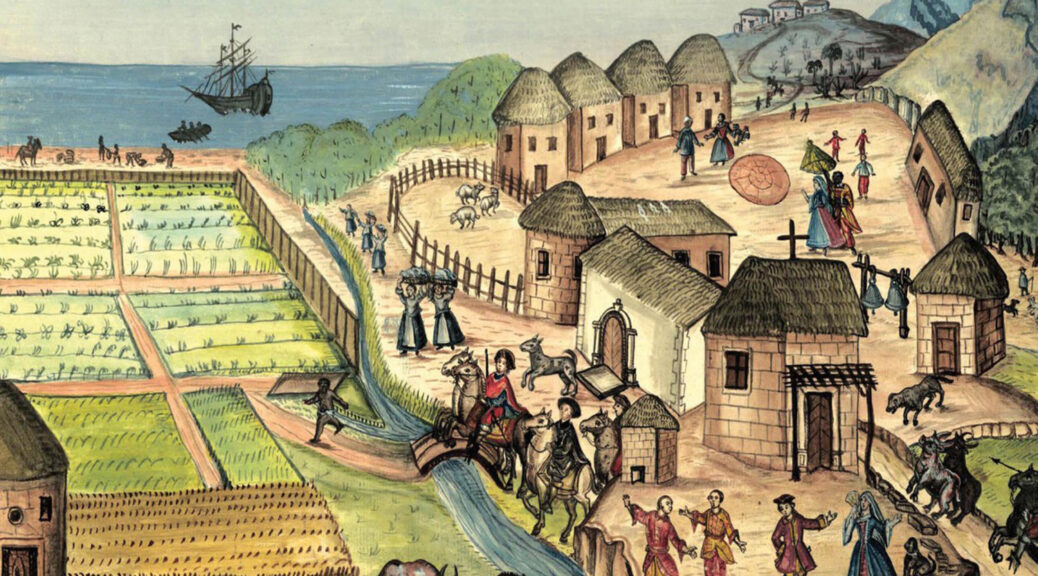
When the Spanish arrived in 1769 to secure their hold on the coast of what they called Alta California from their European rivals, José de Gálvez, the visitador of New Spain, instructed Gaspar de Portolá to undertake that task. Both Gálvez and Portolá recognized that they must treat the large numbers of native people on the coast with kindness and respect. Only with the assistance of native peoples could they control California’s verdant coastline. They lacked the soldiers and the funds for a military conquest, so Gálvez placed the “Sacred Expedition,” in the hands of a small number of soldiers and Franciscan missionaries.
More than 300,000 native peoples, speaking perhaps as many as a hundred languages, lived within the boundaries of present‐day California. California was a paradise then. Sixty thousand lived along the coast between San Diego and San Francisco. A quarter of the plant species found in North America grow in California; more species of plant and animal can be found in California than in any other region of its size in North America. It was no surprise, then, that Portolá’s men described the Chumash as living in thriving communities. The Chumash generously traded with Portolá’s men, so much so that the Spanish leader described them as a “tractable” and “pleasant” people who felt “no fear of us.” Thousands of Chumash occupied towns and villages along the Santa Barbara Channel. They lived by the waterside, harvesting an enormous variety of readily available resources. In special storage houses they kept large stockpiles of dried sardines, anchovies, bonito, and other fish, along with seeds, nuts, and grains in adequate quantities to hold numerous feasts for Portolá’s men. Chiefs organized celebrations, designed perhaps to impress the Spanish newcomers with their wealth and power.
Portolá sought their alliance, but the Chumash looked to secure the friendship of these newcomers as well. The Spanish were impressed both by the abundance of food the Chumash collected, the variety of their economic pursuits, and the great reach of their trade networks. “Some of them,” wrote one Spanish observer, “follow fishing” while “others engage in small carpentry jobs; some make strings of beads, others grind red, white and blue clays.” The Spanish wrote that the Chumash produce “variously shaped plates from the roots of oak and alder trees, and also mortars, crocks, and plates of black stone, all of which they cut out with flint, certainly with great skill and dexterity.” They made arrows to “an infinite number,” and “the women go about their seed sowing, bringing the wood for the use of the house, and water, and other provisions.”
Despite the obvious signs of prosperity, of regional trade and a system of currency based on the manufacture of shell beads, and despite the obvious sophistication of Chumash social organization, the Franciscan missionaries who accompanied Portolá felt that the Indians would have to change. Everywhere they looked, the Catholic priests saw signs of Chumash savagery. Though the Chumash, according to one Spanish observer, lived in “communities that have fixed domiciles,” and they arranged their “well‐constructed” and “spacious and fairly comfortable” houses in organized settlements, the Franciscans hoped to relocate the Chumash to missions where they could more easily control them. Junipero Serra, the Franciscan friar who led this movement, ultimately established twenty‐one missions along the California coast, several of these among the Chumash. The Spanish constructed a presidio, or fort, at Santa Barbara in 1782, and a mission there, and at San Buenaventura, in 1786. La Purisima, near today’s Lompoc, followed one year later and Santa Ines, near Solvang, in 1808. The Santa Barbara Channel, in Serra’s view, was “full of a huge number of formal pueblos, and the most wonderful land.” Serra, now a Catholic Saint, is a controversial figure in my hometown.
In the decade and a half that followed the establishment of the mission at Santa Barbara, according to one estimate, nearly 85% of the Chumash population relocated and settled under the supervision of the Spanish priests. A number of forces, working in unison, propelled this significant and abrupt movement of native peoples.
European diseases took their deadly toll, killing as many as two‐thirds of the Chumash living along the Santa Barbara Channel in the last quarter of the eighteenth century. During the same period, the enormous expansion in Spanish livestock herds compromised Chumash subsistence routines. Drought and fluctuations in sea temperature may have affected the availability of those resources upon which the Chumash relied for food. Fewer people facing significant subsistence crises, the loss of elders and ritual knowledge, and the critical numbers to maintain the integrity of their communities, the Chumash may have moved to the missions in an effort to insulate themselves from the frightening changes occurring in their world.
Once they arrived at the missions, Chumash villagers may not have seen any fundamental contradiction between their traditional beliefs and those taught by the Catholic priests. Missionaries dressed in ceremonial attire when they said mass, led their community in song, and performed sacred rituals, like their own religious leaders. Their knowledge of the sacred set them apart from the broader community. Like the Pueblos before them, Chumash villagers may have seen in the Spanish cross something analogous to the large prayer poles upon which they made their own ritual offerings. Chumash at the Santa Inés mission, for example, hung strings of dried fish and chunks of venison upon the large cross that stood outside the church. At the outset, Chumash villagers would have had little reason to view their traditional beliefs as being in any way incompatible with those of the priests. The conflict that followed was not inevitable, and as historians we need to hold Europeans responsible for the cruelty of their acts.
Once a group of Chumash villagers decided to relocate to the mission, it became more difficult for those who hoped to remain behind. Village economies collapsed, making feeding those who stayed even more difficult. Those who moved to the missions began working in the Franciscans’ fields, producing even more food and creating an environment where the missions seemed to offer both a source of subsistence and a community to which one might belong. But those who settled in the missions did not find relief. Death rates in the missions always surpassed birth rates. Between the years 1771 and 1820, according to one study, the average annual birthrate in the missions stood at 41 per 1000 mission Indians, while the death rate reached an average of 78 per 1000. Only two out of three children made it to their first birthday. Of these, 40% died before they reached the age of five. Few survived past their tenth birthday. Though few epidemics descended upon Alta California, chronic diseases such as dysentery took an enormous toll in Chumash lives. While the non‐Indian population reproduced rapidly, Indians succumbed in large numbers to illnesses in turn made more deadly by unhealthful living conditions, a brutal work regime, and, as one archaeologist noted, “the psychological impact of mistreatment in the missions and by cultural dislocation.” It is a horrifying story.
Those who received baptism and survived (the Spanish called them “neophytes”), faced rigid discipline. In an attempt to impose their own sexual morality upon the Chumash, the priests confined unmarried men and women, some of whom experienced sexual abuse at the hands of Spanish soldiers, in separate crowded and unhealthful barracks. The Franciscans punished any transgression of their moral code by the neophytes with brutal beatings, the use of the lash, solitary confinement, and mutilation. Officials in the imperial center thought this brutality was not only cruel but terribly backwards. Alta California’s Governor Felipe de Neve, as early as 1778 hoped to transform the Indians of Alta California into useful subjects of the Spanish Crown by guaranteeing them a rudimentary municipal government and some control over their own communities. Neve opposed the use of corporal punishment, and believed that missions, by isolating Indians from the gente de razon, the Spanish settlers, retarded their improvement. They should interact with colonists, learn Spanish, and assimilate into the empire. The Franciscans, led by Serra, defied these efforts with all their energy, preserving a religious institution that had fallen out of favor amongst the Bourbon Reformers who took control of the empire late in the eighteenth century.
The missionaries brutally exploited Chumash labor. The Chumash produced nearly everything consumed in or sold at the mission. They faced extraordinary limitations on their freedom. Still, Chumash men and women who settled in the missions seldom granted to the Franciscans all that the priests desired. Chumash elites continued to marry other elites, and those who led native communities outside of the missions often exercised leadership roles within. Chumash working in fields or tending Spanish livestock herds gathered traditional foods and hunted and fished as they always had done when the opportunity arose. Chumash herdsmen who worked too far from the missions to return every night established camps, like that at Saticoy near San Buenaventura, which became the basis for native communities.
Many neophytes clung to important elements of traditional belief. Some of the Chumash at Santa Inés continued to decorate prayer poles. At La Purisima, a twenty‐three‐year‐old man raised at the mission, and “instructed in everything appertaining to religion,” refused on his death bed to confess his sins and die “like a Christian.” Others ran away, joining Chumash communities in the interior where they reconstructed the social and familial relationships that always had given shape to their village communities. On occasion, the Chumash challenged directly the beliefs of the Franciscans. In 1801 a Chumash woman at Santa Barbara began to preach that non‐Christian Chumash would die if they received baptism. She had ingested datura, a hallucinogen that enabled Chumash travelers to encounter powerful spiritual forces in their cosmos. Like other prophets, she received a vision, and called upon her people to change their ways. The neophytes would suffer death as well, she said, unless they renounced Christianity, embraced their traditional beliefs, and washed their head with special water she called “tears of the sun.” The movement flashed brightly and spread rapidly, and Chumash people showered the prophet with gifts and offerings. The Spanish, clearly shaken, suppressed the movement the moment they learned of it. What, one frightened priest asked, would have happened had the prophet called upon her followers to kill the priests? The priests could not control the thoughts of the native peoples who settled in their missions.
More than two decades later, a much larger uprising took place. Discontent amongst the mission Chumash had increased, and Chumash leaders at La Purisima began sending bags of beads into the interior to secure allies against the Spanish. Rumors of revolt became widespread, even if the Spanish did not take them seriously. Neophytes at Santa Inés, La Purisima, and Santa Barbara hoped to launch a coordinated attack on Sunday, February 22, 1824, during the celebration of the mass. On the Saturday before the uprising, however, an Indian from La Purisima traveled to Santa Inés to visit an imprisoned relative. The Spanish guard refused to allow the visitor to see his relative, and after an exchange of words, the guard ordered the visitor whipped for insolence. The Chumash at Santa Inés fought back. They burned most of the buildings at Santa Inés, sparing only the church. They then moved to the complex at La Purisima, which they captured after a brief firefight. The victorious Indians strengthened their defenses and prepared to hold the mission indefinitely.
La Purisima
The next morning, Chumash at Santa Barbara under the leadership of Andrés Sagimomatsee seized control of that mission. Well aware that they could not hold it for long, owing to the proximity of the Spanish garrison at the presidio, they looted the mission and withdrew. Some crossed the channel to their old homes on Santa Cruz Island; the majority headed toward the Tulares, a five‐day march to the east in the interior. They found here shelter and a highly defensible location, establishing in effect a Native American maroon community that the Spanish could attack only with great difficulty.
The Chumash held La Purisima for nearly a month. On March 16, the Spanish attacked, exchanging musket and artillery fire with the defenders. The Spanish ultimately retook the mission, and sentenced seven of the rebels to death. Meanwhile, the Spanish marched to the Tulares. They hoped to persuade the rebels to return. At first, the Chumash refused. “We shall maintain ourselves with what God will provide us in the open country,” they said. They did not turn their backs on all the changes the Spanish had brought. “We are soldiers, stonemasons, carpenters, etc.,” they told the Spanish commander, “and we will provide for ourselves by our work.” They saw the crafts they had learned in the missions as tools that could help them sustain themselves as free persons. The negotiations continued and finally, according to a Spanish observer, “in peace, mutual joy and satisfaction, they were convinced to take advantage of the general pardon” the Spanish had offered them to “return to the mission.” When the Indians returned to Santa Barbara in June, the Franciscans felt that the rebellion had come to a close. But nearly 400 refused to return. They moved farther east, putting more distance between themselves and the Spanish. The uprising of 1824 was not simply a strike against the heavy‐handedness of the mission, but part of a movement by Chumash peoples to secure their independence, to live their lives in a changed world upon their own terms.
That’s why I told this story in a chapter dealing with the era of the American Revolution. Independence can mean many things. It is something most American identify with the Revolution. Americans sought independence from their colonial overlords. They sought “Freedom” from the British. Many Americans will argue that the Revolution was indeed founded to establish freedom and liberty. But the experience of hundreds of thousands of enslaved peoples, and millions of Indigenous people living on this continent, showed clearly that their own independence was never considered by American founders and European colonists. This country was born out of exploitation, and it was shaped by systematic programs of dispossession and colonialism.
Monarch butterflies used to gather in the park half a mile from where I grew up, in numbers too great to count. They hung like orange jewels from the gray-green strands of Eucalyptus leaves.
A lot of my youth took place in that park. I rode through it on my bike to and from the junior high school and, later, on my way to work at a number of those crappy jobs one gets as a teenager. I played baseball there. But for me it’s the monarchs. They gave to that place meaning.
I moved away from Ventura many years ago. The butterflies are mostly gone now. According to a recent report from the Xerces Society, an advocacy group focused on invertebrate conservation, only 1914 Monarchs were recorded overwintering on the California coast. Xerces Society volunteers canvassed 246 roosting sites from the North Coast to Baja California in the south. “This critically low number follows two years with fewer than 30,000 butterflies–the previous record lows–indicating that the western Monarch Butterfly migration is nearing collapse.” The Xerces Society has been watching this migration for decades. The most recent data show “a 99.9% fall from the numbers of monarchs in the 1980s, when butterflies filled trees from Marin County to San Diego County.”
California is changing. Every time I go back it seems drier, hotter, and more desperate. I still see the scars from the catastrophic fires that devastated the town late in 2018. It is difficult to live there unless you have money. Homelessness is rampant. RVs sit in the lots at the park, a place for those who are struggling to scrape by to set up base camp. There are costs associated with all of this. Southern California is so different from what I once knew. Maybe the butterflies are a small matter, but their decline seems emblematic of so much else. The reasons for the devastating drop in the Monarch population are easy to see and entirely avoidable: loss of overwintering, migration, and breeding habitat and the use of pesticides.
Some historians will tell you that they study the past. There is truth to that, of course. But I think it is more on the mark to say that we study change: how and why, and with what consequences.
There has been so much change over the last eleven months. Early in March of last year my mom had a serious stroke. No stroke is well-timed, but having one at the beginning of a global pandemic was particularly devastating. The stroke took place early in March. I flew out to visit. I flew back to New York on the 12th, and everything shut down the next day. After three months in a locked-down rehab facility, as the residents started to fall ill and die from Covid, we moved my mom home. The cost of 24/7 care was enormous and unsustainable, and when Covid hit both my parents late in December, brought into the house by one of the caregivers, we decided again to move my mom, this time out of the house she has called home for sixty years and into a board and care facility. My parents made it through COVID–thanks to the help of a family friend who owned a scuba shop in the harbor we were able to get my dad the oxygen he needed more quickly than the doctor could order it. And we are hopeful we have made the right move. We cannot know for sure and like so many people, we are wracked with uncertainty.
I know we have it better than many millions of people.
I think back over the past eleven months. I think of what has happened since March. George Floyd, and the Black Lives Matter protests across the country; the presidential campaign, and its strange, violent conclusion. I think of the constantly increasing death toll, and the millions of people grieving. And the assault on the Capitol building less than a month ago. These are events of significance. I do not doubt that one day students in high school and on college campuses will read about them, if we still have history classes then.
But his past year has made my world much smaller. What are the events that mattered in my own life? A stroke, fraught trips across the country in the midst of a pandemic to try to help, my own bout with the disease from which I am still recovering. And the effect of this crisis on my parents.
Within two weeks of my return to New York, we reached the painful decision to put our dog Bonehead to sleep. It caused a lot of stress and sadness, the days preceding this decision.
We adopted him from the shelter in 2010, an angry and tweaked-out stray with bug eyes, a lantern jaw, and a bad attitude. We named him Stitch, because of how he looked. Gradually he grew into his real name, because of who he was. He never took food from a plate. Sometimes he tried to be nice, and to be playful, but it was never really in him. He was afraid of fireworks and thunder until he lost his hearing. He continued to speak with the ghost of the old man who died in our house many, many years ago. And if you came up to him to say hi with your dog, he would jack you up. Whenever I left town, his anxiety kicked in and he would get the worst case of the shits. He was not a nice dog, and he was a lot of trouble. But after a year like this one, I am feeling like maybe this long 2020 finally won a round, and landed a couple of hard punches. We’re reeling.
During the week I spent in California I pushed my mom in her wheelchair through the park. I scooped up avocados that the wind had knocked down. I know cargo shorts are out of fashion, but sometimes you have to stash things, you know? Avocados, for instance, or cool rocks. I saw a few Monarchs flying around, but nothing like before. Nothing was the same. On my last day I walked out to the backyard, and checked out a few ratty looking milkweed plants. I saw one Monarch caterpillar, munching along, working his way through his cycle before one of a number of possible predators picked him off. Maybe it’s a hopeful sign.
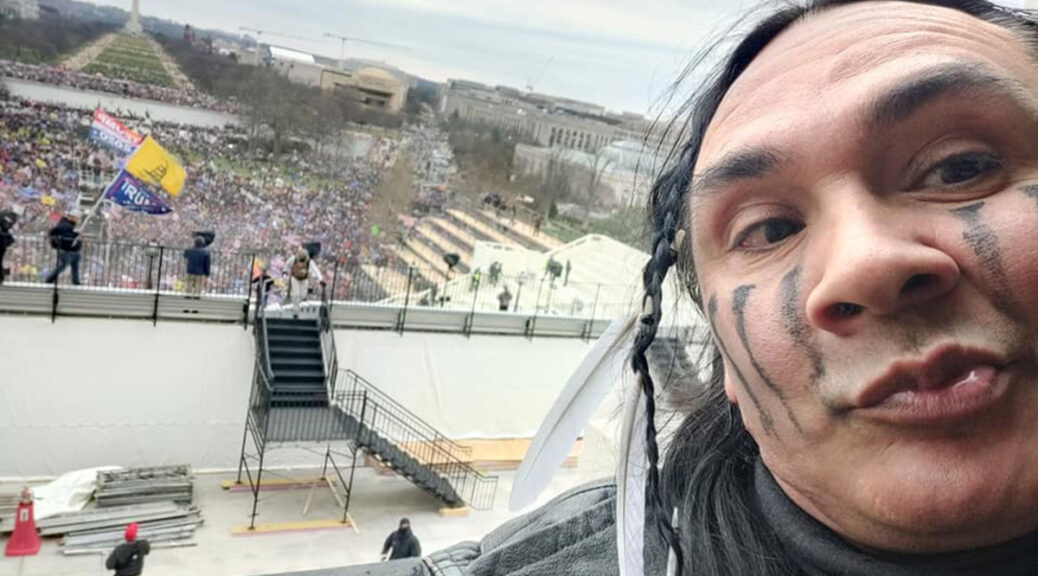
I have to admit that I find characters like Jorge Riley absolutely fascinating. The former Corresponding Secretary of the California Republican Assembly, and former President of the Sacramento Republican Assembly, Riley says that he is a “French-speaking, Native American Messianic Jewish right-wing conservative Republican.”
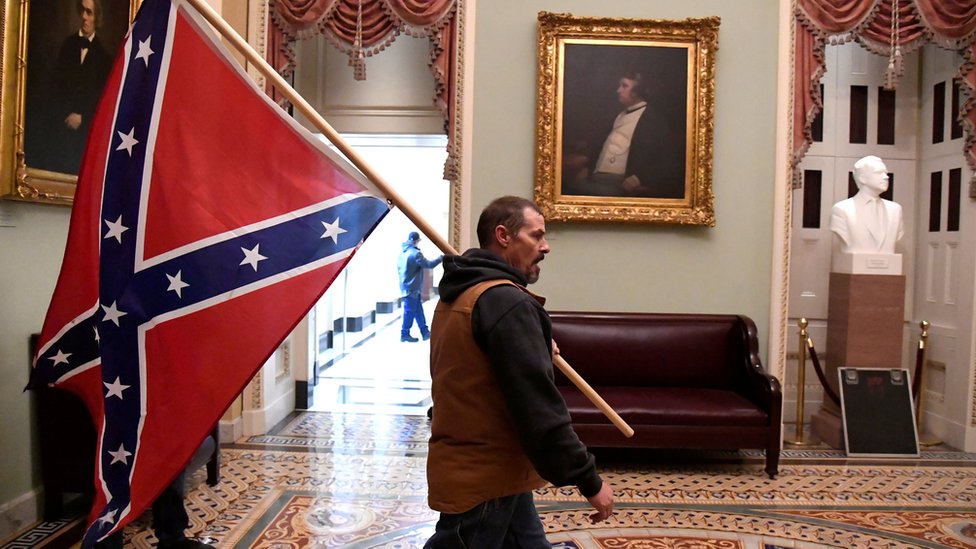
He is also now a prisoner in federal custody, awaiting trial for his role in the violent January 6th attack on the Capitol building, all of which he richly documented on his Facebook page.
Riley really made this easy on his prosecutors. On the 5th of January, the day before the assault, he posted on Facebook the following message: “Do you really not get what is going to happen on the 6th? I absolutely am looking forward to that and NO MATTER WHAT THERE IS NOTHING THAT CAN STOP IT!!!” Between the 6th and the 8th of January, he posted, according to the charging documents, “over 150 messages, photographs, and videos on his public Facebook account, detailing his actions on January 6.”
Those posts show Riley wearing “war paint” and a feather in his long black hair. They show Riley stating in one video that he had “breached” the Capitol building, pushed past police officers, and carried on despite being hit with pepper spray three times. Riley said that “we broke windows. We went into the door. We pushed our way into Nancy Pelosi’s office. We just kept going further and further . . . and then we were sitting in there, yelling ‘Fuck you Nancy Pelosi.’”
It did not take FBI officials much time to track down Riley. He was arrested a week after the protest at his home in Sacramento.
Last Wednesday, Riley appeared before a federal judge in Sacramento, who ordered him returned to Washington to face charges, two misdemeanors and a Class B felony. The judge called Riley “a man of impulse and poor judgment,” which seems like an understatement. Riley’s attorney said that his client was neither a flight risk nor a threat to the community, because the person who summoned him to Washington, Donald Trump, was no longer president and would not be issuing any more orders. Besides, Riley was a disabled American veteran who used his $600 Covid relief check to book travel to Washington. Now he was broke. The judge did not buy any of this.
Riley has said different things about his Native American identity, and Acee Agoyo, the fantastic reporter who writes for Indianz.com, was obviously skeptical about the claims of this “self-proclaimed Native Republican.” She suggested that his hair was dyed, his identity a fabrication: another nutty Pretendian. Indeed, one woman who commented on Agoyo’s article identified herself as Riley’s ex-wife. She said he had a long record of violence and drug abuse, a long criminal record, and that “he is NOT Native Amarican [sic] he’s Mexican and White!”
I am not sure what makes Jorge Riley tick. I am not in the business of disputing one’s claims to Native American identity, even though I have written about a number of historical figures whose “real” identities” were drawn with very blurred lines. Riley made jokes likening the occupation of the Capitol to taking land back that had been illegally seized. Maybe he will demonstrate ties to an Indigenous community in California or elsewhere. Maybe he belongs in the same category as the crazy Q-Shaman. Time will tell. There is some strange stuff going on in the American culture. And historians can cite so many examples of a conjured Native American identity, from Elizabeth Warren to Andrea Smith to Mr. Riley, fulfilling needs material and spiritual.
By the end of the day, after scuffling with police and leaving Capitol Hill and walking down the mall drinking a beer, Riley’s “fake” war paint had washed off.
In the wake of the deadly attack on the Capitol building by a right-wing mob last week, I have found some of the rhetoric used by those who have condemned the attack as troubling as that used by those who provoked and encouraged it in the first place.
I was not surprised by what I witnessed last Wednesday. Many of our leaders, however, seemed absolutely shocked that a large group of violent imbeciles and cosplaying Punishers could assault this “beacon of liberty.”
Does anyone believe this anymore? While the Capitol dome certainly stands as a symbol of American power, that power has been deployed in the name of democracy far less often than many of our leaders seem to believe. The right-wing, racist violence we witnessed on Wednesday is as American as apple pie. Using violence to protect white power and white privilege is one of the things in which American lead the world, along side women’s basketball and incarcerating people of color.
The historian-turned-pundit Jill Lepore said in an interview on WBUR
Time to Go Off The Grid.
that the events in Washington that left her feeling “speechless” were the sorts of things that occurred in other countries, not the United States. It was unfamiliar. “We are,” she said, “off the grid of the trajectory of American history.”
That is a mess of a sentence, but if it means what I think it means, I have to most adamantly disagree. No, Professor Lepore. What we saw on Wednesday was entirely consistent with American history. And from that trajectory and that grid, I swear to God I want off. That the United States is a nation committed to liberty and equality is the biggest lie in American history. Until we face that fact and address it in a meaningful way there is little hope for change.
This country was founded by treasure-seeking storm-troopers who carried with them across the Atlantic guns, avarice, steel and European religious bigotry. They enslaved and subjugated Indigenous peoples. The settlers who followed them came not for freedom but to extract a living from the soil. Whatever wealth they acquired was almost always built
Americans Preparing for a Frank Discussion of Their History
upon the backs of millions of enslaved peoples who worked lands stripped away from their Indigenous occupiers at the point of a gun. There are many stories one might tell about Early America. Most of them are filled with exploitation, intolerance, violence, and greed.
It took a Civil War that killed more than 600,000 people to eradicate slavery, but in its aftermath Southerners and their conciliatory enablers rushed to reconstruct institutions that replicated the restrictions on African-Americans that stood before the war. Meanwhile, the armed forces of the United States continued to march against native peoples who refused to surrender their lives, liberties, and property to the United States.
Look around you. The United States, with less than five percent of the world’s population, is home to a quarter of its people who live their lives behind bars. When most Americans think about Indigenous peoples at all, they conjure images from the past. Few are willing to consider or are aware of the challenges these communities face today, and fewer still are willing to do anything to help.
On the same day that we learned that a stunning, multicultural coalition had elected the first Jew and the first African American to represent Georgia in the Senate, an armed white mob cried foul and stormed the United States Capitol, because they lost what all the evidence shows was a fair and free election. Those who stormed the capitol did not need to fear the inadequate police forces garrisoning the building. They knew, in their lizard brains, that law enforcement in this country too often and in too many ways acts to uphold white supremacy. They feared nothing. For that reason, among others, Wednesday’s violence was so depressing. Not because it was surprising or a new low, but because it was so familiar and so entirely predictable.
When I began my teaching career in Montana in 1994 I found myself often feeling homesick. I had left all of my graduate school friends behind in New York, and my family remained in California. I did not know anyone in Montana yet, and I could already tell that my department was a colossal dumpster fire. I was lonely. Sometimes, at night, I drove my car up on to the Rimrocks that loomed above the city of Billings. There I could tune in to KNX News Radio, a powerful AM station from Los Angeles. It came in pretty clearly. I could hear about what the Dodgers were up to, the frequent traffic reports, and the weather back home. Connections, you know? We find them where we can.
Montana seemed like a foreign country to me. No metropolitan area (if you can call Billings “metropolitan”) is as far from another metropolitan area as Billings. I felt isolated. The music, the food, and the people I cared about–it all seemed very far away.
So I threw myself into my teaching. I had a heavy load, including one section each of the early and recent US History surveys every single semester. I had a lot to do. I felt more tired than I did when I was preparing for my comprehensive exams. What’s more, there was the surprise of teaching a methodology course my first semester. Underprepared, I asked the students to write about a historical event that they remembered with particular vividness. I wanted to talk about matters of memory, and how we measure the historical “significance” of this or that event.
There was one student sitting in the front row. A bit older than his peers. Shocking, white supremacist tattoos appeared on his arms. This was the 90s. Tattoos were still relatively rare. And I had never seen someone with swastikas on their arms before in real life, sitting right in front of me. This student would, by the end of the semester, write a paper about Jacob Thorkelson, a one-term Congressman from Montana who was elected in 1938. Thorkelson was a rabid anti-Semite, and avowedly pro-Nazi. This student clearly looked up to Thorkelson.
All that was to come. In his first essay, this student described hearing of the death of the “Freedom Fighters” in Waco while sitting in a federal penitentiary in Minnesota. It was an effective opening. I’ll give him that. I was hooked. I wanted to read more.
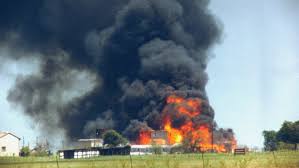
Waco, of course, was the site of the raid by federal authorities on the Branch Davidian compound commanded by a messianic and well-armed rapist and lunatic named David Koresh. Koresh and his followers set fire to the compound rather than surrender, and 76 of his followers died.
My student wrote this seven months before the Oklahoma City Bombing, and I was entirely unfamiliar with this sort heavily-armed, High Plains, Right-wing nuttiness. It was a fringe view even in Montana. But it did not take long to stumble across this frightened, angry, and racist rhetoric–on weak AM radio stations, especially, broadcast over the sparse landscape of Eastern Montana. I was surprised by the number of my students who believed some truly vile things. But it was the fringe.
Montana is beautiful. There are things about it that I miss. I would love to visit it again. I met some fascinating people. I never expected that the sort of conspiratorial insanity I heard on the High Plains of eastern Montana would move to the mainstream of the Republican Party under Donald Trump. And though this dim-witted tyrant and bully will soon lope off the national stage, I have no doubt that the sort of violent, racist, civic illiteracy that has fueled Trumpism is alive and well. Feed Trump a diet rich in fresh greens instead of Big Macs, and slap an Ivy League law degree on him and a larger vocabulary, and you get something looking and sounding a lot like Josh Hawley.
In the morning before the assault on the nation’s Capitol building, I taught my students about the Paxton Boys. It is a story that really pulls at me. A group of racist thugs, in defiance of authorities who had no interest in standing in their way, murdered peaceful Christian Indians. They killed small children with hatchets, and they mutilated the bodies afterwards. Later that day, while listening in on an AHA Panel featuring the great Tisa Wenger, I received a text from a friend telling me to drop what I was doing and turn on the TV. Another mob, this time determined to disfranchise millions of American peoples of color by throwing out their votes, while carrying symbols of white supremacy, stormed the Senate and house chambers. Two mobs, both racist and violent, both utterly and undeniably American.
We are not special. Our body politic is badly diseased. See how we are.
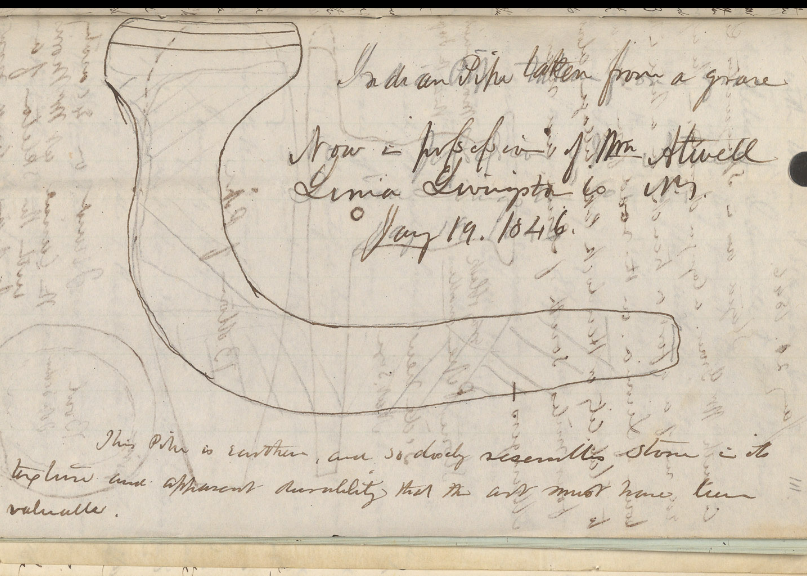
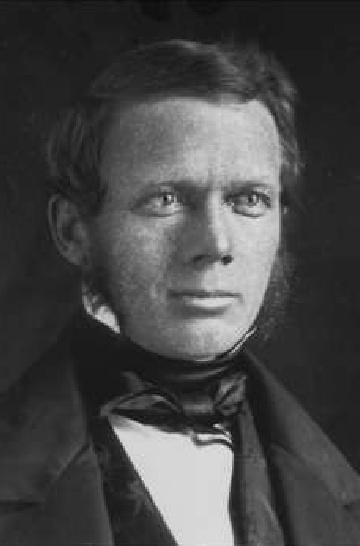
In January of 1846 Lewis Henry Morgan, soon to become the well-known ethnographer and a founding father of the field of anthropology, began a journey from his Rochester home south along the Genesee River. He visited friends along the way, collecting from them Indian “relicts” they had dug up to add to his already-considerable collection.
In the Genesee Valley town of Lima (pronounced like the bean, and not the Peruvian capital), Morgan stayed with William Brown, who told him about the three skeletons he recently had found on his farm, buried in a sitting posture, facing each other as if seated at the three corners of a triangle.
This bothered Morgan, for he had been told just eleven months before by the Onondaga sachem Captain Frost that Iroquois peoples never buried their dead in a seated posture. A contemporary of Morgan’s described Captain Frost as a man “of noble character, fervid eloquence, and unimpeachable integrity.” There was no one “as well-versed as he in the genius and policy of the ancient government and the conducting of good councils and in the practice and celebration of Indian rites.” Forced to choose between believing Captain Frost or William Brown, however, Morgan concluded that in this instance the Onondaga sachem must have been mistaken.
Morgan’s short travel account is fascinating. It shows us a man, interested in Indian “antiquities,” scooping up arrowheads, spear points, mortars, pipes, and human remains nearly everywhere he went in the aboriginal homeland of the Senecas. One could not disturb the soil, it seemed, without finding evidence that should have led to one obvious conclusion: that the part of New York where I live and work, the Genesee Valley, developed and grew into the Empire State only because of a systematic program of Haudenosaunee dispossession. White New Yorkers could not move a stone without uncovering reminders of the people from whom their own ancestors had taken the land.
IF YOU LIKE HORROR MOVIES, you are probably familiar with the old trope of the “Indian Burial Ground.” White people move into an area, treat the land and the human remains buried beneath it with disrespect, and bad things start to happen. In the movies there are frightening consequences. In real life, white Americans have built their towns, cities, and states on Indigenous homelands with nary a thought. They are interested in the Native American past only to the point where that history begins to cost them something. Americans have prospered precisely because they dispossessed Indigenous Americans. We think little of the soil beneath our feet. The sins we forget and the sins we ignore will never be forgiven.
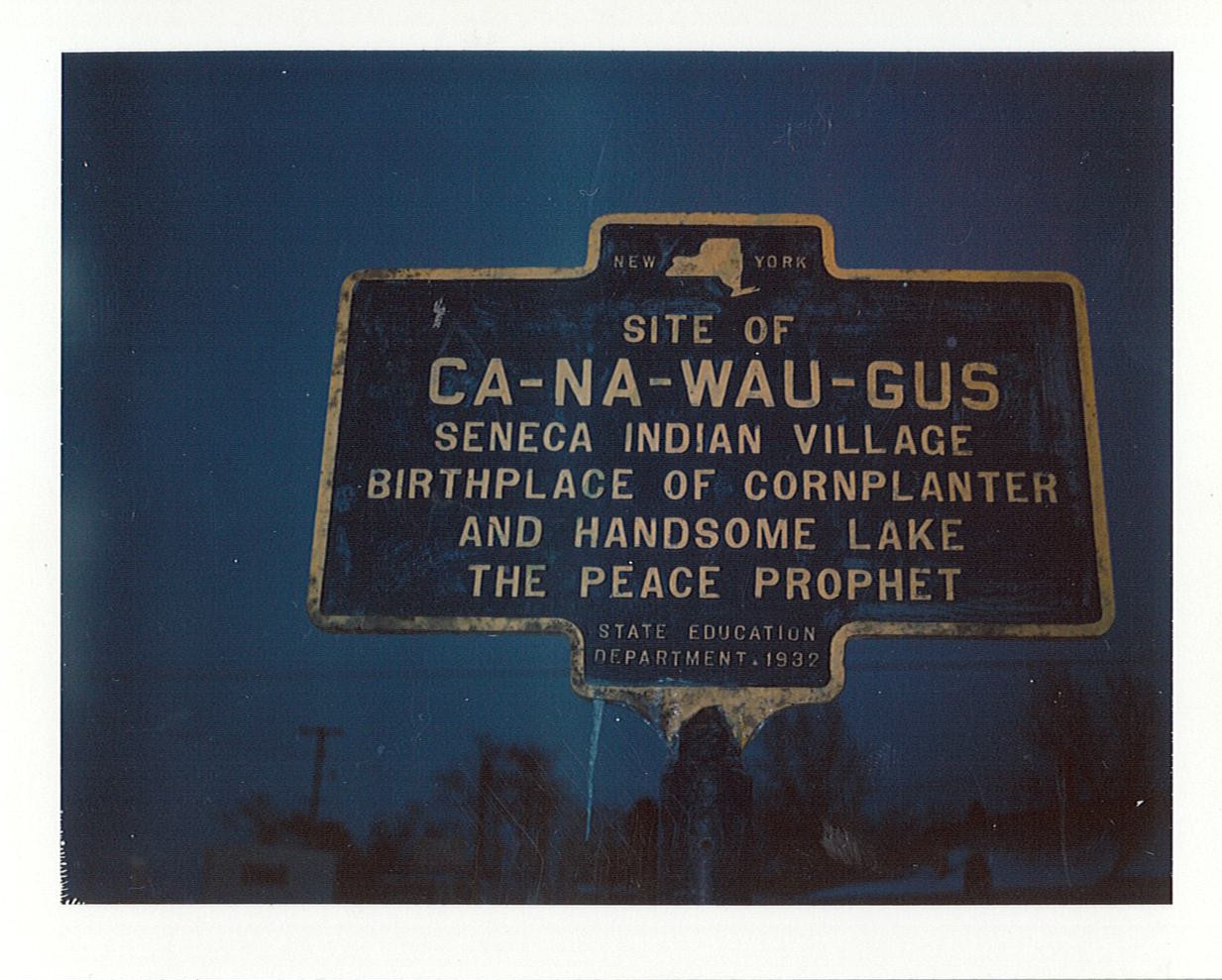
I HAVE THOUGHT ABOUT THE BURDENS AND OBLIGATIONS of the past quite a bit during this horrifying year. For all sorts of bad reasons, it has been a “historic” year, of course. Developments in my own work, however, have forced me to think more than I have previously about how the past can impose upon us a responsibility to set things right. Early in this pandemic season I became aware of a planned solar development for the site of Canawaugus, the Seneca town where important leaders like Red Jacket, Cornplanter, and Handsome Lake were born. Canawaugus avoided destruction by the Continental soldiers George Washington sent on a scorched earth campaign against the Iroquois in 1779, and it remained in Seneca hands as a reservation after the disastrous Big Tree treaty of 1797. White farmers worked the lands surrounding Canawaugus. Nearby towns, like Avon, grew up along the Genesee. Canawaugus slipped from the Senecas’ hands finally in 1826 in a corrupt bargain that violated the laws of the United States and that never received the required Senate ratification.
Then came this past summer the Supreme Court’s surprising decision in McGirt v. Oklahoma. There is a lot going on in the Court’s decision. The key point, included in Justice Neal Gorsuch’s majority opinion, is that reservations remain Indian land until Congress acts explicitly to declare that they are not. The passage of time could not eliminate a reservation, nor could illegal seizures of reservation land. This seemed to offer a means to challenge the 1826 transaction that took from the Senecas Canawaugus, their other lands scattered about the Genesee Valley, and big chunks of their reservations at Tonawanda, Buffalo Creek, Allegany, and Cattaraugus. The McGirt decision could lead one to believe that that vast amounts of land in western New York remain Seneca reservation land.
When the legitimacy of the title to lands that non-Indigenous New Yorkers claim is called into question, what must non-native people do? When history shows that what white New Yorkers have gained has come at the considerable expense of the Senecas and their longhouse kin, and when it is obvious that white Americans did not bother to follow the rules they established to facilitate that dispossession and grant to it a veneer of legitimacy, is there an obligation to set things right? Morally? Ethically? Historically?
Maybe you are familiar with Ibram Kendi’s recent book, How To Be An Antiracist. Kendi points out that to claim that you are not a racist, that you “don’t have a racist bone in your body,” is simply not enough. Racism is structural and systemic. Defeating it requires action, engagement, and commitment. If you lament racism, but do nothing, you help the racists. Kendi’s book speaks clearly and undeniably to those who recoiled from the Black Lives Matter protests that took place in cities and towns across the country earlier this year as too disruptive. It addressed realities made plain after the police murder of George Floyd in Minneapolis. But it speaks as well to the legacy of dispossession. You cannot claim your hands are clean when you live on stolen land.
My college has committed itself to becoming an antiracist institution. Discussions have begun on how to make that happen. The campus community has focused thus far on Black Lives Matter and police brutality. These are current events and our focus here is understandable, especially after the police killing of Daniel Prude in March in nearby Rochester. I am glad we are doing this. But what about the Senecas, and the peoples of the Longhouse generally? What are we called upon to do to set matters right?
I teach at a college, after all, that stands on Native American land, the site of the largest Indigenous town in all of what ultimately became New York State. The college itself is located in a town founded by a man heavily invested in the notorious Ogden Land Company, for whom no practice was too foul to effect the goal of acquiring the Seneca reservations that remained after Big Tree. The illegal transaction of 1826 was the handiwork of the Ogden Company, as was the disgraceful Buffalo Creek Treaty of 1838, arguably the most crooked treaty in the history of the United States. The town of Geneseo, meanwhile, is the seat of Livingston County, named after the patriot leader who signed the Declaration of Independence. Follow the Livingston family tree up its branches and down to its roots and you will find Iroquois dispossession. My point here is clear. Our college could not exist were it not for Iroquois dispossession. If we truly want to commit ourselves to anti-racism, what are we going to do in the face of that extraordinarily well-documented history?
I am skeptical that we are ready and willing to carry the burden of anti-racism when it comes to Indigenous peoples. We fly a Haudenosaunee flag in the Student Union in a hallway where the flags of all our foreign students fly. I pushed for this for two years, and was pleased when the flag finally went up. Most Haudenosaunee people see themselves as members of polities apart and separate from the United States, and they deserved a place here, I felt . Still, as time has passed it increasingly bothers me as an
I know. I don’t see it either.
entirely inadequate gesture, for Haudenosaunee peoples are hardly “foreign” to New York State. They were here from the very beginning. The Haudenosaunee flag also stands on the stage during commencement and at other campus events. The campus community voted to commemorate Indigenous Peoples’ Day in place of Columbus Day, but we’ve done it so very quietly it’s as if we do not want anyone to notice. We do a territorial acknowledgment, but we do so in rooms where almost no native peoples are present.
I have raised these issues in the past. I get sympathetic nods. People tell me they are thankful that I raised these important issues. Little action has taken place.
So what do we do? We could fly the Haudenosaunee flag on the college flagpole, at the college’s main entrance, announcing publicly that we recognize our college stands on Indigenous soil. Improvement in curricula of K-12 social studies is badly needed. We could push for these essential reforms. We could do more to make sure our own students learn about the Indigenous history of the region in which they live. These gestures would cost us little. We could build this into the campus orientation. We could do more to remind students of the events that happened around them, and how it is that we came to name buildings on our campus after Red Jacket and Mary Jemison, and the Wadsworth family as well. Maybe it is time to consider renaming Wadsworth Auditorium.
We need to do more. We could make tuition, room and board free for Haudenosaunee students. We could do that for the cost of some of the SUNY system’s Division I sports programs. To the folks who say Division I sports is a primary vehicle for recruiting students of color to SUNY, I say that our problems then are deeper than you think, our commitment to diversity and equity more ineffective than even I had supposed. We could hire faculty from Haudenosaunee communities. We are in the midst of a terrible economic crisis–on our campus and in terms of our state funding–but if it is important we could make it happen. At the end of the day it is a choice.
We are not alone in wrestling with these questions of enormous consequence. Numerous stories about the complicated connection between Indigenous dispossession across North America and the creation of the nation’s land-grant universities have provoked important and painful discussions. My friend Jon Parmenter at Cornell is doing important research on the Morrill Act and his university’s connection to nineteenth-century dispossession. On some campuses, like Cornell, the awareness of this past has led to concrete steps to set things right.
SUNY and the State of New York should join in these discussions. The state and the university system owns a lot of land. Perhaps we the people could take steps to return some of that land to those from whom it was taken. We should, at least, invite the members of Haudenosaunee communities to come to our campus, to engage in a dialogue, where we listen and learn from them what in their view it will take to set things right.