All posts by admin

Slow Learner

Or unmotivated, or an under-achiever, or “not interested in school.” I was all those things. I am pretty certain I did not know what the SAT was until I became a college professor and that I did not understand its gate-keeping and corporate-enriching function until I became the parent of a high school student. I certainly never took it. I did not even realize until later that I barely graduated from high school. Some of my family insisted I go to my high school graduation because they expected it would be my last.

I showed them.

Yes.

You can call me Doctor.

And here’s the thing: I was precisely the sort of student who Dr. Jill Biden would have helped. People like Dr. Jill Biden motivated me to make my way through school, to find my calling, to succeed. And I needed that. I needed it when at Ventura College. At Cal State. Even at Syracuse, where I earned my Ph. D. It was not a solo effort. I needed a lot of help.

Because it turns out that when you do not do well in high school, don’t take the SAT, and don’t build relationships with the people who might write for you letters of recommendation, lots of doors close. You will have to work harder than your peers who were either more privileged or more adept at making important life decisions while teenagers. And sometimes you can with remarkable ease dig yourself a hole from which it is very difficult to escape.

One door that remained open for me was the junior college less than a mile from my folks’ house. I am pretty sure the school took anyone who applied, and I could walk there. It was cheaper than the four year college. I could have learned a trade there, had I wished. I could knock off some of the required courses needed should I choose to transfer to the Cal State system. Most importantly, I could learn what it meant to be student, to take learning seriously, and how to succeed. That did not happen by itself. It was because of the people I encountered at that school

I can name more of the teachers from whom I took courses at Ventura College than I can for my undergraduate years at Cal State Long Beach, where I ultimately transferred. I can remember more distinct moments in the classroom from VC than I can from CSULB. None of the teachers I had at the junior college had Ph.D. degrees. None of them had the Ed.D degree that so many of Dr. Biden’s creepy and sexist critics have maligned. As far as I can tell, they all had Master’s degrees and none of them every wrote a book or published any path-breaking research. And while I was there as a student? I can guarantee you that I never thought for one second, “I wonder what degree my teacher has and from where they got it.” Never dawned on me at that time that this was something that mattered.

Those teachers, by helping me learn how to think, and teaching me that learning was, among many things a discipline, changed my life.

In my reasonably affluent neighborhood, I see so many cars with college stickers on the back window. Parents take pride in their kids attending Yale, Duke, Northwestern, or Cornell. I often see stickers for my own college, which for years has been thought of as something akin to the poor man’s Swarthmore. I do not see stickers for the “less prestigious'” universities and for community colleges. That is unfortunate.

One quick glance at the leadership of the Republican Party, for instance, will teach you that legions of idiots and jackasses have flourished in and graduated from Ivy League colleges. While some will tell you that the United States has the best system of higher education in the world, it would be foolish to deny that it is expensive, elitist, and frequently out of reach for too many people. The cost of college continues to sky rocket. Even at the public schools I attended as an undergraduate and beginning graduate student, dwindling state support for higher education has caused the cost of attendance to soar.

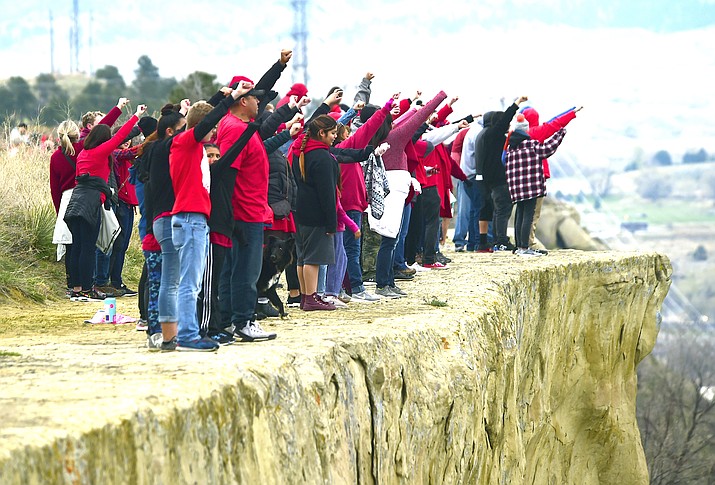
My first teaching job was at Montana State University-Billings. When I was there in the mid-1990s, the average age of the students was slightly above 27 years. I was teaching my peers. The school served many “non-traditional” students who in Montana and many parts of the country are hardly non-traditional at all. My students commuted from the Crow Reservation, or they were coming back to school after raising a family or a divorce or after a business failure or an at-work injury. Some had done their time in the armed forces and were looking for what came next. Some had careened from one misfortune to another but finally seemed ready to make a move. Some had not cared about school but now, finally, had decided to go. I miss teaching older students.

Many of these students, according to the logic upon which we still too often rely, were not “well-prepared” for college. They had “deficiencies” that needed “remediation” and sometimes support services. Many of these students flunked courses, or they came for a semester before taking the next semester off. Almost none of them graduated in four years. I am embarrassed to say that, starting out, fresh out of Syracuse, I sometimes lamented that these students did not seem to have any background knowledge. I was wrong to think that way. You see in higher education we too often blame the victims: we are college professors, after all, and we have no obligation to teach those who cannot be taught. If the student, for whatever reason, does not have the skills to succeed in college, they are out of luck. Some college students just are not good enough and they will flunk out. It is almost seen as inevitable. My wife and her friends, inner-city elementary school teachers all, laugh at what they see as our snobbishness. If only we had the option of choosing our students, they say, and viewing the difficult ones as unfortunate and expendable. They have to teach everyone who walks or crawls in the door.

What, like, it's hard?” | Legally Blonde (2001) – FictionMachine
The guy on the right writes for THE NATIONAL REVIEW

The attacks on Dr. Biden are so distasteful. They are sexist and elitist, of course. They are the sort of thing the dude who Elle dumped in “Legally Blonde” would say. But more than that, in their sneering contempt for public higher education and, most of all, community colleges, they cast the teachers who teach there and the students who study there as unworthy, as people whose educations count for less than theirs. No empathy. No sense that different people follow different paths, and that not everyone has it so easy. If only they could spend some time on these campuses. If they were honest they would see that the work of thousands of educators like Dr. Biden is so much more valuable and important than their stupid, key-jangling opinion pieces.
Maybe, Just Maybe

I am hearing it again and it really bothers me. It is the end of the semester. I am tired, and so are my students. Yet I listen too often to laments from faculty members talking about how the quality of our students has declined. They are not doing the reading. They have no work ethic. They are just not prepared for college work. And they could not write their way out of a paper bag.

But maybe, just maybe, it has something to do with the global pandemic we are struggling through. I have been hearing the same laments from the same instructors for a long time, so it has to be more than that. Maybe, just maybe, as students worry about the dicked-up world our generation has bequeathed to them, we have failed to inspire them to do the work. Maybe they do not do the work because they really cannot get to it right now. Maybe they can’t get to that work because you and I have failed to convince them that this work is important and that it matters more than all the other stuff they are dealing with. Maybe, just maybe, they do not care about the work because, frankly, we have not given them reason to care about what we do and why we think it is important.

Maybe, just maybe, some of us college professors ought to look at what high school and elementary school teachers go through. Their students, they say, are often not prepared for classwork. They have lots of things going on in their young lives that cause them to view school as less important than other things on their list of concerns. And you know what? Those teachers still have to teach. Their jobs depend on it. They do not get to blame the students. They have to meet certain standards, whatever we might think about those standards, or they can face penalties. The good teachers find ways to inspire their students to work and to learn.

When I look at my Zoom screen, I see a small number of black boxes. Because the students are at home, I do not feel comfortable asking them to turn on their cameras if they do not want to–I have no idea what might be going on in their homes, and if they feel a need for privacy, I feel bound to respect it. I wish their cameras were on, but I am not willing to make an issue out of this. Some of my students, I know, are not doing all the reading. I tell them to do their best. I firmly believe that if they are interested, at some point they will come back to this subject if they miss it now. I suspect that one of the reasons why their journals (300 words a week) are coming in late is because some of them, rather than writing each week, waited until the last possible second to do the work. I know that two of my students have buried a parent, and that a half dozen or so have either been sick themselves or in quarantine for Covid exposure. I do not blame the students for any of this. If the students in your classes are not reading, if they are not participating in your class discussions as much as you would like, if they seem uninterested, it might be more productive to look in the mirror before you start beating down students.

Maybe, just maybe, you will have to adjust your standards, or make fundamental changes to the way you teach. I think here of people like Kevin Gannon, Cate Denial, and Thomas LeCaque, who have helped to inspire me to rethink how I approach my classes. If the students truly “are not as strong as they used to be,” then you may need to change your approach. You may have to reconsider how you teach. I firmly believe this, and it is a hill I will die on: if our students are failing to learn what we are trying to teach them, then you and I are failing as teachers. And if this is something you would rather whine about than fix, perhaps you can find something else to do with your life. Maybe, just maybe.

As this semester approaches its end, I can admit to my students that I am exhausted. We are approaching Christmas, with all the busy-ness that entails. I had Covid in early November and, three weeks after being cleared by the County Health Department, I still do not feel like I have fully recovered. My tank is nearly empty. But I have no papers to write, no final exams to study for, no all-nighters that I need to pull. All that is left for me this semester as a (virtual) classroom teacher is to read what my beleaguered, stressed-out, sometimes careless and sloppy, but always interesting students have to say. And I feel fortunate to be here for that. Maybe, just maybe, we can make a resolution for the New Year: No more bitching and moaning about students.

Stay safe out there.

A Letter to a Very Good Student Contemplating Graduate School

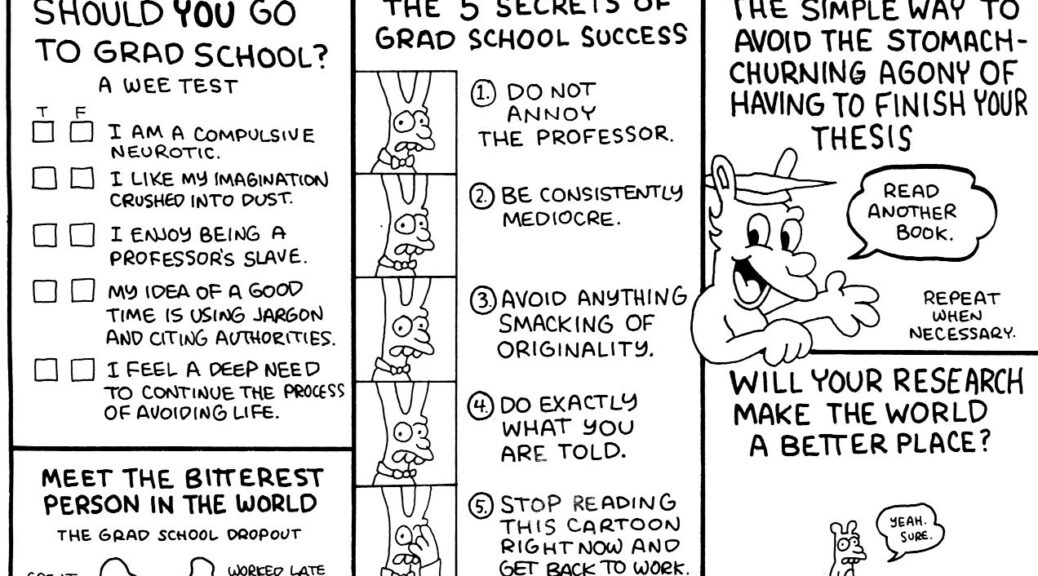
Every semester I find it more difficult to enthusiastically encourage students to pursue their dream of a Ph.D in history. You hope to become a professor some day, but the odds are long. I need to you to know that. This is no reflection on your talents, which I respect enormously. The job market is terrible, and I do not expect it to ever get better. Our work is neither valued nor understood by too many of our legislative leaders, which is a big deal for those of us who work in public higher education. Some of us work at institutions , like one I visited a while back in Missouri, where even the administrative leadership is entirely clueless about history and the liberal arts, and they luxuriate in their ignorance. Graduate school will consume some important years of your life when you might easily be doing something else that is more financially remunerative. Graduate school can be stressful. At its worst it can be demoralizing, depressing, and humiliating. It can beat you up.

It did all those things to me.

Yet, I loved my time in graduate school. I know it sounds crazy to say that. I feel immense gratitude to so many people who helped me along the way. I had a free ride with generous financial support, so I graduated without loans. I was very lucky. I had a fantastic cohort of fellow students, and I found in them incredibly important friendships and a mass of support. I look forward to seeing them when our travels put us in roughly the same location, whether that is a conference or merely passing through on an interstate highway. The professors with whom I worked, meanwhile, were fantastic, and I stay in touch with them to this day. I still draw upon them for advice. I know that I was one of the lucky ones. I found a tenure-track job right out of grad school. I have never worked as an adjunct. Admittedly my first job was at Hellhole State, but I was lucky again to find another tenure track job and escape. Things were so miserable at Hellhole State that I find it difficult to complain about things at my current college–I know how bad it can be elsewhere. I have been able to do my research, and teach basically whatever I want when I want. My teaching load is relatively light. I learned so much in graduate school.

And even with all this good luck, and how much I love what I do, I cannot be certain that I would be willing to pay the costs again. I want you to know that.

So when a bright and talented student like you asks me about graduate school, I am conflicted. Let’s say you have a kid someday and he tells you he wants to be a major league baseball player when he grows up. And he is pretty good. Great in little league, star of his high school team. You take him to private hitting lessons and travel ball tournaments. You encourage him, knowing full well that the odds of him making it to the majors are remote at best. If he loves baseball, and that is really what he wants to with his life, how can you not encourage him?

Sometimes I feel the chances of landing a tenure track job at a college or university where you will be happy are only slightly less daunting than making it to the Major Leagues and, unlike baseball, sometimes it has nothing to do with how good you are at your chosen profession. Academia is not a meritocracy. If your professors are honest with themselves, they will admit that this is true: there are many people out there with Ph.D. degrees in history who could do our jobs just as well as we do, but owing to the unfairness or bad luck, or macroeconomics, or a multitude of other forces, they never got the chance.

So I make sure a prospective graduate student like you understands the realities of the job market. Not just that “it’s bad,” but why it is bad, and why it is unlikely to improve.

I want you to understand that you should not take out loans if possible: if a graduate school is not willing to support you financially, it is not worthy of your talents. This is, of course, easier said than done, but given the state of the academic job market, I have to warn students about going into debt for a graduate degree that will tax them physically, financially, and perhaps emotionally.

There are some people you will meet who will tell you that your work is not good enough: one important way to avoid this trap is to never underestimate your self-worth and your value to an institution.

For me, there was enormous exhilaration that came with doing research, but not all graduate students feel like that at the end of their programs. Burn-out is real.

And consider this: the job does not always go to the hardest working or the most creative or innovative graduate student. Sometimes it goes to the person from an elite institution, or the person with an extraordinarily well-connected advisor at a college with a prestigious name, no matter how much that college seems in reality to be resting on its past laurels. Never, ever underestimate how elitist academia can be.

I hope you will think about these questions:

What is it about history that you love and how do you see pursuit of a Ph.D helping you with that?

How disappointed would you be if you did not find a job as a college professor? What else do you love doing, and might having a Ph.D help you achieve those alternative goals? (These cannot be considered “Plan B” options. I want you to think more broadly than the academy. When you finish you will have skills in research and writing, and a lot of knowledge. You will want to think creatively about how these skills can help you put food on the table and a roof over your head).

What do you think it is that professors do for a living? When you watch us, you may see the joy we take in teaching, and you may read about our scholarship and exciting research, but you may know nothing of committee meetings, scrounging for dollars to support research and travel, and the endless administrivia.

How important is it that you get to choose where you live? How important is it to be close to where you grew up, your friends, your family, and, perhaps, a significant other who may end up living someplace else? How adaptable do you see yourself: If you have lived your whole life in, say, western New York like my students, or in Southern California

In the Service of Clio: Blog CCXIII (213): Life in Hell Again
Though it need not be this bad an experience, it can actually take much more than four years.

like me, would you find it difficult to live in Texas or Billings, Montana, or some place that is so cold and snowy that you feel like you landed on the Ice Planet Hoth, or so hot and humid it makes your ears ring?

How do you envision your life five or ten years down the road? Do you want to have a family? Is it important to you to have the means to buy a house? Mind you, you can do all these things in graduate school if you have support and good luck, but I can tell you it is difficult. Do you have hobbies or other activities in which you engage which are so meaningful to you that it would be hurtful if you had to give them up? Do you like to surf? Or go see punk bands? Because that job in South Dakota may demand of you some important sacrifices. If you are in a relationship, and you want to keep that relationship going, your answers to these questions will inevitably affect your partner, too. Graduate school can be hard on relationships. You will be reading a lot. You will be writing a lot. Chances are you will need to be by yourself more than you ever have before. Are you comfortable being alone? You will have friends in graduate school, I hope, and they will nurture and nourish you, but it can be hard.

If you want to do this, I am happy to support you. I am honored to write a letter of recommendation in your behalf. If I have friends in the department to which you are applying, I will reach out to them and share my high regard for your talents. Do your research. Who are the best historians in the field that interests you, and do they work at a Ph.D granting institution? Write to that person, share your interests, and see if they are interested in working with you. Do they encourage you to apply or is their response lukewarm or uninterested. If it is possible to visit, or Zoom, or get to know them better, it might be worth an effort. That advisor will brag about your work if it is good, and the university to which you apply will benefit from your labor if you end up working for them as a teaching assistant. Do not be shy about investigating and interviewing your prospective teachers. Your advisor will be an important person in your life for the next few years. At the same time, remember, despite our howls of protest, that we to tend easily towards elitism. Remember that. I do not want you applying for a Ph.D at Slackjaw State University. People will judge you for it. I was once on a search committee with a Harvard Ph.D, who would not consider anyone from the South. It is wrong, totally, but you need to be aware of all that is wrong with this profession.

You were an immensely talented student. It was a joy to have you in my classes. I learned from teaching you. You have all the talent to succeed in graduate school. We would not be having this exchange if I did not feel that way. Knowing what I know of you, and what I have seen over the past four years at my college, you would make a fantastic college professor. I will do all I can to help you, and I encourage you to reach out to all of us who taught you here if you need help or encouragement. We will celebrate your successes and we are willing to buoy you up when you confront obstacles. You have a lot to think about. Eyes wide open, you know? I want you have a good understanding of what you are getting into. Remember always that you are always so more than what people think of your work, but that those of us here who knew you as an undergraduate are looking forward to celebrating each and every success you enjoy. It is a big decision. It cannot hurt to apply and see what opportunities present themselves to you. We got your back.

An Amoral World

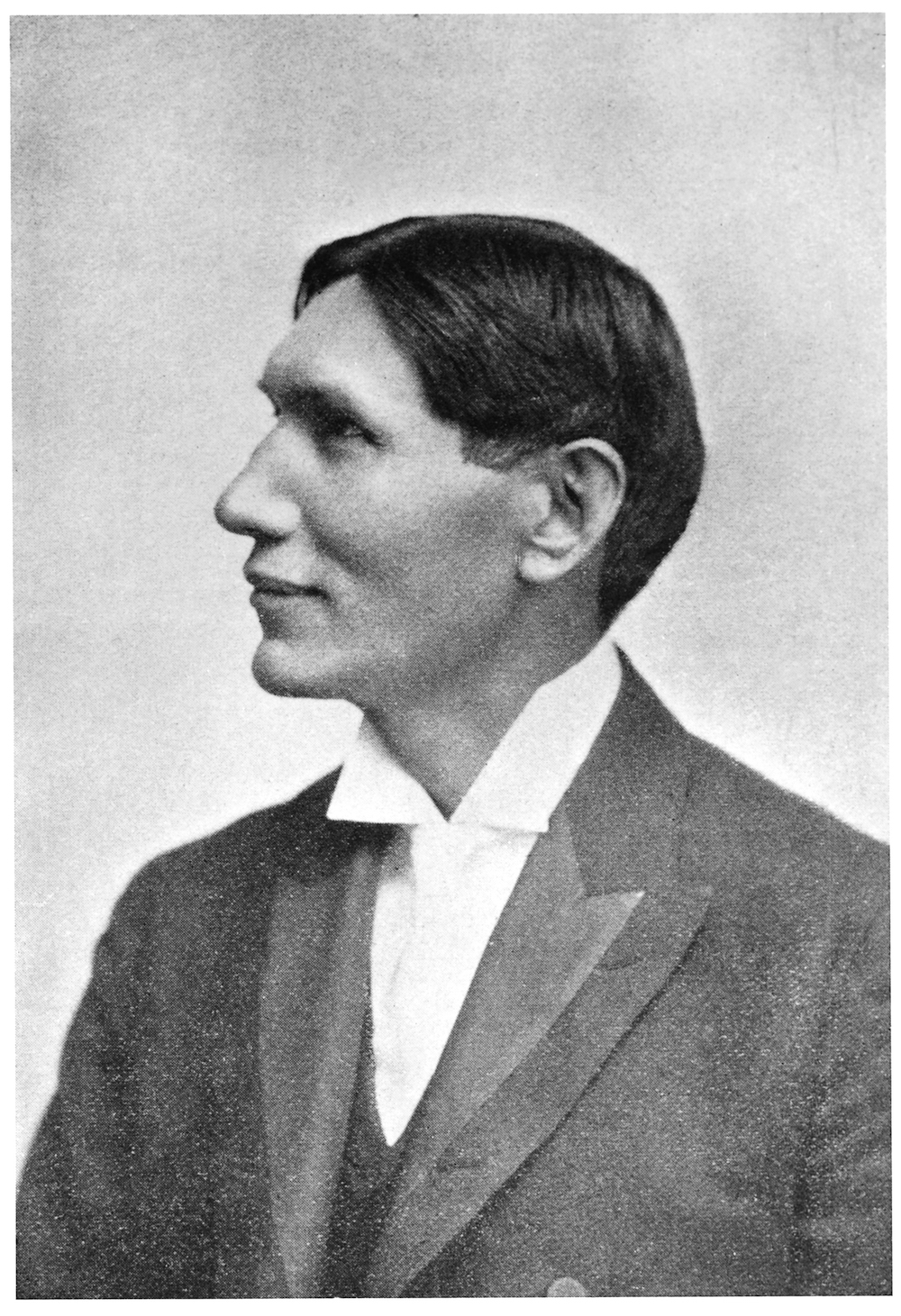
Shortly after the end of the First World War, a conflict which no historian has yet to show was fought for causes that would have justified the loss of a single human life, the great Dakota reformer, writer, and intellectual Charles Eastman hoped that the post-war world would better recognize the rights of the world’s “little peoples,” including Native Americans, “to plead for a better observance of their individuality and rights by the more powerful and ruling nations.” Eastman hoped that in the postwar world the imperial powers might admit “that every race, however untutored, has its ideals, its standards of right and wrong, which are sometimes nearer the Christ principle than the common standards of civilization.”

Eastman is a fascinating thinker. I wish I had more time each semester to expose my students to more of his work. As the newly appointed doctor at Pine Ridge nearly two decades before, he was one of the first people on the scene in the aftermath of the massacre at Wounded Knee. The experience affected Eastman deeply. He saw the mangled bodies, and did what he could for the small number who had miraculously survived the federal artillery and gunfire. When he reached the site of Big Foot’s camp, he “saw the frozen bodies of men who had been in council and who were almost as helpless as the women and babes when the deadly fire began.” Eastman struggled to keep his composure. All about him he heard the “excitement and grief of my Indian companions, nearly every one of whom was crying aloud or singing his death song.” He found a few survivors, all babies. All were adopted by white people. “All this was a severe ordeal for one who had so lately put all his faith in the Christian love and lofty ideals of the white man,” he concluded, “yet I passed no hasty judgment, and I was thankful that I might be of some service and relieve even a small part of the suffering.”

            A Santee Sioux, Eastman was born in 1858. His father had participated in the uprising in Minnesota and fled after the Santees’ defeat in 1862. Federal troops captured Eastman’s father and imprisoned him at Fort Snelling. Nobody told the boy. Eastman believed that his father had been among those hanged in the aftermath of the uprising. All these are stories that I tell in Native America.

            With his grandmother, Eastman joined those who fled from Minnesota out onto the Dakota prairies and from there to southwestern Manitoba. There Eastman lived what he described as a beautiful life. But then his father appeared, a decade after his capture. The father had converted to Christianity during his captivity, taken up farming near Flandreau, South Dakota, and had come to believe firmly in the value of an American-styled education. He determined to prepare his son to live in a nation dominated by white people. He sent the boy to the Santee Normal School, a boarding institution that taught crafts and trades but also instructed its mostly Sioux students to read and write in their own language. From Santee, Eastman moved on to Knox College, Dartmouth, and, finally, the medical school at Boston University.

            Eastman represented a new generation of well-educated native people, familiar fully with both their own culture and the norms and values of white society. Born after the reservation period had begun, they had lived their entire lives with at least some awareness of federal efforts to dismantle their culture and their traditional ways of living. They wrote and spoke English, and emphasized that native peoples had much to contribute to the United States. They hoped to establish a place for native peoples in modern American society. They saw themselves both as Americans and as representatives of an assertive Indian “race.”

After the war, he wrote in the pages of the American Indian Magazine his hopes for the future.

The world is tired, sick , and exhausted by a war which has brought home to us the realization that our boasted progress is after all mainly industrial and commercial–a powerful force, to be sure, but being so unspiritual, not likely to be lasting or stable. On the other hand, being so powerful it might have been expected to be destructive and therefore cruel. The intellectual development connected with it has been largely heartless and soulless. The education of the child has subordinated his higher instincts to the necessities of business. Christ has been preached in vain, since his most unmistakable and unequivocal declarations are directly opposed to our excess of materiel development, social injustice and the accumulation of wealth.

Eastman lived until January of 1939, just as the world was preparing to tear itself into pieces once again in an effort to defeat the horrid racist violence of Hitler’s odious regime. There is a sadness and a disappointment that runs through his writings that is sometimes difficult for me to shake.

What Makes You Ask “Why?”

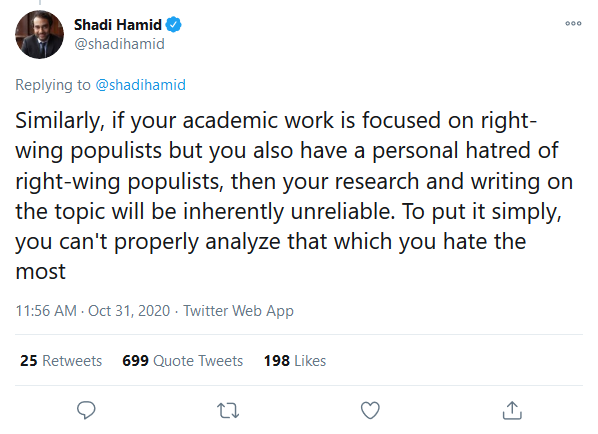
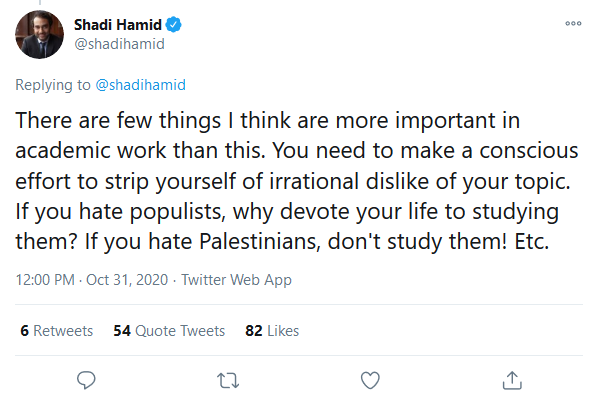
There is a tweet by Shadi Hamid of the Brookings Institution that has raised the ire of more than a few historians.

I will admit that I do not follow Hamid’s work. I have read a piece he wrote for The Atlantic, but I have not read his books. Tweets are a poor way to communicate a complex argument, so I want to be charitable. A large number of critics responded to Hamid’s tweet by pointing out that historians have written important and illuminating books about Hitler and the Nazis, and about Stalin and Stalinism. They wrote about people and groups who they found utterly despicable.

Hamid’s argument, as he stated it on Twitter, is simplistic and short-sighted. But it is not entirely without merit. In another tweet in the thread, Hamid seemed to call upon scholars to honor what the historian Peter Novick long ago called “That Noble Dream,” the ideal of objectivity, in their scholarly work.

This echoes the basic advice many aspiring historians learn early in their schooling. Be aware of your biases, and try to shed them when you enter the library, archives, or study hall. You need to keep your eyes, your ears, and your heart open when you frame the questions that guide your research. Historians agree with Hamid that we all must be fair when we assess the evidence we uncover. But I still see this entire argument as problematic. It is precisely not the advice we should give to aspiring historians. Objectivity and neutrality are not he same thing.

What is it that causes you to ask “Why?” History is not a science, but it is a discipline. It is the study of continuity and change, measured across time and space, in peoples, institutions, and cultures. Historians ask questions about continuity and change, and they answer them in a thorough and disciplined manner. History is, for many of us, a subject we came to out of a sense that something is wrong, that there were better alternatives to our current reality that never were explored. Why? As the historian Tom Crick explained in Graeme Swift’s novel Waterland, the practice of asking “Why?” is fundamental to the human condition, and it emerges from a sense that not all is as it should be. Why did this happen? And why the conditions that led to that? And so on and so on and so on.

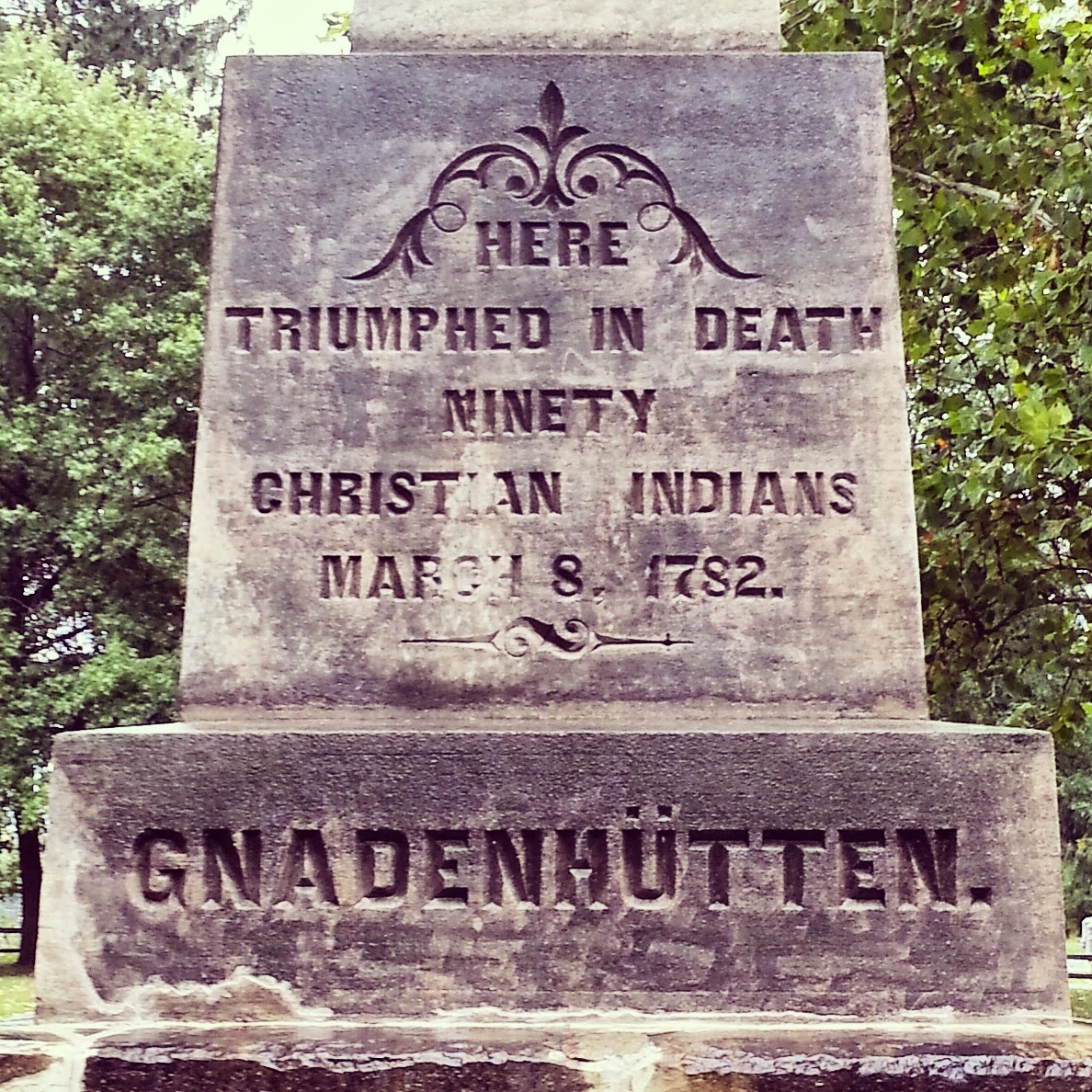
In Native American History I think this is especially the case. A student reads about an incident, an episode, or a historical process and is staggered by what she reads. She has to understand why this happened. She despises the people she studies, whether it is the Paxton Boys, the murderous militiamen at Gnaddenhutten, Chivington of Sand Creek, or the founders of the Indian boarding schools. If she works in a disciplined manner, her strong feelings will not stand in the way of sound academic work. Her passions and her interests brought her to the very questions she asks. Students always should write about those subjects that matter to them, those subjects that get under their skin. It is the questions that keep you up at night that lead to good historical work.

There is so much suffering in the past. If we are to pretend that the study of history will make things better, how can we not choose sides? History has been in the news so much during what I hope are the final weeks of the Trump administration. The President has called for a patriotic history that will teach children to love their country. In the same breath he denounces “socialist” educators who “hate America.” In a sense, Trump and Hamid share a belief that the strong feelings of a scholar will lead them to produce biased, partisan, and tendentious work.

But that is not how it works. There is dreadful and pointless history written by scholars who cling to the mantle of objectivity, and fantastic work written by activist historians. There is no necessary division between scholarship and activism when both are done honestly and in a disciplined manner.

History enters into everything. For every student who has looked at the world and thought, “this is not right,” and wondered how or why things have changed or failed to change, there is a historical answer. The young person, marching with a BLM banner may be driven to study the continued violence of law enforcement against peoples of color and conclude that systemic racism is a reality in American life. Her very existence, her understanding of the harsh realities of racism, led her to her academic work. Long ago, my own disgust about “Indian Removal,” a subject about which I knew little and responded to more on the level of emotion and sentiment rather than knowledge, launched me into a career in history.

Many of those who do not like what we say about the past will question our motives. They will assume that we are dragging up negative and hateful stories about the past because we hate the people or the places we study, and that we want or need our readers and students to hate those things as much as us. But that is not it at all. It is our sense that all is not well that leads us to ask questions about the past. We work because we are so aware of the enormous, yawning gap between the way things are and the way things ought to be, and we know that we will never bridge it without understanding how that chasm formed in the first place, and those who benefit from its continued existence.

See How We Are

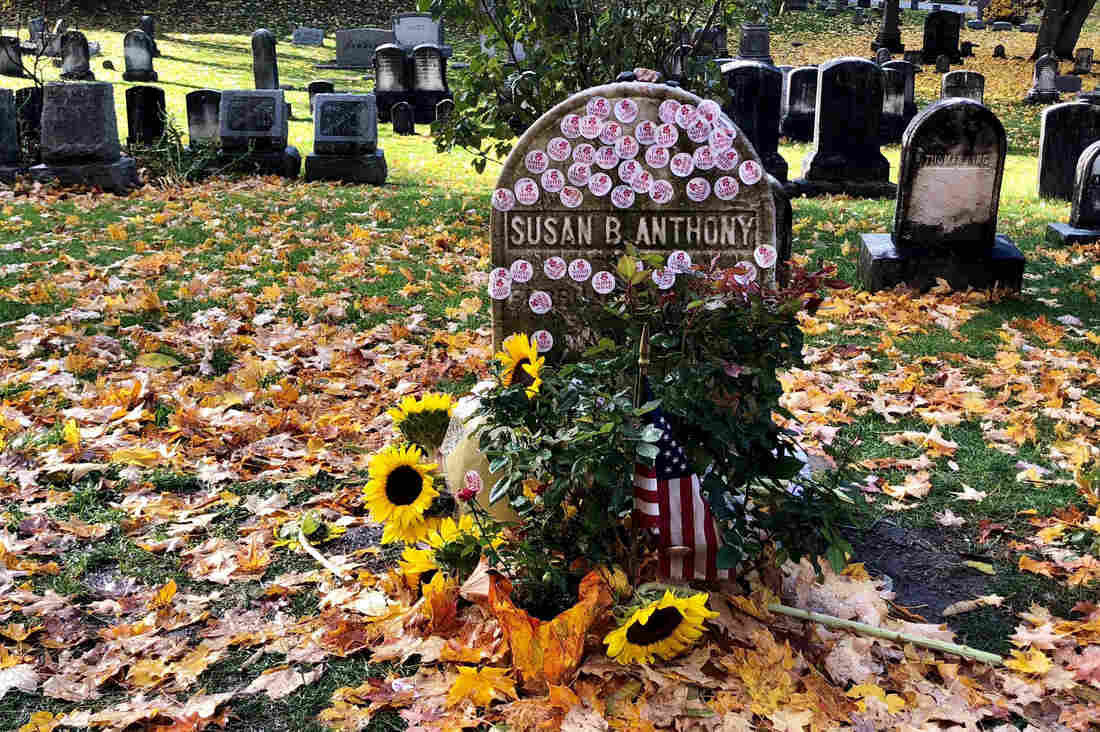
Four years ago on Election Day I took my daughters to Rochester’s Mount Hope Cemetery. Among the local luminaries buried there was Susan B. Anthony, the famous champion of women’s rights. The cemetery was kept open late. We went to visit Anthony’s grave on the day I cast my ballot for what I fully expected would be America’s first woman president.

We were not alone. The cemetery was packed. We never made it to Anthony’s grave. The lines were too long. But we did stand in a crowd filled with women young and women old, who shared our sense that something momentous was going to happen that night. The atmosphere was hopeful, at times festive. With a woman succeeding the first African-American president, maybe it was possible to see another ceiling shattered, a change for the good.

I watched the coverage that night. I sensed early on that Hillary Clinton was going to lose. I could see the tension in James Carville’s face relatively early in the evening as he watched the returns coming in from Florida. That is when it dawned on me that it was over, and that sixty-two million Americans had voted for a monster whose only qualification was a puffed up financial resume, an infinite capacity for dishonesty, and a lethal ability to combine corruption, vindictiveness, racism and incompetence.

Over the past four years I have cut people out of my life who continue to support this monster. For each of his crimes they have had an excuse or a denial. At times I am disappointed in myself for doing this, but I no longer believe these individuals can be reasoned with. Why continue to bash my head against a wall? They are toxic people, and for my own health I have cut these toxins out. So much of the past four years has been toxic. So much rot. So much sickness.

As I write these words I think of a song by my favorite band, X, called “See How We Are.” We are not well.

I was never among those who thought of the policies pursued by Trump and his supporters as “Un-American.” From his fear and hatred of immigrants, his racism, his predatory behavior toward women, his greed, his avarice, and his civic illiteracy, he strikes me as a perfect representative of what this country has become, and in a large measure always has been. I know there are people committed to what many consider this nation’s ideals, but at times it feels like they lose more rounds than they win. My only hope is that there are enough sane people in a handful of states who will defy efforts to disfranchise them and vote to save what’s left of this tattered republic. Sometimes I worry that this election already has been stolen, that the republic cannot be saved.

The last four years have been hard. This year has been especially hard. Trump was not the sole cause of all of this. Or he was both a cause and a symptom. And the underlying causes of Trumpism, those American toxins, will remain in the body politic, even if he is somehow prevented from stealing this election. Look at the Republicans already maneuvering to run for President in 2024: Tom Cotton, Matt Gaetz, Ted Cruz, that vicious empty suit from Missouri and Crenshaw from the district where I briefly lived in Texas–they are no better than him.

I am not hopeful for the future. I do not believe that this country is an exceptional place. We contend with problems that other countries have addressed more successfully. Sometimes I do not believe I will be able to forgive those who continue to support this violent monster.

Vice-President Biden has called for a return to decency. Watching him on TV, I am willing to believe in his basic decency and kindness, even if I wish he took different stands on some of the issues that matter to me. I voted for him last Saturday. But I know he is just a guy, the candidate of a political party whose moderate leadership has failed to effectively counter the President’s tyranny. They continue to appeal to norms that long ago were torn asunder.

Trump’s regime–and I hope it lasts only one term–will have been a historic presidency. It has demonstrated how bad things can become when a significant number of the American people forfeit their civic responsibility to be informed, critical, and compassionate citizens. These have been painful years, but for the love of God do not tell me you were surprised by any of this. It is not just Trump. Tens of millions of Americans share in the guilt for what has happened over the past four years and, like Frank Bruni, I will never be able to look at this country the same way again.

Long ago Thomas Jefferson wrote a letter to Richard Price expressing his faith in the people. He said that “whenever the people are well-informed, they can be trusted with their own government; that, whenever things get so far wrong as to attract their notice, they may be relied on to set them to rights.” Maybe the election of 2020 will serve this purpose. Don’t bet on it. That the United States was founded on principles of liberty, justice, and equality has always been the biggest lie in American history. And the past four years have shown that the forces of racism, fascism, illiberality, callousness and corporate greed are not going anywhere. We will live with the illness for a long, long time. I am not certain we will ever recover, whatever the outcome of the election.

Trace

I just finished reading Lauret Savoy’s Trace. “We make our lives among relics and ruins of former times, former worlds,” she writes. “Each of us is, too, a landscape inscribed by memory and loss.” These words weigh on me, in the seventh month of my mother’s illness, in the midst of a global pandemic that has turned everything upside down.

It is not safe for me to travel to visit my family. I will fly home in January for a visit. Traveling in these times fills me with dread. I worry I will become sick, or will pick up the sickness and carry it with me to people more vulnerable than I.

“From what do we take our origin? From incised memories?” There is so much wrong in this world, and so much darkness. I think of my home town often. Thinking of place, and her place in it, Savoy notes that the “American land preceded hate.” Always, I think that things did not have to be the way that they are. It is the historian’s incessant cry: Along with “Why?” there is always the question of “Why not something else, something better?”

An immense land lies about us. Nations migrate within us. The past looms close, as immediate as breath, blood, and scars on a wrist. It, too, lies hidden, obscured, shattered. What I can know of ancestors’ lives or of this land can’t be retrieved like old postcards stored in a desk drawer.

Savoy speaks to me. As a person struggling to get by, feeling burdened and unmoored. I have work to do, and I attempt to do it as we careen towards an election where the irrational and the millions of Americans who are historically illiterate threaten to cast aside those things we hopefully tell ourselves make us special. About place names, Savoy wisely writes that “if history can be read in the names of the land, then the text at the surface is partial and pieced.”

A reader might do well to look beyond ‘official’ maps for traces of other languages, other visions. He or she might do well to acknowledge, and mourn, the loss of innumerable names born out of textured homelands that no longer reside in living memory. We all might do well to remember that names are one measure of how one chooses to inhabit the world.

Where are we? Who are we? Sometimes I feel like I do not know how to answer these questions. So many people seem never to bother asking them in the first place.

In one chapter Savoy tells of her visit to Walnut Grove Plantation in the South Carolina piedmont. She took the tour, listened to the docent. The tour and educational materials produced about the plantation lionized the owners as hard-working immigrants who had attained self-sufficiency and independence. The enslaved peoples, whose graves Savoy saw nearby, were not mentioned. The visit reminded her of Edmund S. Morgan’s “American Paradox”: that American freedom and American slavery are intertwined and entangled so thoroughly that one cannot be understood apart from the other. In American history, and at Walnut Grove.

“What to remember, what to forget?” Savoy asks. “How a society remembers can’t be separated from how it wants to be remembered or from what it wishes it was–that is, if we believe stories of ancestors reflect who we are and how we came to be. The past is remembered and told by desire.”

We do not comfortably tell stories of enslavement, Savoy writes, or of dispossession. Stories like these don’t work well with “heritage tourism.” Americans do not like to be reminded of their nation’s misdeeds. The current president has declared a culture war on those who seek to undermine American heroes and challenge American monuments. And here’s the problem with that.

A supposedly long-gone past offers an illusory comfort to the living. It’s not my fault. I didn’t own any slaves, and neither did my family. Barricaded safely in the present, the living can condemn the institution while ignoring what made it desirable to privileged classes–and what has fed an ever-mutable caste system to the present.

Reflecting upon, and rejecting, the history taught her as a child, Savoy writes that

the events that occurred and the narratives told of them can never be complete or single-voiced. Each of us participates in it. We contribute to it as players, as witnesses, as narrators, as producers, and consumers in an ongoing past to present.

“What to remember, what to forget?” Much of my own teaching serves to dismantle the comforting myths and half-truths my students learned in elementary, middle, and high school. Thinking of the burial ground at Walnut Grove, Savoy notes all the graves of the enslaved, and the stories not told about those people who enabled the owners’ self-sufficiency and independence. Few of us want to look there. Few of us wish to see where the bodies are buried. Yet the Walnut Grove burial ground, she writes, “seemed to belie the enslavers’ power to extract work without consent from the enslaved. Not just work, but blood, breath, life itself. Silence reminded me, too, of pieces erased from a many-storied past: complex communities excised, interior lives of ‘property in person’ ignored.” Pasts erased, lives forgotten, experiences ignored.

She writes

We live among countless absences of memory in this country. They convey both remembrances and omissions, privileging partial arcs of story while neglecting so many others. Historical sites are contested story sites for the meaning of America’s past-to-present.

To whom is history responsible? What I realized at the burying ground was that each of us is implicated in locating the past-to-present.

History layers itself in language and acts, “of meanings shrouded over generations. The question has to be turned around and made personal: What then is my relationship with history, told and untold, on this land.”

It is hard to engage painful elements of America’s past and be self-reflective, particularly if one must confront deeply ingrained beliefs and ideas that have shaped, or made comfortable, one’s sense of self or place. Or if one seeks to shed a sense of inherited shame or pain in order to step away from stories of group victimization. But the legacy of slavery, and the racism it fed and reinforced, remains a malignant symbiosis. It feeds who we Americans think we are, as citizens and as communities. It still festers as untended wounds, open and disfiguring to some, hidden from view to others.

This is a beautiful reflection on the work of the historian, at least as I have come to see it over the thirty-odd years I have spent in graduate school and as a teacher. I write about Indigenous peoples. I work to understand the processes of dispossession that shaped the land upon which I live. I have worked, in small ways, in the conqueror’s courts in what so often seems like a futile effort to obtain some remedy for the clear crimes of the past. Always, I tell myself that it wasn’t inevitable, that hardly anything is inevitable. It did not have to be this way, and there is another path if we wish to take it. Sometimes, however, when I am reading through the mountains of evidence that document these injustices, I find this especially difficult to believe. But I hope. Always. Savoy’s concluding thoughts about her visit to Walnut Grove resonate with me.

I don’t have answers, but I do have desires. That the intricate relations implicating us in each other’s lives could be acknowledged by the recent immigrant and native, by descendant of colonists and those enslaved by colonists. This isn’t being trampled by history or consumed by guilt over the past, nor is it being victim without end. It is instead honoring the lives of those so often unacknowledged by taking responsibility for the past-in-present–by opposing injustices today for which accountability is direct. This comes closest to my mind for a true re-pairing toward truth and reconciliation.

Indigenous Lives Matter: Some Thoughts on the Death of Reynold High Pine, 1972.

The authorities in Yellowstone County quickly determined Reynold High Pine’s case of death. They found his body in the Burlington Northern Freight Yard on Billings’ south side early in the morning on May 14, 1972. County Coroner Leonard A. Larson concluded that the sixty-year-old man from Pine Ridge had stumbled into the path of a coming train around 6:30pm the evening before. Larson chose that time because it was then that the last train passed through the yard on those tracks before workers spotted the body at 4:30am. So certain was he that Larson felt no need for either an autopsy or an inquest. He did not even bother to draw a blood sample.

Native Americans in Billings did not think that Larson had things right. They suspected a cover-up, and they had good reason. Larson’s conclusions about High Pine’s time of death could not have been correct. Several witnesses saw High Pine at the Standard Bar on Minnesota Avenue, hours after the coroner said he died. These witnesses saw High Pine around midnight, in an altercation with Orville “Buzz” Jones, a 23-year old police officer who had just finished his shift at 11:00pm and was working, in uniform, as a bouncer at the bar. It just did not add up. High Pine was 5’3″, and 130 pounds. Jones had a full foot on him, seventy pounds, and a night stick which witnesses said he used.

T.R. Glenn, a Crow and the chairman of the Montana chapter of American Indian Movement (AIM) based at Eastern Montana College, said that “There is a conflict between the police version of what happened and the stories of the southside people who were witnesses.” Glenn and his associates–Ray Spang, a Northern Cheyenne, and a Winnebago named Frank LeMere–decided to visit Billings police chief Gerald T. Dunbar.

Frank LeMere in 2017.

Glenn, Spang, and LeMere were upset. AIM as an organization was founded in the Twin Cities of Minnesota to monitor police brutality against the cities’ Native American population. HIgh Pine’s case looked and smelled like police brutality at a minimum, and the cover up of a murder at worst, especially because Dunbar denied that there had been any incident involving one of his officers.

They didn’t get far. Dunbar said that he would meet with “any group to hear a complaint if they acted rationally and didn’t shout.” The AIM activists did not meet Dunbar’s standard. He refused to meet with the “Long-Haired–until they acted decently and didn’t have a chip on their shoulder.” LeMere, who was in no mood to be told what sort of protest was proper and suitable for the chief of police, afterward said that “we simply exercised our right to protest inadequacies in police dealing regarding Indians. An Indian dies in Billings and everyone forgets–not even an autopsy was performed and this has got to change.” LeMere wondered how many more Indians would die.

Other Native Americans in Billings, not involved with AIM, were watching the conduct of the police. The 92 members of the moderate Billings American Indian Council joined the AIM activist in raising questions about High Pine’s death. Protests were scheduled and organized, with word of a march bringing in indigenous peoples from throughout North America.

This pressure forced Yellowstone County Attorney Harold Hanser to organize an inquest. He said his decision “was not prompted by Indian protest.” One of the jurors on the panel was a Crow, but the other four were white men, all familiar to the coroner. They concluded that the “probable cause” of High Pine’s death was being struck by a train, but they clearly had their doubts. They underlined the word “probable” in their report. None of the protesters were satisfied.

I do not know how Reynold High Pine died. But I question the coroner’s conclusions, and I bet you do, too. It is folly to pretend that historians do not live in the world of events. Though our craft emphasizes the importance of objectivity, it is never quite that simple. We read the work of scholars who preceded us. We work our way through the primary sources. We must do so honestly and fairly. We should not allow our biases and prejudices to color our interpretation of the sources we read. Few historians would disagree with these simple propositions.

Think about this story. I learned of Reynold High Pine because I saw an article in the important Native American newspaper Akwesasne Notes, which I had been reading because of its relevance to my research on the history of the Onondaga Nation. It was something that I stumbled across. Something about this story caught my eye. The reasons for this are not hard to imagine. I lived in Billings for four years, and I taught at Montana State University at Billings, formerly Eastern Montana College. I heard from more than a few Crow and Northern Cheyenne students I came to know about the rough treatment they received from the police and the county sheriff in Billings. But there is more to it than that. I read that story about High Pine in Akwesasne Notes the same day that the district attorney in Louisville, Kentucky, announced that the grand jury would indict none of the officers who gunned own Breonna Taylor in her own apartment. I read the article amidst the grief and frustration in Rochester, where I live now, that has surfaced since police videos became public showing officers strangling a troubled and naked African-American man on a winter night back in March. I attended some of the protests in downtown Rochester, just a couple of miles from where I live.

The point is that we historians, at the end of the day, seek answers to questions, and we set out to answer these questions in a systematic, thorough, and disciplined manner. These questions can come from many sources. It might be our sense that something is wrong in the prevailing interpretation of a historical event, and we want to know what really happened and why. But sometimes the events happening around us cause us to see something new in the sources–a connection, a parallel, or a line of inquiry–we might never have dreamed of otherwise.

Black Lives Matter. We’ve been saying this since Ferguson, Missouri. Indigenous peoples, too, are killed in disproportionate numbers by law enforcement. This reality has bothered me for years, and I have written about it in a number of posts that have appeared on this blog. Reynold High Pine’s story shows us that the lives of Native peoples don’t mean much in cities and towns where they live on the margins, struggling to get by, coming and going, fucking up, falling apart, and too often getting beaten down. What is, always has been. White people have taken Native peoples’ lands and they’ve taken Native peoples’ lives. And in this country, historians will provide the only accounting of a problem that is as old as the encounter between natives and newcomers on these shores. and that may not be much of an accounting at all when so many Americans are so determined to hear nothing bad about their nation at all.

Your Territorial Acknowledgment Is Not Enough

My college does a territorial acknowledgment before many public events on campus. We are not alone in doing this. We acknowledge that SUNY-Geneseo stands in the historic homeland of the Seneca Nation of Indians and the Tonawanda Seneca Nation. It is an important first step, but one for which my feelings are ambivalent. We do this acknowledgment in rooms where no Native American students are present. We do it for ourselves.

            During our commencement ceremony, a Haudenosaunee flag stands on stage and another flies in our student union, beside the flags of all our foreign students’ nations. Only a tiny number of Native American students have walked the stage at commencement, or ambled through the Union. We consulted with no Indigenous peoples when we began acknowledging our location at the Western Door of the Iroquois Longhouse.

            A just-announced diversity initiative will lead to a more public celebration of Indigenous Peoples’ Day, something we so quietly recognized several years back that it is as if we do not want anyone to know. And we will not raise the Haudenosaunee flag on the college flagpole, unlike some of our sister institutions in SUNY.

            So let’s get serious for a second.  During a troubling year when the college has dedicated itself to exploring the difficult question of how we might become an anti-racist campus, what we have done with and for Indigenous peoples is simply not enough.  We are quiet crusaders on the cheap.  Our gestures, and that is all they are—have been tiny and few and they cost us nothing.  We talk a good game, but that’s it. To say that we acknowledge that our college stands on what was once Indigenous land at a college that makes little effort to recruit, support, and retain Indigenous students is about as hollow a thing as I can imagine. And believe me, there are many schools—in SUNY and beyond– that do even less than us

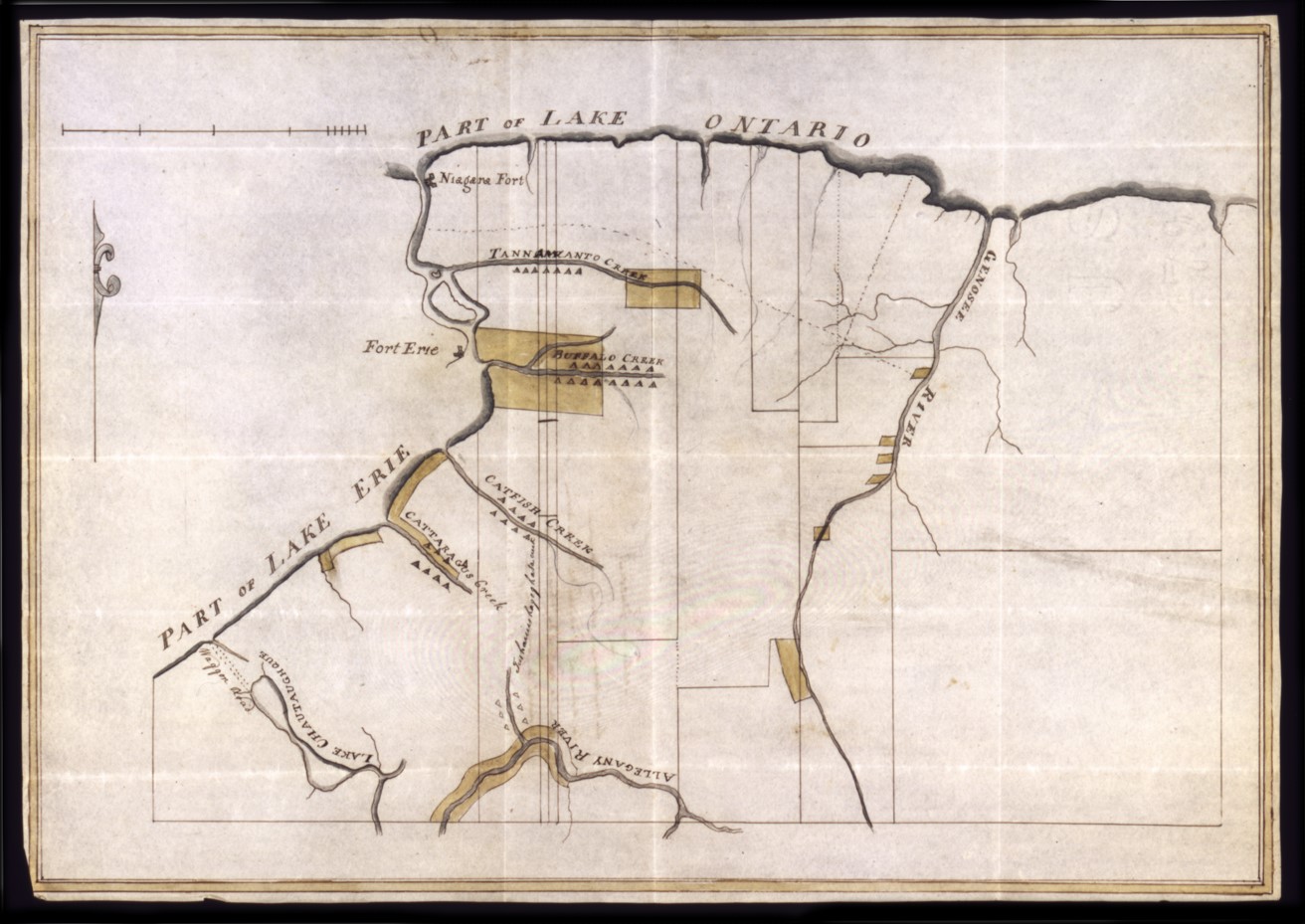
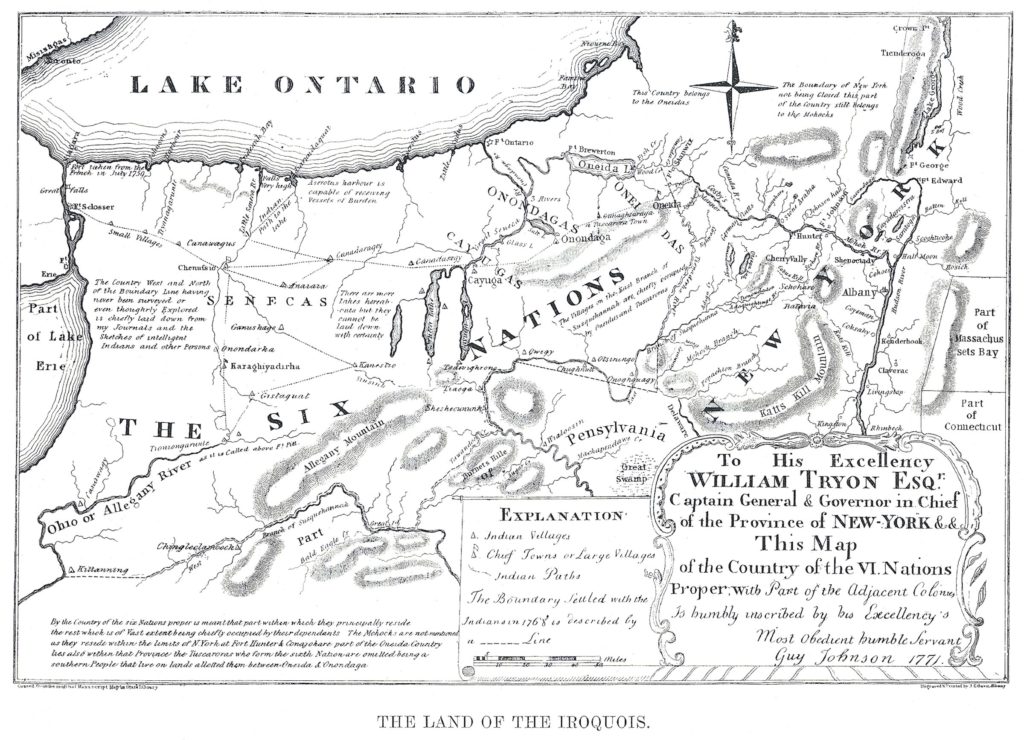
            GENESEO, more than many colleges across North America, stands directly on Native American land.  “Chenussio” appears in New York’s colonial records and in the writings of French Jesuit missionaries in the middle of the seventeenth century.  The Genesee Valley, the beauty of which we sing in our college’s song, was a hub of indigenous activity for many centuries.  Geneseo stands directly at the Western Door of the Haudenosaunee longhouse and critical events in Seneca history took place near and on the very ground the campus occupies. The Big Tree Treaty of 1797, for instance, was negotiated in one of our parking lots.  The Senecas there signed away all their lands in western New York, from that gorgeous Genesee river valley to Lake Erie, eleven small reservations excepted. The town’s white founding fathers all were involved in dispossessing the Senecas. We occupy what was a major Seneca town site in a state that could not have taken the shape it now holds without a systematic program of Iroquois dispossession. It can be argued that no SUNY school stands on ground so closely linked to that history of dispossession.

            I am completely familiar with the arguments that will be thrown back at me. I have heard them many times.  Indigenous peoples comprise approximately 1% of New York’s population.  It is not worth the trouble to devote our scarce resources to trying to attract these students to campus and make them feel welcome once they arrive. Our dedication to diversity is highly qualified, indeed.  We cannot fly the Haudenosaunee flag on the campus flag pole and we certainly cannot invite our Haudenosaunee neighbors to campus, because that will anger anti-Indian politicians in Albany and thus jeopardize the funding needed to fix a college that has significant construction and maintenance needs. We will not look down at the ground upon which we stand. We can’t. Because. We can’t. Because. We just can’t. We won’t.

            Several years ago I organized a meeting on campus. I invited a number of Haudenosaunee scholars from other SUNY campuses in the western part of the state.  They came to Geneseo to talk about bringing Indigenous students to SUNY.  The four of us agreed that it was simply a choice.  If our colleges wanted to do it, they could.  If SUNY as a system wants to do it, it can.   And despite invitations sent to the entire administration and admissions staff, we spoke to an empty room. It was difficult to escape the conclusion that our leaders at that time had voted with their feet.

            Don’t get me wrong. I love my colleagues and I love my students. I have good friends across the campus. But I’ve been at Geneseo for a while now, and I think I see many things clearly. We do not do enough.  We choose not to do enough. We are not interested in doing enough.  It pains me to write these words.

            What would I have the college do? I have been asked that. I am a professor. I am a very good teacher. I have been successful as a scholar and I continue to try to produce. I write more than most historians in SUNY.  And I do a lot of service, both on and off the campus. This service work is time consuming and tiring, as it forces me to be on the road at least every other week. At one level, then, my response to questions like this—to those in admissions, student services, in recruitment and retention who pose it— is to tell them to figure it out for yourselves. You get paid more than I do. You are the experts.  Do the work. I am already too busy.  Hire someone with some expertise in recruiting Native American students. 

            But that isn’t how it works, is it.

            If you are a BIPOC professor, of course you know this. Even if you are a white guy like me who stumbled into this work long ago and was lucky enough to be welcomed into the communities about which I teach and write, you are asked to do nothing less than come up with solutions to the problems you clearly see, and to do so without any additional compensation.  It is demoralizing. So we are asked for solutions. We propose solutions. And those solutions are shot down. We can’t. Because. We can’t. Because. We just can’t.

We won’t.

            It is a choice.  It is really that simple. But the least we can do is try. We can redirect funds. It is the moral and ethical thing to do.  Hire Haudenosaunee faculty and staff. Create a safe and welcoming environment on campus with student services staff experienced in the needs and concerns of Indigenous students.  Grant free tuition, room, and board to Haudenosaunee students. That might be a start. We could do this easily for the cost of SUNY’s football programs. We send no one to meet with Native Nations. We have no one in student services to help support those students should they arrive. We could divert resources towards this goal if we wanted to. We could acknowledge our college’s historic location with something more than a few lines tossed out at the beginning of college functions. We are well-intentioned but ineffective.

           OUR ENROLLMENT is down significantly this year, which has made an already desperate financial situation even worse. The pandemic and widespread economic dislocation is responsible, but some of our administrators fear that those students are not coming back.  Meanwhile, we continue to promote the image, with some small justification, that we are the poor person’s Swarthmore, an elite liberal arts college at a public school price. Sadly, I do not see us casting our net in new waters to try to bring students to Geneseo who we have not brought before. I see no evidence that we are interested in recruiting kids from the inner-city and I see no effort to reach out systematically to the state’s indigenous population. Indeed, we had a recent alum from the Tuscarora Reservation who wanted nothing more than to recruit and mentor Haudenosaunee students for Geneseo, and he would have been good at it.  Nobody in Admissions at that time was interested. (Most of those people have since moved on to other colleges). Geneseo is well known as a demanding school that offers difficult courses. Yet our retention rate—the number of students who come to Geneseo and return—is low. Clearly many of us need to change the way that we teach.  But we also need to think about who our students are, and where we are going to look for new ones.  This is difficult work that will not yield results immediately. It will take resources that are in short supply.  But how we expend our resources is a choice and we really ought to choose differently, as a college and as a massive University system. As employees of the State of New York, we ought to recognize how complicated the State’s relations have been with Native Nations, and how complicit our employer has been in the historic dispossession and marginalization of the state’s Indigenous population.  With regard to our native neighbors, the state’s hands are dirty, and that dirt will not be washed away by a few lines thrown out at the beginning of campus functions.

“I Have Just Killed My Wife”

The newspaper coverage may as well have said that Mrs. Smith had it coming.

            Have you ever been stopped in your tracks by something that you read? Those of you who do historical research, I will wager, can answer this question easily in the affirmative. It happened to me again early last week. And like a deep scratch, I am feeling it days later.

            I had been listening to as set of audio recordings housed at the American Philosophical Society in Philadelphia. An Onondaga woman named Lucenda George sat down with the anthropologist Fred Lukoff in 1950 and told him about life on the Nation Territory, just a bit south of Syracuse, New York. Mrs. George spoke her native language but in several dozen of the recordings, she translated what she said into English, line by line, as Lukoff advanced the tape in small segments.

            Mrs. George told stories about Onondaga clothing and food.  She told Lukoff about working in factories in Syracuse during the first World War.  She told him about a band of gypsies camped on the reservation, and about how she drove a taxi for a time in Syracuse. There was one about the young white woman who boarded with her who wanted to become a missionary.  She spoke about locusts, an occasional delicacy the Onondagas fried in a pan with butter and salt. Don’t criticize, Mrs. George suggested, if you’ve ever eaten and enjoyed a lobster.

            One of the stories was “About a Murder.” Mrs. George told the tale of an Onondaga man who had murdered his Onondaga wife.  “It must be about two years ago that happened,” she said. “This man killed his wife with a knife. He kept pushing the knife in her throat until she died.”  He was tried, and then he was acquitted.  Then, according to Mrs. George, he left the Nation Territory, abandoned his three children, “and nobody knows where he is now.”

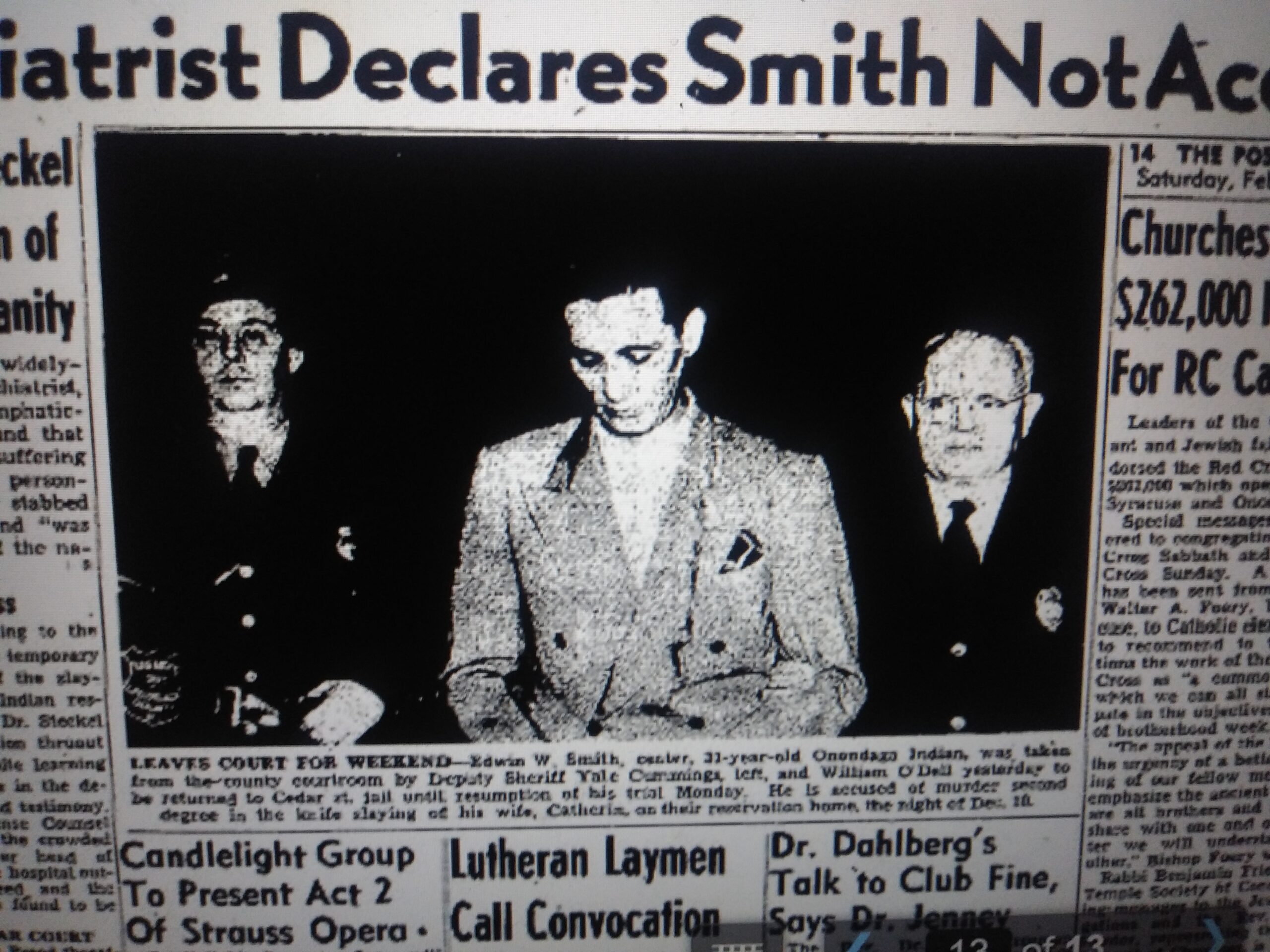
            This story surprised me.  I had spent a great deal of time reading through every newspaper story I could find about the Onondagas in the Syracuse newspapers and in other newspapers that covered central New York.  I had not seen this. Perhaps I missed it.  I went back to the papers, and I looked.  It took me only a few minutes. On December 10, 1948, Edwin Smith murdered his Onondaga wife.

            One source, a seventy-year old digitized copy of a reel-to-reel tape of a story told by Lucenda George, clicks into place with the newspaper coverage of a brutal crime. A fuller picture comes into view.

            Edwin Smith had been struggling, that’s for sure.  According to coverage in the Syracuse Post-Standard, several hours before Smith murdered his wife, he entered the grocery store in Nedrow, just off the Nation Territory, owned and operated by Justice of the Peace Darwin N. Camp.  Smith had left the Onondaga County Penitentiary on the first of December after having served a sixty-day term for assault.  Now, he told Camp, “I am in trouble again.”

           That evening Smith took his wife to a dance.  According to Mrs. George, people were drinking. Smith and his wife were drinking, too.  “She got up on the table,” Mrs. George said, and “took all her clothes off, and there she stood without a stitch of clothing on her.” She started dancing. Mr. Smith was so embarrassed that he left, but there was a man outside who told him to go back inside, get his wife, and take her home. So he did. He told her to get dressed, and he took her home. He continued to drink when they got there.  Then he stabbed her twenty-one times, the lethal blow severing her jugular vein.  He called the police, told them he had killed his wife. His three children, ages 8, 6, and 4, were sleeping in the other room.  He killed their mother “because he couldn’t stand it any longer,” Mrs. George said. “Everything just went black.”

            The newspapers reported on Mrs. Smith’s infidelity.  Mrs. George said that “when they first married she was a very good girl,” but after a while “she got mixed up with this bad company.”  Smith’s defense attorney presented a case of temporary insanity. A psychologist testified that Smith suffered from a “disassociated personality” when he stabbed his wife to death, and that as a result, he “was not able to understand the nature of his act.”  Testifying to Smith’s “peaceful and quiet nature” was the Thadodaho of the Six Nations George Thomas, along with Onondaga Nation treasurer Davis Greene, Chief Jesse Lyons, Elizabeth Powless, and the Methodist minister Livingston Crouse. They all accepted the argument that Mrs. Smith’s infidelity had produced in Mr. Smith so much pain and anguish that he could not justly be held responsible for his actions.  It took the jury of nine men and three women less than four hours to reach its verdict at the beginning of March in 1949.  Not guilty.  “At the trial,” Mrs. George said, “the sentiment was all for him because of his wife’s terrible deed. I am speaking of the white people now. They were for him.” The jury accepted that a wife’s infidelity could drive a husband so crazy that he could get away with murder.

            Mrs. George said that Mr. Smith left the Nation after his acquittal. “This man who has gone away nobody knows where he is, whether he is alive or dead, [and] he has never written to ask if everybody is all right here.” It turns out that he went to Syracuse.  His three children were raised in foster care. They went through a lot.  A friend on the Nation Territory who knows its history well told me that the youngest child “grew up damaged” and has passed away.

You likely have noticed what is missing from this account.  What about Mrs. Smith? Catherine? With all the support shown to Edwin, it is easy to lose track of her. Smith’s defense attorney argued that Mrs. Smith’s infidelity drove him temporarily insane. The chiefs and a Christian minister, in telling the jury that Edwin was a good guy, endorsed this view, even if the record clearly demonstrates his use of violence as a solution to his problems. The jury accepted as perfectly reasonable the argument that a wife’s infidelity can drive a man so insane that he might stab her twenty-one times. Everyone seemed to think that Mrs. Smith had it coming. Was she beaten, neglected, ignored, and tortured in her marriage? Her motives are completely absent, and that is heartbreaking.

            And that is what I carry with me as I think about a murder that took place on an Indian reservation seventy-two years ago. The children—I find it hard to believe that all three of them slept through the slaughter—in one vicious night lost both of their parents.  I can only imagine their pain, confusion, and anger. And that of Mrs. Smith–Catherine–as she attempted to fight off her killer.  People on the Onondaga Nation said “they could hear her scream all the way down the road.”