All posts by admin

The Case for Civic Engagement

I published an opinion piece in the Rochester Democrat and Chronicle today, “The Case for Civic Education.”  I argued that one possible explanation as to why so many of Donald Trump’s supporters have accepted his trampling upon the Constitution is because too many Americans are unfamiliar with the country’s basic institutions, its history, and what the Constitution says.

I believe strongly that historians, and other academics, should engage the public.  We should write in defense of our disciplines.  We should advocate for our disciplines.  We should preach from the highest hills that history education, and education in the liberal arts and humanities generally, is vital to the functioning of a democratic republic because it equips citizens to participate in a mature, reasoned, and constructive manner.

The essay has drawn a bit of fire, but not nearly as much as I would have liked. I want to argue about these issues, and I want to have a debate.  So I will write.  It is the best way I know to engage with a broader public, to at least provoke some thought.

Alas, the D&C wants its opinion pieces short, 450 words, so there is not a lot of room to elaborate.  And for inexplicable reasons, the editorial staff decided to cut out the opening paragraph to the essay, despite the fact that I submitted a piece that came in below their word limit.  Maybe that opening was a bit inflammatory, but I do not think so.  The actual essay reads as follows:


A large minority of the voters who cast ballots last November chose Donald Trump to be their president, a choice endorsed and approved by the Electoral College, that antidemocratic anachronism designed to ensure that slaveholders controlled the national government.

            You have read in these pages many explanations for Trump’s unexpected victory. I would like to add another.  A significant number of voters cast their ballots for a bullying narcissist with little knowledge and less respect for American constitutionalism because they simply do not know enough about the Constitution, America’s political institutions, and the nation’s long struggle, in the Founders’ words, to “form a more perfect union.”  They can excuse Trump trampling over the Constitution because they do not know what the Constitution says.

            Let’s face it: despite a nationwide commitment to standardized testing, the social sciences, humanities, and liberal arts have been under attack.  We need “more plumbers and less philosophers,” said Marco Rubio during his brief quixotic run for the presidency.  The Lieutenant-Governor of Kentucky urged students not to study history but, instead, to focus upon something useful. Even Governor Cuomo, in his otherwise laudable proposal to provide tuition-free access to SUNY schools, promoted the program as a way for the state to produce more skilled workers, not informed citizens equipped to participate in American democracy in a meaningful and constructive manner.

            Education in history and the liberal arts, however, produces citizens capable of asking the tough questions and looking for answers in all their complexity.  They do not settle for simple solutions and pat answers. They know how to question assumptions, and demand evidence.  Civic education leads to responsible and mature civic engagement. Little wonder, then, that these fields of study are devalued and dismissed.

            Less than a third of Americans last year could identify all three branches of the federal government.  Another third could not name a single branch.  Many times more Americans can identify all five members of the Simpsons family than the five freedoms protected by the First Amendment. 

            The Founding Fathers argued that a flourishing republic needs citizens capable of displaying the virtue to set aside their narrow self-interest and petty fears and jealousies in order to pursue the common good.  They argued that citizens must be independent, informed, and active. An ignorant and quiescent populace, they feared, made fit tools for a tyrant.

            I cannot predict what will happen over the next several months and years. But I have watched the protests. We must do more, I believe, to engage the public, explain how our institutions are supposed to work, and protect them from a presidential administration that threatens the country’s fundamental aspiration of liberty and justice for all.


The evidence to support my assertions is not hard to find, and we should consider this evidence closely.  We have our work cut out for us.  Rick Shenkman, for one example, summarized some of the findings of his Just How Stupid Are We at Alternet.  The Annenberg Center for Public Policy in 2014 released a study in 2014 warning about Americans’ lack of basic civic knowledge.  Jason Brennan’s analysis from 2016 in Foreign Policy raises some points worth considering.  And the American Council of Trustees and Alumni found that American college graduates are “alarmingly ignorant of America’s history and heritage.”

This should disturb us all, regardless of the political party which claims our allegiance, regardless of who we voted for in the primaries or the general elections.  These results are a call to action. The challenge will be mustering the courage to answer that call.

I like to write opinion pieces. It is important for us all to bring our expertise to bear on public debates, and to make our voices heard.  Doing so requires a willingness to take some heat, some criticism that can be really, really vicious at times.  In my view, it comes with the territory. I could fume to my friends on Facebook.  I could bitch and whine or yell at the television set.  Better it seems to me is the effort to engage with as large a public as possible, to challenge assumptions, to offer explanations, and to provoke discussions.


#NoDAPL: Easement Approved

The news is not surprising, but disappointing nonetheless.  Douglas Lamont, the “Senior Official Preforming (sic) the Duties of the Assistant Secretary of the Army” announced that he had called upon the Army Corps of Engineers to end its Environmental Impact Review.  He has asked that his intentions be published in the Federal Register.  The process will move quickly if the Trump Administration has its way, for Lamont told congressional leaders that the Army will “waive its policy to wait 14 days after Congressional notification before granting an easement.”

The legal battle may continue.  There are, of course, the legal fights involving the many people arrested by the army of police protecting the assets of Energy Transfer Partners.  but there is also hope of an injunction. The message here is clear.  If you did not see it before, you can see it now.  The administration of Donald Trump has no interest in consultation with Native American communities as required under the entirely uncontroversial Executive Order 13175 issued by President Bill Clinton in early 2000.  Corporate well-being, a slowly dying fossil fuel industry, and not real people and the lands upon which they live and the water they need to survive, are what is most important to Donald Trump, our Creon, in his morally desiccated vision of the American republic.

Finals Week

I teach a range of courses at Geneseo, and just completed reading thirty-one essays for my section of Western Humanities. I teach the first half of the two-semester sequence, a great-books course on the University of Chicago model.  The students begin the semester reading Antigone, and finish with another tragedy, Hamlet.  In between they struggle through Thucydides, Plato, Cicero, the Bible, Augustine, Aquinas, and More.

I teach the course in an explicitly ahistorical manner:  the authors of these works raise questions that we still are struggling to answer.  Teaching during the final months of a presidential campaign that left some of my students frightened for the future, others angry, and still others deeply cynical; while we watched the Assad regime backed by Russian bombers shatter the lives of many hundreds of thousands of people; it was easy to see that we might learn some things from the past.  Jeez. A little humility.

All students at Geneseo are required to take Humanities.  For the past several decades, students take both halves of the course, reading a broad range of important works.  Resource issues lamentably have forced us to consider changing that requirement, and allow students to take only one half of the course to fulfill their requirement.  I am not sure if that proposal will go through, but I understand the practical realities.

I love teaching this course.  In many ways, when I began teaching it several years ago, it revitalized my career, and renewed my enthusiasm for teaching.  Because Humanities is a required course, I get a mix of students from across the campus, and no more than a small handful of history majors.  I like that. I like the mix, the different styles of thinking, and the different perspectives the students can bring to our discussions.  This past semester, the most beautiful essays were written by a student who was a bit older than the rest–at Geneseo, non-traditional students tend to stand out.  He was a veteran who had seen combat in Afghanistan.  In all of his essays, he used the readings to wrestle not only with the big issues we discuss in class, but with his own experiences in a war zone as a soldier.  Thucydides, of course, spoke directly to his experiences, but the other works raised questions about human nature, about power, and about justice that spoke to him deeply.  And this student, more than any other, struggled with the question of how we find beauty and good in a world that at times can appear so vile.

On the last day of class, I hand out this beautiful poem by Jack Gilbert,

“A Brief for the Defense.”

Sorrow everywhere. Slaughter everywhere. If babies
are not starving someplace, they are starving
somewhere else. With flies in their nostrils.
But we enjoy our lives because that’s what God wants.
Otherwise the mornings before summer dawn would not
be made so fine. The Bengal tiger would not
be fashioned so miraculously well. The poor women
at the fountain are laughing together between
the suffering they have known and the awfulness
in their future, smiling and laughing while somebody
in the village is very sick. There is laughter
every day in the terrible streets of Calcutta,
and the women laugh in the cages of Bombay.
If we deny our happiness, resist our satisfaction,
we lessen the importance of their deprivation.
We must risk delight. We can do without pleasure,
but not delight. Not enjoyment. We must have
the stubbornness to accept our gladness in the ruthless
furnace of this world. To make injustice the only
measure of our attention is to praise the Devil.
If the locomotive of the Lord runs us down,
we should give thanks that the end had magnitude.
We must admit there will be music despite everything.
We stand at the prow again of a small ship
anchored late at night in the tiny port
looking over to the sleeping island: the waterfront
is three shuttered cafes and one naked light burning.
To hear the faint sound of oars in the silence as a rowboat
comes slowly out and then goes back is truly worth
all the years of sorrow that are to come.


This student, who had seen first hand so much of the brutality of the world, could find that beauty.  I have had students like him in this class: a refugee who had seen his family killed in front of him, students coming out of abusive relationships, and soldiers.  I learn this from reading their essays.  And I find my faith restored in the goodness of humanity by reading their work, even during very dark times. So I wrote to this student yesterday.  I sent him an email, thanking him for his work this semester, telling him how much I had learned from reading his essays and how they had given me so much to think about.  I told him that I did not know what he was majoring in, but that if he needed a letter of recommendation, and thought that one from me might do him some good, that I would be happy to write in his behalf.   I was stunned by his response.  He thanked me for my note, told me how much he had enjoyed the class, and how the assignments allowed him to work out some of the things he had been carrying around with him. But he was not going to return to Geneseo for the spring semester.  He had decided to work full time, and had withdrawn from the college.  Student essays can be difficult to read sometimes–if you teach, you know how bad grammar, poor punctuation, and sloppy organization can be exhausting.  But the best student work, man, it can make your day, change your life, and alter your thinking.   It is a loss to my college when students like this feel the need to leave, and we–all of us–need to do more to make sure that all students who want to and who have the academic ability can attend the college of their choice. There are big questions out there that we have not answered, questions that great thinkers have been wrestling with for thousands of years.   I do not have all the answers.  Someone out there just might.

Why Can’t I Dress As Pocahontas for Halloween? And Other Thoughts

I like to show this map to my students.  It is the Tryon map of the Six Nations, drawn five years before the colonismap-iroquois-1771ts imperial officials hoped to control declared their independence. I ask my students, when they look at it, to forget all that they know about the subsequent history of the Empire State.  Look at this map, drawn at one point in time. “Read it like a text.  What do you see?”

It’s such an obvious question that there is usually a brief silence.  So I ask them to look at the map and tell me, “what, on this map, is New York?  Where on this map is New York?” We talk, and quickly it becomes apparent. You cannot miss it.  New York, as a geographic entity, did not exist much past Schenectady, and much beyond the Hudson River Valley.  Much of what we call the New York today was, in 1771, “The Land of the Six Nations,” Iroquoia.

It is helpful to keep this in mind, because a large part of the imperial project, the core of what many scholars now call settler colonialism, was the erasure of native peoples from the American landscape, either through assimilation or annihilation.  The settlers will expand, and the Indians disappear, their disappearance itself legitimizing the settlers’ claim to the land.  Indians are always part of the past, always in the process of disappearing, of being swept into the dustbin of history. bad-homeworkThey are erased, the settler state’s claims to sovereignty legitimatized, and the concerns of native peoples today more easily dismissed.

If you are a student, try this exercise.  Ask some of your classmates to define an Indian or Native American.  Have them tell you what comes to mind when you mention the word “Indian” or the phrase “Native American.”  Play with them a word association game.  In New York State, where I live, occasionally a student will mention gaming orbad-costume smoke shops, but by and large the images they will conjure will be drawn from the past.  It is something that many of us are taught from a very young age.  Find “three pictures of American Indian needs” in the assignment here.  The dutiful child will highlight the wigwam, the bison, the blanket weaver.  Now “find the three pictures of needs for people today.” Erasure.  Indians as part of the past.

So when you dress up in an “Indian Costume,” it certainly is in bad taste.  It is crude and offensive.  Like Leilani Downing, a model, in her costume here from 2014.   “I just got massacred by a cowboy. Note Fur is FAKE!!!” she wrote.  What the hell?   It is nice that no animals were harmed in the making of that costume but, really, what was she thinking?  It is offensive, to be sure, to wear these costumes. But more than that, when you dress up in a costume rooted in stereotypes that are themselves rooted in the past, you are aiding the colonial project, aiding in the erasure of native peoples in the present, aiding in their consignment to the past.

And if they are part of the past, it becomes easier to dismiss the legitimate claims of native peoples as being out of time and place and, as a consequence, irrelevant.  Just this week (and it is only Wednesday!) we have seen millions of baseball fans cheering for a team with a terribly offensive racist logo, read about a police killing of a young Native American woman in Washington State who was several months pregnant when she was shot, and watched heavily armed troopers, backed by a concentration of corporate and state power in North Dakota, attempt to shut down peaceful protests against an oil pipeline burrowing under sacred lands. These stories, to say the least, are not front-page news.

You should have a good time on Halloween. Soon enough, you will be freezing your asses off, trooping around the neighborhood, holding a flashlight, as your kids go door-to-door collecting candy. Soon enough you will be silently judging your neighbors for the quality of the candy they distribute.  This night is for you. Have a blast.  But be thoughtful, and careful.  You can be creative. You can be funny.  You can be iconoclastic.  Hell, you can push against the limits of what is acceptable.  But please keep in mind that though your costume might seem innocent, and that you may really have loved Disney’s “Pocahontas” when you were a kid, that these are manifestations of a much larger, and pernicious, dynamic. They depict native peoples as part of the past, and thus contribute to making it more difficult for many Americans to recognize the importance of native peoples’ calls for justice today.

Grief and History

When I teach Native American history, I frequently find myself describing the consequences of the policies and events we cover for children.  Boarding schools, for instance, but also the many times when children die—when children were killed.  I include these harrowing stories not to shock complacent students, but to try to get the kids in the class to understand more deeply the consequences of the policies, decisions, and events they have read about upon the most vulnerable people in a community, people with whom they are perhaps well-equipped to identify.

So I tell the students about George Percy. That weak and cowardly aristocrat who settled at Jamestown led a raid by an English party against the Paspahegh Indians, whose town stood a short distance upriver from that sickly fortified settlement.  Percy’s soldiers took the “Queen of Paspahegh” and her children hostage but his men began to grumble.  He gave in to them, threw the children overboard, and allowed his men to entertain themselves by “shooting out their brains in the water.”  I tell them of the Paxton Boys’ massacre of peaceful Conestoga Indians in December 1763.  The Paxton men killed fourteen of them: men, women, and a couple of children, no more than three years old.  The Paxton Boys split their skulls with tomahawks, and took their scalps as trophies.  This was intimate violence, acts committed at close range. To children.  To babies.  In order to help my students make sense of the Ghost Dance, I tell the students about the movement that occurred on the Kiowa-Comanche-Apache Reservation.  Among the Kiowa ghost dancers were a lot of parents, and they danced on the snowy ground hoping to see, once again, the children who had died, innocents slaughtered by measles, whooping cough, and pneumonia.  Grief lay at the broken heart of the Ghost Dance movement.  And of course that grief continues.  Harold Napoleon, in Yuuyaraq: The Way of the Human Being described Alaska Native communities immersed still in a grief caused by what he called “the Great Death.”

A short time ago I published a biography of Eleazer Williams, a Mohawk missionary to the Oneidas.  I spent a lot of time with Williams.  He struck me as a man with few principles, or as a liar, a hustler, or a confidence man. But Williams was also a man profoundly damaged by the death of his second child.  9999004543-l

He wrote a letter to his wife in 1838.  She was a Metís woman, living still along the Fox River in Wisconsin.  At this point, Williams had been living apart from her for the better part of a decade.  He was always traveling—Buffalo, Oneida, Albany, New York, Washington, and only occasionally back to Green Bay.  This was the only letter of any length that he wrote to his wife that has survived, and in this one he began with small matters—of how the water and ice on the Fox River had done damage to the crops, he had heard.  He chastised her for not having planted the potatoes on higher ground. But he also urged her to think about matters religious.  Beware the shallow things.  Please, he wrote to his “Dear Mary,” “Nothing in this life would make me more happy than to find that you are serving God, and living in humility, as one who is devoted to Christ and preparing for Heaven.”  Focus on the important things. “Let no longer the world and its vanities be upon the upper most in your mind or thoughts—forsake them and give yourself to God and Jesus Christ who had redeemed you by his most precious blood.”

What, I wondered, was going on here?  He was writing, it seemed, to a woman who had lost her faith—in religion, in him, and, I suspect, a lot of things.  As I read the letter, it became clear to me why that might have been.  Williams had never lacked for words, but in this letter his desperation is palpable.  He would pray for her, he said. We must be a good example, he said, for the “only child we have.”  I knew that Williams and his wife had a son, who would have been a teenager. “How happy it would be, should we as a family, finally by the mercy of God, to meet all, with our departed beloved Anne, in Heaven, where, we shall all be happy without end and sing praises to God for all eternity.”

Who was Anne?  He had never mentioned her before.  This is the only time she appeared in Williams’s papers.  A dead child, presumably. It took a lot of digging. After some time in the archives, I found her.  She had died in 1830, eight years before this letter.  Hers was the first baptism recorded at Holy Apostles, the church Williams founded for relocated New York Indians in Wisconsin, and the first burial in the churchyard.  It was in 1830 that Williams largely left home.  Mary buried the child, who died when she was not quite eighteen months old, without his help.

This death haunted Williams. In the late 1840s he began to tell a story about an encounter he had with the French Prince de Joinville aboard a great lakes steamboat in 1841.  In this story, Williams told Joinville as they approached Green Bay that he and his wife had an infant daughter. Joinville offered to serve as godparent.  When they arrived at Green Bay, Williams learned that the baby had died several days earlier.  Joinville was sympathetic, but Williams never went home. He hung out with the French prince for a couple of days.  And here’s the thing:  This story—Joinville, the baby—it was all a lie.  It did not happen.  Williams was a liar.  That was easy to prove.  But why this lie, about this baby?

If you study early American history, you learn how frequent the death of children actually was.  Many families buried children, and I can imagine that the consequences were as emotionally devastating for many of them as it was for Eleazer Williams and his wife.  New England children studying their catechisms in the early nineteenth century were warned to consider that

I, in the burial place may see

Graves shorter far than I;

From Death’s arrest no age is free,

Young children too may die . . .

My God, may such an awful sight

Awakening be to me!

O that by early grace I might

For death prepared be.”


The death of children was common.

As a historian, I find these stories sometimes difficult. I have never shared these thoughts with my friends and colleagues who teach history, but I imagine that they, too, can be overwhelmed by this history of grief, of people gone too soon. It’s heavy. My own children are all healthy.  Despite my own flaws, they are fine people, better than me in so many ways. I am fortunate.  But not everyone is.  In a chilling article that appeared in the October issue of The Atlantic, Roger Rosenblatt reflected upon the viciousness and inhumanity he had witnessed or learned about over his long career as a war reporter.  Rosenblatt told the story of Khu, a 15-year old boy who fled the war in Vietnam for Hong Kong.  His parents had died, and he had nothing.  They ran out of food on the ship he boarded.  The captain assigned one man to knock Khu out, and then slit his throat, so that the others on board could eat him.  Tears welled in the boy’s eyes, and they let him go, but they did kill another man and they ate him.  Khu, Roseblatt, and his translator looked out at the lights in Hong Kong Harbor.  Khu said that the lights and the boats were beautiful.  That is what he was thinking.  Rosenblatt asked him what else was beautiful. Khu said everything is beautiful. Sometimes even when it’s not.

I have thought of these stories today.  I read Jayson Greene’s searing essay in The New York Times, entitled “Children Don’t Always Live.”  Greene told the story of his daughter’s sudden, tragic death, his struggle with grief, and his continuing sadness even as he and his wife welcomed a new child, a boy who always will have a dead sister.   Speaking to his young son, Greene mustered “up every drop of bravery I can: ‘It is a beautiful world,’ I tell him, willing myself to believe it.  We are here to share it.”

I get that.  I try to persuade my students to be hopeful and, because they are young and bright and have not seen much yet, it is not a difficult sell.  Still, we cannot teach about the past without considering the pain, the grief, and the sadness that people—native and non-native alike—felt.  If we want to reach our students, we need to help them feel the weight of the past, to experience those moments of brutality, violence and sadness, and those occasional moments of courage, humanity and grace. Connection, right?  Reaching across the span of time, across the vast distances, in an attempt to come close to understanding the world as others experienced it.


Letter to that Lame Provost in Montana–Some thoughts on History and the Liberal Arts

Dear Provost,

I’ve been thinking a lot about a piece Timothy Egan wrote that appeared in the New York Times back in August. Egan lamented “our Dumbed-Down Democracy,” and saw in the rise of Donald Trump evidence of a failure in, among other things, American civic education.  If Americans knew their constitutionalism, Egan argued, they would be less likely to support a candidate who showed no concern for the American constitutional tradition.  “The current presidential election,” Egan wrote, “may prove that an even bigger part of the American citizenry [Bigger than the thirty million adults who, Egan asserted, cannot read] is politically illiterate—and functional.  Which is to say, they will vote despite being unable to accept basic facts needed to process this American life.”

There has been no shortage of opinion pieces and analyses like Egan’s in recent months.  As a college professor, as a teacher of history and the humanities at a school where, fortunately, these subjects are still valued, I wonder about whether any of the current state of affairs can be laid out our steps.  Are we doing enough to produce critical and informed citizens? Should we do more?

A long time ago when I taught at your college in Billings, Montana, you emphasized that we should be doing “applied research.”  We should strive to be relevant.  I was untenured, and in a deeply dysfunctional department.  You were no help on that front, either. I understood that to survive as a professor I needed to toe the company line. But what on earth did “applied research” mean? I was a historian with training in early American and Native American history.  How, I asked, would I cast these interests in a project that you would consider “applied” and relevant?

You did not expect the question, and I never got a meaningful answer, but I could see plenty of problems on campus. As you might remember, Native American students were the largest minority on campus, and many of them traveled a long way from the Crow Reservation to attend their classes.  There were those on campus who did much to make the college a welcoming environment—staff and faculty.  They did good work.  Students could use Crow to fulfill the college’s foreign language requirement, for instance, and the Intertribal Indian Club was a valuable and effective resource.  Its annual powwow, a beautiful and inspiring event held off campus, was the college’s largest student-sponsored event.  I do not think you knew that.  In the four years I was in Billings, neither you nor the President ever attended because, in the President’s words, it was a thing “for Indians.”

There were a lot of problems on campus. Financial aid was limited.  Some faculty embraced stereotypical and, in places, racist views of Native Americans that could create an incredibly hostile environment on campus.  Many faculty, acting on an assumption that Native American students would not speak up in class, never bothered to reach out.  I heard faculty say, about a student who did well in a class, that “she did really well for an Indian.” I told you about this.  You said something along the lines of, “Yeah, sometimes the Crows will really surprise you when they do well.”  Again, untenured.  I did not tell you how screwed up I thought that was.

But I watched this environment.  Coming from southern California, this was all new to me.  There was an event that caught my attention. I thought it would fit your description of an “applied research” project.  Down in Hardin, a town that borders the Crow Reservation, a series of ugly racial incidents took place.  I do not remember all the details, and I am sure you don’t either. There had been some sort of cultural awareness day at the high school. A significant number of white kids, with their parents’ support, stayed home.  Took a walk.   The Crow kids made some noise about this and, the next morning, distributed on driveways in Hardin was some racist, Christian Identity literature, and texts like “The White Man’s Bible”—really vile stuff.

That’s what I heard.  I heard a lot of stuff. I went down to Hardin.  Tried to talk to some locals.  I couldn’t blend, really. A friend of a friend put me in touch with a local minister, and I talked to her for a while.  She confirmed that there was some ugly and really open racism in Hardin, but also that there were good people trying to make things better. To investigate this problem, would require getting into the community, spending a lot of time, watching and listening and talking.  Producing a piece of “applied” research, then, would be difficult.  I lived sixty miles from Hardin.  I was a single parent, at the time, and I taught seven courses a year.  Time was short.  I could not get into the community enough to understand what these white people were thinking.

I could talk to my Crow students who had attended Hardin High, however. I persuaded a number of them to allow me to record interviews with them. I still have the microcassettes in my desk at Geneseo, even though I no longer have anything upon which to play them.  They spoke of the white ranchers’ kids who drove to school in their big, new trucks, paid for from the proceeds of ranching operations on land that had once belonged to the Crows. They spoke of intimidation.  Of gym teachers who told kids to take a leak before they went out for PE, “because they need something to drink down at Crow.”

When I was a student at Cal State Long Beach, one of my professors in American Indian Studies told me that interest in Native American studies among white people decreases in direct proportion as you get closer to Indian country.  And that seemed to be the case in Billings.  A lot of the people in my classes did not want to hear about racism at Crow, and the statistics that testified to the continuing impacts of colonialism and discrimination.  You and the President proved the truth of that statement, too.

I never did anything with those tapes.  Never did an “applied research” project that accorded with your hazy standards.  But I did keep plugging away at my own research in Early America, and Native America, and I continued to try to improve myself as a classroom teacher.   And I left Billings, and found a job at a wonderful college in the Finger Lakes region of western New York.

I do not like to enter into the debate over what a degree in history is worth in monetary terms, because it brings us value in other ways.  I have drawn upon the advice of so many people, and that advice informs how I teach.  I tell my students that we are the ones who question everything.  I tell them that  I love the questions—the search for answers, the complexity and the absolute lack of definitive answers sometimes, and the stories—the stories are at the heart of all that we historians do as teachers and writers.

In history, these stories can be tough to handle sometimes.  Particularly in my field, I read about horrifying acts of violence, greed, viciousness, and hatred, all the ways in which war is a violent teacher.  It can get you down sometimes, and history can be a brutal business.  But, once in a while, there are these amazing stories: of selflessness, of grace–and of courage.  And I tell them, that to the utmost of their ability, they should try to be intellectually fearless, and to have the courage to not shy away from those things that seem extremely difficult.  To be honest, curious, inquisitive, and relentless to be sure, but most of all, in terms of the questions they ask, the evidence they consider, the ideas they engage with, and the theses they advance, to be as fearless as they can be.  Now, on this campus, in this country, in this global community, more than ever.  This is History, Applied.

My students now live in a world where too many people confuse their feelings and their fears for facts, where being smart and engaged and critical and willing to ask questions can make one an object of scorn.  They live in a world as well where complexity is so often dismissed, where big and difficult answers to the big questions are avoided, that asking these sorts of questions can take a certain amount of courage.  They live in a world where, when we stand up in the face of these problems and ask, “Why?” and when we insist on a reasoned and relevant response to that simple question—it is like an act of subversion, and subversive acts, even small ones, require a degree of courage and fearlessness.

I tell my students this, and that their studies can help them makes sense of this world.   Looking at the spectacle of public life that my generation is in the process of bequeathing to their generation, I tell them, it might be easy to slide into a deep cynicism, but cynicism is an intellectually lazy position, a sort of cop out.  It can take courage to trust and to respect and to appreciate, as well as to care and to love, and to accept the validity of ideas presented by those with whom we would be predisposed to think we might disagree.  To never underestimate others, to take people seriously, whoever that person happens to be, to accept the possibility that those with whom we disagree might have a point and, indeed, to admit that we might be wrong.  To appear vulnerable in the face of those who despise us.  That is not an easy thing to do. That takes courage, and a willingness—a commitment—to approaching everything and everyone with a readiness to see goodness and to be surprised.

It is easy to feel like the challenges we face are too big and it is possible, I think, that we all feel at times like we are not enough to make a difference—that we need to be wealthier or have more expertise or access or whatever.  But what if we used our skills and our thoughts and our reason and acted as if we were exactly what was needed? How would we live or have lived if we were exactly what is needed to solve those things we see as problems? If we knew we could close the gap between the way things are and the way things ought to be, even a little bit, would we have the courage to act?

I am not sure what you would say to these questions.  I do not know that you would agree that the power of history, whatever the subfield, is that it allows us to share in the experiences of people far removed from us in space and time, to take part in our broader, shared, humanity.  That was never something you valued.  You wanted the standards low, the seats full.   I know that.  So I thought of you when I read Egan’s piece. You never realized the merits of the liberal arts, the power of ideas, the feeling of connection one can achieve when they study the past.   You left Billings, and became the president of a small college in a similarly red state, I think, but I did not pay any attention.  But I do know this: history and the liberal arts empower our students to be curious, kind, and fearless in an informed way that makes our world a better place.  That is something that transcends price and simplistic ways to measure learning outcomes.

The Lone Woman of San Nicolas Island

In Native America I tell the tale of the “Lone Woman of San Nicolas Island.”  Thanks to some recent archaeological and historical work, we may now know more than ever before.

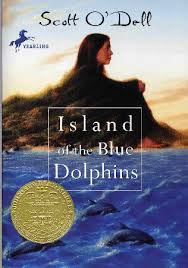
I grew up in Ventura, California, home of the Channel Islands National Park headquarters.  Kids in my town, and I suspect around the country, learned a fictionalized version of the “Lone Woman’s” story in Scott O’Dell’s famous novel, The Island of the Blue Dolphins. In my memory, every kid had to read this book in middle school. San Nicolas is one of the Channel Islands, off of the coast of Ventura and Santa Barbara Counties, though it is owned by the United States Navy, is not part of the National Park, and is not as a result as accessible as the other Channel Islands.  Nevertheless, this was part of a history that was both local and significant to me, and it was a delight to have an opportunity to include the story in the textbook.  blue-dophins

According to the conventional story, in 1853 a party of hunters led by a Californian named George Nidever encountered an elderly Nicoleño “busily employed in stripping the blubber from a piece of seal skin which she held across the knee, using in the operation a rude knife made from a piece of iron hoop stuck into a piece of rough wood for a handle.”  She welcomed the white men, who could see that she lived in a camp comprised of “several huts made of whale’s ribs and covered with brush, although it was long since they had been occupied that they were open on all sides and grass was quite high within.”  She had lived there for a long time, perhaps since the uprising of 1824.  The white men saw that “there were several stakes with blubber on them,” and that there “was blubber also hanging on a sinew rope.”  She had baskets, and “fishhooks made of bone, and needles of the same material, lines or cords of sinews for fishing and the larger rope of sinews [which] she no doubt used for snaring seals on the rocks where they came to sleep.”

At the invitation of the hunters, she accompanied the men as they hunted otter and seals on the islands.  She traveled with them for several days. When the wind began to blow too strongly, “the old woman conveyed to us by signs her intention to stop the wind.”  Nidever observed that “she then knelt and prayed, facing the quarter from which the wind blew, and continued to pray at intervals during the day until the gale was over.”  Nidever described a Chumash woman living her life in time with a very old rhythm.800px-sannicolasisland_corral_harbor

The arrival of the woman in Santa Barbara, however, made clear how much the Chumash world had changed.  Less than a century after the Portolá expedition, few Californians had seen Chumash people. The old woman became a curiosity, an exhibit for the amusement of non-Indians interested in an “extinct” people. According to Nidever, “for months after, she and her things, as her dress, baskets, needle, &c. were visited by everybody in the town and for miles around outside of it.” Chumash people were exotic enough, one enterprising ship’s captain thought, that he offered Nidever $1000 for the woman. He wanted to place her on display in San Francisco, and he was willing to split the take with Nidever.  Nidever refused. He learned bits of her story. She had lost a daughter, and she had grieved for many years. It was the defining event in her life. She did not have long to live. At Santa Barbara, she fell sick five weeks after her arrival and died, Nidever curiously noted, because of “eating too much fruit.”  The priests at the mission church baptized her after her death and christened her Juana Maria.

Archaeologist Steve Schwartz, according to a story that appeared in the Ventura County Star on 9 October, began digging through the notes of linguist J. B. Harrington, who visited the Islands in the early 20th century, and determined that there was much more to the story.  Schwartz found in Harrington’s papers answers to a number of mysteries: Why had the woman been left alone on the island in the first place?  Why, after spending several decades largely alone, did she in 1853 choose to accompany Nidever?  Some stories said that when the Nicloleño were leaving the island, the woman forgot her infant and left her kin to go find the child. Schwartz thought it unlikely that a woman would forget where her infant was, and that instead the child might have been 9 or 10; a nine-year old boy wandering off seemed more plausible.  She remained behind with the child. According to Schwartz, “people would come to the island, see her and try to coax her to leave, and she wouldn’t leave.”  Only after this child died was she willing to go to the mainland.

And though a sort of media storm took place when the Lone Woman came ashore in Santa Barbara, newspaper research indicates that bits and pieces of her story already were circulating. She appears in an 1847 Boston newspaper, and in newspapers in India, Australia, Germany and France.

Several years ago, Schwartz was part of a team that conducted excavations on San Nicolas that he believes led to the discovery of the Lone Woman’s cave.  Schwartz and his colleague Sara Schwebel are assembling a Lone Woman website developed by Channel Islands National Park that will launch later this year.

Red Lives Matter

NPR’s Story Corps project aired this morning the story of woodcarver John T. Williams, gunned down by a Seattle police officer in 2010.  Williams was carrying his carving knife as he crossed a street.  Deaf in one ear, he did not respond to the officer’s command to drop his knife, and the officer opened fire in a matter of seconds.  As in so many recent stories of police shootings of people of color, no charges were filed against the officer.  You can listen to the story told by Rick Williams, John T. Williams’s brother, by following this link.

Andrew Jackson’s Removal from the Twenty-Dollar Bill

Royce's Indian Land Cessions, shows that New York Indians lost land as well.
Royce’s Indian Land Cessions, shows that New York Indians lost land as well.

The Treasury Department recently announced its decision to remove Andrew Jackson from the front of the twenty-dollar bill, a decision justified by Jackson’s slaveholding and the large role he played in the odious policy known as “Indian Removal.”

Jackson certainly bears responsibility for the removal of tens of thousands of Native American people from their homes in the eastern United States to new homes in the west.  He signed the Indian Removal Bill into law in 1830, presented Indians with the Hobson’s choice of either leaving or subjecting themselves to hostile state legal systems, and ignored an important Supreme Court decision that protected Indian rights against state aggression.  Men he appointed negotiated removal treaties with eastern Indians.  Thousands of Native American men and women died.

But Indian removal was popular in many parts of the union. Blaming Jackson for the policy might be emotionally satisfying, but it oversimplifies a complex past.  Millions of white Americans supported Indian removal and benefited economically from it. Many still do.  Indeed, New York became the “Empire State” on lands wrested from the state’s native population.  Millions were guilty, even if Jackson was guiltier than most.

Removals began during the colonial period, a product of disease, enslavement, warfare and dispossession.  It continued during the Revolution as the American patriots found it easier to burn Indian towns than to engage native forces in the field.  Thomas Jefferson in 1803 thought the possibility of removing the Indians a justification for acquiring Louisiana from the French.  Cherokees began moving to Arkansas in 1808; Oneidas from central New York left for Wisconsin in the early 1820s, hoping in part to avoid encroachments on their lands that state and federal authorities lacked the interest or the ability to stop.

Removals, then, began long before Andrew Jackson became President. They continued after he left office.  The Cherokee “Trail of Tears” took place in 1838 under Jackson’s successor Martin Van Buren. That same year, Iroquois in New York were coerced and defrauded into signing the most corrupt Indian treaty in all of American history at Buffalo Creek.

In a couple of years, Andrew Jackson will be gone, “removed” to the back of the twenty-dollar bill.  Good riddance.  He was a violent and angry man, whose harsh embrace of majority rule whatever the consequences ran roughshod over the rights of minorities and heightened sectional tensions.  Though his was a consequential and importance presidency, he was a man who thought dueling a reasonable way to resolve conflicts, and his economic policies provoked a significant financial crisis.   He attempted to silence the abolitionists, and he embraced and endorsed Indian Removal.  But that heinous policy was bigger than one man, and we should not think for a second that demoting him does much at all to expiate the sins of a very guilty nation.