If you spend any time listening to conservative critics of social studies education, you would think that American teachers do little but preach to their students “woke ideology.” The Trump administration considered the problem so severe that the President issued an executive order “Ending Radical Indoctrination in K-12 Education” in January of last year.
When it comes to Native American History, however, history teaching in very blue New York State is quite conservative, and it has had the unfortunate effect of upholding “settler colonialism.” This, despite efforts to be more inclusive and to incorporate Indigenous history into the curriculum. I base this conclusion on my own experience teaching Native American history in New York for over thirty years, and speaking with literally thousands of graduates of K-12 schools in the state. I base it as well on my experience as the parent of five children, the oldest in his late thirties, the youngest a high school sophomore, and looking over their shoulders at the work they did in middle school and high school.
One of the most important things New York’s history curriculum overlooks is the stark reality that New York could only have become the Empire State through a systematic program of Indigenous dispossession that at times, and in places, violated the laws of the United States. New Yorkers do not share this history with their students and it is time for educators to push back.
New York’s learning standards for the social sciences ask that students learn something about Indigenous peoples. In eleventh grade, when high school students study American history, they are asked to examine “European contact with Native Americans, including the Dutch, the English, the French and the Spanish” and to “examine the impacts of European colonization on Native Americans, who eventually lost much of their land and experienced a drastic decline in population through diseases and armed conflict.” As the course moves forward in time, “Students will examine the impacts of the Revolutionary War on workers, African Americans, women, and Native Americans.” Indigenous peoples do not appear again until Andrew Jackson becomes president, when students are asked to “examine Jackson’s presidency, noting the ways it strengthened presidential power yet challenged constitutional principles in the case of Worcester v. Georgia (1832), including the controversy concerning the Indian Removal Act and its implementation.” It is one of a small number of Supreme Court cases students are expected to understand. Students are also expected to study “the effect of federal policies on Native Americans” after the Civil, war, including “reservation policies, the Dawes Act (1887), and forced assimilation efforts (Carlisle Indian School).” That’s it, until World War II, when students will examine the “contributions” of Indigenous peoples to the war effort. For the era from the 1960s to the present, students should look at the “successes/limitations” of Native Americans during these years, “(e.g., American Indian Movement, Russell Means, native identity, sovereignty, and land claims).”
Perhaps the outcomes ask of teachers too much. It would be an extraordinary feat for a teacher to cover everything in the outcomes in a single academic year. When it comes to Native American history, the outcomes have a broad, generic feel to them. They are general rather than specific, episodic rather than comprehensive. Importantly, they ask teachers to speak about the history of Indigenous peoples in national terms rather than presenting to students the history of Indians in the lands that became New York State. As a result, in the implementation of these learning standards, instead of teaching the history of Indigenous peoples in a truthful and responsible way, educators in New York for the most part spend too much of their time teaching subjects that are irrelevant and pernicious. We can and must do better.
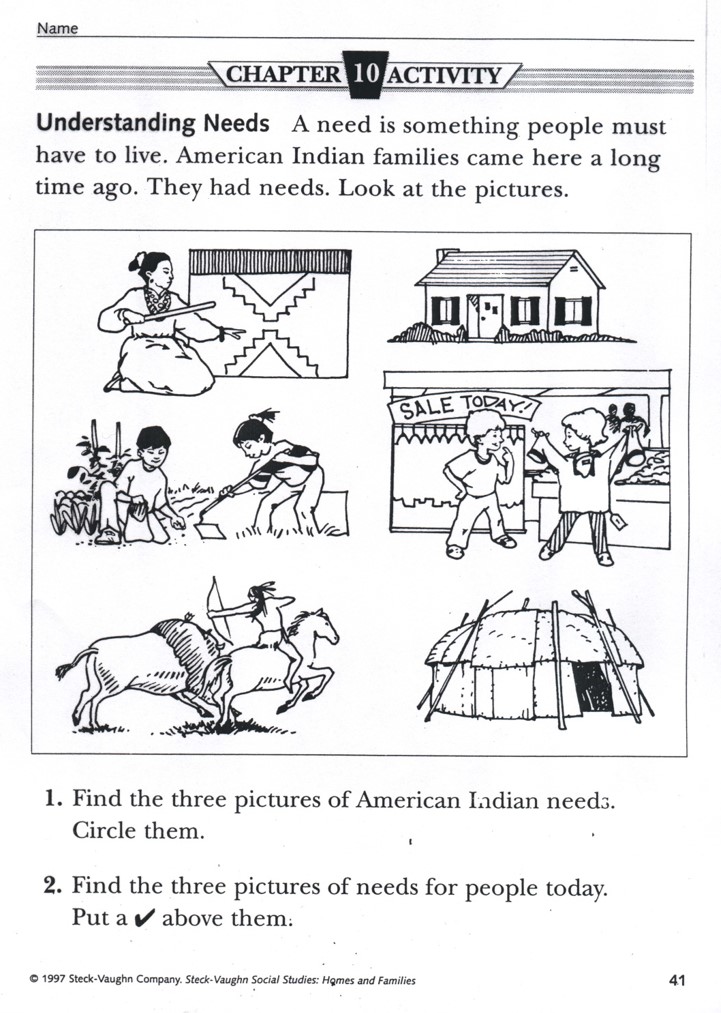
It starts early, in elementary school. Children are taught about the “Three Sisters.” Many used to make model longhouses. The effect of this is that from an early age, children in New York are taught to see Indigenous peoples as part of the past. Every year, I have students in my classes who did not know that Indigenous people still existed. Obviously, this is a problem. Ask a crowd of students to draw you a picture or describe an Indigenous person. I think you can anticipate the sorts of images that will appear. Teepees and horses and bows and arrows; leather and feathers and beads. When you teach students that Native Americans are part of the past, you make it more difficult for them to take seriously the very real grievances of Indigenous peoples in the present.
It does not get better in later grades. There is little meaningful discussion of the power of the Haudenosaunee—the League of Five and, later, Six Nations–that controlled nearly all of the land that became New York state during the eighteenth century. Indeed, my students arrive at Geneseo with no knowledge of how Iroquoia became the Empire state. We could talk about the Declaration of Independence. They may know a bit about the entirely uncontroversial preamble to the Declaration, but they know nothing of the specific grievances which make up the real heart of the document. “Merciless Indian savages, whose known rule of warfare, is an undistinguished destruction of all ages, sexes, and conditions”: this line appears as the last of those grievances, along with the accusation that George III has stirred up “domestic insurrections amongst us.” Hostility to Indigenous peoples is inscribed in our national DNA.
The way the constitution is taught does little to help. It appalls me, as I am sure it appalls many of you, that it is possible to graduate from college in New York state without having read the Constitution in its entirety at any point in a student’s educational career. Some teachers, meanwhile, still present to their students the “Iroquois influence thesis,” which seems to be making something of a comeback. The “Iroquois Influence” thesis has been around for a long time. The argument goes: The Founders learned from Haudenosaunee diplomats the strength and value of an unbreakable union. These lessons were offered at treaty grounds and councils, where native peoples and European newcomers met. The Iroquois presented a workable model of democracy and confederation for the men who wrote the Declaration of Independence and the Constitution. Although it isn’t true, the theory had purchase and became popularized. In 1988 the United States Senate even approved a resolution acknowledging “the contributions made by the Iroquois Confederacy . . . to the formation and development of the United States.”
In reality, the Iroquois League was not a democracy, but a place for ritual condolence and consultation among the League’s Five (and later) Six Nations. League sachems sought consensus but did not operate on the principle of majority rule. There is little about the Iroquois League in myth and historical memory that resembles the winner-take-all approach to politics engaged in by the American founders and their successors. So the version of Iroquois history that became so popular was simply wrong. Moreover, history shows that at the time of the founding, there were plenty of existing models for the new government; many of the colonies had a single executive and bicameral legislatures.
The entire discussion suggests that the American founders were more enlightened than they really were, that they were willing to learn from the people the Declaration shows us that they encouraged their followers to hate. The Revolution was, for Indigenous peoples who controlled much of this state, a nightmare. American forces, fighting for their own freedom, had no qualms about denying other peoples this same unalienable right. They invaded Iroquois territory during the Revolutionary War. The results were horrifying. In April 1779, New York militia forces struck Onondaga, the very center of the Iroquois League, burning the town and scattering its people. Onondagas said that the American soldiers raped women and murdered their children. Students learn none of this in New York State. Several months later, an American army invaded the homelands of the Senecas and Cayugas, the two westernmost Iroquois nations. They burned 40 towns, boundless orchards and crops in the field. They contributed to people’s forced dispersal and migration and an Iroquois diaspora that continues to this day, with Iroquois communities in two Canadian provinces and three American states. Almost none of my students have ever heard of the Sullivan-Clinton campaign against the Iroquois.
These soldiers hoped to “distract and terrify” the Haudenosaunee and, in General Washington’s own words, “extirpate them from the country.” Before they marched, the American soldiers drank a toast promising “civility or death to all American savages.” To Indians, the Founders were not freedom fighters but invaders and “perfidious” and cruel “White savages.” They knew White settlers not as champions of liberty but as “butchers,” “killers,” and “mad men.” They called them “Long Knives,” a terrifying name that reflected the violence with which they long had been associated. Do students in New York learn any of this? No. Not one bit.
Those Indigenous people who confronted the Founders and the citizens of the young republic feared that the Americans acted with genocidal intent, and they said it again and again. And they felt this way for good reason: One solution to the “Indian problem” confronting the new nation was, for some settlers, extermination, and groups of Americans expressed this desire frequently. They also acted on these words in ways that confirmed Native peoples’ worst nightmares: the slaughter of innocents carried out by the Paxton Boys late in 1763, for instance, or the massacre at Gnadenhütten in March 1782. Gnadenhütten means “Huts of Mercy.” But American soldiers showed no mercy to the Christian Indians who lived, prayed and worked at this mission town in what now is eastern Ohio. The soldiers surrounded them, held a vote and determined to kill them all, men, women and children. They killed babies. This was, for many Native peoples, what American democracy looked like. Genocidal violence has no place in the history that is taught to students in this state.
The Founders saw nothing in the culture and society of Indigenous people of value, beyond the occasional rhetorical prop they could wield to critique and distinguish themselves from a refined and effete Europe. At best, some believed that some Indians might possibly become something else. The republic’s first presidents all pursued policies designed to transform Indians into replicas of White America acceptable to White Americans. With proper teaching, they hoped, some might progress from savagery to civilization. They would blend into the American population and disappear. They would give up their culture, and also their land.
Indigenous land became the means to pay continental soldiers. New York, for example, which grew and expanded across the Iroquois homeland, became the Empire State only through a systematic program of Indigenous dispossession, its government financed from the sale of lands fraudulently and illegally acquired from Indigenous peoples. To say that Haudenosaunee people gave to White America the gift of democracy in the end rests on the flawed assumption that Americans were prepared to learn from Indigenous people in any meaningful way. And the proponents of this view do not realize how conservative it actually is: poring through the writings of the Founders, looking for scattered sentences that support their views. It ignores sources from Indigenous peoples, which tell the stories of the communities they lived in and the historical traumas they experienced, endured and survived. They ignore how the Haudenosaunee people resisted conquest and continued to defy those who sought their destruction and dispossession.
In so much of this nation’s tortured discourse on racism and inequality, we are crusaders on the cheap. We claim that the Iroquois influenced the Constitution, without discussing the very real ways that Constitution justifies a colonial regime that limits Native peoples’ powers over how their communities are governed. Even efforts to be inclusive misfire.
The discussion of removal is another good example of the problems with the way history is taught in New York state. The Removal era is specifically mentioned in New York’s social studies framework. The framework mentions Andrew Jackson’s defiance of the Worcester decision. My students all have heard the story of Cherokee Removal and the Trail of Tears. This is understandable because the Cherokees managed to make the removal debates all about themselves. But why do New York teachers tell their students about Cherokee Removal and not about the removal of Indigenous people from this state? Why do they not explain how Oneida communities relocated to Green Bay?
I used a phrase at the outset of this discussion: settler colonialism. Teachers, I suspect, are probably familiar with concepts like extractive colonialism—the seizing of land outside the homeland for the purpose of exploiting resources that can enrich the mother country. Settler colonialism is something different. Here, the resource is the land. An Australian scholar named Patrick Wolfe laid this out way back in an essay called “Settler Colonialism and the Elimination of the Native.” The elimination of the native, in this sense, can come through cultural genocide—what we in this country often call “assimilation”– or the literal elimination or extermination of Indigenous peoples.
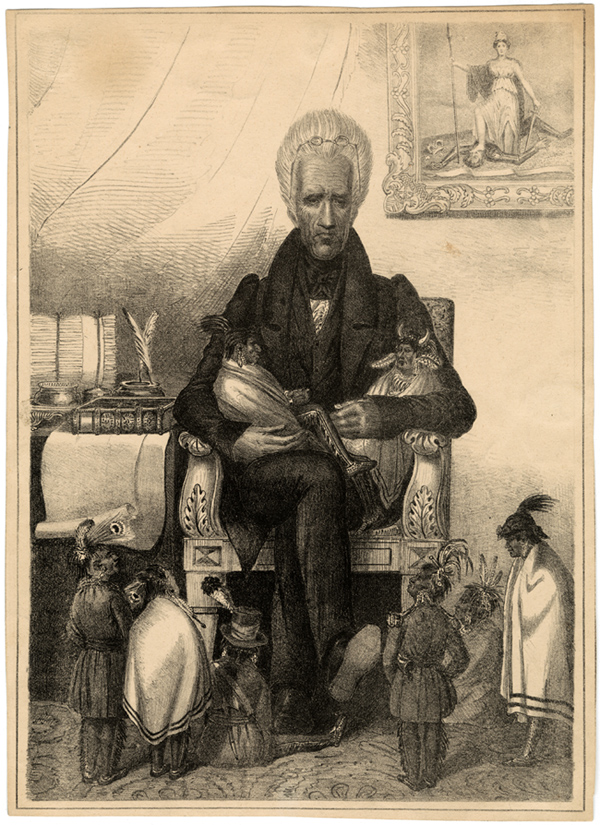
You can make Andrew Jackson the villain in the story if you want to, but removal began before he came on the scene and continued after he was dead. It would have happened whether or not he was elected president. We denounce the Founders and their successors for their support of “Indian removal” from comfortable homes that sit on Native American land. We are only too willing to overlook our own complicity in historical injustice and the bloody birth of the American Republic by clinging to comforting myths about who and what we are. We won’t talk about dispossession, but we will talk about how the Iroquois taught us about freedom; Removal was horrible, but Andrew Jackson was responsible for that, and eventually we will manage to remove him from the twenty-dollar bill. That will fix the problem.
My point is that in every instance where a choice is made about what to include or exclude in Native American history, the decision always is made in such a way that it insulates New Yorkers from blame or responsibility, conceals the coercion, violence, and deceit with which New Yorkers conducted themselves, and lies to children of this state about their past.
Let me give you another example. My students will have heard something about the Carlisle Indian Industrial School in Pennsylvania. It operated from 1879 to 1918. It was the most well-known of the federally-supported boarding schools. Most of them have seen the famous Choate postcards, before-and-after pictures taken of Carlisle students. But not one of them has heard of the Thomas Asylum, later the Thomas School, which operated for more than a century on the Senecas’ Cattaraugus Reservation beginning in the 1850s. There are people alive today who attended the Thomas School. New York was in the business of government-run boarding schools well before Congress got involved.
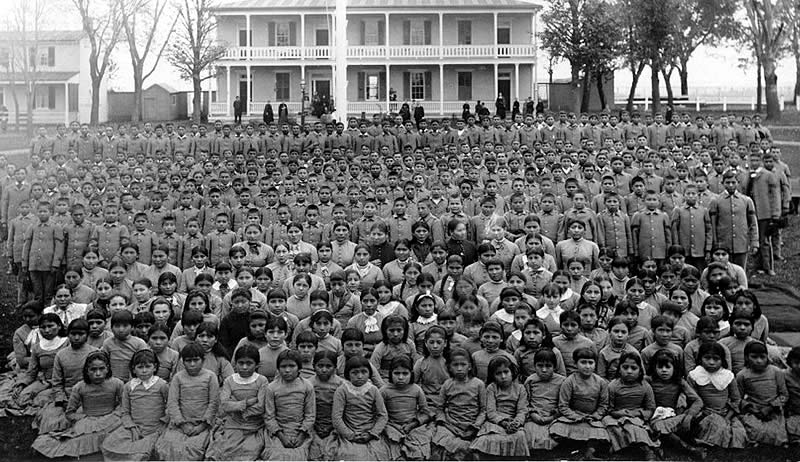
Some of my students will have heard of the Dawes Act, or the General Allotment Act of 1887. Important, right? The New York social studies framework says it is. But the Dawes Act did not apply in New York State. The state undertook its own programs of allotment beginning well before the General Allotment Act. It pursued the policy on its own. What is my point? Nearly every bad idea in the history of American Indian policy has had its origins in New York State. Termination, for instance, came to New York before it became the general policy of the United States in the 1950s.
So what do we do about this? Here’s why this matters. I like to remind the people to whom I speak that “termination” was the “Indian policy” of the United States when I was born. Progress has been slow, but it is real. When I started graduate school in 1990, Americans were beginning to plan for the Columbian Quincentennial, a celebration of the 500th anniversary of the “discovery of America.” Native activists, scholars, and their allies pushed back. You can see the effects of their work. Columbus will never be celebrated again. His reputation has been entirely destroyed, whether or not Columbus Day is entirely replaced with Indigenous Peoples’ Day. Progress unthinkable just a few short years ago is coming on many fronts. Because of the often unheralded work of Indigenosu activists and their allies, Americans are increasingly aware of the 4200 unsolved cases of Missing and Murdered Indigenous women in the United States, and they are calling upon the government to act. In places, and in small amounts, land is being returned to Indigenous Nations, a product of the #LandBack movement. Governor Tim Walz of Minnesota recently returned several thousand acres to the Mille Lacs band. The Onondagas in New York received more than a thousand acres back. These are small steps addressing a big problem, but the achievements here are significant.
Meanwhile, the Seneca Nation of Indians is the second largest employer in Niagara County and Cattaraugus County. The Oneida Indian Nation in central New York spent more than $305 million in payroll and benefits in 2025, and $542 million more in capital spending making it a massive economic power in the region. Students in New York schools learn nothing about the economic, political, and social significance of Indigenous nations in New York today. As a result, they often know little about their neighbors.
Despite military invasion, waves of epidemic disease, an illegal campaign of dispossession, and systematic efforts to eradicate Haudenosaunee culture, Haudenosaunee peoples are still here. They are living on lands they have occupied since long before the United States was born. The Onondagas and the Tonawanda Seneca Nation, who still live under a traditional form of league governance, are the only Indigenous communities east of the Mississippi still living on their homelands under a form of government that predates the arrival of European colonists.
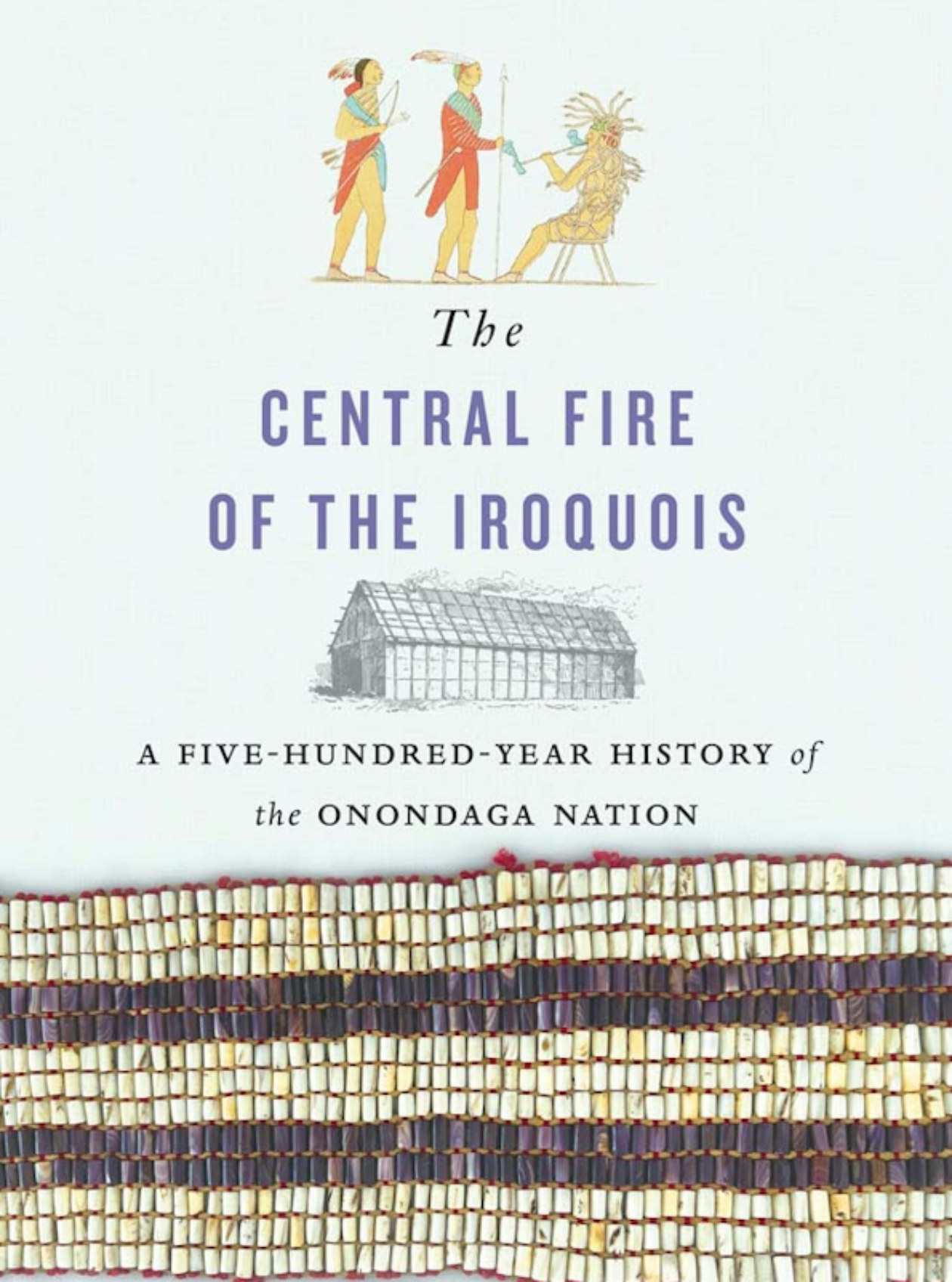
A couple of years ago, as I was finishing up the book I was writing about the Onondaga Nation, I met with several elders at the Nation’s office complex. I told them that I was nearing completion, and that I was uncertain how I should bring this massive story to a close. One of the clan mothers, bless her, told me the answer was simple. Tell them, she said, that we are still here.
I think of this often, every time a student expresses surprise that Indigenous peoples still live in New York state, or when they come to me shocked that they had never heard before some part of the story of the Indigenous past that I had just shared with them in class.
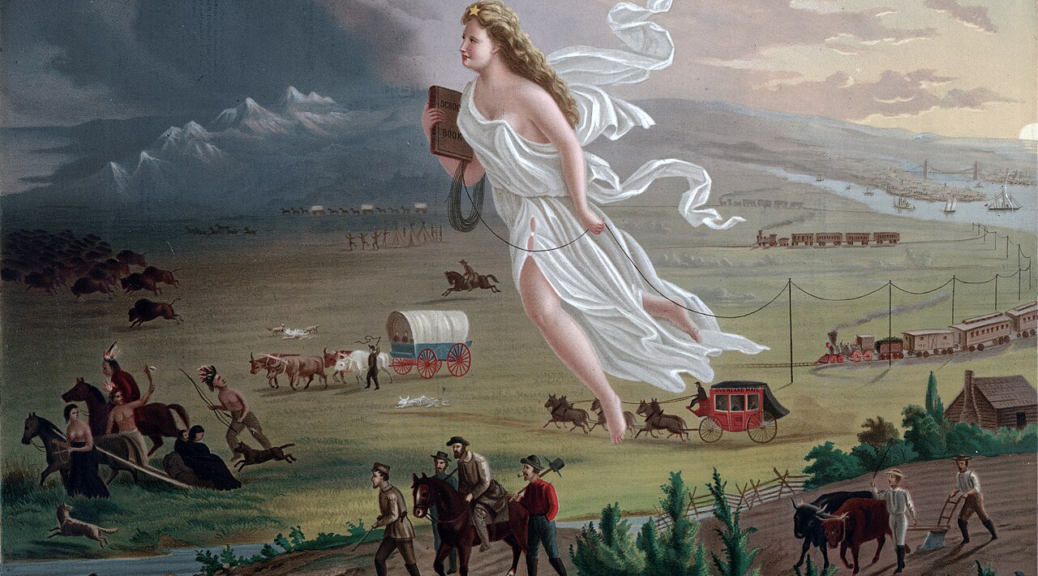
A friend once told my wife that I was an angry historian. I immediately dismissed this when she told me about this conversation, but maybe that dismissal was rash. Certainly I believe the state’s education system must do better if we are to create a more just, equitable, and historically informed population. New York became the Empire State not through conquest but by carrying out a systematic program of Indigenous dispossession. In places, this process violated federal law. Dispossession was not a product of conquest. It was not natural. It was not inevitable. Nor was it the American Nation’s “Manifest Destiny.” In places it was quite simply a crime against the laws of the United States. Even when the United States acquired lands in a manner that was “legal,” the practices deployed by the land companies and their allies should repel people of conscience. They used deceit and coercion. Nobody who has looked at the historical record will deny this. We who own land in this state, as a result, are the beneficiaries of an unjust process of dispossession. That we do not teach our kids about this seems more than coincidental and more than convenient. We have run up an enormous debt. The question, for me, really is not a matter of whether or not this debt exists, but what am I, and what are you, going to do about it. The Trump Administration can pass laws proscribing the teaching of certain subjects. A majority of white Americans will join them in dismissing what I have described above as “woke” history.
But that’s not an answer. It’s not an argument. It’s an abdication, and an admission, in my mind, of complicity in a crime that too many people in this state are too unwilling to talk about. And the kids who attend school in this state learn nothing of this. Maybe teachers and administrators and the people who write learning outcomes know no better. Maybe they, too, are products of an educational system in New York that conceals the state’s crimes against Indigenous peoples. I can be remarkably forgiving, and I travel around speaking to as many audiences as I can to spread the word. But, on the other hand, I feel that it is their job to know better, to challenge entrenched injustices, and to teach curiosity, critical thinking, and the asking of tough questions. And I do not think they are doing that job very well. Maybe the concealment is deliberate. A tension has always existed between history as an academic discipline and history as part of a civic education that produces citizens informed, loyal and obedient. It is easier to blame removal, for example, on Andrew Jackson, than to address one’s own complicity in so enormous a crime. And it seems like it remains more important to teach civic pride than critical history. Your kids are allowed to think critically about the past, as long as doing so does not reflect poorly on New York State.
