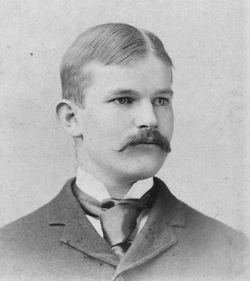
The New York Times the day before yesterday published an article on Scott Dawson’s recent book, The Lost Colony and Hatteras Island. The book has generated a lot of attention because it purports to prove the location of the so-called “Lost Colonists” who attempted to settle Roanoke Island in 1587.
For those of you unfamiliar with the basic contours of the story, in 1584 Sir Walter Ralegh sent a reconnaissance voyage to scout the location for a new colony that he hoped would serve well the three principal ends of Elizabethan empire: profit, through discovery of valuable items or trade with indigenous peoples; religion, in the form of the expansion of Elizabethan Protestantism abroad; and security in the form of providing a base for privateering raids against the Catholic Spanish, the wicked tools, in English eyes, of the scarlet whore of Babylon. English colonists planted an outpost on Roanoke Island with the permission of the weroance Wingina in 1585, but it lasted only a year. English demands for food, outbreaks of disease, and violence made them unwelcome visitors. With a hurricane bearing down upon them, and after having murdered Wingina, the colonists returned home aboard the massive fleet Sir Francis Drake had used to terrorize Spanish holdings in the Caribbean. The English tried again in 1587, placing the colony under the charge of the artist John White. Hostilities with the Indians remaining from the previous year’s colony led to the immediate killing of one of White’s advisers. White led a retaliatory raid that struck the Croatoans rather than the Indians they intended to hit. This debacle was followed by the coward White’s return home to fetch more provisions. When he finally returned three years later, in 1590, the colony had disappeared. The only clue, we are so often told, was the word “Croatoan” carved into a post near the settlement on Roanoke. Croatoan was an Algonquian village that stood on today’s Hatteras Island.
Dawson, working with the archaeologist Mark Horton, has argued that the Lost Colonists did not disappear (an argument that almost nobody actually makes–all agree they went somewhere). Just as that carved post might lead one to believe, they left Roanoke and settled under the protection of the Croatoan Indians. Manteo, a Croatoan who had worked with the English since 1584 and been baptized into Christianity in 1587, would have eased in the resettlement. A large quantity of archaeological evidence has been found at the sight, Dawson says, and some of it is quite promising. There are also bits and pieces of historical evidence–a traveler’s account, for instance, from the early eighteenth century indicating that he saw blue-eyed Indians living in coastal Carolina.
Dawson told the Times that he was “trying to get the Croatoans’ history back from the depths of mystery.” The Croatoan Indians, he continued, “played a huge role in American history.” The Croatoans took the colonists in and sheltered them, while “in school you’re taught that no one knows what Croatoan means.”
I have yet to read Dawson’s book. I have seen enough to be deeply disappointed by all the attention it has received. There are, from what I have observed, a number of significant problems with the argument Dawson presents.
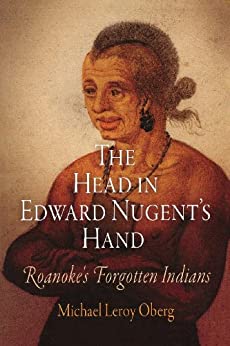
First, there is absolutely nothing new about the argument that the colonists relocated to Croatoan Island. Every book written on the subject, including mine, considers the possibility. Most of us approach the Croatoan prospect with interest, but leave unpersuaded. It is a small island. The first things Croatoans did when they encountered the English in 1587 was ask them not to take any of their food, as they had little to spare. Perhaps a small party went there to look for White’s return, a possibility suggested by numerous historians because of the route English ships likely would have taken on their return to Roanoke. But the reasons not to go there were powerful (you can read about those reasons in my book The Head in Edward Nugent’s Hand). Indeed, recent archaeological work by Nick Lucketti and his associates from the First Colony Foundation offers suggestive evidence that the colonists headed inland toward the head of Albemarle Sound. There is documentary evidence supporting this hypothesis as well. The only reason to think that Dawson’s interpretation about Hatteras might be innovative and interesting is because of the archaeological evidence upon which it seems to rest.
And this brings us to the second problem. Horton’s discoveries are exciting and they are worth looking at more closely. Horton has been talking about his discoveries for several years, however, and students of the Roanoke ventures remain skeptical. That is because he has not published any of his findings and subjected his research to scholarly peer review. There is a history of grandiose claims made on the basis of archaeological discoveries on Hatteras. You might remember the gold signet ring uncovered by archaeologist David Sutton Phelps some years ago. Something interesting is found, and it leads to large leaps of faith to establish a connection to the Lost Colony.
Dawson certainly seems guilty of this. For instance, in a story written about Dawson’s book by James Hampton of The Virginian Pilot, “a lead tablet and pencil found at the dig could have belonged to White himself, Dawson said.” Hampton continues
White also was part of the 1585 group, working as an artist who drew natives and wildlife . . . He likely used the newly discovered tablet or a similar one.
That seems like quite a stretch. But here’s the kicker.
“The uncovered tablet has an impression of an Englishman shooting a native in the back . . . Wingina, chief of the Secotans, was shot twice in the back by an Englishman in 1586 at a village near what is now Mann’s Harbor, Dawson said. The Croatoans assisted the English in the ambush, Dawson said.”
There are problems with this claim. A huge leap is made from an artifact to the colonists. John White did indeed accompany the 1585 expedition and his famous paintings are justly revered by scholars for their depiction of Algonquian cultures and the flora and fauna of the Outer Banks. But White did not remain with the 1585 colonists. He returned home on August 25th, 1585, so he certainly never witnessed the 1586 attack (in which one Croatoan assisted). The English did visit Croatoan for a short period on July 30-31, 1587, to look for food and friends for colonists who had neither, but it is not precisely clear that White was with them. “The Governour,” as he referred to himself, is not mentioned. After leading an attack on the 22nd of August to avenge the killing of a colonist that fell by mistake upon the friendly but frightened Croatoans, White at the colonists’ command returned to England. Dawson would thus have us believe that a tablet used by White to draw an event he did not see ended up at the Algonquian village we have no evidence he ever visited.
Furthermore, the 1586 English attack on the village of Dasemunkepeuc was a traumatic and dramatic event. The English killed and then beheaded the weroance Wingina (who by that time had taken the name “Pemisapan”). There were some Croatoans in the village when the English fell upon it. They witnessed the treacherous attack. Is it unreasonable to think that a Croatoan may have etched a picture of the attack on a tablet acquired through trade? Native peoples in the coastal Carolina region wanted to obtain English goods. Indigenous peoples could draw. They could make use of European goods. They could raise English livestock. Dawson looks for ways to connect the English goods he and Horton found on Hatteras to the Lost Colonists so badly that they seem to overlook that native peoples themselves could make use of English manufactured goods. There is almost no likelihood that the lead tablet found at Hatteras and linked by Dawson to the Lost Colony was used by John White or the Lost Colonists.
That Horton has not shared his archaeological evidence nor subjected any of his research to peer review is another problem. Horton can not expect historians, anthropologists, and archaeologists to find his old and familiar arguments persuasive if he does not publish his findings.
In my own book on Roanoke, which Dawson does not include in his sparse bibliography, I argued as he did that the Lost Colonists’ did not disappear. Indeed, I made the point that the colonists were lost only to those English explorers who tried and failed to find them. Algonquian peoples knew what happened to them and most likely determined their fate. There has been a long national obsession over the Lost Colonist. Yet the shores of the Atlantic World were littered with the remains of castaways, castoffs, and casualties. Getting lost and left behind was part of the business. Roanoke is much more interesting as an Algonquian story, of native peoples adjusting to the arrival of newcomers, making use of them in their own political, economic, and diplomatic maneuvers, before ultimately deciding that the colonist caused more harm than good. As the great historian Malinda Maynor Lowery said in the New York Times piece, the Lost Colony legend is “like a monument that has to come down,” but that “it’s harder to dismantle an origin story than a statue.” Dawson and Horton, however much they claim to look at the Croatoan Indians, focus all their efforts on that tired and failed monument to English empire on the Outer Banks.
How did the “Spanish Flu” epidemic that hit the United States in 1918 affect the Onondaga Nation? I cannot tell for sure, but going through the census records kept by the Interior Department and the State of New York has given me some ideas.
We know that the epidemic did great damage in Native American communities. One scholar estimated that more than 6200 Native peoples died from influenza in 1918, 2% of the total Native American population. The Seneca Jesse Cornplanter returned home from his service overseas during the first World War to learn that his parents, sister, brother-in-law, and two children had died. Joaqlin Estus’s piece in Indian Country Today from last February highlights some of the massive desolation, with a particular focus on Alaska Native communities. Estus mentions Harold Napoleon’s Yuuyaraq, one of the most powerful and important indigenous assessments of what the epidemic meant. I have assigned it to my students, and I encourage you to consider it as well.
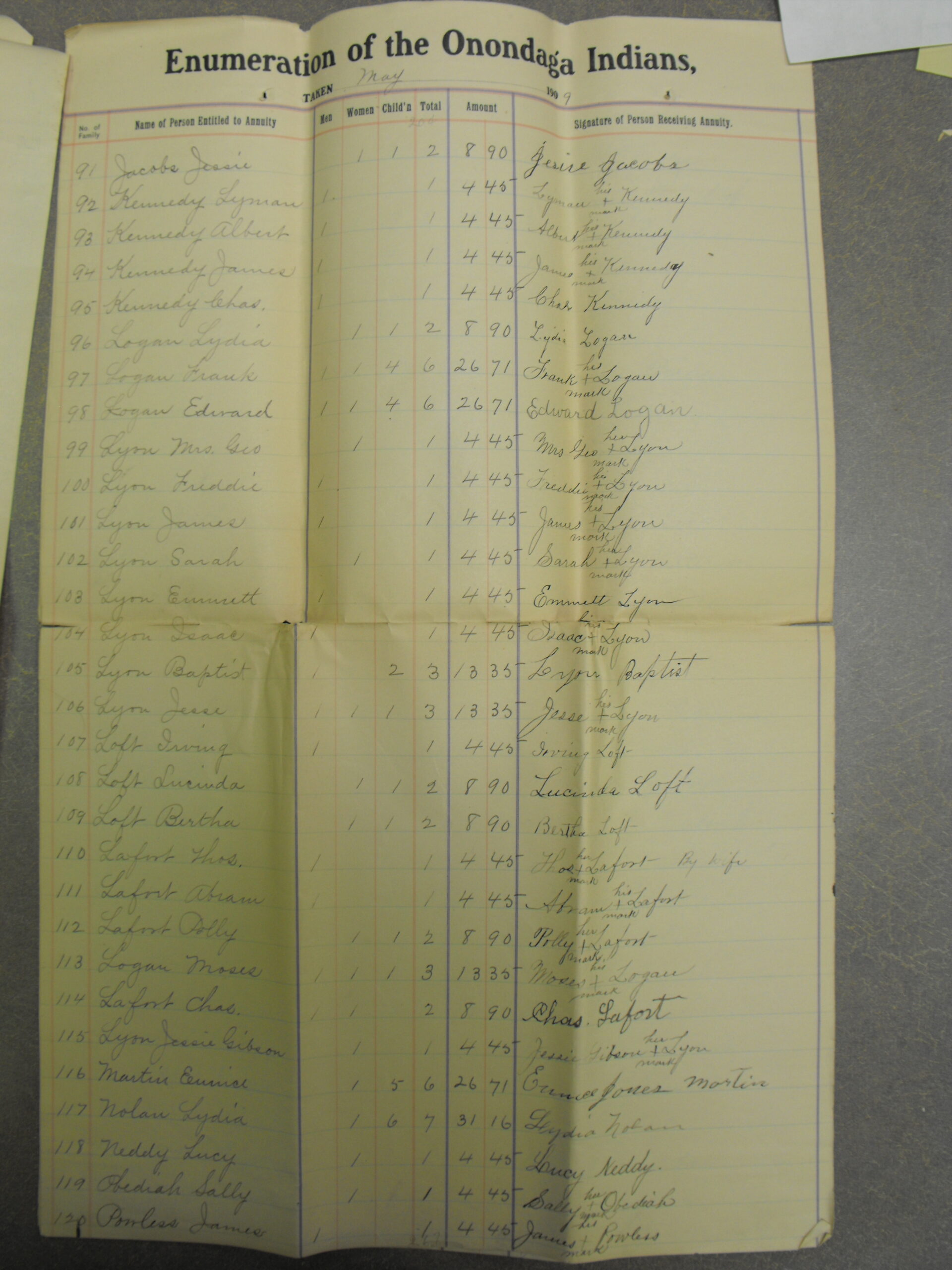
In 1918 418 Onondagas lived on the Nation Territory located a bit to the south of Syracuse, New York. Another 128 Oneidas lived on the reservation. Between July 1, 1918 and June 30, 1919, nine Onondagas and seven Oneidas died. Some, like Mary Jones, were elderly, and some were very young, like Eliza Homer’s baby boy. Two had attended Carlisle. Jerry Homer I have written about on this blog in the past when I knew less about him. Eva Waterman was a popular rebel at the Boarding School, expelled for her behavior. She was a talented student, but O. H. Lipps, the school’s superintendent, wrote to Eva’s mother in 1913 to tell her that “because of continued misconduct your daughter Eva Waterman, will be returned to you tomorrow. Her influence for the bad,” Lipps continued, “is so great that I deem it advisable to separate her from the rest of our girls.” He said he was sorry that he had to do this. She was, according to one report of her outing, “impudent at times.” She had a smart mouth, and she made the other students laugh. She had influence. In a letter from “Behind the Bars” to “Dearest,” undated, Eva wrote from one of her outings to a friend back at Carlisle. She missed her friend, and she missed the school. She said that it was good to receive a loving letter from her because “the only kind I hear is these coarse, hoggish, indigestible commands.” A Carlisle investigator, looking into Eva’s complaints about one of her outing situations, found that she spent her time lying around in the hammock, playing croquet, and reading. She was impudent. She had little interest in farm work and she ran away. To me, she sounds like a teenager, a kid, who refused to take the adults around her seriously. But she needed to be broken. One of the matrons at Carlisle suggested that for Eva “all privileges might be taken away and work all day in the laundry might be required for a certain length of time and if possible she should be prevented from communicating with the girls and making herself a heroine instead of a failure.” It did not work and she was sent home. She spent some time living in Syracuse, and at other times she lived on the Nation Territory. She was still a young woman when she died.
The census records do not tell us the causes of death for these individuals. It is worthy of note that during this twelve-month period which contained the peaks of the influenza epidemic fewer people died than during the previous year. From July of 1917 until June 30 1918, twelve Onondagas and 9 Oneidas died. From July of 1916 to the end of June in 1917 thirteen Onondagas and three Oneidas died.
The evidence suggests that a fourth wave of the Spanish Flu hit New York City and other locations around the country early in 1920. And between July 1 1919 and June 30 1920, nineteen Onondagas and four Oneidas died. Some of the relatively large number of Onondagas who died had lived long lives. Joshua Pierce was in his mid-90s. Mary BigBear and Abner Printup both had been born in 1836. Others were struck down in middle age. Nine of the Onondagas who died were under thirty years old. Lavina Hill and Lena Jacobs both were around five years old. David George and the “Baby Isaacs” were just one. Bernice Jacobs, George Archie Logan, and Florence Tallchief all were teenagers.
Other diseases, or accidents, could have killed people. Life could be fragile in the early twentieth century. Death could strike suddenly. Tuberculosis was a steady enemy of Indigenous peoples’ health. There is much we cannot know, but the leap in the number of Onondaga deaths between 1918-19 and 1919-20 is striking. Nearly twenty people dying in a community of a bit more than 400 would have been felt acutely, especially with the deaths of so many young people who should have had so many more years to live. These deaths, however, did not draw the attention of local journalist or the legions of judgmental observers who criticized the Onondagas for their backwardness and continued embrace of “paganism.” And they would have gone unnoticed by me had I not devoted the past month to reading through these figures. This is the sort of work we must do, even if it is only a start. Each death, in a community where there were no strangers, would have been a blow, with waves of grief that must have swept throughout the small community from the very young to the very old.
What’s it like to live in a community in which every single person in it feels the same grief at the same time? I have thought about this question a lot as I looked through these records. I have thought about it as well when I read the Jesuits’ 17th century descriptions of the epidemics that swept through Iroquoia, cutting jagged holes in the fabric of everyday life. Whether Spanish Flu, consumption, suicide or accident, or in our own time killer cops, the coronavirus, or colon cancer, these historical moments may lead some of us towards greater empathy. It is a difficult journey, and one we need to make.
Last night officials at the Federal Penitentiary in Terre Haute executed Lezmond Mitchell for a brutal crime committed half his lifetime ago. The 38-year-old was the only Native American on federal death row, and the fourth person killed by the government since the Trump Administration resumed executions after a hiatus of nearly two decades.
Mitchell was convicted of a truly horrifying double homicide. In 2001, according to the New York Times, Mitchell and three others “plotted to carjack a vehicle to use in an armed robbery. Mr. Mitchell and Johnny Orsinger, his 16-year-old accomplice, killed Alyce Slim and her granddaughter, before decapitating them and disposing of the bodies in a shallow hole. Three days later, Mr. Mitchell and two others robbed a trading post on the Navajo Reservation, using Mrs. Slim’s pickup truck.”
There are problems with this case. Because both Mitchell and his victim were Navajos, the crime fell under federal jurisdiction because of the 1885 Major Crimes Act, an important piece of legislation that played a role as well in the Supreme Court’s recent decision in McGirt. Mitchell was arrested and held in a tribal jail for nearly a month. Without an attorney present, FBI agents interrogated him. They brought him before the court only after he had confessed. Mitchell’s confession was never recorded and in his only recorded statement, said that he had no direct role in the slayings. The jury also learned little of Mitchell’s tragic life story: the horrors of intergenerational trauma, drug abuse, and mental illness. Only one Navajo sat on the jury.
Now here is where things get complicated. As the New York Times put it, “the Federal Death Penalty Act of 1994 allowed tribes to opt in to the death penalty, and nearly all—including the Navajo Nation—have opted out. But Mr. Mitchell was convicted of a federal crime to which the tribal option did not apply, ‘carjacking resulting in death.’” The federal prosecutors understood that Mitchell’s accomplice was the primary assailant, but he was 16, and ineligible for capital punishment. Mitchell, just twenty, took the bulk of the blame and faced execution if convicted. Had he been tried for murder, he could not have been executed; the carjacking charge was a federal government workaround by a Justice Department that wanted to prosecute a capital crime. Navajo officials repeatedly called upon the government to commute Mitchell’s sentence to life in prison without the possibility of parole, as the government had done in twenty other murder cases.
Lezmond Mitchell is dead. As Carl Slater, a delegate to the Navajo Nation Council put it in an op-ed piece in the New York Times, “this case remains the only time in the history of the modern death penalty that the federal government has sought capital punishment over tribal objection for a crime committed on tribal land.” This judicial murder was a violation of the government’s promises to Native peoples under the Federal Death Penalty Act. It was, as Slater pointed out, a “grave injustice.” It is also proof that the federal government is a large and mighty beast, and that steps forward like the decision in McGirt are nearly always followed by steps backward.
The Major Crimes Act of 1885 amounted to the imposition of colonial control over native nations. When the Supreme Court upheld its constitutionality a year later, it acknowledged that the Constitution contained no language granting to the United States the power to prosecute crimes between Indians committed on the lands of a Native nation. As a result, it justified this action on the basis of federal strength and the relative weakness of Native peoples. Echoing the language of John Marshall’s decision in Cherokee Nation v. Georgia (1831), the Court held that “these Indian tribes are the wards of the nation.
These Indian tribes are wards of the nation. They are communities dependent on the United States. Dependent largely for their daily food. Dependent for their political rights. They owe no allegiance to the States, and receive from them no protection. Because of local ill feeling, the people of the States where they are found are often their deadliest enemies. From their very weakness and helplessness, so largely due t the course of dealing of the Federal Government with them and the treaties in which it has been promised, there arises the duty of protection, and with it the power.
The 1994 act tempered federal power over Native nations when it came to the imposition of penalties for Major Crimes. It accorded Native nations the power to determine who would face capital punishment for crimes committed on Indian reservations. It was a pledge that tribes, in this very constrained circumstance, could choose to follow their own values. In Lezond Mitchell’s case, the Federal Government turned its back on that promise.
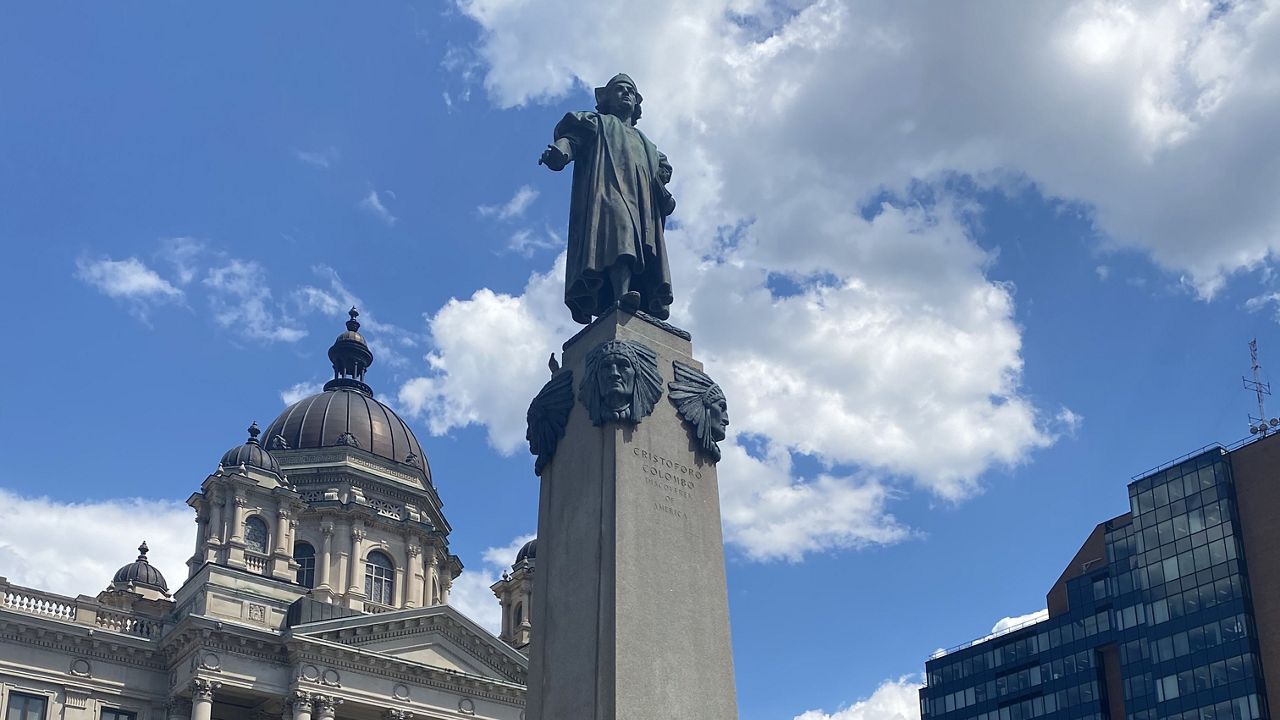
This past Thursday, the Onondaga Nation issued a statement on the notorious statue of Christopher Columbus located in Columbus Circle in downtown Syracuse. They did so at the invitation of a Syracuse Inter-Faith Commission, and as a contribution to the 23-member panel that will issue recommendations to the mayor about what to do by the end of the summer. The Onondaga Nation’s statement is worth your time and attention.
The Nation expressed their hope that “through diplomacy, discussion, and open minds, these discussions will lead to a positive solution for the future of Syracuse with inclusion for all people to live in peace as neighbors and brothers.” They looked forward to “an outcome that will encourage peace, understanding, and the united brotherhood exemplifying the foundation of cooperation, peace, and equality for the generations yet to come.” They reminded Syracusans that the city stood in the heart of what was once their homeland, the site of the central council fire of the Haudenosaunee, and that the Onondaga Nation “carries a great responsibility in the continued existence of our sovereign government.” The Nation’s “traditional teachings are morally dignified and highly principled in peace and democracy and our way of life means being ever thankful for the many gifts of our mother earth. We are,” the statement reads, “people culturally mandated to respectfully live as caretakers of Mother Earth and as equals to all beings within the natural realm.” Anyone who knows anything about the history of Syracuse knows that the City and its people have seldom lived up to these ideals.
The statement struck a conciliatory and diplomatic tone in addressing the City’s Italian-American community, which has raised money to keep the Columbus statue right where it is.
We fully understand the wishes of the Italian American community to honor their heritage, but it is burdensome for the people of Onondaga to see Christopher Columbus memorialized with a statue. Within our lands and hearts, finding equality and peace is difficult knowing the hardships our ancestors endured as a consequence of his campaign. Our own monuments, beautiful lakes, streams, rivers, and the earth itself, has suffered greatly as a direct result principle of the Doctrine of Discovery to which Columbus used to claim the lands in the name of the Spanish crown.
The power of the pen favors the writers of history. In truth, what was “discovered” on this continent we know as Turtle Island were well established independent nations of indigenous peoples. People living within their respected ways of life in accordance with their individual cultures. As indigenous people, we are taught of the exploits of Columbus while our own history was being unheard, misunderstood, and often erased.
The Onondagas thought it best that the statue be removed. The space it occupies might be repurposed to better ends.
At this crucial time in our joint history with the need for unity and compassion at hand, we ask ourselves is honoring the heritage of the Columbus righteous and just? Should we continue to ignore all the different peoples who suffered enumerable atrocities? We think not. We know we are not responsible for the transgressions of our ancestors, but it is never the wrong time to do the right thing. The Onondaga Nation does not wish anyone’s culture or heritage to be affronted in the manner ours have suffered; but to find a way to allow the space currently occupied by the Columbus statue to be reinvented and reenergized into a symbol of unity for all.
The statement concludes with a call to find a good mind, to come together and find a consensus and a solution “in which all the peoples who call Syracuse home may find a way to continue to honor each other’s heritage and cultures.”
There is a lot going on in this document. Columbus appears in it as both myth and symbol, as something more than a historical figure. I have written about this “mythical Columbus,” and the functions these myths serve, on this blog in the past. For Italian-Americans Columbus serves as a symbol of freedom and a hero whose experience shows that Italians are important in American history, and that Italians were present at the very creation of the American Nation. In reality, we know that Columbus was an aggressive slaver who never set foot in North America. For Native peoples, Columbus is made to stand in for all the burdens suffered by Indigenous peoples. To the Onondagas’ charge that Columbus was responsible for “the hardships our ancestors endured as a consequence of his campaign,” a historian might argue that Columbus never came close to the Longhouse. He did nothing to you, and neither to “the lakes, streams, rivers, and to the earth himself.” Those who followed him did loads of damage, but that is a longer and more complicated story. “The Doctrine of Discovery,” which according to the Onondaga Nation Statement “Columbus used to claim the lands in the name of the Spanish Crown,” was as much a justification for colonization drawn up centuries later than it was license for empire: Indigenous peoples paid no attention to papal bulls and colonial charters, and the European “Ceremonies of Possession,” as historian Patrica Seed called them, were performed for other Europeans, not native peoples. The work of colonization was brutal and violent, but the process in North America especially was a remarkably unintellectual process. The Doctrine of Discovery mattered little on the ground in the Americas, where Native peoples retained the power to ignore it. Indeed one can find many instances of Haudenosaunee orators dressing down Europeans and their pretentious claims to discovery and conquest.
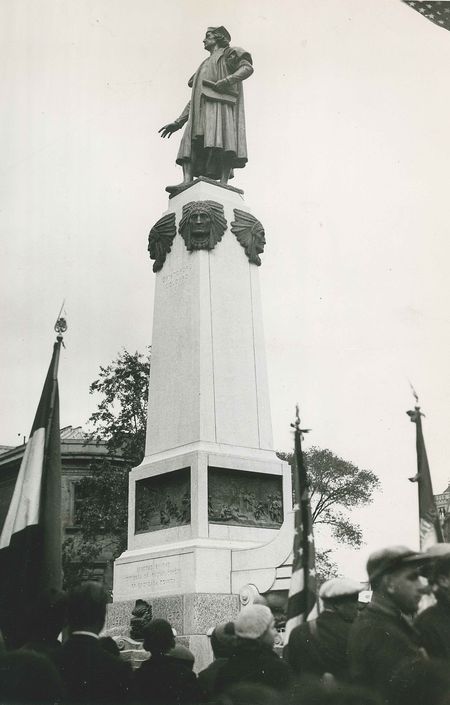
But there is a problem with these arguments. One of the things that has struck me as I have worked on a history of the Onondaga Nation is the Nation’s willingness and ability to speak for Indigenous America writ large, and to have Native North America listen. The Onondagas always have carried more influence than their relatively small numbers would lead one to believe. And for the Onondagas and their allies, the problem with the Columbus statue in Syracuse is precisely the things he has come to symbolize for all Indigenous peoples: the well-documented and undeniable brutality of European colonization, and a campaign erasure, violence, and exploitation that has lasted centuries, from 1492 to the present. With its feet on the heads of Indigenous peoples with Plains Indian Headdresses, and with its friezes depicting Columbus as both hero and conqueror, the statue is a grotesque and graphic celebration of five hundred years’ of genocide, and an white-washing of the viciousness of the Columbian Encounter in the Caribbean.
The Onondagas would like to see the statue removed. They are not alone in this. But they spoke to the people of Syracuse as neighbors. They acknowledged the position of the city’s Italian-American community. But in terms similar to what has been done with the Skä۰noñh Great Law of Peace Center, which repurposed an old living-history museum representing the Jesuits called Ste. Marie Among the Iroquois, the Onondagas spoke of working together in a unified manner to give new meaning to the space occupied by the Columbus statue, to allow it to “be reinvented and reenergized into a symbol of unity for all.”
When the Onondagas filed their “land rights action” more than fifteen years ago, they stated their wish to “bring about a healing between themselves and all others who live in this region that has been the homeland of the Onondaga Nation since the dawn of time.” At a time when groups like Upstate Citizens for Equality were ginning up white peoples’ fears of being dispossessed by Native Americans in Cayuga and Oneida territory, the Nation made clear that it wanted justice and an acknowledgment of their rights to the lands taken in violation of United States law, but that “we will not displace any of our neighbors—the Onondaga know all too well the pain of being forced to leave our homes and do not wish that on anyone.”
There is a long history informing the Onondaga Nation statement. In its demonstration of the Nation’s leaders’ diplomatic skill, and the tactfulness with which the Nation’s leaders assert their will, and in its call for cooperatively defining and sharing space, it echoes themes that run throughout the long history of the Onondaga Nation, and especially in its relations to the non-Indigenous community of what has become over time Central New York. In the relationship between Syracuse and the Onondagas over many, many years, the Onondagas have often been been better neighbors to the City than the City has been to them. The City has expressed a willingness to listen, but acting on what it hears might be difficult. There are many who want the statue preserved. Let’s hope that the Mayor’s commission approaches its work with a good mind, and a desire to be good neighbors to the Onondaga Nation.
Mission San Gabriel burned over the weekend, suffering devastating damage. No conclusions have been drawn about the cause of the fire, but some suspect arson. Though nobody I have read has said anything, I wonder if anyone has made a connection between possible arson and recent attempts to remove monuments to the Franciscan missionary Junipero Serra. He founded the Mission San Gabriel in 1771.
On Monday morning the Los Angeles Times ran a well-reported story about the mission and its meaning in the aftermath of the fire. “Pain resonated around the valley that bears San Gabriel’s name in the wake of the fire,” Gustavo Arellano wrote. “It manifested in ways that told multiple stories about the mission.” Some, Arellano wrote, saw the mission “as a place of horror: where Native Americans toiled under brutally domineering Spaniards and were nearly exterminated.” But others found in the mission “a place that embraced them when few others would,” welcoming immigrants and refugees to a nation that has a poor record for welcoming newcomers. It is a fantastic article, far superior to the coverage in other papers that I have read.
A historical location is different, it seems to me, from a monument, because its purpose is not solely to commemorate. People may visit and look at a monument, but they experience life in places. There was a high school at San Gabriel Mission. My wife graduated there. There was a church where generations of Californians held baptisms, first communions, weddings and funerals. The last time I was inside the mission was 2010, when we held my mother-in-law’s funeral there. In the years since, I’ve driven or jogged past the mission a handful of times.
Places matter in our lives, but why a place matters to me might be different from why it matters to you. The people who were with you when you were there, the things you experienced and that added to who and what you are–they add layers of meaning to a place and give to it significance. “This was where….”: I said that to my daughter so many times late last month as we walked around my hometown. I bored her, but the memories and meanings for me were powerful. We cannot make sense of these places entirely apart from these meanings and experiences.
I know many of my friends and colleagues cannot easily separate Mission San Gabriel from the cruelty of the Spanish Christian regime in California. Of course I get that. This history angers them, and they will engage in debate, on occasion, with those whose experiences have layered other meanings on a site.
So you think of the mission as the site of a genocide, which as a historian I understand perfectly well. But as the member of a family, I think of the mission and feel grief and anger, not primarily from this history, but from my wife’s mother’s murder by the negligence of the doctors and nurses who were supposed to care for her. Different experiences, different layers of meaning that we sift through in order to make sense of a place.
As I walk around my home town, the legacy of colonialism is everywhere. The most immediately relevant manifestation of this colonial past is the large statue of Junipero Serra that stands in front of Ventura’s City Hall. Serra established the Spanish Mission San Buenaventura in 1782, and is widely viewed as the city’s founder.
Three of the four middle schools in the Ventura Unified School District–Balboa, DeAnza, and Cabrillo–are named after Spanish explorers of the Pacific. The “Serra Cross” stands above the city in a small park that still bears the scars of the horrifying fires of late 2018. An inscription reads that the cross was “restored September 9, 1912, by the Alice Bartlett Club of San Buenaventura . . . to take the place of the mission cross erected on this spot by Franciscan Missionary Padre Junipero Serra, 1782.” Another plaque, placed on the same spot in 1982, commemorates the life of Serra “who closed the labor of his useful life with the founding of the Mission” two hundred years before. That mission still stands below the cross, down a winding and twisted road.
I am sure that I was taught some of California’s colonial history when I was in school. What those lessons consisted of I have long since forgotten, though I do vaguely remember building a replica of one of the missions in elementary school. I am certain we learned nothing in high school or at Ventural College of Calfornia’s violent past, or of the Chumash, the indigenous peoples of the islands and the mainland where I grew up.
Still, in ways small and large those of us raised in this city have been immersed in its history, absorbing bits and pieces of it throughout our lives. There can be a subtlety to teaching, justifying, and normalizing a past premised on exploitation, colonialism, and violence. Everyday in grades 1 through 6 I walked past the mural outside of Our Lady of Assumption Catholic Church, where I went to school. I knew about the Serra statue. You could not miss it. On some weekends we hung out at Grant Park, in the shadow of the Serra Cross. We drove commonly along the stretch of Highway 101 known as “El Camino Real,” where mission bells marked the path.
This is the work that monuments do. They are not “history,” but they are context. Those of us who grow up in their shadows easily absorb the myths and the half-truths that course through them. And the stories they tell are always partial, partisan, and incomplete. And it is possible to absorb these stories, sometimes without even thinking.
It is not like there are no alternatives. The people of Ventura, some of them at least, have taken steps to de-center colonialism and to bring attention to the City’s indigenous past. These efforts are not perfect. The city commissioned a statue of a Chumash flute player in 1995 to stand at the entrance to Arroyo Verde Park, where I played as a kid. The artist Eric Richards is a non-native, but he at least used a Chumash model and consulted with members of the community. Richards wanted “to represent the fact that the Chumash are still alive.” A large mural on Main Street in front of the Mission portrays Ventura’s history from the date of its official founding in 1866. Completed by a local artist Michael O’Kelly, the fifty-foot-long tiled work represents some–but only a few– of the Chumash people who factored in the city’s history.
Another mural, about a mile and a half away, and on the wall of a restaurant next door to Our Lady of Assumption, depicts a variety of images representative of life in Ventura, including poinsettias and the monarch butterflies which used to migrate through town in massive numbers. In one corner it includes the locally well-known rock-art paintings, a nod to the city’s indigenous origins.
Those who are taking down monuments and markers around the United States are not removing or erasing history, whatever our Minor League Tyrant President says. Rather, they are engaged in a healthy process of revision. People who find these monuments offensive or pernicious are organizing to remove them. Others oppose these efforts. If you are one of them, fantastic. But I would encourage you not to whine about history being erased. Rather, make your case with evidence as to why you think they should remain.
—————————
Father Serra was criticized during his lifetime. It is a story that seldom is taught in California, or elsewhere.
The Spanish in 1769 sought to secure their hold on the coast of what they called Alta California from their European rivals, and José de Gálvez, the visitador of New Spain, instructed Gaspar de Portolá to undertake that task. Both Gálvez and Portolá recognized that they must treat the large numbers of native people on the coast with kindness and respect. Only with the assistance of native peoples could they control California’s verdant coastline. They lacked the soldiers and the funds for a military conquest, so Gálvez placed the “Sacred Expedition,” in the hands of a small number of soldiers and Franciscan missionaries.
More than three hundred thousand native peoples, speaking perhaps as many as a hundred languages, lived within the boundaries of present-day California. Sixty thousand lived along the coast between San Diego and San Francisco. A quarter of the plant-species found in North America grow in California; more species of plant and animal can be found in California than in any other region of its size in North America. It was no surprise, then, that Portolá’s men described the Chumash as living in thriving communities. The Chumash generously traded with Portolá’s men, so much so that the Spanish leader described them as a “tractable” and “pleasant” people who felt “no fear of us.” Thousands of Chumash occupied towns and villages along the Santa Barbara Channel. They lived by the water side, harvesting an enormous variety of readily available resources. In special storage houses they kept large stockpiles of dried sardines, anchovies, bonito and other fish, along with seeds, nuts, and grains in adequate quantities to hold numerous feasts for Portolá’s men. Chiefs organized celebrations, designed perhaps to impress the Spanish newcomers with their wealth and power.
Portolá sought their alliance, but the Chumash looked to secure the friendship of these newcomers as well. The Spanish were impressed both by the abundance of food the Chumash collected, the variety of their economic pursuits, and the great reach of their trade networks. “Some of them,” wrote one Spanish observer, “follow fishing” while “others engage in small carpentry jobs; some make strings of beads, others grind red, white and blue clays.” The Spanish wrote that the Chumash produce “variously shaped plates from the roots of oak and alder trees, and also mortars, crocks, and plates of black stone, all of which they cut out with flint, certainly with great skill and dexterity.” They made arrows to “an infinite number,” and “the women go about their seed sowing, bringing the wood for the use of the house, and water, and other provisions.”
Despite the obvious signs of prosperity, of regional trade and a system of currency based on the manufacture of shell beads, and despite the obvious sophistication of Chumash social organization, the Franciscan missionaries who accompanied Portolá felt that the Indians would have to change. Everywhere they looked, the Catholic priests saw signs of Chumash savagery. Though the Chumash, according to one Spanish observer, lived in “communities that have fixed domiciles,” and they arranged their “well-constructed” and “spacious and fairly comfortable” houses in organized settlements, the Franciscans hoped to relocate the Chumash to missions where they could more easily control them. Junipero Serra, the Franciscan friar who led this movement, ultimately established twenty-one missions along the California coast, several of these among the Chumash. The Spanish constructed a presidio, or fort, at Santa Barbara in 1782, and a mission there, and at San Buenaventura. La Purisima, near today’s Lompoc, followed one year later and Santa Ines, near Solvang, in 1808. The Santa Barbara Channel, in Serra’s view, was “full of a huge number of formal pueblos, and the most wonderful land.”
In the decade and a half that followed the establishment of the mission at Santa Barbara, according to one estimate, nearly 85% of the Chumash population relocated and settled under the supervision of the Spanish priests. A number of forces, working in unison, propelled this significant and abrupt movement of native peoples.
European diseases took their deadly toll, killing as many as two-thirds of the Chumash living along the Santa Barbara Channel in the last quarter of the eighteenth century. During the same period, the enormous expansion in Spanish livestock herds compromised Chumash subsistence routines. Drought and fluctuations in sea temperature may have affected the availability of those resources upon which the Chumash relied for food. Fewer people facing significant subsistence crises, the loss of elders and ritual knowledge, and the critical numbers to maintain the integrity of their communities, the Chumash may have moved to the missions in an effort to insulate themselves from the frightening changes occurring in their world.
Once they arrived at the missions, Chumash villagers may not have seen any fundamental contradiction between their traditional beliefs and those taught by the Catholic priests. Missionaries dressed in ceremonial attire when they said mass, led their community in song, and performed sacred rituals, like their own religious leaders. Their knowledge of the sacred set them apart from the broader community. Like the Pueblos before them, Chumash villagers may have seen in the Spanish cross something analogous to the large prayer poles upon which they made their own ritual offerings. Chumash at the Santa Inés mission, for example, hung strings of dried fish and chunks of venison upon the large cross that stood outside the church. At the outset, Chumash villagers would have had little reason to view their traditional beliefs as being in any way incompatible with those of the priests.
Once a group of Chumash villagers decided to relocate to the mission, it became more difficult for those who hoped to remain behind. Village economies collapsed, making feeding those who stayed even more difficult. Those who moved to the missions began working in the Franciscans’ fields, producing even more food and creating an environment where the missions seemed to offer both a source of subsistence and a community to which one might belong. But those who settled in the missions did not find relief. Death rates in the missions always surpassed birth rates. Between the years 1771 and 1820, according to one study, the average annual birthrate in the missions stood at 41 per 1000 mission Indians, while the death rate reached an average of 78 per 1000. Only two out of three children made it to their first birthday. Of these, 40% died before they reached the age of five. Few survived past their tenth birthday. Though few epidemics descended upon Alta California, chronic diseases such as dysentery took an enormous toll in Chumash lives. While the non-Indian population reproduced rapidly, Indians succumbed in large numbers to illnesses in turn made more deadly by unhealthful living conditions, a brutal work regime, and, as one archaeologist noted, “the psychological impact of mistreatment in the missions and by cultural dislocation.”
Those who received baptism and survived (the Spanish called them “neophytes”), faced rigid discipline. In an attempt to impose their own sexual morality upon the Chumash, the priests confined unmarried men and women, some of whom experienced sexual abuse at the hands of Spanish soldiers, in separate crowded and unhealthful barracks. The Franciscans punished any transgression of their moral code by the neophytes with brutal beatings, the use of the lash, solitary confinement, and mutilation. Officials in the imperial center thought this brutality was not only cruel but terribly backwards. Alta California’s Governor Felipe de Neve, as early as 1778 hoped to transform the Indians of Alta California into useful subjects of the Spanish crown by guaranteeing them a rudimentary municipal government and some control over their own communities. Neve opposed the use of corporal punishment, and believed that missions, by isolating Indians from the gente de razon, the Spanish settlers, retarded their improvement. They should interact with colonists, learn Spanish, and assimilate into the empire. The Franciscans, led by Serra, defied these efforts with all their energy, preserving a religious institution that had fallen out of favor amongst the Bourbon Reformers who took control of the empire late in the eighteenth century.
The missionaries brutally exploited Chumash labor. The Chumash produced nearly everything consumed in or sold at the mission. They faced extraordinary limitations on their freedom. Still, Chumash men and women who settled in the missions seldom granted to the Franciscans all that the priests desired. Chumash elites continued to marry other elites, and those who led native communities outside of the missions often exercised leadership roles within. Chumash working in fields or tending Spanish livestock herds gathered traditional foods and hunted and fished as they always had done when the opportunity arose. Chumash herdsmen who worked too far from the missions to return every night established camps, like that at Saticoy near San Buenaventura, which became the basis for native communities.
Many neophytes clung to important elements of traditional belief. Some of the Chumash at Santa Inés continued to decorate prayer poles. At La Purisima, a 23-year-old man raised at the mission, and “instructed in everything appertaining to religion,” refused on his death bed to confess his sins and die “like a Christian.” Others ran away, joining Chumash communities in the interior where they reconstructed the social and familial relationships that always had given shape to their village communities. On occasion, the Chumash challenged directly the beliefs of the Franciscans. In 1801 a Chumash woman at Santa Barbara began to preach that non-Christian Chumash would die if they received baptism. She had ingested datura, a hallucinogen that enabled Chumash travelers to encounter powerful spiritual forces in their cosmos. Like other prophets, she received a vision, and called upon her people to change their ways. The neophytes would suffer death as well, she said, unless they renounced Christianity, embraced their traditional beliefs, and washed their head with special water she called “tears of the sun.” The movement flashed brightly and spread rapidly, and Chumash people showered the prophet with gifts and offerings. The Spanish, clearly shaken, suppressed the movement the moment they learned of it. What, one frightened priest asked, would have happened had the prophet called upon her followers to kill the priests? The priests could not control the thoughts of the native peoples who settled in their missions.
More than two decades later, a much larger uprising took place. Discontent amongst the mission Chumash had increased, and Chumash leaders at La Purisima began sending bags of beads into the interior to secure allies against the Spanish. Rumors of revolt became widespread, even if the Spanish did not take them seriously. Neophytes at Santa Inés, La Purisima, and Santa Barbara hoped to launch a coordinated attack on Sunday, 22 February 1824, during the celebration of the mass. On the Saturday before the uprising, however, an Indian from La Purisima traveled to Santa Inés to visit an imprisoned relative. The Spanish guard refused to allow the visitor to see his relative, and after an exchange of words, the guard ordered the visitor whipped for insolence. The Chumash at Santa Inés fought back. They burned most of the buildings at Santa Inés, sparing only the church. They then moved to the complex at La Purisima, which they captured after a brief firefight. The victorious Indians strengthened their defenses and prepared to hold the mission indefinitely.
The next morning, Chumash at Santa Barbara under the leadership of Andrés Sagimomatsee seized control of that mission. Well aware that they could not hold it for long, owing to the proximity of the Spanish garrison at the presidio, they looted the mission and withdrew. Some crossed the channel to their old homes on Santa Cruz Island; the majority headed toward the Tulares, a five-day march to the east in the interior. They found here shelter and a highly defensible location, establishing in effect a Native American maroon community that the Spanish could attack only with great difficulty.
The Chumash held La Purisima for nearly a month. On March 16, the Spanish attacked, exchanging musket and artillery fire with the defenders. The Spanish ultimately retook the mission, and sentenced seven of the rebels to death. Meanwhile, the Spanish marched to the Tulares. They hoped to persuade the rebels to return. At first, the Chumash refused. “We shall maintain ourselves with what God will provide us in the open country,” they said. They did not turn their backs on all the changes the Spanish had brought. “We are soldiers, stonemasons, carpenters, etc.,” they told the Spanish commander, “and we will provide for ourselves by our work.” They saw the crafts they had learned in the missions as tools that could help them sustain themselves as free persons. The negotiations continued and finally, according to a Spanish observer, “in peace, mutual joy and satisfaction, they were convinced to take advantage of the general pardon” the Spanish had offered them to “return to the mission.” When the Indians returned to Santa Barbara in June, the Franciscans felt that the rebellion had come to a close. But nearly four hundred refused to return. They moved farther east, putting more distance between themselves and the Spanish. The uprising of 1824 was not simply a strike against the heavy-handedness of the mission, but part of a movement by Chumash peoples to secure their independence, to live their lives in a changed world upon their own terms.
———————
I came home for a visit to Ventura two weeks ago. My visit coincided with protests and discussions about the removal of the City’s Father Serra statue. Last week the City’s Historic Preservation Committee met to discuss the narrow question of whether or not the statue, a replica of a 1936 original, is or is not a “historic landmark.” The Historic Resources Group, a Pasadena-based consulting firm says it is not. It is neither old enough nor had been considered as such in earlier city planning documents. Following this lead, the committee voted 4-1 that the statue did not meet the requirements for “historic landmark” status. A second meeting took place on July 7th, focused on the statue’s future. Should it stay where it stands or should it be moved elsewhere? A joint statement issued late in June by Ventura’s mayor, the Chumash elder Julie Tumamait-Stenslie, and the Rev. Tom Elewaut of the Mission San Buenaventura read:
We have listened and we have heard the calls from those in the community who believe the time has come for the statue to be taken down and moved to a more appropriate non-public location.”
They wanted this movement to take place peacefully, as an expression of the community’s will. Others wanted more decisive steps taken. Two days after the joint statement, some protestors marched to the statue and threatened to pull it down. They squared off against what the local news called “pro-Serra attendees” who showed up to protect the statue. Police prevented the confrontation from escalating. Tensions were running high. City leaders hoped that through a pair of public meetings, cooler heads might prevail. At the meeting on the 7th, Ventura’s mayor recused himself, as he had taken a public stand on the statue’s fate in the joint statement. A chain link fence and security cameras were placed around the statute to protect it. More than two hundred people signed up to speak. Some wanted to save the statue. They spoke of the need to stand up against the “angry mob.” Other spoke in terms of slippery slopes: if we tear down the statue, where will it end? Will nothing be sacred? They suggested that if the statue comes down, the city will have to be renamed, and one even thought that all the Eucalyptus trees that give the city its color and cast should be removed as well, since they are a non-native species. Many of the speakers who wanted to preserve the statue in its current location spoke of the danger of erasing history, and some of them argued that Serra was a force for good in the history of the world. They wanted to celebrate “the beacon of hope the statue represents.” They spoke of civic pride, of the statue’s place in the city’s iconography. Many of them were angry, and they threatened to vote against any council member who chose to remove the statue. Their emotional connection to the statue was powerful, their anger at the other side readily apparent. I found their comments exhausting and frustrating to listen to.
Because the arguments of those who wanted the statute removed could not have been more different. They spoke of Serra’s documented cruelty. They asked why the city would ever keep a statue that celebrates racism and “the perpetuation of violence towards indigenous peoples.” Some Chumash speakers described the pain the statue causes them, this monument “to a murderer.” The Pro-Serra speakers never acknowledged or accepted the brutality of the history nor the pain it might cause the descendants of those who survived Spanish cruelty.
Originally, each speaker would have three minutes to make their point. Before the meeting began, the presiding deputy mayor decided to reduce the time allotted for each comment to two minutes. Mid-way through the evening, each speaker received one minute to make their point. Though I did not keep score, it seemed that the comments were about divided, with slightly more speakers committed to preserving the current statue. The Council took it in, considered the voices, and decided early on that owing to a procedural issue, they could not vote on the statue’s fate. They announced that they would reconvene on the 15th of July to vote to maintain or remove the statue. Another delay in a city, as one Chumash speaker put it, that is finding it so difficult to muster the courage to do what is right.
As Americans hit the streets, and monuments to America’s racist past topple down, a growing number of people are waking up to the biggest lie in American history. This country’s racist roots run deep, from Columbus to the Confederacy to Derek Chauvin.
Contrary to American myth, the United States was not conceived in liberty and it has never fully committed itself to the principle that “all men are created equal.” The United States was built on stolen Native American land, worked by the labor of millions of enslaved Africans and African-Americans. That deep and fundamental commitment to inequality has come under attack on a variety of fronts in the time since four Minneapolis police officers murdered George Floyd.
The common cause of the American Revolution was not enshrined in the famous preamble to the Declaration of Independence, but later in the document, when Thomas Jefferson charged the king with stirring up slaves and the “merciless Indian savages, whose known rule of warfare is an undistinguished destruction of all ages, sexes, and conditions,” to murder white Americans. Countering those fears brought the thirteen colonies together. The ensuing Revolution was an unmitigated disaster for Native Americans, and it ended with a Constitution that defended the institution of slavery and created a governing structure that effectively guaranteed slaveholding states control of the New Nation. Racism, illiberality, injustice are not aberrations in American history. They rest at the core of all things.
We are six years from the 250th anniversary of the Declaration, and it is pretty clear that our commitment as a nation to life, liberty and the pursuit of happiness for all Americans is highly-qualified at best. We, as a nation, have been at this for nearly two and a half centuries. If we have yet to live up to our nation’s ideals, maybe it is time to admit that we never held those ideals at all.
From Columbus’s slaving voyages to the Conquistadors, from the joint-stock privateers and adventurers to the religious bigots who settled Plymouth Plantation and Massachusetts Bay, America’s colonial past was rife with exploitation and violence. The promises of the Revolution that followed remain woefully incomplete, the protection of individual liberties enshrined in the Constitution applied selectively and partially, such that a country with 5 percent of the world’s population is home to a quarter of the people on earth who live their lives behind bars. You do not have to travel far before you see a Confederate flag. From the children, struggling and yearning to breathe free who the current occupant of the White House tore from their parents and incarcerated, to the millions of Americans who now see militarized police as a threat to their life and liberty, there results a growing awareness that we as a country have much to do to dismantle our deeply racist past.
At the marches following George Floyd’s death, protestors silently kneeled for eight minutes and forty-six seconds, the amount of time Officer Derek Chauvin had his knee of Floyd’s neck. That is a long time.
And it has been a long time.
So keep marching, and take down those statues that lionize slave-owners who were willing to kill U.S. soldiers in order to hang on to their human property and the system of white supremacy that lay at the bedrock of American society. Of course there have been excesses. There is much debate about the destruction of a statue of Ulysses S. Grant. But do not lose sight of the larger significance of this moment. If you own property in the United States, you benefit from the historic and continuing dispossession of Native peoples, and from the unequal concentrations of wealth that enslavement, red-lining and other structures make possible. Monuments are not history. They are interpretations of the past. And they are not sacred. Much of America’s monumental history justifies past evils and continuing crimes. It is time to write a new story, and erase the biggest lie. The protestors are helping in this important work, but there remains much work ahead. It is going to require much more than police reform and pulling down statues. The removal of monuments unaccompanied by action to dismantle to structures of racism and inequality that they commemorate is nothing more than a symbolic act.
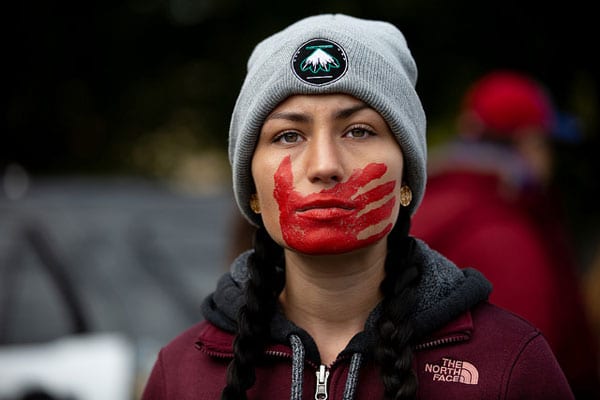
Well, that did not take long. Last week I published a piece in the Syracuse newspaper giving the Trump Administration qualified credit for appointing a task force, dubbed “Operation Lady Justice,” directed at addressing the problem of Missing and Murdered Indigenous Women and Girls, and for issuing a proclamation making May 5th “Missing and Murdered American Indians and Alaska Natives Awareness Day.“
At a listening session yesterday, the Trump Administration unsurprisingly demonstrated that its real commitment to the issue is shallow and so limited as to be effectively meaningless. As Native Americans who attended the session yesterday pointed out, the President’s approval of pipe lines and other projects brings large numbers of non-native “man camps” into areas close to many Native American communities. Many observers have asserted that a relationship exists between such projects and reports of missing and murdered Native American women and girls. Indeed, Kristin Welch, a community organizer for Menikanaehkem, a Wisconsin group, asserted that cases of violence against Native American women are increased 70% by the presence of these man camps.
Task Force members repeatedly ignored these questions. When asked about the 1978 Oliphant decision, which held that non-Indians can not be held criminally liable for their actions on Indian land by tribal authorities, Task Force Member Marcia Good said that “Oliphant is currently beyond the scope of [Operation Lady Justice] at this time.”
Without restoring power to Native nations to allow them to prosecute the crimes non-Indians commit against Native American women, the Trump Administration has removed from the table what all experts assert is a vital part of any solution to this heart-wrenching problem. President Trump, in other words, supports policies that threaten to exacerbate the problem of missing and murdered Indigenous women while permitting no discussion of a critical part of the solution. The Trump Administration is interested only in the appearance of action, except when it chooses to behave in a destructive manner.
Being a historian in a world so full of needless suffering sometimes feels like a sentence to despair and hopelessness. I am not the first historian to feel this way. A long time ago the American historian Clarence Walworth Alvord looked out a world ravaged by the first Great War and wrote an essay entitled “Musings of an Inebriated Historian.” Historians, he noted, for a generation had celebrated “progress.” They assumed civilization emerged from and prevailed over barbarism, the arc moving ever upwards. Historians reminded their readers and students of that progress, or at least they were supposed to. Like the philosopher George Santayana, who famously declared that those who do not know their history are doomed to repeat it, Alvord believed that the story of the past could illuminate the path toward a better future. But then, he wrote, “I remembered that this boasted historical mindedness did not prevent historians of all nationalities losing their sense of toleration and feeling for proportion during the World War.” That realization left him forlorn. What, Alvord wondered, “in heaven, or hell, or on earth is the value of a professor of history?” Had the historian, Alvord asked, “ever offered any plausible excuse for his existence?”
As he wandered “aimlessly amidst the shadows of dead ambitions and frustrated hopes, phantoms of many efforts to save the world from its own insanity,” Alvord lamented that the historians who wrote before the war “experienced no difficulty in discovering signs of an upward progress. To them . . . the nations were goose-stepping in serried columns toward a better world, the millennium itself was evidently on the point of capitulating before the onslaught.”
They should have seen the slaughter coming. He should have seen it, too. But he didn’t and they didn’t. And millions died for causes that were not in the end worth the expenditure of a single human life. That progress? It was a lie. He looked out at the wreckage. “After such an error, what right have professors of history to speak?” Alvord thought none. “As I kick my heels on the edge of nothingness’ chasm,” he wrote, “I look as miserable and repentant as I can in my sackcloth suit and shampoo of ashes.”
WHAT IN HEAVEN, in hell, or on earth is the value of a professor of history? Not a thing, it seems, when they fail to ask tough questions and stop casting upon the evidence a critical eye.
My generation of historians, and the generation or generations of historians who have followed me, are not nearly as Whiggish as our profession once was. We know how bad things are, and we know the deep history of our country’s sins. While we are well aware that the world today is in so many ways better than it was in the past, we are far less inclined to focus on progress. We understand the depth of our imperfections. But too many of us still believe in what must be the biggest lie in American history: that he United States was a nation conceived in liberty, committed to justice for all.
If you have not seen this before, you must see it now. And if you cannot see it now, and if you are one of those who supported the President and his hollow sycophants in the Republican Party, it boggles my mind. How could you? We must stop repeating the lie.
REPUBLICANS HAD BEEN at war with historians long before the awful Lynne Cheney declared its “end” in a dismissive attack on the National History Standards which she published in the Wall Street Journal back in 1994. Those of us who teach Native American history have long told our students about all the colonialism, the cruelty, and the violence that rests at the foundation of this nation’s past. But too many of us describe the acts of racism and state-sanctioned violence, as well as the President’s recent strongman posturing, as somehow “UnAmerican.” “This is not who we are,” I hear people say. I am not so sure about hat. The President might lose the upcoming election and he might leave office afterwards–I am doubtful about both of these points–but the type of politics and the attitudes toward race he embraces are as American as apple pie. It is possible that this is who we are.
LET’S SAY THAT YOU and your partner go to see a therapist for some couple’s counseling. “She keeps breaking my stuff,” the husband says.
“Do you break your husband’s stuff?” the therapist asks.
Wiping away a tear, she nods her head.
“Tell me about that,” the therapist asks.
“I try to get him to talk about our problems. Every time I do he shuts me down. He sees neither my pain nor my anger. The only way I can get his attention is by breaking his stuff.”
“How does it make you feel to break his stuff?”
“I’m angry,” she says. “But it feels good for a minute or two, at least. I know it doesn’t make anything better, but I have been trying for so long.”
The therapist turns to the husband. “Do you hear what she is saying?”
“She’s breaking my stuff,” he says. “She admits it.”
“She has,” the therapist acknowledges, “but do you hear what she is saying about the reasons why?”
“I don’t care,” the husband says. “She is breaking my stuff. It’s wrong to do that.”
MOST AMERICANS, who are bad historians indeed, are like that husband as they look out at the riots. White supremacists–and by that I do not mean the assholes with hoods and swastikas and tiki-torches, but all of those who benefit and uphold systems and structures that have historically privileged white people at the expense of peoples of color–will focus on how people protest and not why.
Historians. We are the people who ask why. We must do this even when it is difficult to do so, even when it is frightening. The couple seeking a therapist will never heal by looking at the superficial. Good therapists share much with historians. They seek root causes. Meanwhile, tens of millions of Americans say to those burdened by the weight of injustice, “Why are you so angry?” You’re acting crazy. Stop being such a bitch.” So few of us have stopped and listened, acknowledged the pain, and joined in the efforts to carve a new path for this broken shell of a country.
Like Clarence Walworth Alvord, we can wallow in our despair. We can say that these have been some of the worst weeks in American history. But if your eyes were open, you saw this coming. And if your eyes are open you will see that in so many ways it is not getting better. “Racism isn’t getting worse,” Will Smith said. “It’s getting filmed.” It’s getting worse in all sorts of ways. Only a racist or a sociopath could want four more years of this.
During his visit to Arizona at the beginning of May, President Donald Trump took some time out to comment on his administration’s efforts to help the state’s large Native American population combat the Coronavirus pandemic and, as he put it, to bring attention to “the unprecedented actions my administration has taken to support our treasured Native American communities.” The President said that his administration has improved “the lives of Native American families and tribes more than any administration has done by far.”
That is quite a claim, and it’s not supported by the evidence.
Trump touted the eight billion dollars Congress appropriated to assist American Indian nations, which he claimed, “is the largest single investment in Indian Country in our history.” The President announced as well that the Navajo Nation will receive an additional $600 million in assistance. “That’s a lot,” he said. Trump then asked, according to the White House transcript of the meeting, “Should I renegotiate that? Can we renegotiate that? (Laughter).” “Only if you go up,” said Navajo Nation Vice President Myron Lizer.
Lizer can be forgiven for not laughing. As of May 28th, the Navajo Nation had suffered more than 5000 active cases of COVID-19, and 167 deaths, and the third-highest per capita rate of infection in the Country.
“Since I took office,” Trump continued, “my administration has also worked to repatriate precious Native American artifacts, to protect children in the care of the Indian Health Service, and to make eagle remains more easily accessible for cultural and religious purposes, and to highlight the contributions of Native American veterans throughout the history of our nation.” None of the items on this list are unprecedented, and all are required by laws that predated Trump’s election in 2016.
Make no mistake, Trump’s presidency has been mostly bad for Native Americans. His racist name-calling directed at Elizabeth Warren reinforced damaging stereotypes about Native American identity. Within days of taking office, he authorized completion of the Dakota Access Pipeline and ignored the protestors at Standing Rock, and rolled back protections on sacred sites like the Bears Ears National Monument. His fetish for Andrew Jackson has bothered those who know anything at all about that president’s record concerning Native America, and Trump’s budgets have imposed cuts on the Indian Health Service at a time when additional funding was badly needed. In fact, the $800 billion in funding has been tied up in court as tribes have clashed with the nation on who should receive the payments. He has ignored the problem of police violence towards Native Americans. The President has been more talk than action, and those actions are usually bad.
With one exception.
In November of 2019, the President signed an Executive Order establishing a task force “on Missing and Murdered American Indian and Alaska Natives,” charged with consulting tribal governments “on the scope and nature of the issues” related to missing and murdered women and girls, developing “model protocols and procedures to apply to new and unsolved cases of missing or murdered persons in American Indian and Alaska Native communities,” as well as the “establishment of a multi-disciplinary, multi-jurisdictional team” including representatives from tribal law enforcement agencies and the federal Departments of Justice and Interior.
Dubbed “Operation Lady Justice,” the task force held consultation/listening sessions in January and February of this year but had to shelve the rest of its schedule, which was to have run through the end of July, because of the coronavirus pandemic.
This is a serious problem. According to the Centers for Disease Control found that 49 percent of Native American women have experienced sexual violence. The Department of Justice reported that 34.1 percent of Native American women will be raped during their lifetime, more than for any other ethnic or racial grouping. As President Trump indicated when he signed the Executive order, “the statistics are sobering and heartbreaking.” He said that “more than 5,000 Native American women and girls were reported missing,” and though the majority return home or are found, “too many are still missing and their whereabouts are unknown—and they usually don’t find them.”
It was this task force about which he spoke during his visit to Arizona. He issued a proclamation making May 5th “Missing and Murdered American Indians and Alaska Natives Awareness Day.”
Many of these missing women have been caught in a web of human trafficking, the exact breadth of the problem unknown. It is a problem of great magnitude but hazy borders. In this sense, the President’s effort to bring additional attention to this issue is welcome. More resources are needed. Nearly half of tribal law enforcement agencies who responded to a Government Accountability Office called for the information reported that they believe human trafficking is occurring on tribal lands within their jurisdictions. The President can educate Americans about the problem of missing and murdered women and girls.
These are crimes on the margins. Native communities are poor. They are isolated. The Supreme Court has made the prosecution of non-Indians by tribal law enforcement officers difficult where it is not impossible. Native American history is a story of tragedy, violence, crime, theft, and plunder. It is, at other times, a story of blundering goodwill. Even those who want to do right often do damage. But the harm is not inevitable, and nations, like individuals, have choices. In this one instance, the President and his handlers have made the right one. The Task Force is still on schedule to report to the President sometime after the election. Let’s hope, whatever the outcome in November, that this important first step is not one wasted.