
All posts by admin

This Is Not A Manifesto

There was a period several years back when I can remember feeling deeply unhappy. I was living in Houston’s soulless suburbs, on the margins of a city I did not yet know, having a relocated for a job that I was beginning to think was not quite right for me.  I went for a walk, and I saw above me a bird that I later learned was a swallow-tailed kite.  I had never seen a bird fly like that before. It was stunning, and, for reasons I cannot fully explain, it put me at peace. It was a rare feeling and that moment, ten years ago, remains important to me.

            I have just finished a month in Oxford where I taught my college’s required Humanities course to a group of nine students, all of whom are from New York State.  It’s a course I love teaching.  I have written about it on this blog before. In a number of ways, teaching it revitalized my career.  But the course can also be a downer.  The readings are heavy.  We attempt to find in Antigone’s refusal to heed an unjust law, and in the defiance that brings about so much destruction, some semblance of meaning; or in the Melians’ futile resistance to the monstrous tyranny and massive injustice of the menacing Athenians; or in Jesus’s fears in Gethsemane as he approached his martyrdom, and the cry of abandonment that came at the end of his life; or in Augustine’s troubled quest to account for the evil he saw in the world around him. There is viciousness, violence, injustice, and despair.  They course through the readings like blood. I punctuate these readings with poetry, and stories yanked from today’s news.  They show that the questions these texts raise we have not yet succeeded in answering.

            I end the course with two readings: Martin Luther King’s “Letter from a Birmingham Jail,” and Robert Rosenblatt’s “The World is a Thriving Slaughterhouse,” a text I have discussed here many times.  King spoke about law, power, and injustice, and how to act when confronted with an unjust law.  He did so knowing, in his heart, that he would die a martyr to the cause so closely identified with him.  Rosenblatt looks at thirty years of his life as a war correspondent, as a witness to humankind’s seemingly endless capacity to serve up despair, violence, and pain.

            During the month I have been here, the President of the United States has stoked up racial and religious hatreds.  He told four congressional representatives, all women of color, all of whom are citizens of the United Sates, to go back to the countries they came from.  In an earlier outburst Trump referred to these parts of the world as “shithole countries.”  The President is a white nationalist.  He is a monster, but the greater monstrosity has always been that sixty-two million Americans voted for him, and they did so with their eyes wide open.  They knew what they were doing. The problem, then, has always been bigger than Donald Trump. All the problems are bigger than Donald Trump. I saw that, from across the Atlantic, as I watched an audience in North Carolina stroke the President’s boundless ego and join in a chant calling for the exile of Representative Ilhan Omar of Minnesota.  “Send her back,” they yelled. 

It was a sickening display. Some politicians said things along the lines of, “this is not who we are.”  I suspect most historians who write about Native American history, or about the history of African Americans, would join me in disagreeing.  That crowd in North Carolina showed the racism that has lived for so long, secreting its hateful bile. This evil metastasized long ago.

And the hits kept coming. A white nationalist shot up the annual Garlic Festival in Gilroy, California, the site of which I drove by more than a few times when I lived in California.  And during my last weekend in England, two killers in one day opened fire in El Paso and Dayton, killing thirty-one people between them. One of the killers was a racist who hated Mexicans, and who absorbed the President’s rhetoric in his “Manifesto.” The other appears to have leaned to the left, based upon tweets he liked, but displayed the toxic masculinity we now associate with so-called “incels”: women who knew him feared him.  He kept an enemies list and a rape list.  Texas Senator John Cornyn, a man whose spinelessness makes Lindsay Graham look like Lincoln, gloated when he learned that the Dayton killer was, refreshingly, not a white nationalist.  “The Dayton killer was a left-winger,” Cornyn tweeted, “but don’t blame Senator Warren.”  Just weeks before he had tweeted out his fear that the Mexican population was outpacing that of White Texans at a rate of nine to one.  Blood and soil.  Cornyn may as well have tweeted “the Mexicans will not replace us.”

Decades from now, the historians of the future will look at Cornyn’s tweets and say, “What an asshole.”  Because the problem is not partisan blame games.  It is guns. No place on earth makes it as easy as the United States for those who hate to kill.  I tried to make this point some time back when I wrote an angry manifesto after the slaughter of innocents at Parkland. A couple of days ago I thought that maybe I should revisit it, because of the prevalence of white nationalism and racism in the recent shootings.  But that misses the point, for the racism has always been there, as Eddie S. Glaude pointed out in a powerful, two-minute long history lesson on MSNBC. Ours is a country steeped in racism, built on stolen land with labor from stolen and enslaved black bodies.  The better angels of our nature have appeared from time to time, but they have never banished the fundamental evil at the heart of our history.  In a beautiful tribute to the writer Toni Morrison, who died this week, Damon Young said that her importance rested in how she “articulated the truth of America’s amniotic fluid. What we’re really swimming in. What we’re really swallowing. What we’re really choking on.  And when that sting is burning your eyes, who has any space left for a lie?” I feel this observation deeply.

So I stand by what I wrote in my own manifesto.  I have followed the news since the massacres in Texas and Ohio.  The Lt. Governor of Texas said something stupid about how the shooting might not have happened if there were prayer in schools, even though Texas has a moment of silence at the beginning of the day and prayers at school functions like sporting events.   Others have trotted out equally spurious, but predictable explanations for the carnage:  violent movies, violent video games, homosexuality and the presence of transgendered people, Colin Kaepernick (somehow). 

I do not think any of these explanations are funny.  They are either dishonest or dangerously and obscenely stupid.  In any event, they are dangerous.  I do not care why you want to kill. It does not matter to me in the slightest.   A white nationalist and a racist? An “Incel”? A Nazi, or a revolutionary or an End-of-Timer or a sullen kid or a sociopath? I could not care less.  Because no matter who you are, and no matter who you hate, I do not believe you should have a weapon of war at your disposal.  You have no right to kill, and no matter your irrational fears, your macho fantasies, your martial cosplay, or your fevered dreams, there is nothing you can say to convince me that there is a place for killing machines in a civil society.  Some of you will trot out the 2nd Amendment.  Screw you.  Bearing arms does not mean what you think it does. Some of you will invoke your Christianity.  Show me if you can one line, from the first verse of the first chapter of Matthew to the last line of Revelation, that in any way justifies violence.

Look around the world. There are violent video games and violent movies all over the place.  There are many countries where almost nobody prays, where far more people identify as Atheists than in the United States.  They do not have mass killings.  40,000 people die from gunshot wounds in the United States each year, whether from suicide, accident, or homicide.  That comes out to one death roughly every fourteen minutes. To those who say nothing needs to be done, that your rights are sacred, and that guns are not the problem, I ask you how many more deaths will it take before you concede that this is wrong.  50,000? 100,000? A million? When and where will it end?

I believe firmly that this man-made and entirely preventable slaughter will soon consume us.  I feel it coming closer.  My father-in-law, who I have not seen in years, shops regularly at the El Paso Wal-Mart.  The slaughter in Thousand Oaks is not far from where I grew up.  I felt it approaching when my daughter messaged us that an active shooter was on her campus, though it turned out to be a false alarm. Thoughts and prayers.  From Melania and Ivanka, from the President and from Mike Pence and scores of Republican lawmakers.   They offer their prayers. The words of Isaiah come to me, as he confronted the hypocrites whose empty prayers, he said, meant nothing to an angry God. 

When you spread forth your hands,

I will hide my eyes from you;

even though you make many prayers,

I will not listen;

your hands are full of blood.

Wash yourselves; make yourselves clean;

remove the evil of your doings

from before my eyes;

cease to do evil,

learn to do good;

seek justice,

correct oppression;

defend the fatherless,

plead for the widow.

The readings I assign are dark.  I know that.  I can see the students’ reactions when I give them news stories that raise probing questions about our violence and viciousness. As an antidote at the end of the semester I hand out Jack Gilbert’s popular poem, “A Brief for the Defense.”  “To make injustice the only measure of our attention,” he writes, “is to praise the Devil.” I know I do not always practice what I preach.

I walked a lot during the five weeks I spent in England.  Eight, nine, sometimes ten miles a day or more. It was a way to escape from the tourist hordes crowding the center of Oxford, but also to have some uninterrupted time to think. On many of these walks I saw red kites, an English cousin of the bird I saw swirling high above the Houston suburbs. It flies beautifully, with an assuring grace.  I found myself watching these birds, and I could have stood there for a long time.  Augustine, who my students read, opens his Confessions, his prayer, with the assertion that “our heart is unquiet until it rests in you.” He found his quiet heart in God, but wherever or whatever it is, you need to find it somewhere.  So. Kites.

There is reason to be hopeful.  These shooters are generally young men, it is true, but for most young people I meet this new world is not one to fear.  The issues that concern the white nationalist and the loony right they see as normal and worthy of defense.  You can read laments about the oppressive atmosphere on college campuses but I have seen nothing in my thirty years of college teaching that leads me to believe that these are anything other than crude caricatures written by frightened, old, white people.  And because so many parts of our current national government are dominated by frightened, old, white people, we need these young people to march, to hit the streets, to challenge the frightened old white people in primary elections.  The kids are all right.  We are going to need them to be.

What Is Yours Is Ours

I have visited the British Museum in London many times. The first time was in 1988, a couple of months after I completed my undergraduate degree. I had taken two courses in Ancient History, another in Medieval Europe, as we called it back then, and I was was eager to see the museum’s “treasures.” I was an uncritical consumer, excited to see things that I had read about but could see nowhere else.

That was over thirty years ago. Now I am a more critical consumer of museums, so much so, that my family has to tell me to lighten up whenever we visit one. I am teaching my college’s Western Humanities course in England now, and we are based as a class in Oxford’s Lincoln College. Western Humanities, required of all students at Geneseo, began as a “Great Books” course taught over two semesters by a significant percentage of the faculty. Recently we pared that requirement down to one course, and faculty are slowly modifying the original menu of works they might assign.

I think the course is one of great value. And to understand more deeply what they are reading: Sophocles, Thucydides, Plato, Cicero, the Bible, Augustine, Aquinas, More, and Shakespeare’s Hamlet, we have arranged a number of excursions. On Friday we took in a performance of Measure for Measure by the Royal Shakespeare Company in Stratford-upon-Avon. I sent the students on their own to the Ashmolean, a minature version of the British Museum here in Oxford. And a week from Friday we will visit the British Museum in London.

I want the students to think critically about what they see there. I had no guidance when I went, but I would like them to explore how and why it was that they came to see these objects in London, and what, really, we can learn from them. I want the students to look at the museum’s collections and decide if they can see past the artifact to the actual people behind it. In the statuary, the religious items, the decorative arts, and the household objects on display, can the students arrive at a sense of what these people valued. From these items, collected and displayed, can the students arrive at an understanding of what these people considered good and bad, beautiful and loathsome, funny or boring? What did they view as heroic? Cowardly? What frightened them, or kept them up at night? What values did they see as worthy of emulation?

It is easy, I worry, for students to view a trip to the museum as an assignment where they are required to look at stuff, often for some vague set of reasons: because this is something that you should do, or because these are an important part of the students’ cultural inheritance, with which all the heirs of that tradition ought to be familiar. I agree with these statements, I suppose–how could I not–but there is more to it than that. Look for the people who made these things, who attempted to communicate or to evoke some feeling or response in those who saw their work. If history is the study of continuity and change, measured across time and space, in peoples, institutions, and cultures, the student’s human connection to those people far removed from them spatially and chronologically is an important part of the understanding we want to encourage. As I watched the thousands of people milling about, moving through the uncomfortably warm exhibit rooms, looking at everything a bit, I wonder what really do the hordes of tourists get out of this.

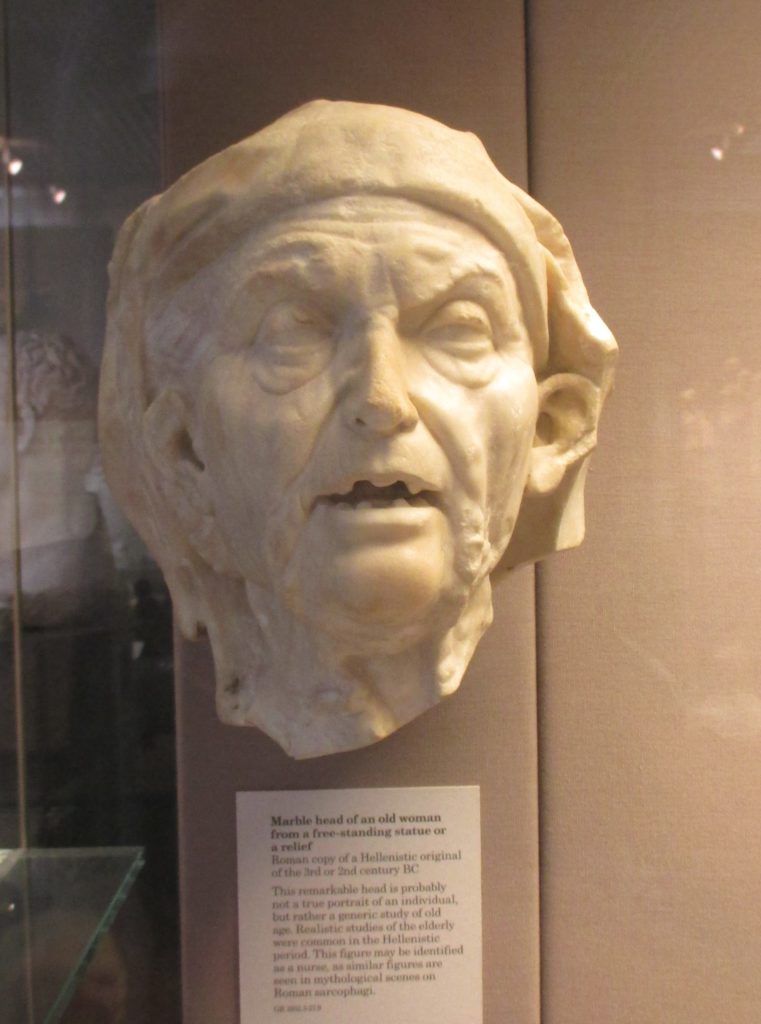
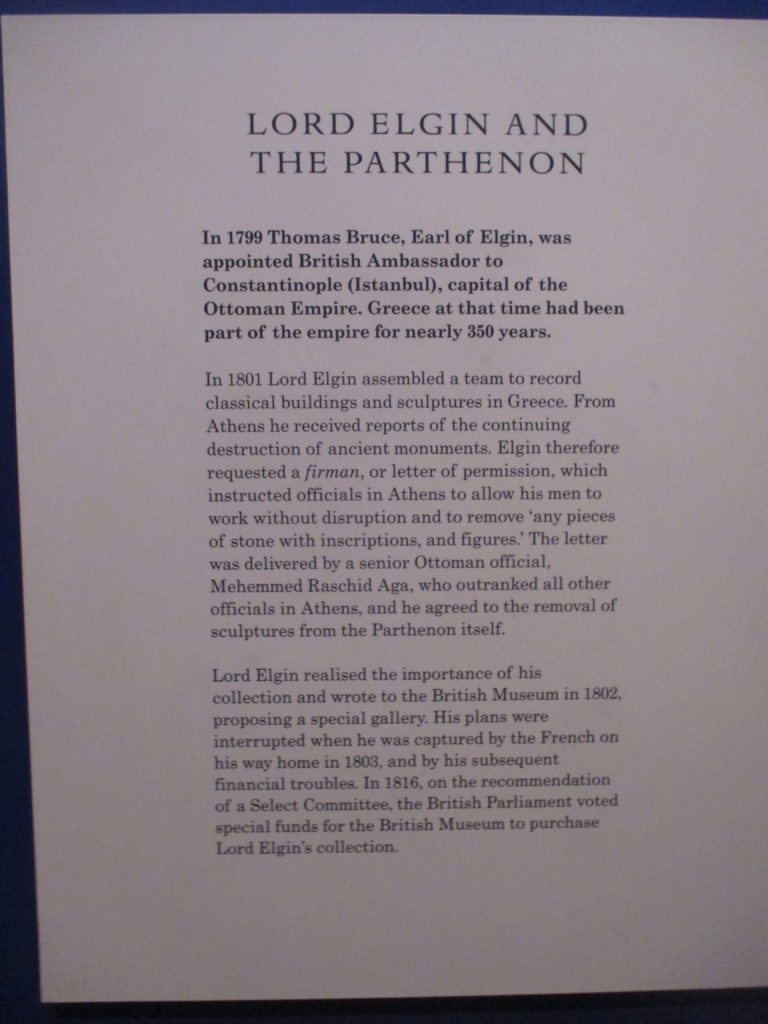
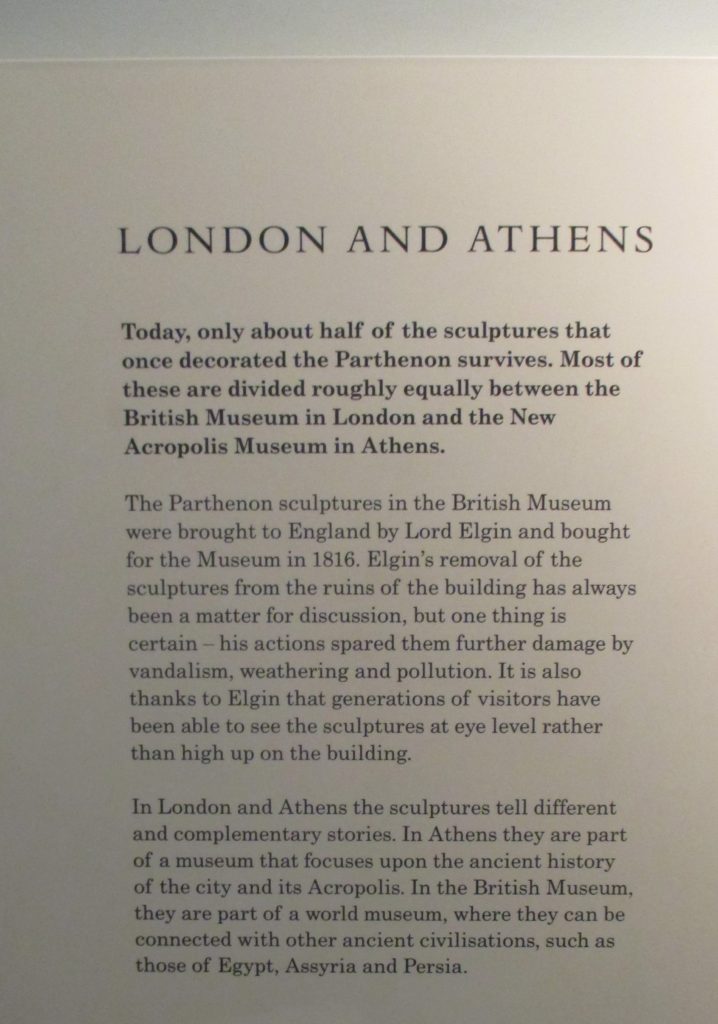
I want the students to think, as well, about why these objects are considered classic and significant. Who gets to decide? The British Museum’s “collections,” a word they use a lot, have a fraught history, to put it politely. The British Museum, in my view, has not adequately addressed how it came to amass such a large collection. Take, for instance, the famous “Elgin Marbles,” looted, according to some sources, from the Acropolis in Athens.

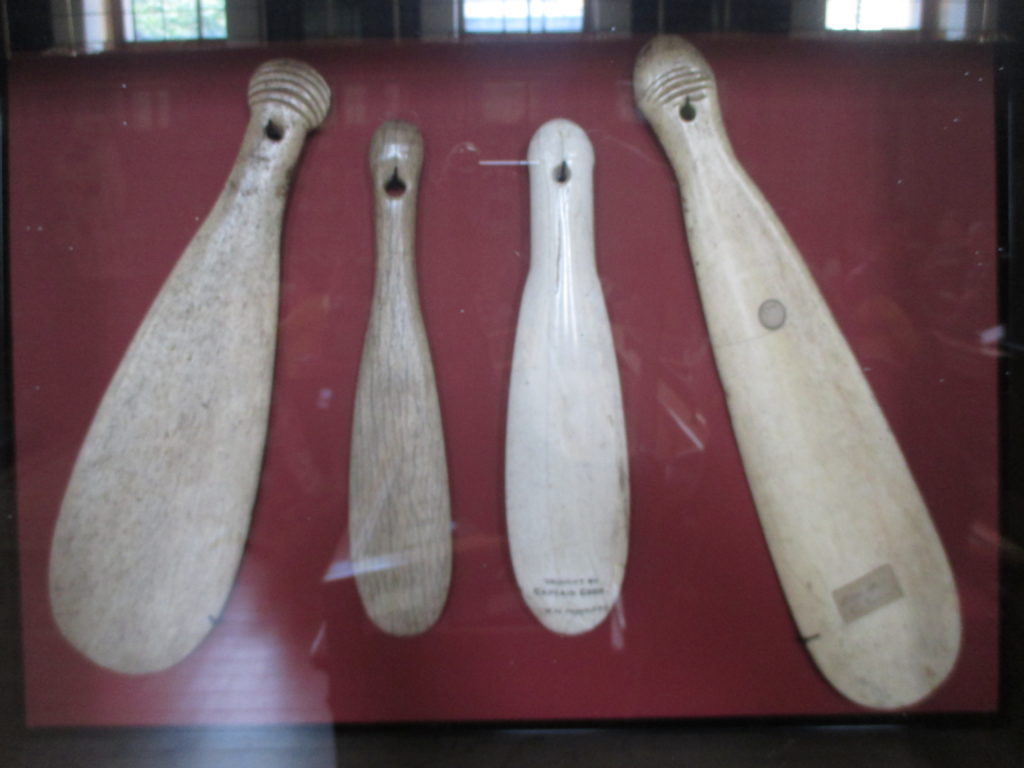
Other items, from other parts of the world, appear in displays with little information on how these objects arrived in London and what the descendants of those people whose culture is represented feel about this. How might various people talk back to the interpretive signs and displays that museum visitors see?

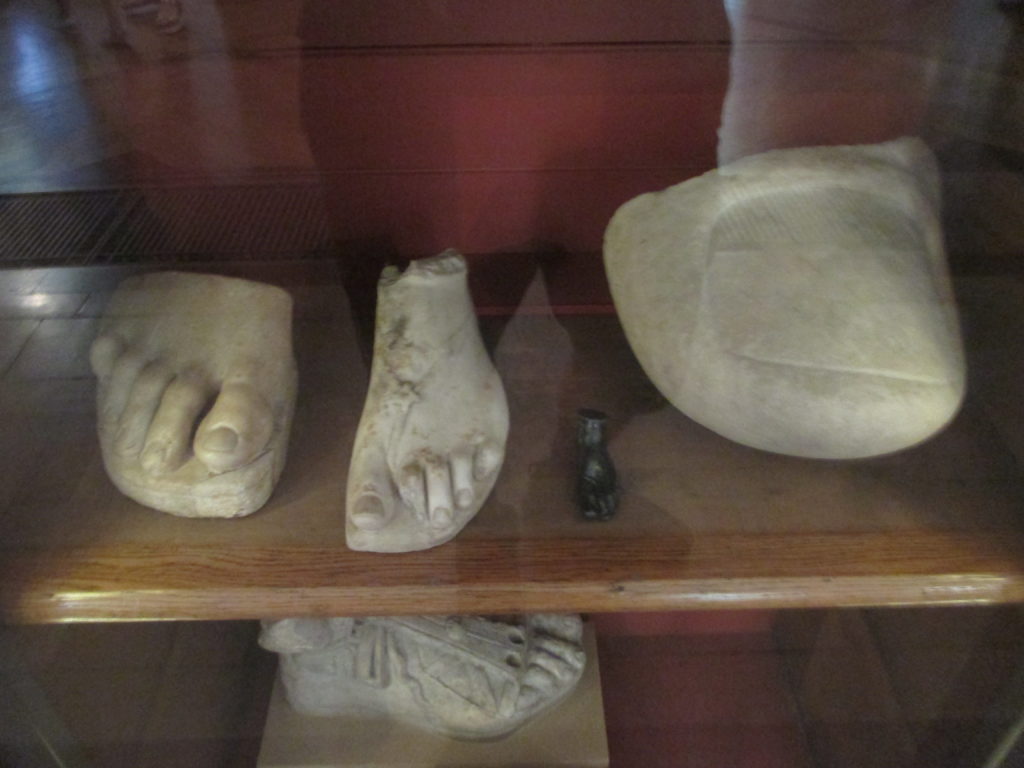
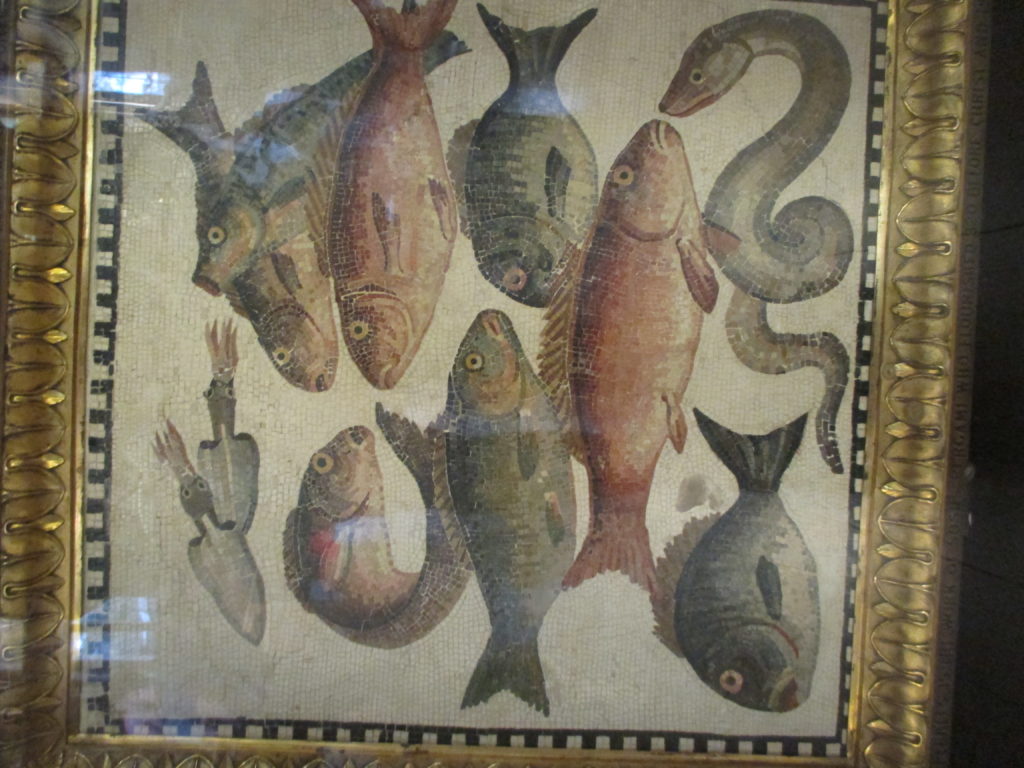
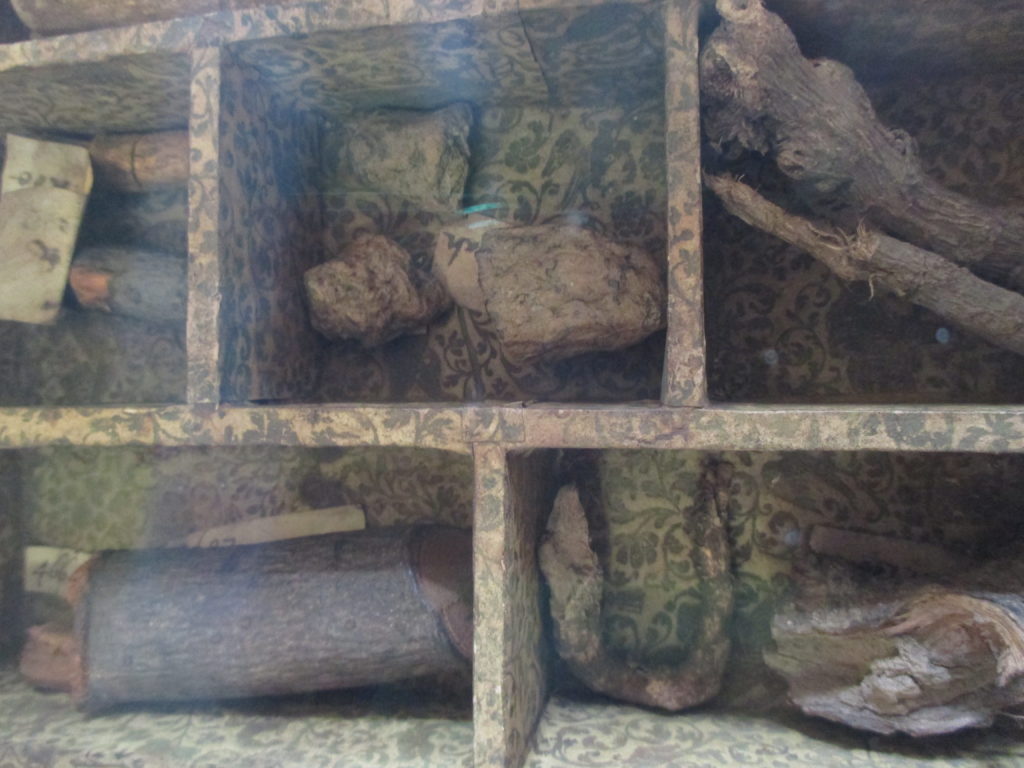
For instance, the British Museum has an “Enlightenment Gallery” that might just as well be called the “Colonialism and Empire” Gallery. As a history student, this room seduced me. I loved it. Old books like the shelves surrounding the room. Artifacts are placed on these shelves and in case around the room. Little remarked upon is the significance of these objects. What did they mean to the people to whom they originally belonged. Some of them were looted from graves, from collections around the world. There is no museum in Cairo or Athens where so large a collection of English treasures are housed. The English took these objects, and their curators will tell us what they mean. And if that requires presenting funerary objects and other items of sacred significance, it matters little.

It is unstated, but so clear when you think about it. What was yours, the British Museum says, is now ours, and we will decide what it means and its value. The Museum still says that whatever one thinks of Lord Elgin, his decision to snatch a large chunk of Athens’ cultural patrimony saved it from destruction, loss, and damage. We know better than you how to collect.

I do not follow the museum world as closely as I should, but I certainly am aware of a growing movement to “decolonize the museum.” If the British Museum is any indication, we have a long way to go.

Some Thoughts on an Old Friend.

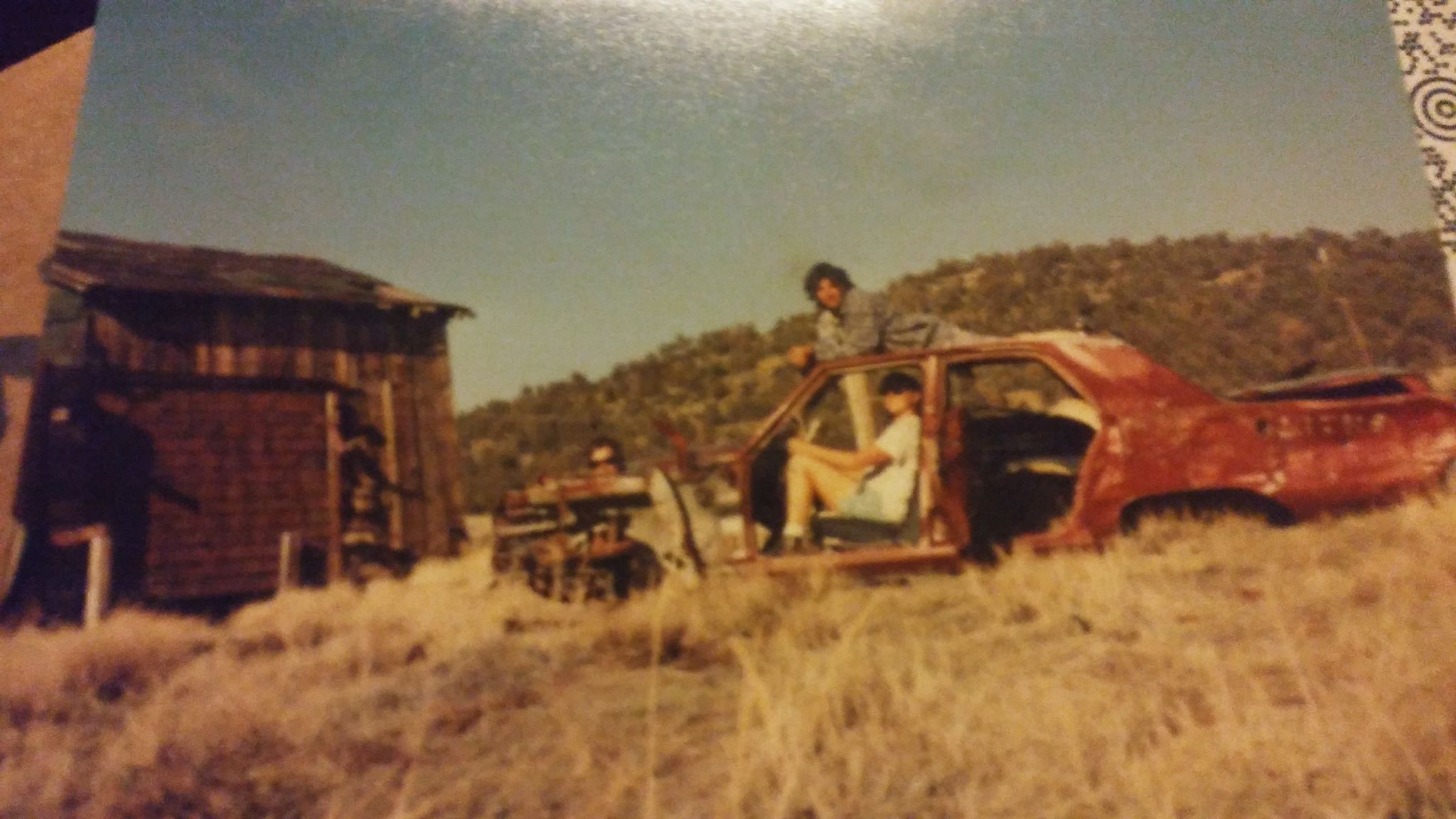
I’ve had this picture in my car for months now. I picked it up somewhere in our old house. It must have fallen out of an album while we were preparing to move. I look at it a lot: the high desert in California, with two of my best friends from college, at least thirty years ago. I kept it close to hand because the people in it mattered so much to me at a point where our lives were pretty much free from responsibility, at least compared to now. Life was easy then, it seems now, even when it did not feel that way at the time. That is Jon in the front of the car, where the engine should go, and I am on the car’s roof. Kim, Jon’s girlfriend, is in the driver’s seat. I woke up on Friday with a message on my phone that Kim had died the day before, on the Fourth of July. Ovarian cancer, eight months after she first was diagnosed.

Hazy like the past.

There was a Los Angeles anchorman for Eyewitness News named Jerry Dunphy. He had a long career and I can still hear his voice clearly in my head. He had an introductory line for which he was famous: “From the desert to the sea, to all of Southern California, Good Evening.” It became the inspiration for that road trip. We had been camping in Joshua Tree. Could we make it from the desert, to the mountains, to the valley, and to the surf in one day? California is amazing like that, and writing these words makes me feel homesick.

I met Kim in the fall of 1985, when we both began as students at Cal State Long Beach. We lived in the dorms. She shared a suite with a bunch of girls, two of whom, Toast and Psycho, became part of a circle of friends who became something new during those years in Long Beach. Kim and I had classes near each other, and we sat in the hallway outside our rooms before they began, reading the Daily Forty-Niner or the Long Beach newspaper or whatever else was lying around, laughing constantly. Kim laughed a lot. I remember that, and her smile was warm and welcoming. She had the greatest smile and she was generous with it.

Kim, Rich, myself, and Jon, having breakfast in San Francisco, sometime between 1988-1990

I saw Kim a lot over the course of the late 1980s. Jon and I were housemates, so Kim was around our place in Bellflower a lot. We made road trips, camping, or to see bands. We hit the freeway to see shows. I have vague memories of going to some country music festival, somewhere, maybe near a dam, which I must have gone to ironically, since I generally hate most country music. But I cannot remember for certain.

It has probably been twenty-five years at least since I last saw Kim. I do not know her kids’ names, nor that of her husbad. I moved to New York, and then to Montana, and back to New York. She moved to Sacramento. We kept in touch a bit on Facebook. Kim became an archaeologist, working on California’s native communities. She gave me some advice as I worked on both editions of Native America. I loved the digital humanities project she and her colleagues and indigenous collaborators produced. I continued to learn from her, but I did not get back to California as much as I should have.

Historians like me, we look for the significance in events. Too many of us, I think, ask students to identify and give the significance of this, that, or another person, place, or thing. I have railed against this on this blog before, because it is perfectly possible to live a life rich with meaning and entirely fulfilling without understanding the Alamo, or the Lend-Lease Act, or the Treaty of Westphalia. But what are the truly significant events in a life? The events that make you who or what you are? The moments, after which, nothing ever will be the same again? Maybe they were newsworthy events. Maybe you lived through something that historians will write about. But these events can also be a road trip, full of experiences that carry meaning only for those who were there, magic moments, points in time to which we are tethered, as we move through the desert, from sand to snow to surf, past abandoned farms, dry lake beds, anonymous tract housing, and concrete rivers, always in the warm bright California sun. Kim was at or around a lot of those events, during this important time in my own life from a long time ago. It was good to know her, from the desert to the sea, across all of Southern California.

How Does a Story End?

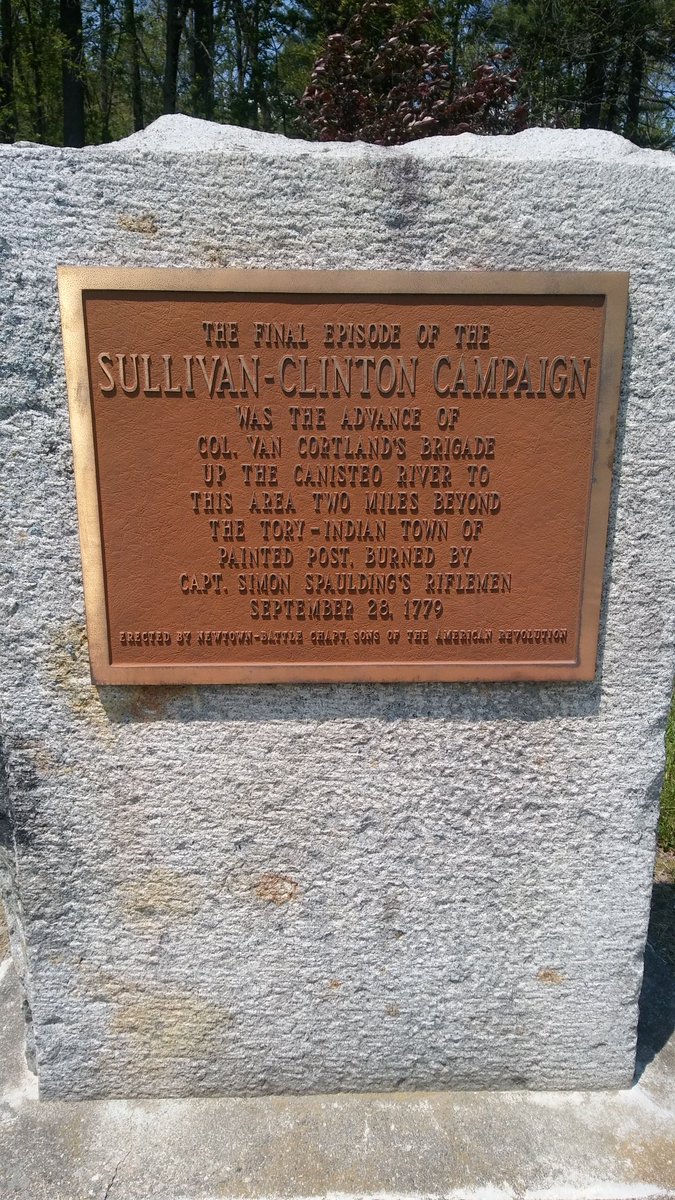
Driving from Rochester to Washington a couple of weeks ago, I saw this historical marker on Route 15, just north of the Pennsylvania state line. It commemorated the “final episode” of the Sullivan-Clinton campaign in 1779. American forces invaded the western Iroquois homelands and burned towns throughout the “Finger Lakes” region of western New York. I tell the story of the Sullivan-Clinton campaign in Native America. I have also written about it on this blog here and here. Because I cross the paths Sullivan’s army traveled frequently, I am familiar with many of the historical markers identifying key sites in the campaign.

But his one was new to me. The people who wrote it believed that the Sullivan-Clinton campaign ended near this spot. The soldiers completed their mission. The story began, and it ended.

I find myself these days spending a lot of time talking history with what some might call “amateurs”–people who are interested in the past, who enjoy reading history, even if they do not study it systematically. One of the things that strikes me about these conversations is that we have not been as effective as we might have been in describing what it is that we do, and why we do it. We have not, among other things, explained how much choice is involved in the historical enterprise. We choose the stories that we want to tell. We determine what questions we want to answer, how we can best answer them, and how best to present the results of our research. We determine the scope of our work geographically–how much space we are going to cover, and chronologically. He have to decide where in time our stories begin and end.

According to this marker, the story of the Sullivan Campaign, ended “with the advance of Col. Van Cortland’s brigade up the Canisteo River to this area two miles beyond the Tory-Indian town of Painted Post burned by Capt. Simon Spaulding’s riflemen, September 28, 1779.” Joseph Fischer, in the most thoroughly-researched military history of the invasion, says it began in July and ended in September.

But did it?

The soldiers went home. Or they went to fight elsewhere. Some of them later returned to New York, settling on lands seized from the Iroquois. But the expedition was, as Fischer calls it, a “well-executed failure.” That apt title implies that despite the invasion, the Indians remained. They resisted. Their towns burned, the fields destroyed, the orchards cut down, they settled at the refugee haven around British-controlled Fort Niagara, or along Buffalo Creek. They suffered through a brutal winter. They fought on. And when the British abandoned them, they faced the onslaught of settlement encouraged by private land companies, the state, and the United States. They signed treaties and formal deeds of cession. New York’s rise as the “Empire State” could not have occurred without Iroquois dispossession.

But after the campaign the Senecas remained in New York. That much is obvious. They resisted their complete dispossession. They obtained security for some of their lands at Canandaigua in 1794, sold much of their homeland in 1797, and in 1802, 1815, 1826 and 1838 as well. But they are force still in western New York. Their gaming enterprises in Niagara Falls, Salamanca, and Buffalo are significant. They have survived, even though they continue to contend with the obtrusive power of the state. Perhaps the story of the Sullivan-Clinton campaign, which its planners hoped would lead to “civilization or death” to the American “savages,” has yet to end.

Dangerous Humors

It was all a joke, they said. You saw the video. The people were laughing. They thought it was funny. Geez. Where’s your sense of humor? Nothing was meant by it.

The “it,” of course, was the scene from the President’s latest “rally” in Florida. While riffing on the refugee crisis, the President wondered aloud what might be done about the problem of refugees crossing the border. One Florida Man audience member shouted, “Shoot them!”

The white people standing behind the President laughed out loud, shouted their approval, applauded, and hooted and hollered. The President, who has demonstrated his racism repeatedly, did not discourage this. No. He joined in. It’s genocide humor, and it has a long history. Students of Native American history ought to recognize that immediately.

Sometimes it is useful for historians to consider who is laughing at whom. Whose cultural values can be mocked, scorned, and caricatured?

At the outset of the encounter between natives and newcomers, Indians sometimes laughed at the Europeans they were coming to know. Their appearance, their customs, their cluelessness about survival in a new land: all caused Indians, on occasion, to laugh at them. But that soon changed. A Powhatan priest, for instance, late in the seventeenth century approached the overseer on William Byrd’s Virginia plantation. The priest offered to make rain in exchange for two bottles of rum. The priest began to work, and soon the rain fell. Byrd refused to pay the priest. Byrd, who was only joking, told the priest that “hew as a Cheat, and had seen the cloud a coming.” Only after teasing the priest some more did Byrd provide him with the rum. When another Powhatan healer worked to charm a rattlesnake that the planter William Claiborne had captured, Claiborne hit the snake with his cane, causing it to bite the healer. He recovered from the venomous bite, but to Claiborne it was all a joke. He and his associates got a good laugh out of it. Only joking.

Who is laughing at whom? The process continued. Americans in the 1830s described the Mexicans and Pueblos who inhabited New Mexico as backwards and barbaric, as people “peculiarly blessed with ugliness,” and a “lazy and gossiping people” who lived “in darkness and ignorance.” This racist rhetoric provided, of course, a justification for empire, as American imperialists occupied their land. They would uplift the savages as they took their land. John Watts, a delegate from New Mexico in the 1860s told Congress that it should ban the liquor trade in the territory. If alcohol poisoning, however, was an “easy and a pleasant way to die,” he suggested that Congress might permit “the poor Indian, for whom our sympathies run out in uninterrupted stream, to enjoy the privilege of dying in that glorious manner?” According to the record, laughter followed Watts’ joke, genocide humor on Capitol Hill.

When the suffering of a particular group, today as in history, becomes the subject of a dominant group’s humor, that says much about the morality, compassion, and wisdom of that dominant group. Talk of shooting immigrants will accompany the actual shooting of immigrants. Indeed, less than a month ago federal authorities arrested a self-constituted militia leader who held refugees at gunpoint on the southern border. Talk of native peoples’ inhumanity always preceded violent acts of inhumanity by the dominant group. It preceded George Percy’s expedition against the Paspaheghs early in the seventeenth century when the English soldiers amused themselves by “shooting out the brains” of the Native American children they had taken captive. It preceded the “trophy taking” that took place after the Sand Creek Massacre, when Colorado militia forces castrated the bodies of the men they gunned down, and it preceded the standing ovation opera-goers gave in Denver when scalps taken by these cavalrymen were displayed at intermission. It preceded the “many bad deeds” white people did to the Crows after they settled on their Montana Reservation. White Ranchers, the Crow woman Pretty Shield said, “gunned down Crow horse, she recalled bitterly, as though they “were wolves that killed the white man’s sheep.” She recalled the time when “white cowboys mead a deaf and dumb Crow boy on the plains, and because he could not answer their questions, could not even hear what they said, they roped him and dragged him to his death.” James Byrd, the African-American man dragged to his death in 1998 in Jasper Texas: his death, too, took place at the hands of men deeply committed to their racist values, including their racist jokes.

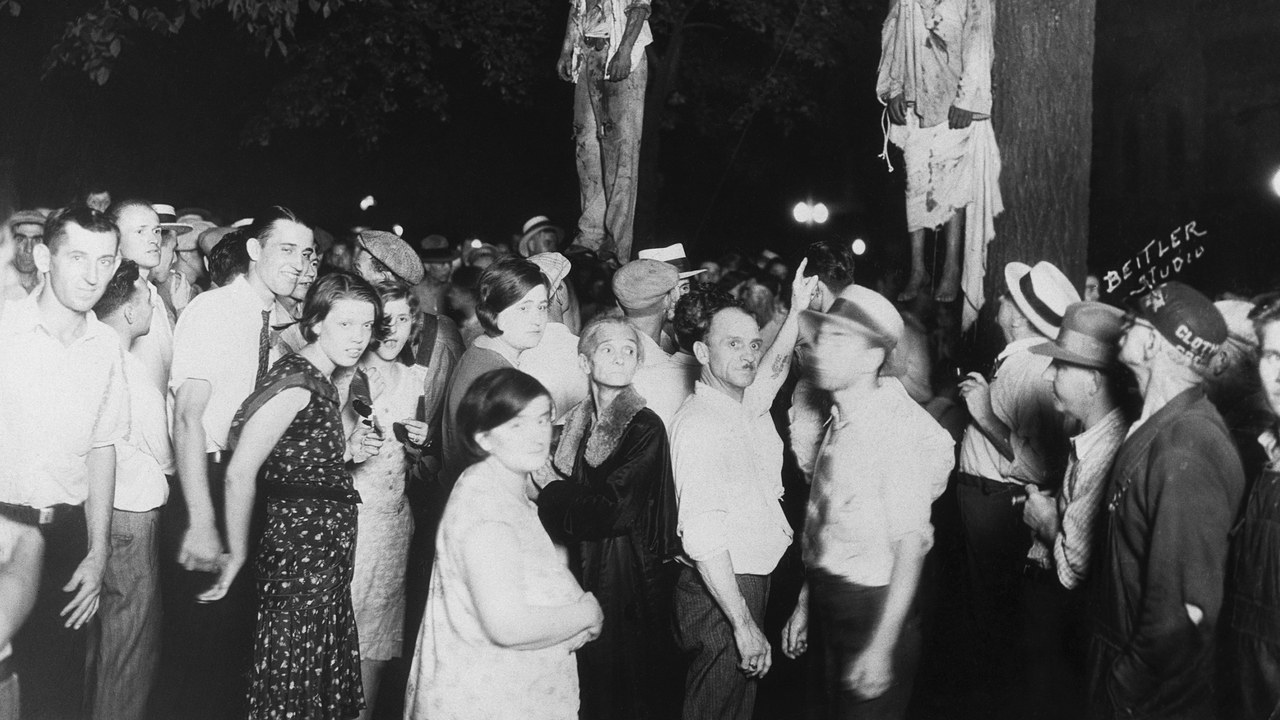
The President is stirring up a noxious brew of lethal ingredients. The dangerous humors unleashed are toxic, and will have horrible consequences. He was only joking, you might say. Loosen up. It was meant to be funny. But we all know that racist activity is on the increase, that those who hold these views have been emboldened. The white people in the photograph at the top of this post–they are smiling, too, at a lynching. The brutal rhetoric that preceded this sort of violence is becoming more common. It is encoded, but it is there. And it is happening more openly and more often. Those who laugh at the notion of racist violence, at genocide humor, will be judged harshly by historians. They might be “very fine people” individually, but theirs is a moral failing, and it is racist. We who study the past have seen this before. Too often, dehumanization leads to violence. Dehumanization is the precondition to violence.

On Seeing HAMILTON, In the Ugly Light of Trump’s America

            I am going to go see Hamilton this weekend, and I have been invited to share my impressions of the award-winning musical on a local NPR-affiliate the week following.  I will be teaching the American Revolution next semester, and as some of my posts over the past several months make clear, I have been thinking about the stories we should tell quite a bit.

            I have also been thinking a lot about the American constitutional system that emerged from that Revolution, what the Founders intended, and what they might think about our current mess.  I have never thought much of “Framer’s Intent” as a style of constitutional argument that carries much weight, but still, we are historians, and comparisons for us come easily.

            We have a president elected by a minority of the voters whose administration shows levels of mendacity, greed, and spite that stand in stark contrast to that of his predecessor.  The president’s supporters work to restrict the right to vote of poor people and peoples of color out of fear that these constituencies will vote against him.  Some of his sycophants, led by the besotted Jerry Falwell, Jr., have suggested that the president unconstitutionally extend his term. Indeed, the Democratic Speaker of the House Nancy Pelosi expressed her belief that the President will not voluntarily leave office if he loses the election. Meanwhile, the Attorney-General of the United States and the Secretary of the Treasury defy subpoenas from the House of Representatives, that chamber of the legislature that most directly represents the American people.

THE REVOLUTIONARY GENERATION believed that republican forms of government were inherently fragile because they relied upon the wisdom and the civic-mindedness of “the people.”  The revolutionary generation, as historians like Bernard Bailyn, H. Trevor Colbourn, and Gordon Wood showed long ago, had no reason to expect that a republic could last forever and, indeed, all the examples they could point to had descended into tyranny and corruption.  Perhaps our time is running out, I sometimes think.  Perhaps we have had a good run that now is ending.  I legitimately worry that the American constitutional system will not survive my children’s generation in any meaningful or recognizable form.  The system is broken, as so many politicians have pointed out.  It is broken because cynical, cowardly, and corrupt Republicans, aided by timorous Democrats, smashed it to pieces.

            The Revolutionary generation believed that the purpose of government was to secure the Commonwealth, the good of the whole.  In order to pursue the good of the whole, citizens must exercise and practice virtue.  A virtuous citizen, in the parlance of the time, was one who could set aside his or her narrow self-interest and willingly make sacrifices for the good of the whole.  Corruption, in this sense, was the exact opposite of virtue. In order to practice virtue, citizens required independence. They could not be subject to the will of another. That is part of the reason why women (subject to the authority of their fathers and husbands), tenants (subject to their landlord’s authority) and wage-earners (subject to their employers) could not vote in elections.  In addition to independence, citizens had to remain active.  They had to practice citizenship.  They had to inform themselves, remain vigilant, because liberty was a fragile thing.  A supine and ill-informed citizenry made fit-tools for tyrants. 

            While agreeing broadly that these concepts were important, the revolutionary generation could disagree intensely over what these terms meant. But few questioned the importance of these values. Commonwealth, Virtue, Independence, and Citizenship: by these standards we are not doing very well.

            The Trump Administration has revealed itself as a smash-and-grab operation operated by liars and grifters.  The Republican Party has become a haven for hacks and fools, an unholy alliance of the super-rich and the ill-informed.  The President who proudly proclaimed his love for the “poorly-educated” on the campaign trail treats government as little more than an opportunity to generate wealth for his family and bile against those he views as enemies. He lies ferociously. He casts his legitimate critics as “enemies of the people.” He calls names.  He vilifies.  For him there is no common good.  He is incurious and unlettered, a brute and a tyrant. He knows nothing of the Revolution or the Constitution.

            Of course, there are Republicans who believe that we are part of something larger than a political party.  There are patriotic Republicans who disagree intensely with Trump’s policies and behavior. But none of the Republicans holding office have had the courage to oppose him in any meaningful manner. Instead, they furrow their brows, hold their noses, and dive headfirst into the cesspool, the smell of the crap no longer bothering them once they are in.

            Tens of millions of people continue to support the President, seemingly unaware of his administration’s utter contempt for the Constitution. Some of them embrace the President’s politics of spite. They find room under his big, hateful tent to express their own fears, and a racism nourished by the fevered rants of the megalomaniac who stumbled into the White House. Perhaps his fervent supporters know so little about the Constitution, and their civic illiteracy is so great, that they do not understand the dangers this president and his party portend.  The citizen who does not know what the Constitution says is poorly-equipped to know when its provisions are stripped away.

AS A STUDENT OF THE REVOLUTION, I fear for the future.  The founding generation knew that republics did not last for log and that corruption, selfishness, and ignorance posed fundamental threats.  Many of their most momentous debates centered on questions of how to avoid these threats. As he watched the government struggle during the Confederation period, Alexander Hamilton expressed his distrust of the people.  They could not govern responsibly.  “All men of respectability who have been witnesses of the despotism and iniquity of the legislature, are convinced that the principal people in the community must for their own defense, unite to overset the party I have alluded to.” High stakes were involved, he felt.  “The safety of all those who have something to lose,” he wrote, “calls upon them to take care that the power of the government is intrusted to proper hands.”  He called for a much more powerful central government than was established by the Philadelphia Convention in 1787. When he became George Washington’s Secretary of the Treasury, he argued for policies of broad political significance.

            Admittedly, it has been a long time since I read in any depth in Hamilton’s work.  I am not as up-to-date on the literature of the 1780s and 1790s as I want to be.  Still, it seems to me that Hamilton’s experience during the war had convinced him of the necessity for a vigorous government.  He did not believe that He did not believe that one could rely on “Virtue” as the basis for a framework of government. He believed, in fact, that mankind was in general so selfish and ambitious that virtue alone could never provide the basis for a system of government.  A government based on virtue assumed that people would think of the common good.  Hamilton thought all of that was nonsense.
Government should appeal, he argued, to the well-born, the wealthy, and the able if it were to succeed.  He considered these people a sort of natural aristocracy.  Hamilton admired Great Britain and especially its commercial power.  He wanted the same for America.  He thought that this could be obtained most easily by pursuing two general policies:  First, Hamilton wanted to use the power of the federal government to encourage manufacturing and commerce in order to make the United States economically strong and independent for Europe.  He did not believe the United States could remain politically independent of Europe if it remained economically dependent.  It must move beyond a colonial economy. Second, he wanted to link the rich and the wealthy to the government.  These were the secure part of the body politic, he believed, the stable people most capable of taking the long-term view of the issues.  These were the stable people. 

How to achieve this?  Hamilton laid out his program in his Report on the Public Credit, a white paper arguing that the government could take steps to strengthen the nation’s finances.  His program consisted of two things: Funding and assumption, and the creation of a National Bank. Hamilton asserted that the government needed two things in order to prosper: revenue and Credit.  It needed capital, money, but it also needed the faith of merchants and other governments that it would repay its debts.  Without that faith, the government would lack the ability to borrow money, which sometimes governments have occasion to do. 

All told, the Confederation had accumulated a debt of $52 million dollars.  Hamilton said that this debt should be paid in full, or funded.  Also, the several states had accumulated debts of $25 million.  He believed that the federal government should assume responsibility for these debts and pay them in full.  How would this work?  For funding, Hamilton asserted that all those holding certificates of the confederation debt, these bonds, would be paid the full face value for those notes. The money for funding this debt would come from the issuance of new notes.

Holders of the debt would be paid in full, unless they preferred to receive the newly issued notes.  These notes would serve as a form of currency, so long as confidence existed that the government would continue to survive.  For the assumption of state debts, the same principal applied. The United States would pay to the holders of state paper the face value or, if they chose, to deliver to them new bonds.

What was Hamilton after?

He claimed that the failure of certain states to honor their obligations undermined American credit in overseas markets. He saw the assumption of state debts as a means for the federal government to secure the gratitude and loyalty of state creditors by honoring their claims before the states could manage to pay them.  These creditors would look to the new national government, rather than the state governments, securing the allegiance of an important class of citizens.

Hamilton also wanted to establish a national bank.  Banks, he argued, could create capital. A national banking institution was an unprecedented idea.  Hamilton recognized that a large financial institution could act as the fiscal agent of the United States government.

This bank would be a joint public-private venture.  4/5 of the stock of the national bank would be held by private investors.  The bank, he argued, was a public institution, thus the stock ought to be available to the public. 

There were many critics of the Bank.  There was, many of these critics contended, nothing in the Constitution that authorized the United States government to establish a national banking institution.  The Bank took the notion of implied powers too far. 

Congress deadlocked over Hamilton’s financial program.  Many southern states, especially Virginia, were unhappy about assumption, because they had already paid their debts and did not relish the prospect of possibly being taxed to assist heavily indebted states like Massachusetts. 

James Madison and Thomas Jefferson met with Hamilton.  They reportedly worked out a compromise over dinner.  They agreed to support his financial program if, after ten years, Hamilton agreed to support the notion of establishing the permanent seat of the national capitol in the south. .Funding and assumption passed the Congress, the Bank of the United States was granted a 20-year charter, and the national capital was built in the District of Columbia.

PERHAPS HAMILTON INJECTED A POWERFUL STRAIN OF CYNICISM into the American political system.  His distrust in the capacity of ordinary people to rule responsibly is powerful and he stated it frequently.  I have not read a lot on Hamilton recently, but the thing that strikes me as I reflect on this period we have entered is that he did expect those chosen to lead in the republic’s extended sphere to be wise, and men of character and integrity. It seems like we the people have chosen poorly lately, and part of that is our fault.  And if the President is reelected, whether by fair means or foul, I am not sure the system can be saved. Soon, we are told, 50% of the American people will live in 8 states. Half the population will have 16 senators, and half will have sixty-four.  Show me a political leader with vision calling for reform of these deep structural problems, and I will show you a woman or a man marginalized in our political life, denounced as a dreamer, a demagogue, or a “socialist.”

MY DAUGHTER IS FINISHING HER first year of college. At her high school graduation ceremony eleven months ago, the Superintendent opened his remarks to the graduates with an apology.  I am sorry, he said, on behalf of my generation, for leaving your generation with so many problems to solve. We failed you.  But looking out at that auditorium filled with kids, he expressed some optimism, too.  Your generation is better than ours is so many ways.  Save us, he said. You can do it.

            I found this profoundly moving.  We need to help these young people. We need to encourage them to be braver than us.  These young people, after all, now live in a world that you and I have helped to create for them where too many people confuse their feelings and their fears for facts, where being smart and engaged and critical and willing to ask questions can make one an object of scorn.  They live in a world as well where complexity is so often dismissed, where big and difficult answers to the big questions are avoided, that asking these sorts of questions can take a certain amount of courage.  Rational, reasoned, and just public policy is difficult if not impossible without an informed, engaged, and rationally-thinking public willing to ask tough questions, to engage.

            Here is what a student of mine wrote a couple of years ago for her Humanities final.  The assignment I gave asked students to write about human nature, justice, and the problem of evil, as they contemplated an article by Roger Rosenblatt I have mentioned many times on this blog, and works by Sophocles, Plato, Thucydides, Augustine, More, the Bible, and Shakespeare.  “The question remains,” this very talented student wrote, “how do we account for all of the hatred, violence, and injustice that we witness? What words do we use to describe it? How can we possibly rationalize it and make sense of it? Where do we find its opposite in the world, and how do we eagerly point at that, so as to say, ‘See, this is also us. This is also me.’

            “In a world and a human history overwhelmed by hatred, violence, and injustice, what counters it, I argue, is love, compassion, faith, and the courage to rise above it.”

I agree with the superintendent. This rising generation is already better than us in important ways—its open-mindedness, its tolerance, its acceptance of difference. I really believe that. As educators we must encourage courage. We have a lot of influence.  Or at least we have the potential to be highly influential:  a cruel or an uncaring word from us, for example, even when cast off thoughtlessly or uncritically, or because we are stressed out or too busy, can do so much damage, while a simple kind word, a single note of encouragement, can do something that these students might remember for the rest of their lives, something that can help them write a beautiful life story. 

            So let’s do better.  Let’s encourage fearlessness, even where we have failed to demonstrate it ourselves.  Each and every day, I have the opportunity, if I choose to truly be present, to truly listen, to be awed by their achievements, humbled by the obstacles they have overcome to get to this college, inspired by their creative thinking, pushed by their challenging questions, and amazed by the alacrity with which so many of them seek out injustice, attempt to correct oppression, and in thousands of small ways show the vital courage to make the world—our world—a better place.  Our future is in their hands.

This Is Not A Lament


We all know that we live in tough times. A number of small, private, liberal arts colleges have gone belly up, a product of mismanagement, declining enrollment, or a combination of the two.  Funding for public higher education is either flat or falling, and some schools have dramatically cut back on programs.  Western Kentucky University, for instance, recently announced an end to 101 academic programs. Faculty members do more with less. 

Demographic changes, meanwhile, have made their impact felt, as colleges compete for a declining number of prospective first-year students.  Institutions with deep pockets and strong reputations are able to offer generous packages of financial assistance, while state colleges and smaller private institutions struggle to keep up.  Adjunct faculty do an increasing amount of the actual teaching at institutions across the spectrum, and universities seldom replace departed faculty members in uncertain times. I may be part of the last generation of tenured professors.

Perhaps predictably, this sorry state of affairs has produced some soul-searching. Some commentators or critics have explained that the current crisis is the fault of the academy itself.  The demographic trends could have been visible to anyone who looked, they argue. At the same time, professors, more interested in pursuing their overly-narrow research interests, do not put adequate time into their teaching.  This hyper-specialization spills over into the classes they offer. Quite simply, colleges are not offering classes that students want to take. Try to find a military or diplomatic history course, they say, and you will search for a long time. Maybe professors would be better off teaching relevant courses for their students than dunking on buffoons like Dinesh D’Souza.

Please.

Can we give it a rest?

Of course, there are serious problems in higher education. I do not want to dismiss the seriousness of the crisis.

But let’s not blame the liberal arts or their practitioners, and let’s not look to their alteration, diminution, or elimination as a solution to the deep structural problems afflicting the academy. At SUNY-Geneseo, where I teach, the number of majors in our history program has increased in each of the last three years. Our liberal arts programs are healthy and vibrant.

There are a couple of reasons for this. We have outstanding teachers in our department, and we encourage faculty to pursue their interests, to share their passions with their students. Instead of requiring old-school survey courses in United States history and Western Civilization, a tired model if ever there was one, we emphasize the discipline of history. We study continuity and change, measured across time and space, in peoples, institutions and cultures.  We teach students to formulate questions, to answer them in a manner that is honest, thorough, and disciplined, and to write with grace and style.  We offer no courses in military history, it is true, but we offer courses that our students find relevant and important and that teach students the skills of the historical discipline. They learn to work with facts, evidence and explanation. They study the history of everyday life, histories written from the “bottom-up,” and histories of groups traditionally underrepresented in other historical accounts. They want histories shorn of the patriotism and myth that they see as characterizing parts of their high school experience. But they study as well the classics.  They read widely and they read deeply. 

            Many of us are active researchers still, and our scholarship informs our teaching. Some of us focus on topics that are narrower than others, but we are working, exploring, asking questions, and examining our own assumptions as we examine the evidence.  We bring this research into the classroom. We deploy a variety of teaching styles. Some of us lecture. Some emphasize discussion and form our students into groups to analyze the reading. Most of us do both. Over the years, I have sat in on discussion classes where little has been accomplished, and others where the resulting conversations were so stimulating that my mind raced for the rest of the day. I have sat in on lecture courses as a student that bored me to tears. And I attended lectures that changed my life.

            If you were young once, you might remember how an idea could turn you on, how a topic about which you knew nothing could consume you, and inspire you to dig deeply for more knowledge. Students hunger for knowledge. They want to think big thoughts, ask and answer important questions, examine the contours of their own existence.  They want to learn the skills of their particular discipline, yes, but many also want to talk about meaningful citizenship. They want to understand the world they live in and the people in it, and how to make their world a better place.

            There are scholars who write on “narrow” topics, to be sure.  Some publish and present their work to small groups of like-minded scholars. There are writers in the liberal arts whose writing is difficult and jargon-filled.  But there are others whose work is accessible, urgent, and available. They write about subjects of immense importance, and they do so with energy and style.  Their work sheds light on the human condition, and they share their work widely with readers and with their students.  They may not write about war, politics, or diplomacy, but they explore what it is to be human, to live in community with others, and how we got here.  Those who read their work find it powerful and important.

            Students love their courses in history. 

In our current political climate, however, they hear from politicians and policy-makers that to be educated is to have a job, and that little else matters.  The president, his party, and their propagandists dismiss the value of the life of the mind. They dismiss the liberal arts as elitist, or as dominated by topics that are “politically correct,” largely because they distrust the democratizing potential of free inquiry, and resent the calls for justice that lie at its core.  Professors should teach the facts, they say, and they should not indoctrinate their students.  They express that fear frequently.  They worry about freedom of expression and freedom of speech on college campuses, but what they really fear is open debate and the discussion of topics that challenge their assumptions. When we ask students to consider the meanings of freedom, equality, and power, to explore the inconsistent relationship between law and justice, and to examine the yawning gap between our reality and our ideals, between the way things are and the way things ought to be, they see a threat.  They fail to understand how it is essential to a thriving republic for citizens to ask these deep, probing questions.  They fear the questions and those who ask them.

We who teach these subjects must push back against this style of thought.  We can talk about how liberal arts students will find work, about how they make decent money, and how students need to be adaptable because today’s students will likely be doing many jobs that do not even exist.  Many have made the point about the economic value of the liberal arts.  But there is a larger, cultural force against which we contend.  Anti-intellectualism and resentment against the privilege that colleges and universities seem to represent are powerful forces. It will not be easy, but it is essential, that we engage those who hold these views.  We are, after all, educators. And our most important job, in addition to teaching the students in front of us, may be to explain to a skeptical public the importance of the work we do, and how wrestling with big ideas is necessary not only for meaningful citizenship, but for a richer life.

Scholarship and Activism

In the epilogue to her powerful The Beginning and End of Rape, Sarah Deer wrote about the day she received a phone call from the MacArthur Foundation announcing that she had won one of their coveted “Genius” prizes. The honor, so richly-deserved, would not change her, she wrote. Deer would continue to combine her activism and scholarship to help Native American communities.

“History repeats itself.” What history teacher has not heard that line from a student? “Those who do not know their past are doomed to repeat it.” That was George Santayana’s old apothegm. In each, history is a force, marching endlessly in a circle. Because so few people indeed know their history, it becomes a sentence. If we are lazy, we can see the past as depressing, and outcomes as inevitable, or tragic. The past becomes a burden, a weight that can drag you down. I have felt that way at times and I have written about it on this blog. If you study the past, I am willing to bet that you have felt that way at times, too.

When I was taught long ago how to be a historian in the one-semester methods class I took at Cal State Long Beach, my professor emphasized the importance of objectivity. Several years later, one of my professors at Syracuse, a member of my dissertation committee, wrote at length in much of his own scholarship about the emergence of objectivity as a value in historical scholarship. Many of those who criticize our work, from outside the guild and within, may raise objections to it by suggesting that we are biased, and driven by our agendas. We might be left wingers, or “politically correct,” scholars more close-minded than we realize, and hampered by ideology from doing the simple work of reciting the facts that, brick by evidentiary brick, make up that edifice called history.

We might explain that this is not how we work, that this is not history at all. And it certainly is not how we should teach our students to work. History is not a science, but it is a discipline. Our research should be conceived, composed, and conducted in as objective and as disciplined a manner as we can. Of course we must be fair. We must keep our minds open and we must be honest enough with the evidence and our own assumptions that we are able to see clearly when they do not go together.

But the work we do, at the end of the day, is about answering questions. The questions that present themselves to us–that strike us as important, and worth answering–come from our experiences in life and in the archives, from our hard work, and, quite often, from our sense that all is not well.

Read history for a while and you will feel regret. Asking why a certain reality is ours can lead a curious mind to wonder if indeed other realities were possible. And if other possibilities existed, why did they not come to be? Who benefited from this particular outcome, and what might they have had to lose through other outcomes? And if one of these possible outcomes is superior to our current state of affairs, how do we get there? History can make clear the yawning gap between the way things are and they way things might have been.

In the opening of The Beginning and End of Rape, Deer makes the point that the current crisis afflicting native communities on and off-reservation is not an “epidemic.” Calling it that, she points out, makes it seem natural, unavoidable, beyond immediate human causes. That’s the wrong way to look at it, she writes. Rape, Deer argues, which “should be the number one priority for tribal nations,” because “all other challenges faced by tribal nations are linked to the history and trauma of rape,” resulted from the conscious choices made by the many and varied agents of colonialism over five centuries.

For Deer, as for many who study the past, there is a massive chasm between the way things are and the way things ought to be. To not ask the natural and logical question that follows is an abdication of responsibility: if history can guide us to a more perfect union, and if the lamp of experience illuminates a path to a better future by helping us to identify historical alternatives, how can we responsibly look away? To ask, “Why this?” leads easily to “Why not an alternative past?”
Encourage your students’ activism. Teach them the hard work involved in scholarship. Teach them to avoid polemic, to be fair, to ask tough questions of themselves and others, and to respect the discipline. Teach them that others will judge their work on the quality of their evidence, the thoroughness of their research, the rigor of their argument, and the grace and style of its presentation. Teach them that expertise is earned, not asserted. But do not allow a commitment to objectivity to stifle the questions, and hard-won answers, that can present themselves to any open-minded student of the past. Almost nothing was inevitable, and almost always there were other choices that men and women in the past might have made. There were almost always other possible outcomes.

The Lonely Death of Carlos Pico

I am teaching for the first time a freshman writing seminar on the history of the Carlisle Indian Industrial School in Carlisle, Pennsylvania. The students have read a couple of secondary works, but the bulk of their work will involve research in the documents collected by the Carlisle Indian School Digital Resource Center. It is an amazing resource, filled with revealing records from the school, but also amazing human stories.

The students are selecting the topics for their research papers. They obviously cannot go through the thousands and thousands of student records, and much of my time meeting with them last week was directed towards trying to help them narrow their topics down to a manageable scope and size. One way to do that was to follow the students from a given native nation, to explore their experiences at the school, and as much as possible, to try to figure out how they fared once they left.

Only a small number of the students are history majors, and they come to the work with a wide range of interests. Some of the delight in teaching the course comes with working with these diverse students, and approaching the records anew, from the perspectives of, say, education, or psychology, or epidemiology, or nutrition. I learn a lot from working with these students, and find myself constantly forced to think about the sorts of stories these records can tell.

I keep coming back to the human stories, of young people, often far from home, who came to the school, experienced it, and then moved on. Carlos Pico was one of those students.

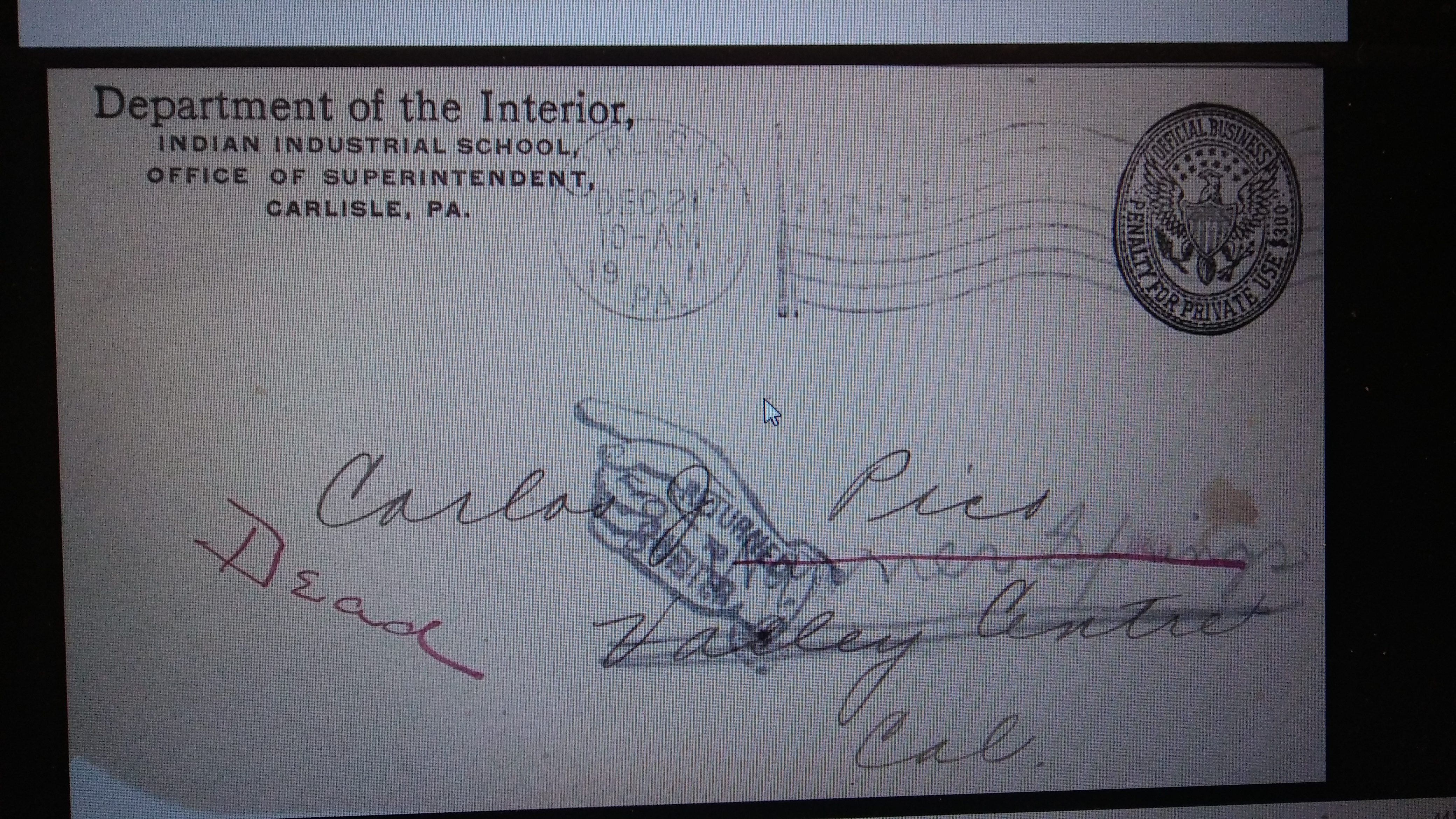
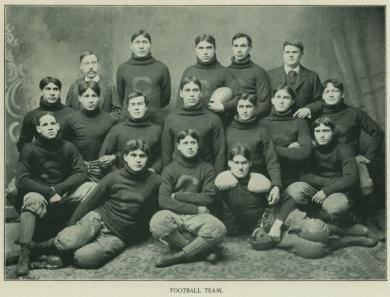
Carlos was 17 when he came to Carlisle in 1899. Last Thursday, the 7th of March, was the 120th anniversary of his arrival at Carlisle. Carlos was huge, six-and-a-half feet tall, 174 pounds. There is a story that he played on the Carlisle football team under Pop Warner, who coached at Carlisle from 1899 to 1903 and from 1907 to 1914. Carlos was at Carlisle for the first part of that period, but he left the school in June of 1904. I am not certain that he played. He is not listed in a newspaper article on the school football team in 1900. His student file shows that his outing–in Mt. Airy, New Jersey, and in Penn Valley and Morrisville, Pennsylvania, ran from the spring until late August or early September. If Carlos played on the 1900 team, he was not included in this picture of the players.

We do know that by 1905 Carlos was home in California and working as a farmer and a blacksmith, using the training he received while away from home. In May of 1910, he married Thomasa Penna. She was a Mission Indian, too, living in California. As he responded in August of that year to a Carlisle questionnaire, he had “a happy home my wife and my self.” He had “enough horses to do my work. And enough money to carry me on.” But something went wrong.

Carlos’s student file includes a pair of newspaper clippings. One read that “We regret very much the death of Carlos Pico of Rincon, who was brought to Pala Thursday in critical condition. The death of his wife, which occurred recently, preyed so heavily on his mind that he became mentally unbalanced and died Saturday morning.” Another read that “An Indian, Carlos Pico, of Rincon, California, grieved so over the death of this wife that he lost his mind. Death soon come to his relief.”

It’s hard to know what to do with stories like this. Grief saturates the story of Carlos and his wife. It is difficult to imagine the loneliness and a depth of grief so consuming that it produced in this young man derangement and self-destruction. I have poked around a bit. Carlos is still remembered and still has relatives in his community. Much of his story nonetheless remains out of reach. Perhaps county records might reveal more. Perhaps there is more that can be learned about is wife (Thomasa Penna? Tomasa Pena? It is hard to be certain of the actual spelling of her name). A historian would have to spend some time on the ground in California, hitting the archives, looking for needles in different haystacks. Stories like this leave students grasping for more, and they teach the difficulties that come with historical research. Sometimes we can only go so far. Trails grow cold, the lineaments of the story difficult to trace. But they connect students to the past at an emotional level, and call them to dig deeper, and to recognize that the work of reconstructing the past is never complete. As a historian, and as a human being, it is hard to forget stories like these.

Remembering Zachary Bearheels


A year and a half ago I wrote a post about the killing of Zachary Bearheels by a police officer in Omaha, Nebraska. You can read that story here. On Friday of last week, the district attorney announced that no charges will be filed against the officer involved.

This morning, Representative Rashida Tlaib (D-MI) tweeted out a recent New York Times story reporting that authorities in Sacramento would not file charges against the officer who gunned down Stephon Clark. “Our legal system continues to tell our Black neighbors that their lives are disposable,” Tlaib wrote. “It’s uncomfortable to put a mirror up, but what hurts more is allowing senseless killings, by those who are supposed to protect us, to continue with no accountability.”

I am glad Tlaib is speaking out about this issue, but it is not enough, and the approach is too limited, for native peoples are more likely to die at the hands of police than any other group in American society. The injustice is deep, the remedy elusive, but the problem simply must be addressed.