Category Archives: TDIH

Some Thoughts on an Old Friend.

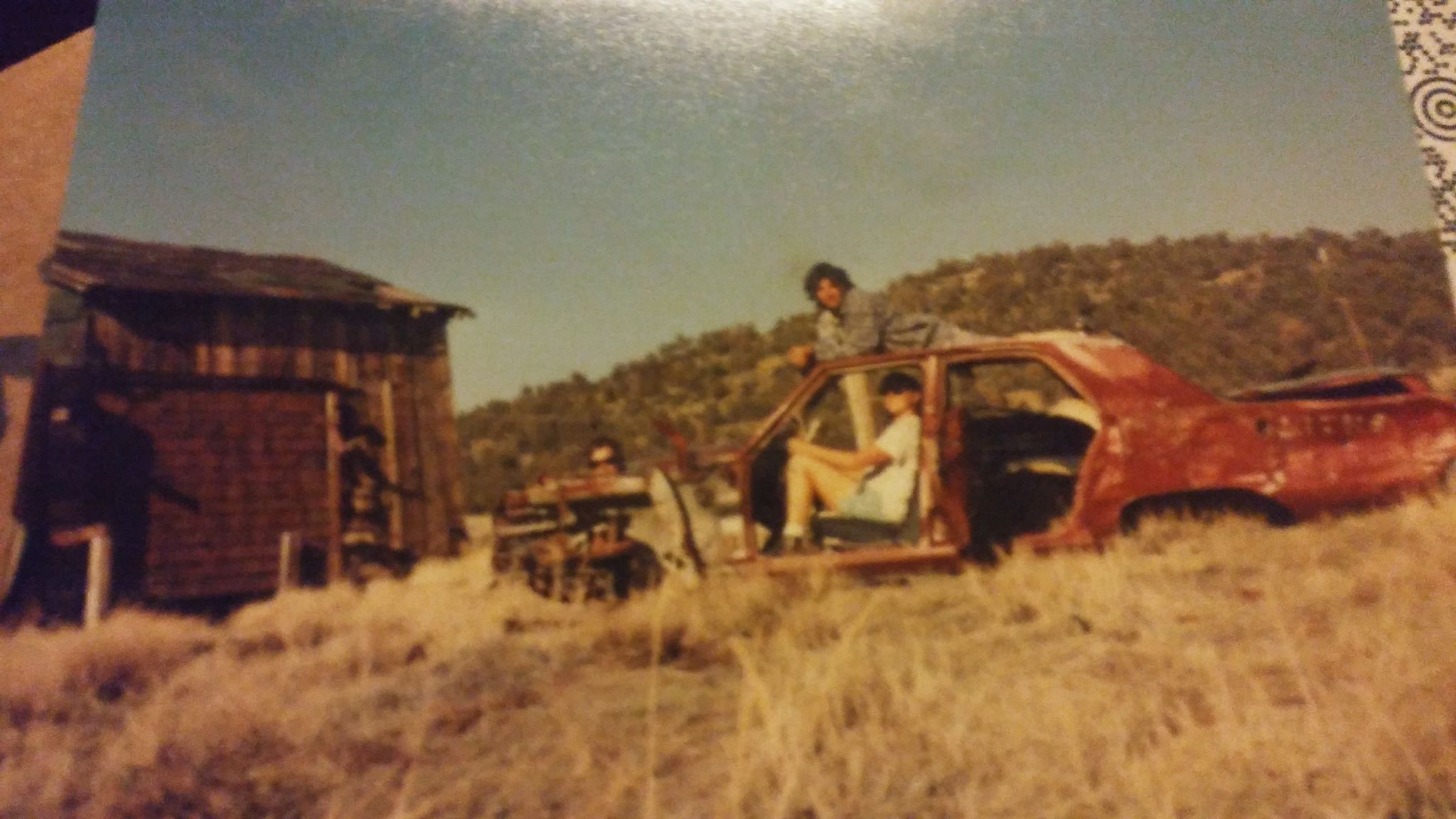
I’ve had this picture in my car for months now. I picked it up somewhere in our old house. It must have fallen out of an album while we were preparing to move. I look at it a lot: the high desert in California, with two of my best friends from college, at least thirty years ago. I kept it close to hand because the people in it mattered so much to me at a point where our lives were pretty much free from responsibility, at least compared to now. Life was easy then, it seems now, even when it did not feel that way at the time. That is Jon in the front of the car, where the engine should go, and I am on the car’s roof. Kim, Jon’s girlfriend, is in the driver’s seat. I woke up on Friday with a message on my phone that Kim had died the day before, on the Fourth of July. Ovarian cancer, eight months after she first was diagnosed.
Hazy like the past.

There was a Los Angeles anchorman for Eyewitness News named Jerry Dunphy. He had a long career and I can still hear his voice clearly in my head. He had an introductory line for which he was famous: “From the desert to the sea, to all of Southern California, Good Evening.” It became the inspiration for that road trip. We had been camping in Joshua Tree. Could we make it from the desert, to the mountains, to the valley, and to the surf in one day? California is amazing like that, and writing these words makes me feel homesick.

I met Kim in the fall of 1985, when we both began as students at Cal State Long Beach. We lived in the dorms. She shared a suite with a bunch of girls, two of whom, Toast and Psycho, became part of a circle of friends who became something new during those years in Long Beach. Kim and I had classes near each other, and we sat in the hallway outside our rooms before they began, reading the Daily Forty-Niner or the Long Beach newspaper or whatever else was lying around, laughing constantly. Kim laughed a lot. I remember that, and her smile was warm and welcoming. She had the greatest smile and she was generous with it.

Kim, Rich, myself, and Jon, having breakfast in San Francisco, sometime between 1988-1990

I saw Kim a lot over the course of the late 1980s. Jon and I were housemates, so Kim was around our place in Bellflower a lot. We made road trips, camping, or to see bands. We hit the freeway to see shows. I have vague memories of going to some country music festival, somewhere, maybe near a dam, which I must have gone to ironically, since I generally hate most country music. But I cannot remember for certain.

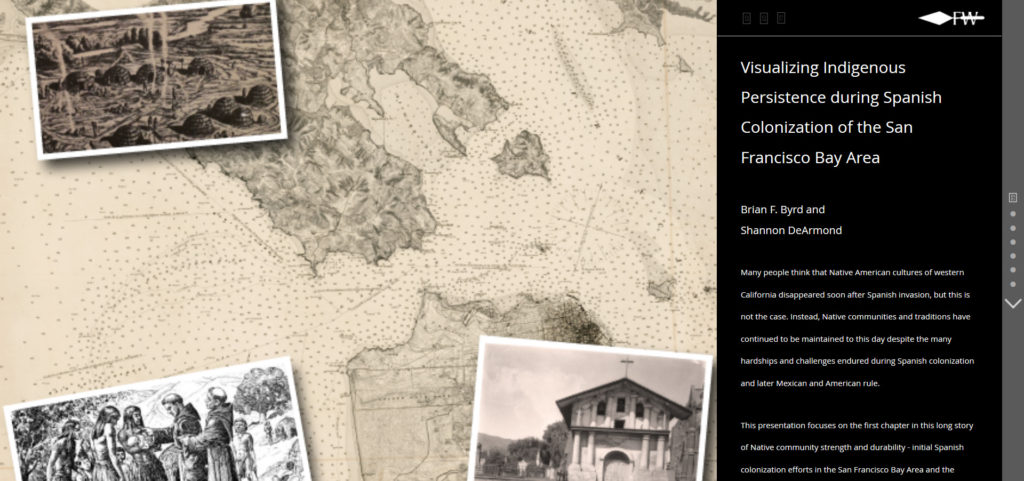
It has probably been twenty-five years at least since I last saw Kim. I do not know her kids’ names, nor that of her husbad. I moved to New York, and then to Montana, and back to New York. She moved to Sacramento. We kept in touch a bit on Facebook. Kim became an archaeologist, working on California’s native communities. She gave me some advice as I worked on both editions of Native America. I loved the digital humanities project she and her colleagues and indigenous collaborators produced. I continued to learn from her, but I did not get back to California as much as I should have.
Historians like me, we look for the significance in events. Too many of us, I think, ask students to identify and give the significance of this, that, or another person, place, or thing. I have railed against this on this blog before, because it is perfectly possible to live a life rich with meaning and entirely fulfilling without understanding the Alamo, or the Lend-Lease Act, or the Treaty of Westphalia. But what are the truly significant events in a life? The events that make you who or what you are? The moments, after which, nothing ever will be the same again? Maybe they were newsworthy events. Maybe you lived through something that historians will write about. But these events can also be a road trip, full of experiences that carry meaning only for those who were there, magic moments, points in time to which we are tethered, as we move through the desert, from sand to snow to surf, past abandoned farms, dry lake beds, anonymous tract housing, and concrete rivers, always in the warm bright California sun. Kim was at or around a lot of those events, during this important time in my own life from a long time ago. It was good to know her, from the desert to the sea, across all of Southern California.

Thinking of Gnadenhutten, 8 March 1782

I have thought a lot lately about the old charge that University faculty are all left-wingers who distort the minds of the tender children enrolled in their courses.   I have never believed this.  When I took my first job in Montana, my colleagues in the history department included a Missouri Synod Lutheran pastor who despised liberals and loved Rush Limbaugh, an Iraqi Seventh-Day Adventist who worried that African Americans would move to Billings because it was easier there to commit crimes, and an expert on lynching who saw nothing objectionable in the infamous Willie Horton ad run by the George HW Bush campaign against Michael Dukakis.  I was surrounded by historians on the political right.

More recently, a local radio show asked if my college would send a representative to discuss whether or not we were concerned about a lack of ideological diversity on campus, and just days before that, the recently installed Secretary of Education warned her audience at the Conservative Political Action Conference that “the faculty, from adjunct professors to deans, tell you want to do, what to say, and more ominously, what to think.”  I wrote about that here, yesterday.

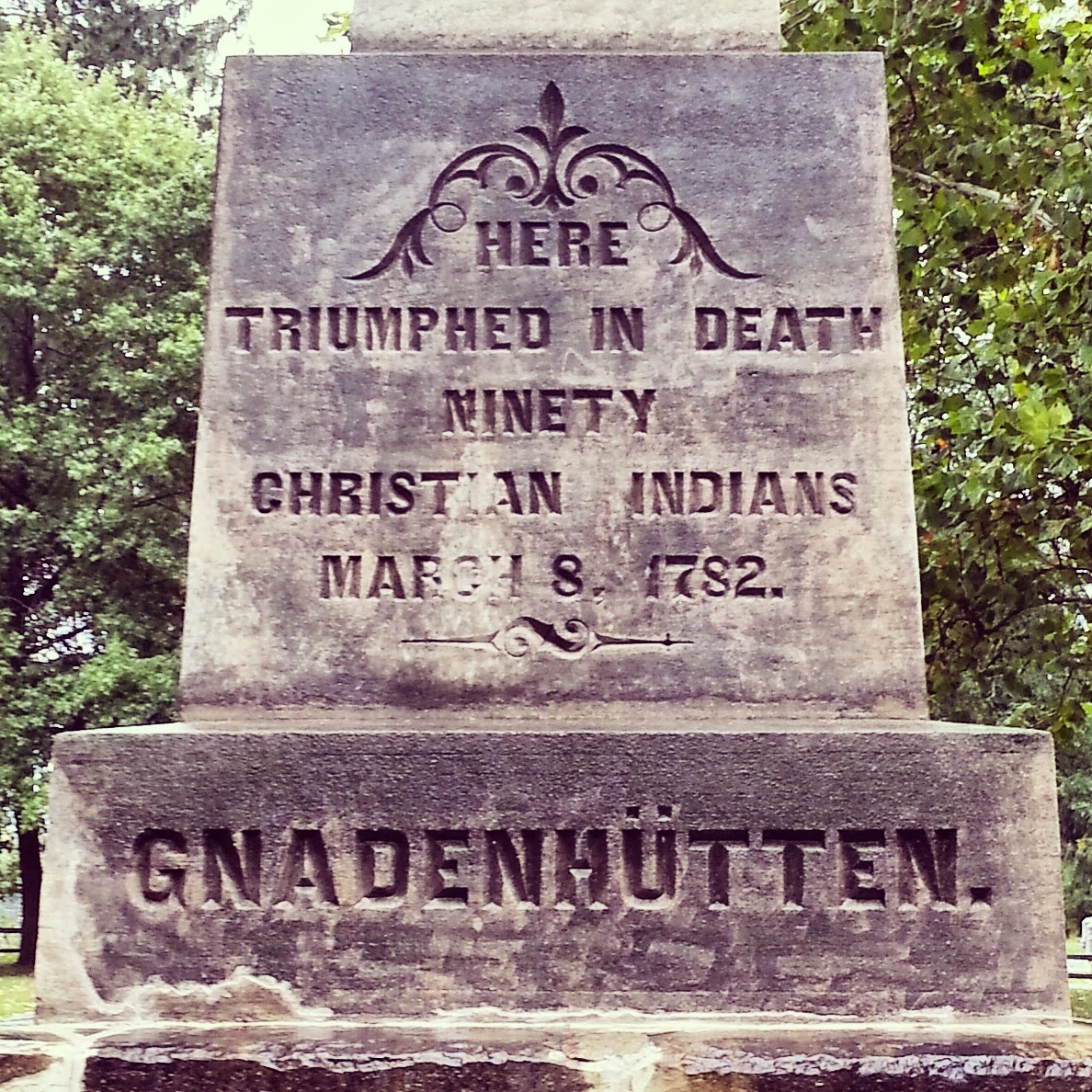
I have little patience for charges such as these.  One thing I like to do as a historian when confronted with questions like these is to ask those who believe that left-wingers have taken over the academy how the teaching of a given subject might change if I were farther to the right or the left than I am at present.  Let’s talk about the history. Support your reasoning.  Explain to me how the political affiliation of, say, a history professor, affects the way he or she teaches a given subject.  We can talk about slavery, or the American Revolution, or I might ask them about events like the massacre at Gnadenhutten, which occurred on this date in 1782.

Because if we are to understand Native American history in all its complexity, I believe that we must confront the lacerating violence of events like Gnadenhutten. We must do so whether we are on the Right or the Left or in the middle.  I would contend that an honest rendering of this event would not differ widely on the basis of who taught it.

The frontier, we must remember, was a violent and at times a frightening place. No historian would dispute that, no matter what their politics, unless they chose to ignore the evidence completely. Many Anglo-American settlers living on war-ravaged frontiers simply could not trust their Indian neighbors. Settlers in the Ohio country, for example, experienced the horrors of warfare just as did Indians. Some of them witnessed the death of friends and neighbors in Indian attacks. More of them heard horrifying stories of Indian attack. These settlers had occasion to fear Indians. They acted, with violence and decision, to save themselves.  But settlers found in their fears justification for horrible acts of terror. They could, as did Ohio country settlers in 1782, conclude that the singing of psalms by Christian Indians at the Moravian mission at Gnadenhutten was not the pious expression of praise to the One God but the ranting and boasts of savages who had wet their hands in the settlers’ blood.

Native peoples had their own fears, of course. When Kentucky militiamen attacked a cluster of villages in northern Indiana where Potawatomis and many other native peoples lived, they threatened them with extermination. If native peoples refused to make peace, Brigadier General Charles Scott said, “your warriors will be slaughtered, your towns and villages ransacked and destroyed, your wives and children carried into captivity.”  Read Jeffrey Ostler’s excellent piece in the William and Mary Quarterly from 2015.   Indians feared genocidal violence from white Americans, and you cannot miss the expressions of that genocidal intent in the writings and statements of American officials. Words and deeds combined, a frightening mix. Many native peoples who lived in the Ohio country saw in the United States and its citizens, whatever its claims to desire peace, an existential threat to their existence. Gnadenhutten.  The soldiers from Pennsylvania held a vote on whether or not to kill the 100 Christian Indians they had taken captive. This was, for native peoples, American democracy at work.   As the Christians sang the last hymns they would sing, savage militiamen began to murder them, thirty men, three dozen women, and thirty-two children in all. Kids.  Almost three dozen.

I tell my students about these violent episodes.  I mess around with the words.  Murder becomes an expression of democracy.  Frontier settlers become savages.  I try to decenter things, upset expectations.  I want the students to think about events like these, so formative in my own thinking about the meaning of Native American History.

If you are a student, you will have to decide how to make sense of this stuff.  We can talk about it or not.  We can ignore it if we want to.  Maybe that dude in Texas, who I saw on a local television station when I lived down there defending that state’s crazy history curriculum, and who believed that a bad day in the United States was better than a good day anywhere else, would choose to dismiss Gnadenhutten as an exception.  More likely he would not have us talk about it at all. But Gnadenhutten cuts to the core of the American frontier experience, and we cannot confront that history without paying it heed.  Left, Right, or Center.


Oliphant v. Suquamish: Forty Years Ago Today


Today is the anniversary of the Supreme Court ruling in  Oliphant v. Suquamish, a case that involved a native community along the Salish Sea, a white interloper, and the evisceration of the power of native peoples to govern and preserve order in their communities.  The Court issued its ruling on this date in 1978.

When I revised Native America and completed the second edition, I wanted to include more discussion of the role played by the American judiciary in defining and limiting that slippery concept we call sovereignty, and to look closely at the practices of an activist court applied to  Native American tribal governments

I talk a lot about the law and the courts.  I like to have students in my American Indian law course begin at the beginning, or one of a number of possible beginnings, by reading the United States Constitution.  Indians are mentioned twice in that august document.  There is a reference to “Indians not taxed” as being excluded from the tally of population required to calculate representation.  And then there is Article I, Section 8, spelling out the powers of Congress.  Among the long list of things that the legislative branch can do is “regulate commerce with foreign nations, and among the several states, and with the Indian tribes.”

Commerce.  What does it mean?  The students in my class ponder that question.  They read the Indian Trade and Intercourse Act of 1790. Like a number of pieces of legislation enacted by the first federal congress, the Trade and Intercourse Act elaborated upon the sparse language in the constitution.  Under the Trade and Intercourse Act, trade was licensed and regulated.  Land purchases from Indians not overseen and approved by the United States government were declared invalid.  Congress claimed the power to regulate those instances when native peoples and American citizens interacted with each other.  Importantly,  Congress claimed no authority over the internal affairs of American Indian nations.

Native nations were autonomous nations.   But that autonomy gradually was defined away. Chief Justice John Marshall, in 1831 and 1832, defined native polities as “domestic dependent nations.”  They could not carry on diplomacy with powers outside of the United States, nor sell their lands to any party but the United States, but they were immune to any state interference.  The State of Georgia’s prosecution of an American missionary resident in the Cherokee Nation was thus deemed unconstitutional, even if Andrew Jackson refused to enforce the decision.

But a series of decisions beginning in the last quarter of the nineteenth century chipped away at the autonomy of native nations even farther. Congress could extend its criminal jurisdiction over Indian country because the very weakness of the Indians, caused by the actions of the American government, demanded protection.  If the relationship of native peoples to the United States resembled, as Chief Justice Marshall had said, that of a ward to its guardian, in the 1886 Kagama decision the Court held that the government had the power to legislate for those communities, to protect them by making native peoples subject to federal criminal jurisdiction for certain “Major Crimes.”

The rule that emerged over time, and through the law, came to be known by legal scholars as explicit divestiture.  Native American nations could do essentially whatever they wanted unless they had been explicitly forbidden from doing so by a treaty or an act of congress, both of which were the “supreme law of the land” according to the Constitution.

And this is where Oliphant comes in.  The facts of Oliphant, according to Judith Royster,  are straightforward. “Mark David Oliphant and his co-defendant were on the Port Madison Reservation during the Suquamish Tribe’s annual celebration. Tribal police arrested both men in separate incidents. Oliphant was charged with assaulting a tribal officer and resisting arrest. The other man was charged with reckless endangerment and injury to tribal property after he led tribal police on a high-speed chase that ended when he crashed into a tribal police car. Both men sought a writ of habeas corpus in federal district court. The district court denied the petitions, the Ninth Circuit affirmed in Oliphant’s case, and the Supreme Court took the cases on review.”

Oliphant asserted that because he was not a member of the Suquamish tribe, and despite his residence on their land, that tribal authorities lacked the authority to prosecute him.  The Supreme Court agreed.  In a devastating ruling, Justice William Rehnquist held that

an examination of our earlier precedents satisfies us that, even ignoring treaty  provisions and congressional policy, Indians do not have criminal jurisdiction over non-Indians absent affirmative delegation of such power by Congress.

Without citing any evidence, Rehnquist concluded that “by acknowledging their dependence on the United States, in the Treaty of Point Elliott, the Suquamish were, in all probability, recognizing that the United States would arrest and try non-Indian intruders who came within their Reservation.”  The treaty does not explicitly say that, nor did the Suquamish specifically give up that power, but Rehnquist did not seem to care.

Oliphant, in essence, produced a new principle for measuring the powers of tribal governments to police their communities.  Adding to the doctrine of explicit divestiture came Rehnquist’s elaboration: the doctrine of implicit divestiture.  Native nations could do anything they wanted, unless explicitly prohibited by the terms of a treaty or an act of Congress or, now, if the power in question were somehow inconsistent with their status as domestic dependent nations.  Defining what was and was not inconsistent with this status was murky at best.

It was, over the course of one hundred and forty years, quite a slide.  The Supreme Court in Oliphant cited little law. It did not cite the constitution.  It simply stated that the exercise of criminal jurisdiction over a non-member in this case was inconsistent with their status as a domestic dependent nation. And the consequences—of Oliphant and the doctrine of implicit divestiture, were significant. It limited significantly the ability of Native American nations to preserve order on their lands, and to police the activities of non-members within their boundaries.  The decision was, according to Royster, “a morass of bad reasoning,” and a ruling that affirmed that the Supreme Court, rather than the military or missionaries, was now the locus of imperial power over native nations in the United States.