Category Archives: Current Events

Incarceration Rates for Native Americans

Many of my students have seen The 13th, the scathing documentary that looks at the close relationship between racism and violence in modern America.  Not only does the United States, with 5% of the world’s population, incarcerate nearly a quarter of the people on earth who live their lives behind bars, but it does so in a manner where African Americans are are disproportionately represented in the prison population.  Racism is alive and well in this Incarceration Nation.

I spend a lot of time thinking about the prison system.  My good friend runs a blog detailing her experiences as the wife of an inmate incarcerated under New York’s inhumane Rockefeller drug laws.  And many of our students read Heather Thompson’s book on Attica last fall.  Professor Thompson was on campus, as were a number of people who had been involved in the Attica uprising and its aftermath. A student in my Indian Law class asked about incarceration rates for Native Americans.  I had always assumed that Native Americans, in states with large Native American populations, were over-represented in those state prison populations.

There is information on jails in Indian Country here. It is a broad, national picture.  For the Native American population incarcerated in “local jails,” which are defined as “confinement facilities administered by local or regional law enforcement agencies and private facilities operated under contract to such agencies. They exclude jails administered by federal, state prison, or tribal authorities,” you can read more here. For the federal prison system, an overview can be found here.

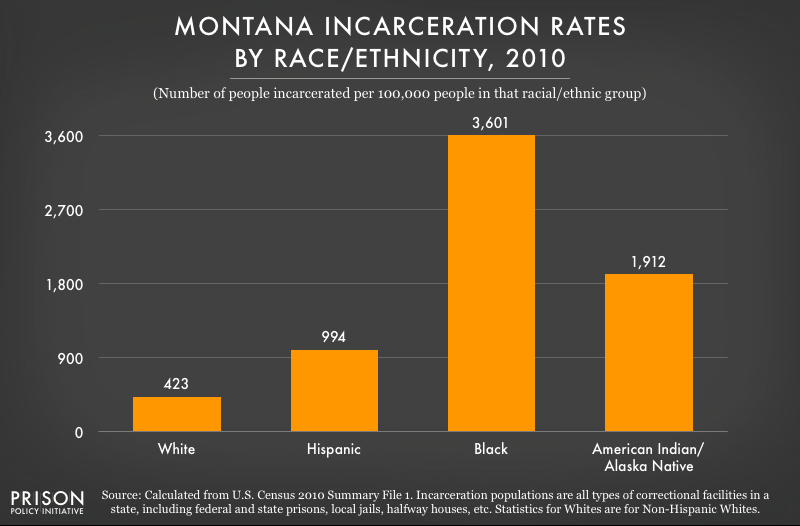
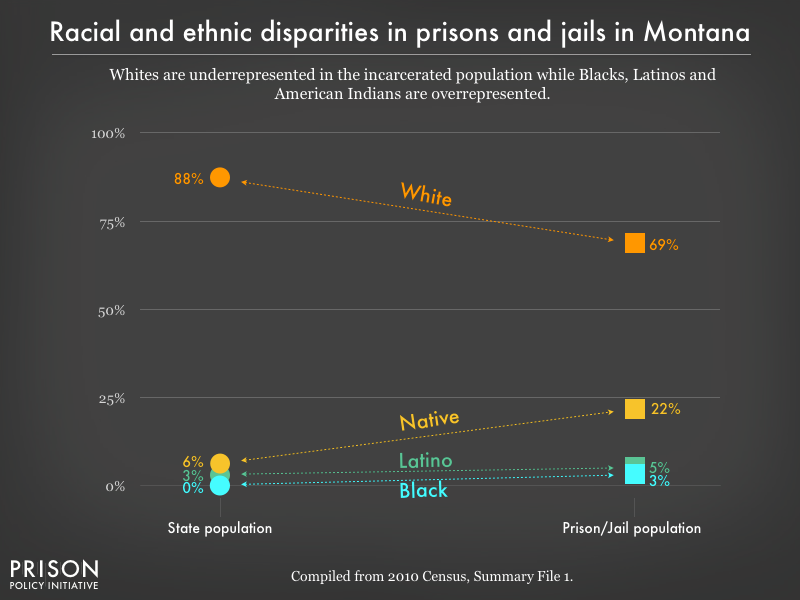
In Montana, where I lived and taught for four years. Native Americans were significantly over-represented in the states prison population. The Prison Policy Initiative has assembled a really helpful website that allowed me to increase my understanding of this important issue.


2010 graph showing incarceration rates per 100,000 people of various racial and ethnic groups in Montana


racial and ethnic disparities between the prison/jail and general population in MT as of 2010

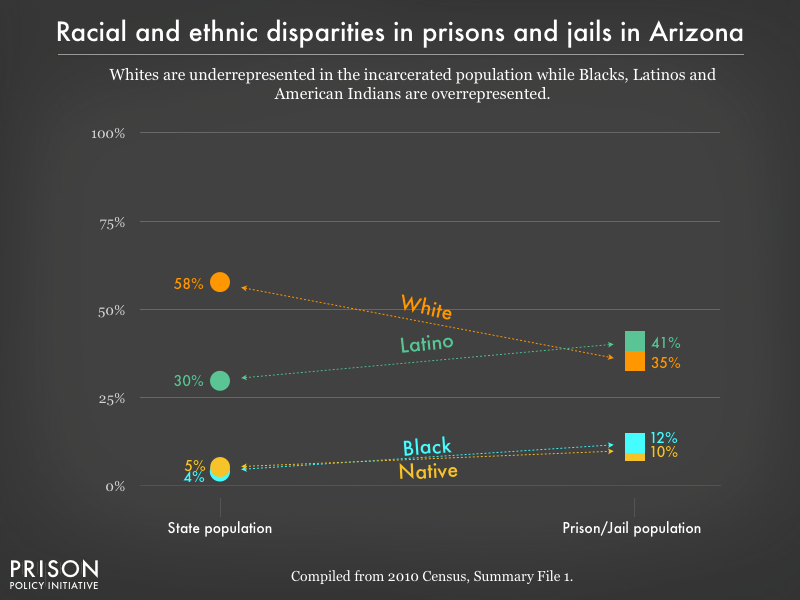
For Arizona, a state with a large Native American population, the figures are a bit less stark than they are for Montana.


racial and ethnic disparities between the prison/jail and general population in AZ as of 2010


For other states with large Native American populations, here is a run down on the figures:

State                                          Percentage of Population           Percentage of Incarcerated Population

New Mexico                                               9%                                                           11%

South Dakota                                            9%                                                            29%

North Dakota                                            5%                                                            29%

Utah                                                            1%                                                             4%

Washington                                              2%                                                              5%

Oklahoma                                                 7%                                                              8%

Alaska                                                        15%                                                          38%

Minnesota                                                 1%                                                             8%

For other states, you can see the reports here, including tables on the number of people in each racial demographic per 100,000 in population by clicking here.

Manifesto

We are historians.

No document is sacred. We are impatient with slogans, patriotic hymns, dogmas, ideas held but unexamined and unchallenged.

There is no text that cannot be analyzed, no claim that can not be challenged. Your comforting myths will find no succor here.  There is no assertion we will not check, no argument we will not dissect, no matter we will take on faith.

We will question you. You will feel like it is getting hot in here.  You will sweat.

We respect only the discipline of history–the craft we have learned and refined, the diligence and the thoroughness and the honesty and the hard work that goes into answering questions about the past in a systematic manner.

It is not a science, but it is a discipline, a way of thinking, doing, and being.

We take it all very seriously.

We will make you uncomfortable.

We will be, in your view, assholes and inquisitors, for we will demand of you your evidence. You would rather we study STEM. You see less value in the liberal arts and humanities in direct proportion to the pressure you feel we put upon you to think critically, to reason soundly and honestly.  We will expect you to be able to explain how your reasoning follows from your premises and, assuredly, we will ask you for proof. Maybe you will convince us.  Maybe not.  We will know what you have said before. We will ask you questions you have not considered. We will ask you why you did not consider our questions, and we may feel, as you might, that you are not asking the right questions at all, that they are not good questions that you are asking.

We will ask you what you have read, and why this and not that and what you think about this other thing. We will ask you how you know what you claim to know. If you have nothing to say, we might think that you have more work to do, or that you have not been fully honest, with yourself or us, about your own prejudices and biases.  We will think that you are more interested in advancing an agenda, in scoring political points, than in the truth.

And so we will judge you, and your work. We will judge what you say and what you write, though we will usually be polite. And we will judge you harshly when you mouth platitudes and talking point that you know to be half-truths, and when you attempt to wriggle away from the harsh reality you helped concoct, by saying “it’s not time.” We will listen to you, the mouthpieces of the NRA, and the craven politicians who do their bidding, and the fringes of the media where such dark ideas dwell.Image result for anti-gun art

And when you call us “politically correct,” or view us as part of a menacing “Left,” or as “Libtards”; when you mock us for being “woke” or fragile “snowflakes,” or “European socialists,” we will conclude that you are ill-informed, ignorant, or a coward and a wilful liar.  Or that you have nothing much to say at all. That all your Hannity vanity and wreckless Bannon is nothing but air.  We have a name for that sort of conduct, and we will use it to describe you.

We students of the liberal arts and humanities do not always agree. Sometimes we argue and sometimes feelings get hurt.  Criticism stings. But the give-and-take, the dialogue and debate, it is what we love.  It drew us into this world, this life’s work.

We listen and we learn. We re-write our lectures and redesign our courses, when we uncover something new. When a new interpretation, a “revisionist” work arrives, we consider it.  We think it over.  We take notes. We think some more. We stay up on our fields.  We devour new scholarship. We are honest, and we work hard.  We work longer hours than you will expect. We have high standards. We do not fear these at all. We agonize about what we write and teach, and we strive, imperfectly, to get things right. We spend a lot of time alone, reading, thinking, researching, writing. No, we will not carry weapons.

We hold ourselves to high standards. But we will hold you to high standards, too. And though we are quick to smell a rat, and good at detecting lies, and we are willing to dig like terriers for answers, we are patient and we will listen to you. And we listen closely.

It has been a bad couple of days.  I say that as a historian and as a human being.

There is a novel I love.

I have not read it in a long time. I may have lost my copy. I gave it away to someone but I cannot remember who that was, or I lost it on one of my many moves. It is called Waterland, and the author was Graeme Swift. The main character was a history teacher named Tom Crick. He taught his students about the French Revolution, about the history of Europe. But Tom Crick’s life was falling apart, personally and professionally.

And one day, challenged by a frightened student, a boy who could not see the point in studying the past when the future looked so bleak, and who asked his teacher why should we bother studying history, Crick provided his answer.

Why, Crick said, is the question that makes us human, and the word that blares in the historian’s ear like a siren in the night.  Why? If only…But why?

I think about that novel a lot.  History. And regret.  They go together.

Like gunshots and grief.

So, again, why?

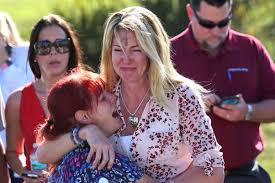
Why did this screwed-up kid with a screwed-up life do this screwed-up thing in Florida the other day. I rarely watch the news anymore, but I watched a lot after I heard that yet another school shooting was underway.  These stories hit me hard. I wrote some words for the local paper, and have thought a lot about this story of this screwed-up thing. I listened to the Republicans talk about it.  One of them said that he did it because he was a screwed-up kid with a screwed-up life, which does not help me.  It is circular.  And I have known other screwed-up  kids with screwed-up lives who could not hurt a fly. Maybe the society is sick, as one person said, or it’s because of I-pads, somehow, or because of violent video games, or too many guns in the movies.  Maybe it happened because we have removed God from the schools and because there are, one said, homosexuals everywhere.  This kid had no parents. Maybe it is a product of bad parenting. Or the cops.  Maybe it happened because the cops chickened out and would not go into that school that had become a charnel house, one fueled by the easy availability of weapons of war.

Or maybe it is because when a bad, screwed-up person is determined to do a bad, screwed-up thing, there is really nothing you can do to stop them. I heard one political leader say that. And that is fatalism.  It is not an explanation. It is an abdication.

Shoddy reasoning.  Fallacious reasoning.  I have heard a lot of it.  I have read it in some of the nasty notes I have received after my editorial appeared in the paper. But people like me? We are patient.  We are teachers. And we will reason with you and engage with you. We can take the heat.  How about the guns, we will ask you.  Maybe it happened because it is so easy to obtain weapons here, and to use them while the nation’s leader stirs up unthinking anger and undiscerning resentment.

Why did this happen? It is a historical question, you see, because asking it forces us to ask why it happens in this country so frequently.  It has become a uniquely American thing: like women’s basketball and the mass incarceration of people of color, it is one of those things in which America leads the world. (MAGA!)

We who think, read, reason, and we who are moved by the suffering, we will point out that there is plenty that might be done to reduce the likelihood of events like this from repeating again, and again, and again. And we, who think, read, and reason, and who feel the weight of the past, and who demand evidence, will call you out when you repeat the talking points handed out by the terrorist death cult that claims your allegiance as you race towards the Eighth Circle of Hell. And when your evidence is cherry-picked, fabricated, and is the sort of complete and utter bullshit that seemingly excuses the slaughter of children as the price of freedom, we will denounce you for your amorality and your cowardice and your utter and absolute evil.

Because thirty thousand people die every year from gunshot wounds, whether from suicide, homicide, or accident.  Many thousands more have their bodies torn, lacerated, chewed up and spit out by these weapons that have one purpose and one purpose only: to kill. How many more crimes are committed with these weapons, or people threatened and frightened? It boggles the mind.

You can stop this. You can do something or you can remain complicit. If you choose to do nothing, the blood is on your hands. We will say that, out loud and to your face.

We will remember you and we will be among those who judge you.  And we judge harshly.

A sick society?  No. There is sickness, but there is also good. I know you saw those kids in Florida.  They are coming to Washington. Marching.  None of you,  I expect, will have the stones to come out and meet them. You will try to co-opt the movement, but we are angry.  And, as historians, we can tell you that if you ignore evil for too long, it will explode. And those who rise up against the evil, they become history’s heroes.

In Indian Country, the Police Are Not Your Friends

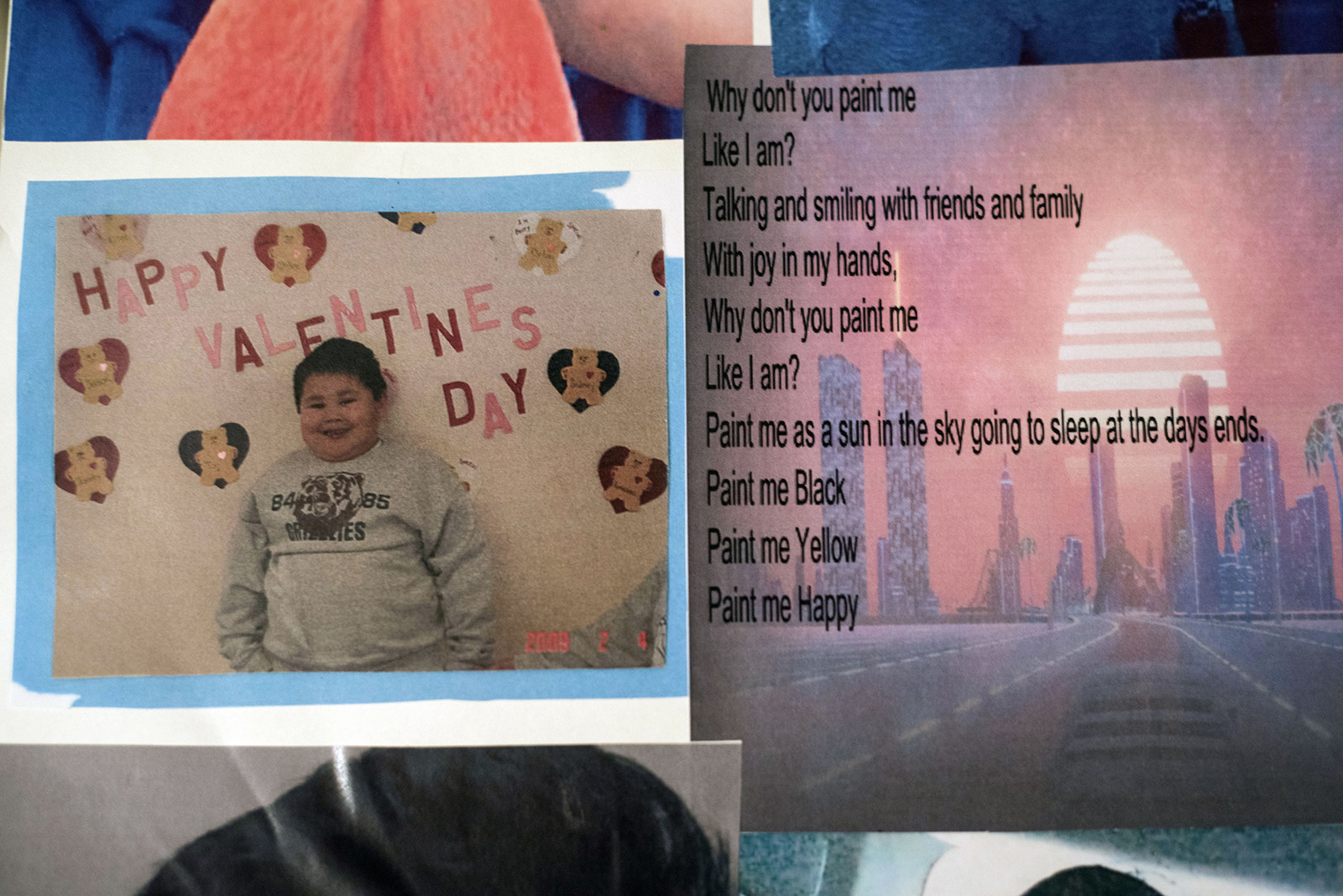
A deeply disheartening story appeared in Buzzfeed looking at relations between native peoples and local law enforcement on Wisconsin’s Bad River Reservation.  It was here, last year, where a sheriff’s deputy shot to death 14-year old Jason Pero.  And it is here, according to members of the Bad River community who spoke to Buzzfeed’s John Stanton, where rape, harassment, and racism are all experienced by members of the community at the hands of white law enforcement.  Pictures and a poem written by Jason Pero. Jason, 14, was shot and killed by Ashland County Sheriff’s Deputy Brock Mrdjenovich on Nov. 8, 2017.

Stanton presents to his readers figures that you are familiar with if you have been reading my blog.  According to the CDC, Stanton writes, “Native Americans are more likely to be killed during an interaction with law enforcement than any other racial group. In 2017, at least 31 indigenous people died as a result of an encounter with law enforcement. In 2016, the number was 29.”

And, he continues,

On a per-capita basis, Native Americans are 12% more likely to be killed by law enforcement officers than black Americans — and three times more likely than white Americans.

If you live on one of the dozens of reservations across the country in which local, white police forces from nearby border towns have jurisdiction, the chances that you’ll end up in jail are high. In Ashland County, for instance, Native Americans make up 11% of the population but account for 44% of the inmates in the county jail, according to data collected by the Vera Institute of Justice, a nonprofit criminal justice research and reform group.

It is an impressive piece, and Stanton has done much more work than most journalists writing about Indian country.  He looked at census data, showing the relative poverty of Bad River, and relatively high rates of unemployment.  He looks at the community’s history. “You don’t have to look far back for examples of racial tensions boiling over here,” he writes.

During the Wisconsin Walleye War between 1988 and 1991, white protesters hurled racial epithets and sometimes eggs and rocks at Ojibwe tribal members spear fishing for walleye, a tradition protected under treaties between the US government and the tribe. Although the violence eventually ended after a federal judge upheld the Ojibwe right to spear fish, distrust and bitterness between the two communities remained.

According to one member of the community, things at Bad River are not as bad as they were back in the 1970s and 1980s.  Whites and Indians are “inextricably linked” in Ashland County, with native peoples and their white neighbors coexisting “in an uneasy truce of convenience and routine.” The tribe’s casino is a major engine in the local economy, especially during the summer months. The system seems to work for white people as long as the members of the Bad River community stay quiet.  But with evidence of rape, and the murder of Jason Pero by a deputy sheriff, people are speaking out.  Sandra Gokee, a family relation of Jason’s and a teacher at the Ashland Middle School, was suspended for an angry Facebook post in which she lamented the murder of Jason by a deputy sheriff.  According to her superintendent, Gokee created racial tensions in the school and made the children of white police officers feel unsafe.

We are no longer in the 1970s and 1980s, but in the short time Our New Nero has been in office, racial tensions have increased.  The small progress made over decades has been threatened.

Stanton’s fantastic article will give students a sense of the amount of racism existing in communities where native people and white people live in close contact, the ability of law enforcement to prey upon Indians with few consequences, and the complexities of law enforcement created by Public Law 280 back in the 1950s.  But more than any of that, he highlights the pain caused by the murder of yet another child, by yet another law enforcement officer, in yet another incident where deadly force was hardly necessary.

On Montana, Foster Care, and Reservation Basketball

A couple of news stories centered on Montana caught my attention this past week.  The Missoulian ran a series of well-reported stories on the state’s foster care system, Addicted and Expecting: How Montana’s Lack of Resources Impacts Mothers and their Children.  Montana, a state that is struggling like many others with the opioid crisis, has become the “child removal capital of the United States.” This at a time when research on best practices suggests that adequately funded and accessible drug treatment programs for troubled parents produces better outcomes than placing their children in a foster care system characterized by neglect, abuse, and poor conditions.

The history of state foster care systems and Native American children is a distressing one, and the problems continue, most notoriously in South Dakota. Steven Pevar, whose ACLU handbook I use in my American Indian Law course, has written extensively about the problem. In Native America, I write about this history, and the events that led to the passage of the Indian Child Welfare Act in 1978. It is a subject that catches the attention of my students, and I have written on this blog about continued assaults from the political right on the ICWA. Image result for montana indian reservations

The Missoulian devoted one article in the series to conditions on reservations where drug treatment programs are in especially short supply. The figures presented by Lucy Tompkins, who reported this piece for the paper, are staggering.  In Browning, way up in the northwestern corner of the state on the Blackfeet Indian Reservation, “44 percent of pregnant women tested positive for opioid use, according to a 2017 health assessment by the Blackfeet Tribal Health Department and Boston Medical Center.” (The full report is available here).

Furthermore, in Montana’s Lake County, which includes part of the Flathead Indian Reservation, almost half of the infants born “were at risk for neonatal abstinence syndrome, the medical term for a dangerous set of withdrawal symptoms in drug-dependent infants including tremors, convulsions, and high-pitched crying.” Add to this that far fewer Native American women receive pre-natal care during the first trimester of their pregnancies than non-native women, and you have the ingredients for significant crisis in Montana’s native communities.

It is easy to provide students with facts and figures illustrating economic, social, and health disparities in native and non-native communities. One must be careful about doing this in order to avoid the sort of “sympathy porn” produced by “journalists” like Dianne Sawyer a couple of years back. (The reservation students’ response to Sawyer’s piece is fantastically effective: If you have not seen it, you can watch it here).  It is always worth mentioning to our students what native nations and native peoples are doing on their own to construct solutions to the challenges they face and, indeed, that the problems reservations face may be different in degree but not necessarily in kind from those facing many small towns and rural areas in the United States.

The Washington Post ran a story that offers a moving depiction of reservation life that avoids the cliches and stereotypes and pitfalls into which Dianne Sawyer blissfully stumbled. It’s a profile of Mya Fourstar, a talented fifteen-year-old basketball player at Frazer on the Fort Peck Reservation in the northeastern part of the state. Fourstar wants to play college basketball, either Division I at Gonzaga or somewhere else, but it’s tough both on and off the court.  It is a story students will appreciate, I believe, as they confront their own challenges.

Reservation basketball in Montana is huge. I learned that during the four years I lived in Billings. It was covered on the local television news, and in the pages of the Billings Gazette.  It was an exciting, run-and-gun style of basketball, with some incredibly talented players. But it was difficult to recruit these kids to play in college. “They won’t leave home,” I remember a guy in the athletics department at the college where I taught saying.  Given the treatment native students faced on my campus, I did not find this surprising at all, though I was then only beginning to grasp the complexity of the challenges these young people faced.

Reservation basketball offers a revealing and, for students, an interesting way to teach about conditions on reservations in the United States, a way to humanize a story that too often is phrased in generalities and statistics that provide by their nature a limited perspective. There is a wealth of material out there for students to read, watch, and think about. There is this CNN story about basketball on the Fort Belknap Reservation, for instance, and you will find many more if you look; news stories like this and this and this and this and this and this, from the now defunct Indian Country Today Media Network, that capture something of the strong feelings reservation basketball can generate; blog posts like this that describe the importance of reservation basketball and others that provide fascinating historical background.  And, of course, there is Larry Colton’s book on Crow basketball.

There are, I suppose, as many ways to teach non-Indian students about life in Indian country as there are college professors teaching the subject.  What we have to do as instructors, in addition to imparting knowledge and information, is break down and dismantle the stereotypes and uncritical assumptions that serve as the lenses our students look through as they read and write and learn about Indians.  There is plenty of bad news out there, and so many of the images to which students are exposed highlight themes of suffering, tragedy, and inevitability.   It is worth talking about how limited most discussion of Native American issues actually is.  Reservation basketball, like lacrosse in Haudenosaunee communities in New York and Canada, allows a window into a world that is not nearly as remote as our students are led to believe.

On Reparations and Reconciliation

Students of Native American History could benefit from paying attention to the debate that took place earlier this week between Cornel West and Ta-Nehesi Coates.  Coates wrote We Were Eight Years in Power and West reviewed that book in The Guardian.  Since then, Coates has deleted his Twitter account after a lengthy exchange.

I like Coates’ work, a lot, though I have yet to read his most recent book.  His article on white supremacy and the rise of Donald Trump was outstanding, and his essay making the case for reparations for slavery has sparked debates ever since it appeared in The Atlantic several years ago.  West, however, was unimpressed, and he criticized how Coates “fetishizes white supremacy,” has a “preoccupation with white acceptance,” and an uncritical “allegiance to Obama” who, West believed, let black people down.  “It is clear,” West said of Coates, that his “narrow racial tribalism and myopic political neoliberalism has no place for keeping track of Wall Street greed, US Imperial crimes, or black elite indifference to poverty.” Why, for example, West suggested, should we talk about paying reparations to the descendants of African slaves if the unjust power structures that both fuel and feed off of racism and poverty remain in place and stronger than ever?

Across the country in recent years, Americans have slowly and haltingly begun to pay more attention to the legacies of slavery.  The ugly conservative defense of Confederate monuments can be seen in part as the racists’ reaction to this salutary revisiting of the nation’s past.  Exciting scholarship continues to be produced exploring the centrality of slave-holding to the rise of the American republic. Colleges and universities, like Brown and Georgetown and Yale, for instance, as a result of what scholars have learned, have begun to examine critically the importance of slavery in the development of their own institutions, and have tried to set things right.  Protestors, young people mostly, have put their bodies on the line to demonstrate to complacent white Americans that “Black Lives Matter.”  But look around you, and you will see it: racism is stronger than ever and the rich grow richer and consume an ever-growing piece of the pie.

The past can weigh you down and hold you back. It can sap your strength.   Think of people you know.  The traumas they have experienced, and the grief and the sadness and the pain they have felt can leave them maimed, scarred, paralyzed, injured.  These traumas can become a powerful and important part of their identity, as they see themselves as a victim or a survivor or both.  Personal stories and personal histories: our pasts can affect us.  What is true for individuals can be true as well for the larger community.  Without an accounting the pain remains, the injuries do not heal, and the excuses, justifications, distortions and lies remain unchallenged.

Over the course of the past semester, I have written on this blog about how in a growing number of municipalities and on an increasing number of college campuses commemoration of “Indigenous Peoples’ Day” has either replaced or been appended to celebrations of Columbus Day.  On my own campus, a resolution to this effect passed the College Senate unanimously. I have written about efforts in Canada to present the “truth” of what happened in the nation’s residential schools in an effort to find “reconciliation” with Canada’s aboriginal peoples.

There are limits, of course.  At the end of the day it costs white people nothing, save for some hurt feelings on the part of conservative snowflakes, to acknowledge Indigenous Peoples’ Day, or to rid themselves of a racist sports team mascot or logo. Nothing at all. And, still, it is a slog, every step of the way. Progress, at times, is depressingly slow, the opposition determined.  On my own campus, efforts to fly the Haudenosaunee flag on the college flagpole have been defeated by a policy of SUNY leaders in Albany mandating that only the US, the state, the college flag fly. We are located in Geneseo, New York, a town that obviously bears the name of the Seneca village that preceded it on this site.  Events of significance, like the Big Tree Treaty of 1797, were supposedly negotiated on the campus grounds. Other significant events–the Sullivan-Clinton campaign marched through town in 1779–occurred nearby.  And, of course, there is the people’s history. Long before there was a white settlement at Geneseo, and a Livingston County, long before Continental soldiers burned Iroquois towns and crops in the field and began coveting those lands, the Chenussio Senecas were important actors impossible to miss in the historical record.  We are an institution that is part of a state that could not exist in the way it exists without a systematic campaign of Iroquois dispossession.  But despite uniform support on my campus, SUNY will not allow our gesture to a shared history and our acknowledgment that the Senecas’ loss was the state’s gain.

So let’s talk truth and let’s talk reconciliation.  And let’s do so with an acceptance of the fact that native peoples might stop us and ask, “yes, but upon whose terms?”  Talk, after all, our long, shared history shows is exceedingly cheap. Canada and the United States, and their respective provinces and states, and counties, cities and towns, stand on lands that once belonged to native peoples.  Sometimes these lands were acquired by white people through means that were illegal and unjust even by the self-justifying standards of the “settler state.”  The fact of enduring colonialism is painfully evident.  How productive can discussions of reconciliation be without addressing the fundamental reality that settler states rose on native peoples’ land, and that their growth and gain was necessarily native peoples’ loss?  How can we fruitfully talk about “reconciliation” when the institutional mechanics of “settler colonialism” remain so thoroughly intact? To get my students to think about these issues I often assign the work of Haudenosaunee scholars like Taiaiake Alfred and Audra Simpson, but there are many other solid people discussing these issues.

West, in a sense, saw Coates tinkering around the edges, offering a powerful critique of white supremacy without a program to tackle fundamental structures of inequality.  Whatever one feels about West or Coates, it is a useful debate.  I often have students who tell me they “want to do something,” and I admire them for that.   I ask them what they have in mind.  We talk. They start as reformers, and it can take them time to grasp the larger forces that benefit from and hold in place structural inequality.  Similar debates are going on in Native American communities, and we who teach and write in this field need to bring more attention to them.  There is plenty of “sympathy” that I hear for what some people still describe as the “plight” of native peoples.  Doing something to counter the structural features of “settler colonialism” is another matter indeed, but one that we as scholars and teachers have an obligation to address.

Historians and the Problem of Evil

Elzbieta Plackowska, forty-five years old, was convicted late in September for murdering her seven-year old son Justin and a five-year old girl, Olivia Dworakowski, who she was babysitting.  The crime occurred more than five years ago, on 30 October 2012. After telling the children to get down on their knees to pray, she started after them with a pair of kitchen knives. She stabbed Justin more than one hundred times, then slashed his throat. Olivia she stabbed more than fifty times. Her throat was cut as well. She also stabbed to death two dogs that were in the apartment. It was a horrifying crime, and I find it difficult to comprehend the terrifying last moments in the lives of those two children.

For the past several years, I have told the students in my Humanities course this harrowing tale. I do so as part of our discussion of Augustine’s Confessions. I spend three days discussing The Confessions. One of the many topics Augustine wrestled with was the problem of evil.  The Manicheans, with whom Augustine spent a lot of time, had one explanation for the existence of evil but this answer left Augustine dissatisfied and unmoved.

In his attempts to understand the nature of God and the relationship between an all-powerful and good God and the existence of evil, Augustine concluded that the farther away from God something was, the more disordered it became, and more scattered and fleeting.  The notion was Platonic. Heaven is close to God, human souls and minds are a step farther away, and bodies, the world of flesh and materiality, farther away still.  This conceptualization allowed Augustine to deal with the problem of evil in a way that made sense to him.  Evil, he wrote, “is nothing  but the diminishment of good to the point where nothing at all is left.”

I want the students to think about this.  I ask them for their definitions of evil. They usually answer with cases, as in “Stalin was evil,” or the latest mass shooter is evil.  I wonder whether they think Augustine’s definition is helpful. Does it help them comprehend the acts of which they speak.  Does his definition work for them? The brutality of the twentieth century, in the closing years of which these students were born: what of that? Does Augustine’s explanation of evil allow us to understand Hitler, Rwanda, Pol Pot, and Jeffrey Dahmer?

So I ask them about Elzbieta Plackowska.  I tell them her story.  Is she evil? Does Augustine’s explanation provide us with what we need to make sense of so senseless an act of violence?

The story often stuns the students.  I can see that reaction very clearly and very powerfully. Certainly they did not see this story coming. So many of them are young and sensitive and some of them are overpowered by it.  There is usually some silence before anybody speaks. Invariably someone mumbles out something quietly about insanity and, indeed, I point out that Plackowska’s attorneys attempted an insanity defense.  I try to let the conversation go. Do we call “insane” what people in an earlier time might have called “evil”? Is the institutional and diagnostic apparatus of psychology, applied to the criminal justice system, just an attempt to explain the inexplicable, to make sense of the senselessness of nightmarish violence?

I do not know enough about the history of psychology to answer that question, but I do want the students to think about the issues Augustine–and Elzbieta Plackowska’s knee-buckling acts of violence–present.

I always have loved Norman Maclean’s Young Men and Fire, but I disagree to some extent with his criticism of historians and the very discipline of history.  We historians, he suggested, are reluctant to go to the edge, and go beyond the strict confines of “what happened” and “who” and “why” and “where.”  We pull back from the big, existential questions. In the case of Maclean, we do not attempt to get inside the heads of the impetuous young men who died fighting the Mann Gulch Fire in Montana in 1949. In his attempt to uncover and imagine their dying thoughts, Maclean believed, one might find meaning and wisdom. He did, and the result is an absolutely beautiful meditation on fire and the meaning of life.

Historians, however, do more of this than Maclean believed. I think here of Martha Hodes’ gorgeous The Sea Captain’s Wife and Rachel Hope Cleves’ Charity and Sylvia, both of which are books that sit on my shelf close to Maclean’s. In my own work, I wrestled with some of this in my book on Roanoke, The Head in Edward Nugent’s Hand, and in my attempts to understand how it was that a Mohawk missionary to the Oneidas decided one day to begin claiming that he was the long lost child of Marie Antoinette and Louis XVI.

But if you look at history as it’s taught to young people, there is abundant evidence to support Maclean’s critique. Filling in blanks, bubbling in scan-tron forms, clicking on one of a number of choices–and, indeed, the way that history is presented in all-too-many textbooks–it leaves students with the sense that history really is little more than a series of events and facts to be mastered and remembered.

And I do find when my students in history courses work on their research projects, sometimes they pull back from the suffering, the evil that may exist at the heart of their story.  When I encounter these students, I urge them to read parts of James Merrell’s Into the American Woods, the most beautifully and powerfully written piece of serious scholarship in my field that I have read in a great many years. His treatment of massacre of the peaceful, but suspected, Christian Indians by the “Paxton Boys” late in 1763 informed what I wrote about this event in Native America. I did not want my readers to think that “this thing happened and it was really, really bad,” but rather to understand what it was like, not just to be there, but to have been a participant in the event, a victim, or a perpetrator.  Merrell does this so well. It is a wise, but very dark book.

Next week, in my Native American history survey course, I will discuss with my students “Indian Affairs in the Civil War Years.”  The title for that day’s meeting, I admit, needs some work.  The students will read a chunk of Native America, a handful of documents on federal Indian policy from the annual report of the Commissioner of Indian Affairs, and documents on the Dakota War in Minnesota in 1862 and the Sand Creek Massacre in southern Colorado in November of 1864.  I spend most of the hour on Sand Creek. I place on a Powerpoint slide an excerpt from a letter written by Silas Soule, a soldier in Colonel Chivington’s force, who refused to obey his commanding officer’s order to kill all the Indians at Sand Creek.  In a letter to his family written a short time after the slaughter, Soule wrote:

“The massacre lasted six or eight hours, and a good many Indians escaped.  I tell you Ned it was hard to see little children on their knees have their brains beat out by men professing to be civilized.  One squaw was wounded and a fellow took a hatchet to finish her,  she held her arms up to defend her, and he cut one arm off, and held the other with one hand and dashed the hatchet through her brain.  One squaw with her two children, were on their knees begging for their lives of a dozen soldiers, within ten feet of them all, firing –when one succeeded in hitting the squaw in the thigh, when she took a knife and cut the throats of both children, and then killed herself.  One old squaw hung herself in the lodge –there was not enough room for her to hang and she held up her knees and choked herself to death.  Some tried to escape on the Prairie, but most of them were run down by horsemen.  I saw two Indians hold one of another’s hands, chased until they were exhausted, when they kneeled down, and clasped each other around the neck and were both shot together.  They were all scalped, and as high as half a dozen taken from one head.  They were all horribly mutilated.  One woman was cut open and a child taken out of her, and scalped.

  White Antelope, War Bonnet and a number of others had Ears and Privates cut off.  Squaw’s snatches were cut out for trophies.  You would think it impossible for white men to butcher and mutilate human beings as they did there, but every word I have told you is the truth, which they do not deny.  It was almost impossible to save any of them.”

Apparently there is a movie about Soule.  Who knew? If you have seen it, I would love to hear your thoughts. Soule is an attractive hero, a compelling character. He testified against his fellow soldiers and his commander. He was murdered shortly thereafter in Denver.  Nobody was ever tried for the crime, and his murder went unpunished.

Shocking stuff, to be sure. Sometimes students will shake their heads, dismayed or disgusted or disturbed by Soule’s words. But I urge them to go further. Into the woods.  Why did this event happen in this way? Why did these horrible deeds occur? Most accounts of Sand Creek,with the exception of Ari Kelman’s masterful A Misplaced Massacre,  will describe how the Cheyenne and Arapaho at Sand Creek were no threat, were attempting to comply with orders and were caught completely unaware.  Chivington was a bad guy and he was roundly criticized in the east afterwards.  But what about the rest of his men, those who took trophies, and cut up bodies, and murdered those who begged to be spared? Why did these Colorado soldiers make this choice? And what of the crowds at the Denver Opera House, who cheered when scalps taken from the slain were presented to them during intermission?

They were racist, no doubt.   The students have no difficulty in drawing that conclusion.  But there are racists everywhere, I tell them.  You might know some, I say.  But they do not always pull out their guns and shoot babies in the face. They do not castrate the dead, carrying off their prizes as tobacco pouches, or mutilate the bodies of the women they killed. How did these men get there? How does anyone get there? War, Thucydides once said, “is a violent teacher.”  What lessons do acts like these leave us with?

The value of our endeavors as historians, the worth of the historical enterprise, might be measured by how well we can explain these brutal realities, and draw out their dark lessons.  We who write about and study the history of native peoples, we need to go to the black heart of the frontier experience, of colonialism, and injustice.  We must do more than decry how awful these events were.  We must teach them, and reach as far into the darkness as we can to understand them, and help others to do so as well.

So, Elzbieta Plackowska.  The officers who responded to the crime scene were shattered by what they saw.  Many of them needed counseling.  How could she have done this? She claimed at first that she was attacked by a black man, that it was a home invasion.  She said as well that the children were possessed, that they took the shape of demons, or that she lost control of herself.  There was evidence as well that she resented her husband, a long-haul truck driver, that she was deeply alone and wanted to hurt him in the worst way that she could imagine.  If that is what motivated her, then I suspect she succeeded.  But lots of husbands and wives resent their spouses, and they don’t all do this.  In the end, I do not know what was going through Elzbieta Plackowska’s mind when she picked up those knives, but I do know that labeling this act as evil, or insane, or deranged or whatever word you want to use, doesn’t help me get closer to finding the meaning of this event, and learning its dark lessons about who and what we are.

Why Dennis Banks Matters

Dennis Banks, one of the most important leaders of the American Indian Movement, or AIM, died last week.  Banks was eighty years old.

The  obituary that appeared in the New York Times, written by Robert McFadden, covered the key points in Banks’ long career, but it has justly been maligned for its resort to stereotype in describing Banks’ appearance (“high cheekbones,” “raven-haired,” “dark, piercing eyes”); its over-emphasis on Banks’ considerable legal troubles without describing the harassment and persecution AIM faced from federal, state, local, and, at times, tribal police officials; and a nasty, judgmental tone when it came to Banks’ family life and large number of children.

If you follow the conversation on Twitter about the Times obituary, you will see that some of these critiques are sensible, others a bit off-base.  Many of the critics suggested that the obituary dishonored Banks by pointing out his criminal troubles and the confrontational and sometimes violent nature of AIM activism.

My own objection to the obituary is a bit different, for it seems to me that McFadden badly misunderstood the goals and the significance of the American Indian Movement and Banks’ role in it.

We should be clear. AIM has, to too great an extent, monopolized discussions of American Indian activism in the second half of the twentieth century.  This is a failing of the historians, and not AIM itself. Native American “activism,” a term that has been used uncritically, at the local and reservation level, and often occurring away from the gaze of national media, long predated AIM.  Still, McFadden questioned the significance of AIM’s activism and, in so doing, much of Banks’ life work.  Banks, he said, brought some attention to Indian causes, but he “achieved few real improvements in the daily lives of millions of Native Americans living on reservations and in major cities” and who continue to “lag behind most fellow citizens in jobs, housing, and education.” He never slayed the dragon.

I am not quite sure what McFadden expected, and what he might have defined as meaningful change or “real improvements.”  His language, which I am willing to believe was unintentional, still struck me as a snide dismissal of AIM and of American reform in general.  If problems still exist after the reformers’ careers have ended, McFadden seems to suggest that it was all for naught.

Of course AIM made outrageous demands that never were going to be fulfilled.  Of course their actions, at time, generated opposition among certain members of the communities in which they worked.  At times, by any standard, AIM members behaved badly.  It would be foolish to expect native peoples to speak with one voice, for factionalism and disagreement are facts of Native American life.  And it would be foolish as well to expect one organization, no matter how charismatic its leaders, to wipe out the enormous injustices and inequalities native peoples faced.

Banks plays a significant role in my present book project, a history of the Onondaga Nation.  After jumping bail in South Dakota, Banks found shelter in California. Jerry Brown, the state’s once and future Democratic governor, refused to honor demands that he be extradited.  But when the Republican George Deukmejian became governor of the Golden State, Banks made his way to New York, where he found “sanctuary” on the the lands of the Onondaga Nation.  He stayed there for much of 1983 and 1984.  The decision of the chiefs and clanmothers at Onondaga to grant Banks sanctuary was part of the Onondagas’ assertion of nationhood that made it, in many ways, the center of discussions about Native American Nationhood in the last quarter of the twentieth century.

Banks missed out on a lot during his sanctuary, was homesick, and at times struggled to keep busy on the small nation territory.  He organized running clubs, took a job, but the evidence in Syracuse newspapers and other sources suggest that not all Onondagas were happy with his residence on the nation territory.  I have much left to learn about Banks’ time on the Onondaga Nation, but it seems that all these things factored into his decision to leave. He surrendered to authorities in the fall of 1984.

McFadden, in an obituary rife with cliches that focused on dysfunction, violence, and alcoholism in Native American communities, could not see the significance of AIM’s work.  He did not understand the toll persecution and legal harassment took on the movement, nor the barriers against which it operated. Nor did he acknowledge how the activism of the 1960s and 1970s, from the Fish-Ins and Alcatraz, to the Trail of Broken Treaties and the occupation of the Bureau of Indian Affairs headquarters in Washington, to the stand-off at Wounded Knee in 1973, and hundreds of other acts of defiance and protest in Native American communities small and large, made American policy makers who previously had hoped to “terminate” Native Americans reconsider their positions.  You can see the shifts in policy beginning under President Johnson, accelerating under Richard Nixon who, despite that whole Watergate thing, was a pretty good president for native peoples.   And it culminated in the significant legislation of 1978, which I discuss in the final chapter of Native America, one of the most important and creative periods in law-making in all of Native American history. Of course Banks and his allies and associates left much work undone, and of course there were significant limitations in what solutions federal authorities were willing to consider, but without the efforts of thousands of native peoples, on their own, in AIM, or in other Native American rights organizations, none of this significant legislation would have been enacted.

Nobody summarized the significance of this activism better than Paul Chaat Smith, whose Everything You Know About Indians is Wrong, is a wonderful introduction to this important subject.  Speaking of this period in Native American history, from Alcatraz to Wounded Knee, Smith wrote that

“It is our people at our looniest, bravest, most singular and wonderful best, and moving beyond words even to those of us who resist cheap sentiment and heroic constructions of complicated and flawed movements.  Yet there it is, over and over again: Indians who objectively have little or nothing in common choosing to join people they often don’t even know who are engaged in projects as bizarre as laying claim to a dead prison on an island that is mostly rock, or picking up a gun to take sides in the Byzantine political struggles of the famously argumentative Sioux.”

McFadden said that Dennis Banks and his partner in so many AIM campaigns, the late Russell Means, were the best known Native Americans since Sitting Bull and Crazy Horse.  Maybe so, but Americans seem to know little about Sitting Bull and almost nothing about Crazy Horse except for their names.   Banks’s influence is a significant one, and all one has to do is search the archives of the New York Times to see that.  It is disappointing that McFadden’s obituary is such a disappointing last word on so significant a life.

Creative Destruction: Or, Let’s Bash Some Monuments

It’s what we do, at least metaphorically. For historians, the destruction of monuments can be a good thing, a visceral and often-times important act of revision. It is an opportunity to replace dated and damaging interpretations of the past with more complicated, nuanced, and correct stories. We do not necessarily need to destroy Confederate statues to do this, but certainly we can reinterpret them, knock them down a few pegs, and re-write the stories that these racist monuments to white supremacy attempt to tell. Stick them in a museum, if you want, but let’s not pretend these are sacred sites.

There was a news story I caught at the end of last week.  Among the many vicious clowns and tiki-torch bearing, racist weenies in Charlottesville, was Mr. Jerrod Kuhn, a graduate of Honeoye Falls-Lima High School. It’s about ten miles from where I live. Kuhn was photographed marching with the white supremacists while they chanted “Jews Will Not Replace Us,” “Blood and Soil,” and “White Lives Matter.”  Kuhn said, however, that he was neither a Nazi nor a white-supremacist.  Rather, he was a “moderate Republican”(!) marching to protest efforts to eliminate statues and monuments commemorating the Confederacy and the cause for which it stood–White Supremacy.  When some of Kuhn’s anti-fascist neighbors saw his picture with the marchers, they publicized this bit of news, arguing that local residents should know that there is a Nazi in town.  And Kuhn cried foul. He was afraid. Some of his neighbors were being mean to him.  Boo-Freakin-Hoo. If you dance with the devil, people are going to think you are a sinner, and the monuments Kuhn marched to protect and which commemorated the Confederacy were erected not immediately after the Civil War, but several decades later, at the beginning of the Jim Crow era.  It is an interpretation of the Civil War that has endured, in the face of all the evidence, for far too long. If taking down statues which lionize slave-owners who were willing to kill US Soldiers in order to hang on to their human property and the system of white supremacy that lay at the bedrock of southern society is what’s at stake, then let them fall.

I have thought a lot about Charlottesville.  I have thought about the President’s support for the so-called “Alt-Right” movement.  As I mentioned in a post last week, I really do not care what the President says: systems of white supremacy are deeply ingrained. Trump has emboldened the Nazis and the Troglodytes, but those people have been living under rocks quite contentedly for generations, surfacing periodically. Even though Steve Bannon has lumbered away from the White House, and Donald Trump is saying whatever the hell it is that he occasionally says, white supremacy will endure. It is institutional, and it is part of what we are as a nation.

I have thought, however, about what all of this might mean to those of us who teach and study Native American history, a field in which we might not discuss white supremacy enough.

After I moved to Montana in 1994, one of my first trips was to visit the Little Bighorn Battlefield site, about an hour or so away from Billings.  In the small visitor’s center stood a iron plaque, about a yard square, that had been placed at the battlefield by Native American activists in the summer of 1988.  It read,

In honor of our Indian Patriots who fought and defeated the U.S. calvary. In order to save our women and children from mass-murder. In doing so, preserving rights to our Homelands, Treaties and Sovereignty. 6/25/1988 G. Magpie, Cheyenne.

You can read about the history of this plaque here.  It was a protest.  An attempt to replace one monument with another, a somber remembrance of the men Custer led to their deaths in June of 1876 with a monument commemorating the efforts of the Lakota warriors who fought to protect their homelands, even if the battle took place in Crow Country. Some viewed the plaque as an act of vandalism.  But it forced a conversation. Custer was no hero.  His men fought to eliminate Lakota people, to take their homelands, and the mineral wealth that lie beneath it.  The native peoples who fought them were not obstacles to progress.  But that is how they were depicted.

The protest mattered. It gained attention.  It forced a conversation, a reconsideration.  The National Park Service responded.  When a permanent monument was erected at the battlefield site in 2003, the native peoples who participated in that protest, who defied the rangers and cemented their iron plaque over the list of Custer’s dead cavalrymen, came as invited guests.

History is not merely a collection of facts.  You can see, for instance, how Custer has been depicted over the years.  Walt Whitman described him as a Christ-like figure, one who sacrificed himself in the name of western civilization and the conquest of the American West.

From far Dakota’s canyons,
  Lands of the wild ravine, the dusky Sioux, the lonesome stretch, the
      silence,
  Haply to-day a mournful wall, haply a trumpet-note for heroes.

  The battle-bulletin,
  The Indian ambuscade, the craft, the fatal environment,
  The cavalry companies fighting to the last in sternest heroism,
  In the midst of their little circle, with their slaughter’d horses
      for breastworks,
  The fall of Custer and all his officers and men.

  Continues yet the old, old legend of our race,
  The loftiest of life upheld by death,
  The ancient banner perfectly maintain’d,
  O lesson opportune, O how I welcome thee!

  As sitting in dark days,
  Lone, sulky, through the time’s thick murk looking in vain for
      light, for hope,
  From unsuspected parts a fierce and momentary proof,
  (The sun there at the centre though conceal’d,
  Electric life forever at the centre,)
  Breaks forth a lightning flash.

  Thou of the tawny flowing hair in battle,
  I erewhile saw, with erect head, pressing ever in front, bearing a
      bright sword in thy hand,
  Now ending well in death the splendid fever of thy deeds,
  (I bring no dirge for it or thee, I bring a glad triumphal sonnet,)
  Desperate and glorious, aye in defeat most desperate, most glorious,
  After thy many battles in which never yielding up a gun or a color,
  Leaving behind thee a memory sweet to soldiers,
  Thou yieldest up thyself.

A century later, Richard Mulligan portrayed Custer in “Little Big Man” as an unhinged madman, a preening martinet, in love with his own reflection, and lusting for Indian blood.  He spouted lines that would have sounded familiar to a movie audience exhausted and angry about the Vietnam War. He represented all the foolishness, the arrogance, and the stupidity that led the United States into an imperial war it could not win.  Custer, Westmoreland, light at the end of the tunnel, we must always advance.  It was a stunning revision of Custer’s carefully cultivated image.

Interpretations change.  Monuments are not history. They are interpretations of history.  And as such, they are not sacred.  They are open to challenge, to question.  And if the claims they make are wrong or over-simplified or pernicious–Custer was heroic, or the South fought for “States’ Rights,” for example– than they ought to be replaced, revised, rewritten.  My point is that we historians, when we do our jobs well, destroy monuments ALL. THE. TIME.  We ask tough questions.  We challenge long-cherished assumptions.  We are not precious, and we should hold nothing sacred but a determination to work the sources thoroughly and honestly in order to get the story right.

And then there is the story of Juan de Oñate’s foot.  A statue of the Spanish Conquistador, considered a “Founding Father” of New Mexico, stood in the town of Alcalde.  In January of 1998, as the 400th anniversary of his arrival in New Mexico approached, protestors armed with a chainsaw cut the right foot off the statue.  For them, this conquistador was no hero. They were, in effect, writing an alternative version of the Oñate story, commemorating the violent Spaniard’s brutal order to cut the right foot off of two dozen Acoma Pueblo prisoners who had resisted his advance.  I wrote about this event in Native America. The sculptor repaired the statue, but the missing foot never was returned.

We can call this act vandalism, or the destruction of public property, the sort of stuff that Vice-President Mike Pence has said he deplores.  It was those things, but it also was an act of reinterpretation, of historical revision. Douglas Seefeldt made this point in a paper entitled “Oñate’s Foot: Histories, Landscapes, and Contested Memories in the Southwest,” published in Across the Continent: Jefferson, Lewis and Clark, and the Making of America, published by the University of Virginia Press in 2005. Seefeldt edited this volume, along with Jeffrey L. Hantman and Peter Onuf. While some might excuse Oñate’s violence, and celebrate his founding of the Spanish province that became the state of New Mexico, and his bringing the cattle industry to what became the American Southwest, the people who removed the foot from the statue reminded New Mexicans of another side to the story, and demonstrated that history consists of many narratives and many voices.  Not all these voices are heard.  Not all of them are listened to.  And sometimes, to register, to move the debate, dramatic acts are necessary.

I like this poem that tells the story of the removal of Oñate’s foot, and the subsequent celebration of another, larger, statue of the conquistador erected near El Paso:

“The Right Foot of Juan De Oñate”By Martín Espada

On the road to Taos, in the town of Alcalde, the bronze statue
of Juan de Oñate, the conquistador, kept vigil from his horse.
Late one night a chainsaw sliced off his right foot, stuttering
through the ball of his ankle, as Oñate’s spirit scratched
and howled like a dog trapped within the bronze body.
Four centuries ago, after his cannon fire burst to burn hundreds
of bodies and blacken the adobe walls of the Acoma Pueblo,
Oñate wheeled on his startled horse and spoke the decree:
all Acoma males above the age of twenty-five would be punished
by amputation of the right foot. Spanish knives sawed through ankles;
Spanish hands tossed feet into piles like fish at the marketplace.
There was prayer and wailing in a language Oñate did not speak.
Now, at the airport in El Paso, across from Juárez,
another bronze statue of Oñate rises on a horse frozen in fury.
The city fathers smash champagne bottles across the horse’s legs
to christen the statue, and Oñate’s spirit remembers the chainsaw
carving through the ball of his ankle. The Acoma Pueblo still stands.
Thousands of brown feet walk across the border, the desert
of Chihuaha, the shallow places of the Río Grande, the bridges
from Juárez to El Paso. Oñate keeps watch, high on horseback
above the Río Grande, the law of the conquistador rolled
in his hand, helpless as a man with an amputated foot,
spirit scratching and howling like a dog within the bronze body.

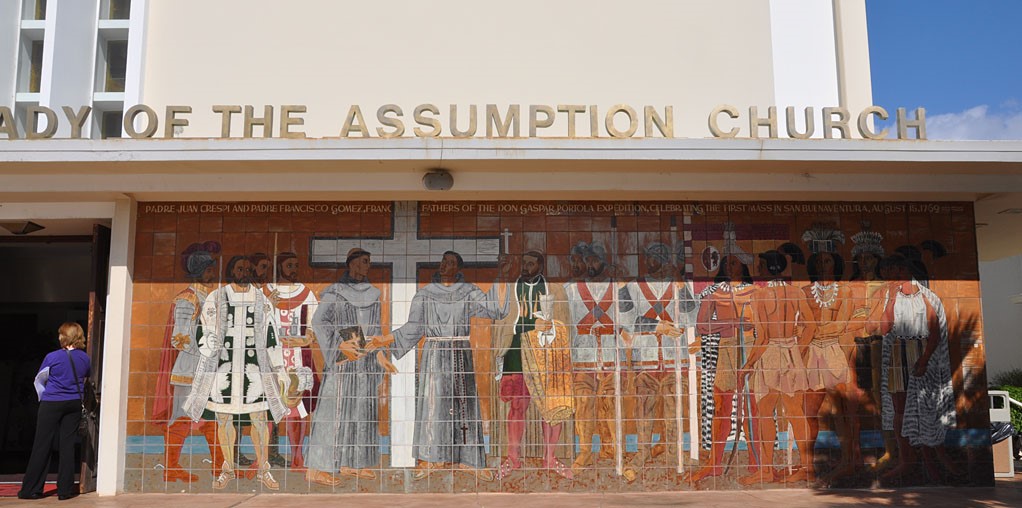
Interpretations of Native American history are everywhere, and I often encourage students to seek them out, to engage them in a debate, to interrogate their biases and assumptions.  Good comes from this.  Every day from first through sixth grade I saw this mural on the wall of Our Lady of Assumption Church in Ventura, where I grew up and went to elementary school.  It presents a rosy picture of the arrival of the Spanish priests at Mission San Buenaventura, one not at all consistent with how scholars see that encounter today.  Nobody has suggested removing this mural to my knowledge, but it stands testament to an interpretation highly favorable to the Catholic Church.

We write history; we do not create monuments. Our purpose is not civic education or instilling patriotism. As I have said before, history is the study of continuity and change, measured across time and space in peoples, institutions, and cultures.  That requires asking tough questions, researching relentlessly, and presenting answers that are sometimes painful to hear.  And too much of the history that has been included on these Confederate monuments and monuments to conquistadors and conquerors is, quite simply, bad history.

In two weeks the town of Geneseo, where my college is located, will be commemorating the 1797 “Treaty of Big Tree.” It is a big deal in town. As a guest of the college, you might stay in the Big Tree Inn.  Dining halls on campus are named after Mary Jemison, who knew much about the treaty, and Red Jacket, who got screaming drunk before he signed it.  For those who do not want to drink where students drink, the tavern at the Big Tree is one of a small handful of choices along Geneseo’s short main street.  If you want to take in the sights, you can go to the Livingston County Historical Society, spitting distance from the campus, and see what its curators claim is an actual piece of the “Big Tree,” under which the treaty was negotiated.  And according to a historical marker located in a campus parking lot, this treaty was significant.  The sign reads, “Treaty Of Big Tree:  Site Of Memorable Treaty Releasing Seneca Title To 3,600,000 Acres Of Land September 15, 1797.”

Releasing title.  3. 6 million acres.  Wow.  This treaty was an alcohol-soaked affair in which Thomas Morris, the non-bankrupt son of the bankrupt financier of the American Revolution and not-too-successful land speculator Robert Morris, employed bribery and alcohol to obtain signatures to a grotesquely corrupt real estate transaction. The Senecas, who had little choice, signed over the right to nearly all of the land in New York State west of the Genesee River save for eleven reservations. Over time, those reservations were whittled down to four, and then two, and now three.  In return for this massive cession, and the bribes he agreed to pay several Seneca leaders, Thomas Morris invested $100,000 dollars in stock of the Bank of the United States, the interest of which was paid to the Senecas most years thereafter.  Some years the amount came to nearly six thousand dollars; other years it was half that.  Why did this happen?  Stuart Banner answers tough questions like this in his excellent How the Indians Lost Their Land, a book I use in my Indian Law course.  The territory was massive; the Senecas’ population small.  The speculators and the settlers were coming.  Better to sell now, get something, and preserve a few key locations than walk away empty-handed. Dispossession.  Land loss. The removal from homes and homelands.  That story is given short-shrift in the celebratory histories of Geneseo and Livingston County. Signs like this one, as the Haudenosaunee scholar Rick Hill has argued, should be re-written.   Rick put together a pamphlet some years ago in which he wrote brief retorts to these ethnocentric markers that seemingly justify the dispossession of Haudenosaunee people and the resulting Iroquois diaspora.

So to those of you who marched in Charlottesville, or sympathize with them, let me make this clear: when we historians suggest that your markers and monuments ought to come down, we are not trying to steal your history and heritage.  History belongs to no one and your heritage, well, good luck with that.  You are on your own. We are suggesting that the interpretation of the past that you cling to, rather, is not only incorrect and oversimplified, but in some cases pernicious and a justification for past evils and continuing historical crimes. We hope we can reason with you, and persuade you with evidence to see things our way.   We are educators, after all, who have spent our adult lives studying history.  We know some stuff. (Some of the other people complaining about you? Yeah, they think you’re racist assholes, and some of them want to beat you up, but I don’t speak for them).  Facts, evidence, explanation: That is the world of the historian.  Myth, fantasy, and ideological comfort food–that is where the monument boosters stand.  Our goals are different. Yours are about justifying your views of the past.  Ours?  We like to think that we are speaking and writing about the truth.

And here’s a challenge for those of you who do not like what we say.  I tell my students this every semester. Ask us for the evidence.  I promise you, we will do the same.  We will support our claims with evidence, and ask that you do, too. If you hear something that you do not believe, ask us for the proof.   That is fair. I tell my students, it is entirely fair for them to ask their history professors not only, “What is the evidence for this claim?” but, also, “So What? Why does this story matter?” No historian worth his or her salt will be threatened by that question.  We can take it.  Can you?


Intellectual Courage

I gave the following keynote address to the annual meeting of NYSACAC, the New York state organization for high school and college admissions counselors, which took place at SUNY-Geneseo earlier this month. In some ways, it encapsulates what I tell my students each semester on the first day of class in my Humanities class.


I am delighted to be here, and to join those who have welcomed you here to our beautiful campus.  Geneseo, as a place, shows up in the historical documents long before Rochester existed, long before Monroe or Livingston counties, long before there was much of anything European established in what became the broader upstate region. It lays in the heart of the ancestral homeland of the Senecas, the keepers of the western door of the Haudenosaunee, the Iroquois Longhouse.

Seneca soldiers and diplomats who lived in this Genesee valley played a role in the history of two empires, the French and the English, in the Iroquois League and Confederacy, and in the history of the native confederations that threatened the existence of the British Empire in America and then the young United States in the 1790s. They continued to live in this valley, at least some of them, even after Major-General John Sullivan led Continental forces through the Finger Lakes in 1779, burning crops and villages, and scorching the earth, as he went.  They were here in the 1790s and into the 1800s, before they moved to Allegany and Cattaraugus and Grand River in Canada.
Stories from the past.  I could tell you more: about Mary Jemison, the white woman of the Genesee.  She lived for a time as a captive, and adoptee, a refugee, and a Seneca homesteader down the road in what became Letchworth State Park, where you can see a statue of her and a replica cabin.  There are some documents with her mark on them in the county courthouse at the end of Main Street, where she deeded Seneca lands she claimed to white men associated with the Ogden Land Company, among whom numbered one of Geneseo’s founding fathers.  Her Seneca sons, who died violently, two of the three at the hands of their brothers, victims of the alcohol that could cut jagged holes in the fabric of Native American life.  There are New York State historical markers all over this county.  Biased, to be sure, but all telling historical stories about this part of New York State.

For nearly two decades, I have told stories like these to students at this school.  I have taught a lot of students over the years, and told a lot of stories. I am a historian.  That’s what we do.  I am interested in the past, and its connections to the present.  How things came to be.  Continuity and Change measured across time and space in peoples, institutions and cultures.  But all of that is just a way of saying that I am a guy that makes my living by asking questions.  And I love the questions—the search for evidence, the complexity and the lack sometimes of definitive answers, and the stories—the stories are at the heart of all that we historians do as teachers and writers.

I imagine that in your line of work you have stories that you can tell, too, stories of young people who have all sorts of challenges in front of them, or who survive trauma and neglect, some who have succeeded wildly and some who have broken your hearts.  I am sure you have stories of kids who are coming to you before they leave home to go to school, or to work, or into the service, or off to some experience—a gap year or a slack year or an adventure–and who want to begin writing their own stories for themselves, and perhaps by themselves, for the very first time.  These are stories, too, of continuity and change, of how things came to be, of being and becoming. Some of these young people are becoming competent and capable. Or they may be developing generosity and compassion, and some of them might be frightened and uncertain, sometimes for reasons that go deep into theirs and their family’s past, layers upon layers of stories you may have to disentangle if you want to understand them, where they are coming from, and where they hope to go. Some of them do not know what their story is going to look like, or how to begin writing it.

Like you, I have seen students who fall into all of these categories, students who, whatever they are feeling, can do so much to make this world—our world—a better place.

I can also imagine, and only imagine, the time constraints that you, and our colleagues who are out there in the classroom, work under in an era of increasing demands and declining resources. My teacher friends do so much, with so little, so often for people outside the building who have little understanding of what a good job actually looks like, who measure success in ways so foreign to the lived experience of you and your students.  And so it is with some trepidation that I propose to you today, if we are truly “dedicated to serving students as they explore options and make choices about pursuing postsecondary education” as Article I, Section 1 of your association’s by-laws read, that there is more that we can and should do for these young people who are so important to all of our futures.

My oldest daughter is one of these young people, She is at this point in her life where she interacts with her counselor a bit in high school, and talks with an occasional admissions representative.  She has entered this period that is so rich with opportunity and potential but also fraught with vulnerability. She is finishing up her junior year in high school. She has visited colleges and will visit some more and has begun to think when her way-too-busy schedule permits about what she might like to do with the rest of her life.  She has received all sorts of advice on what sort of story she might write, and she has received a lot of advice on how to navigate the college admissions process.  She has been plopped down in front of computers to navigate Naviance and see what her next step might look like. Programs to get her thinking about how to begin her story.

And based upon what I have seen as a parent and a professor, it seems to me that there is one area that is so essential to success in a college classroom, and especially at a liberal arts college like this one, that does not get talked about at high school enough: the importance of cultivating and encouraging intellectual fearlessness; to develop in young people the courage not to shy away from those things that seem to them–to all of us—to be extremely difficult. To master basic skills, of course. To be honest, curious, inquisitive, and relentless to be sure, but most of all, in terms of the questions they ask, the evidence they consider, the ideas they engage with, and the theses they advance, to be as fearless as they can be.  Now, on campuses like this, in this country, in this global community, more than ever.

Geneseo, as I have said, is still a liberal arts college. It’s a phrase that gets thrown around a lot.  We integrate the liberal arts into the curriculum whatever a student’s major. We here at Geneseo wear that label, a liberal arts college, proudly, and many of us still hope our students will, too.

But that is a difficult—an increasingly difficult—thing for them to do. I imagine that some of the students you advise have heard the jokes about liberal arts and humanities majors.  They have worried parents who fear that their kids will not be able to take care of themselves without a “marketable” degree. Some of your students, before they arrive on campus, will already have been asked, “What are you going to do with that degree?”  Sometimes those questions can come from innocent curiosity, like, really, what are you going to do with that degree. But these questions can also come with a barbed tip, too, in the sense that the liberal arts and humanities are thought by some people out there to have limited value because, unlike the STEM fields and business and “the Art of the Deal,” the liberal arts are too often thought of as adding little of value.

The governor of Florida, for instance, a few years ago, argued that we do not need more anthropologists.  Another Floridian, a United States Senator, during his brief, quixotic run for the presidency said that we need “more plumbers and less philosophers.”  The Lieutenant Governor of Kentucky told students at Eastern Kentucky University that they should not bother studying history, and that since they attended a public college, funded by taxpayers—people who work—that they should do something useful to the Commonwealth.   Why should the state subsidize the study of French literature, the governor of that state asked.  What value does it add for Kentuckians?  Even in the SUNY system we have seen a diminishment in the perceived importance of the liberal arts, social sciences, and humanities.

And all of this is too bad, for I would argue that the study of these fields adds a lot, because they give us the cultural capital necessary to participate in a democratic society in a meaningful and constructive way.  But thinking in terms of nuances, complexities, ambiguities, shades of grey; being one of the people who embraces the big questions, pursues the answers over the long haul, who appreciates the value of open debate and discussion, who endeavors to find truth, and digs like a terrier for answers—people like that can find these times we live in rough sledding. People who ask fundamental questions about why things are the way that they are and how they ought to be—they can be perceived as threatening to those in power, which is why we see this assault on institutions like the National Endowment for the Arts and the NEH, which fund in a variety of ways arts and humanities projects that explore issues that cut to the marrow of the human condition.

Our students now live in a world that you and I have helped to create for them where too many people confuse their feelings and their fears for facts, where being smart and engaged and critical and willing to ask questions can make one an object of scorn.  They live in a world as well where complexity is so often dismissed, where big and difficult answers to the big questions are avoided, that asking these sorts of questions can take a certain amount of courage.

Let me give you an example. The former talk show host Bill O’Reilly used to have a segment on his shows where he sent a correspondent out to do “on the street” interviews where his goal was to expose the ignorance of the liberals he so often criticized on his show. One time the correspondent ran into a highly knowledgeable young guy, college-aged, who was more than willing to engage in a reasoned and informed debate and before he could get to his second sentence, Boom! “Nerd Alert!” flashed on the screen, as if being knowledgeable about public affairs and the world in which we live is a bad thing, something to make fun of.

Many Americans live in a world where they simply do not invest their time and energy to ask questions, stay informed. When we have a President who lies baldly to the press, and a press that is more concerned with ratings and clicks than in pursuing difficult stories, that is interested in fad and outrage and that has the attention span of a 2-year-old, we arrive at that dire point where the use of “alternative facts” can really be a thing that we can talk about with straight faces.  We, collectively, the mature adults in the room, have modeled some very, very, poor behavior.  We reason sloppily or lazily; we are dishonest, or cynical; we are cowards and grotesquely ill-informed.  For instance:

  • A sitting congressman told an audience that the theory of evolution and the Big Bang were “lies straight out of the pit of hell.”
  • The chairman of a Senate environmental panel brought a snowball into that august chamber as proof that climate change is a hoax.
  • When only 36% can find North Korea on a map, and that remaining majority is far more likely to favor military action against a nuclear power led by a deranged mad man;
  • And when almost one in three Americans could not identify President Obama’s vice president, who was there for the entire eight years of his presidency,
  • We have come pretty close to bottoming out.

Think about this: Americans, according to a recent survey, are more likely to be able to identify any two members of the Simpson family than any one of the five freedoms protected by the First Amendment to the United States Constitution, rights that now, as they have been at many points in the past, are under assault. (I known, you think Homer, Marge, Bart, Lisa, and Maggie, but maybe not quite as readily of press, religion, speech, petition and assembly).  22% of Americans can name all five members of the Simpson family, while only one in one thousand could name all five first amendment freedoms.

We are complacent in the face of inequality and injustice.  As the searing documentary “The 13th” pointed out, the United States has 5% of the world’s population, but 25% of the people who live their lives behind bars, and we are working hard to increase that percentage, if we are to believe the current United States Attorney General.  But think about that: One out of every four persons who is incarcerated ON EARTH  is imprisoned in the land of the free, and the home of the brave, though that freedom and that bravery is, at times, quite hard to find. People of color are imprisoned at rates far out of proportion to their share of the general population.

OXFAM reported in January of 2017 that 8 men, the wealthiest in the world, own as much as the poorest half of the world’s population.  8 men own as much wealth as the poorest 50%, 3.6 BILLION PEOPLE.  The wealth of these eight men grew by half a trillion dollars over the course of the preceding five years, while the wealth of the poorest 50% fell by 1 trillion. At the height of his fame, Michael Jordan was paid more than all the factory workers in all of Nike’s factories combined.

We have seen gun-craziness, racism, rising antisemitism, fear.  You know it is all there, and you can, I imagine, think of additional examples.  Violence.  White supremacists marching in New Orleans and Charlottesville to protect monuments explicitly commemorating white supremacy. The election of an incurious and juvenile president who has, at various times,

  • insisted that freedom of the press—part of that pesky first amendment—does not allow the press to criticize him;
  • that torture, specifically prohibited by American laws, should be brought back;
  • that we should wall ourselves off from the rest of the world;
  • claimed that women are objects who can be grabbed and groped at his pleasure; and that the norms and values and responsibilities of civil society and basic ethics simply do not apply to his family and favorites.
  • I cannot keep up with it all—every time I thought I was done writing this address, another bit of news…And here is the point:

Rational, reasoned, and just public policy is difficult if not impossible without an informed, engaged, and rationally-thinking public willing to ask tough questions, to engage.

Fear.  Many Americans live in fear: of immigrants and Islamist extremists–but a plastic surgeon botching your operation is more likely to kill you in the United States than a terrorist. Peanuts kill more Americans than terrorists, as John Oliver pointed out.  Yet we are told to be fearful.  And many of us do as we are told. People around the globe and in this country—some of them, anyways—seem to have more confidence in fear and anger and hate than in their opposites. With malice towards many, and charity for few; with little interest in heeding the call of the Old Testament prophets to care for the widows and comfort the fatherless, the weakest members of society, and to seek out injustice and correct oppression.

Our students are coming of age in this moment where a lot of really old issues—race and inequality and class and gender and violence and justice, are resurfacing in complicated and anguishing ways.  The problems are out there.  But to name them and to ask, “What can we do?” and to gather the information to solve them, that can be tough.  And so many of these problems we face are rooted, in part, in a rejection of critical thought, in an embrace of the irrational, and a society with these problems can fall prey to demagogues with their simplistic answers, and will find it difficult to display emotional maturity, and will be prone to violence.

What are we going to do about all of this?  I don’t know. But maybe if we are to make America great again, or as great as it might be, it might be the young people who you help send to a school like this one, who get a solid grounding in the liberal arts, whatever their majors, who will best see that “injustice anywhere” just may be a threat to justice everywhere.  And that if it is “an inescapable network of mutuality, tied in a single garment of destiny, that binds us, one to another,” as Martin Luther King once wrote, that these kids, these young men and women, may be among those best suited to do something about it.   So those of us at a school like this, we who think and reason; we, the people who read the footnotes–we can deploy that wisdom that not only makes our lives richer but makes the world a better place—–only if we have the courage to act, and to use it.

All of us, you and I, we need to do a better job with the young people we advise and teach.

After all, we live in and have helped to create a world where—when we stand up in the face of the problems before us and ask, “Why?” and when we insist on a reasoned and relevant response to that simple question—it’s like an act of subversion, and subversive acts, even the smallest ones, require a degree of courage, of fearlessness.

It can beat your down, if you let it. I see it occasionally on this campus.  Despair. Hopelessness.  Cynicism.  Especially cynicism. I worry that it can beat down the young people with whom we work, if we do not do a better job in equipping them to be intellectually fearless. Again, look at the spectacle of public life that we are in the process of bequeathing to this generation. We might forgive them for an easy slide into a deep cynicism, but we must emphasize that cynicism is an intellectually lazy position, a colossal cop out or a reflection of a feeling of powerlessness.

But these young people do have power.

It can take courage to trust and to respect and to appreciate, as well as to care and to love, and to accept the validity of ideas presented by those with whom we would be predisposed to think we might disagree.  To never underestimate others, to take people seriously, whoever that person happens to be, to accept the possibility that those with whom we disagree might have a point and, indeed, to admit that we might be wrong.  To appear vulnerable in the face of those who despise us.  It is not an easy thing for us, and it is not an easy thing for our students.  It takes courage, and a willingness—a true commitment—to approaching everything and everyone with a readiness to see goodness and to be surprised.

It is so easy, and at a level perfectly understandable, to feel like the challenges we all face are too big and it is possible, I think, that we all feel at times like we are not enough to make a difference—that we need to be wealthier or have more expertise or access or a stronger prescription or whatever.  But what if the students we worked with used their skills and their thoughts and their reason and acted as if they were exactly what was needed? If we all knew we could work to close the gap between the way things are and the way things ought to be, even a little bit, would we have the courage to act? Would we really do it?

A long time ago I had a great history professor.  His name was Albie Burke.  He died about five years ago. And even though I left Cal State Long Beach where he taught in the late 1980s, I still got back to campus every other year or so to have lunch with him and to catch up, to talk about the Supreme Court, constitutionalism, politics, and all sorts of other things. We were both historians who sort of wanted to be lawyers.  I can remember feeling nervous and unprepared before having to present some of my work in seminar, my thesis project on two really big Supreme Court cases in the field of American Indian law.  And believe me, I was stressed out. We would meet in his very Spartan office, and he always made really incisive eye contact when you were speaking to him.  Bright, bright, blue eyes. He would listen very quietly, never interrupting.  Very comfortable with silences.  And then when you finished, spilling out your guts, telling him how you were not ready, he would pause for a few beats and then say:  “You will never be prepared. You still got to do it.”  He’d smile just a little bit as he said that. It was a tough lesson for some of his students, I think, but his point was that you can spend all your time worrying and fretting and fearing and preparing and not doing.  Fear can keep you from doing what needs to be done, in public life, and in terms of what you want for your own lives.  His daughter told a similar story at his memorial service about many conversations she had had with him just like that.  It is so easy to talk yourself out of pursuing your dreams, of tackling the challenges that may lie in front of you, and that lie in front of all of us.

It is this spirit that we must teach and nurture and cultivate.

How do we get there? Not by rubrics and grades and tests.  Not by slapping labels on kids without making clear to them that at the end of the day they will have to decide whether that label will serve as an explanation for their failures or an obstacle, however burdensome and unfair, that they will have to overcome if they are to succeed.

I know that I have a lot to learn still. I learn a lot from my students.  Maybe I do not know much at all.  But I do know this: Students do not become better people, or more courageous citizens, through exams and grading.  Students do not learn from many forms of assessment.  The tests and the grades we assign do nothing to make them better people. And yet we do this still. The non-profit ETS brings in over 1.6 billion dollars a year.

And when grades or test scores are used to as great an extent as they are at present to determine opportunity—to open doors for some students and close doors for others—they can have the effect of reinforcing inequalities and systematic injustices that have stood for far too long.

The grades your colleagues give, and the grades I give, and the subjects that many of us teach, may in fact matter less for the scores and the content that we are mandated to cover than for what we give to our students to help them to learn to think, and reason, and ask tough questions.  Students will remember how we made them feel, if we made them feel, more than any of the subject matter we teach them. I am willing to bet that if you take a minute, and think back to the time you spent in class, in high school or in college, and what you remember from those classes, that you might agree with me.  I hope so.

Maybe we can be the types of teachers who worry less about grades and missed deadlines, who will believe their excuses, and give out more “A’s.” I am walking proof, after all, that there is little relationship between high school and even undergraduate achievement and later academic success.   And nobody—NOBODY—will convince me that a sixteen or a seventeen or an eighteen-year old should have doors shut because they were not inspired or equipped by their overworked and underpaid teacher to complete their assignments, or able to place their rote work and assignments ahead of whatever crisis, great or small, was dominating their life.  Grades and test scores, to too great an extent, measure the dutiful but not the beautiful parts of our students.

Students.  I have used that word a number of times in this talk, but it is important to remember that we are talking here about young people—people like us years ago– with potential and with dreams who are still learning where their talents lie.  And we need those dreamers.  Stargazers.  That’s what Plato called them.

Here’s what a student of mine wrote for her Humanities final just a month ago. Humanities is a course that we used to really value here, and that used to make Geneseo special and unique.  I gave the students an essay by Roger Rosenblatt that appeared last fall in The Atlantic in which he reflected on his long career as a war correspondent, and the seemingly limitless capacity of people for inhumanity and barbarism.  It is powerful, heartbreakingly beautiful essay. The assignment, in the end, asked students to write about human nature, justice, and the problem of evil, as the contemplated this article, and works by Sophocles, Plato, Thucydides, Augustine, More, the Bible, Shakespeare, and some others I am not remembering.  “The question remains,” this very talented student wrote, “how do we account for all of the hatred, violence, and injustice that we witness? What words do we use to describe it? How can we possibly rationalize it and make sense of it? Where do we find its opposite in the world, and how do we eagerly point at that, so as to say, ‘See, this is also us. This is also me.’

“In a world and a human history overwhelmed by hatred, violence, and injustice, what counters it, I argue, is love, compassion, faith, and the courage to rise above it.”

Maybe we should refuse the rubric, and ignore the scores.  Look for the beautiful.  This rising generation of students is already better than us in important ways—their open-mindedness, their tolerance, their acceptance of difference. I really believe that. Encourage courage. We have a lot of influence.  Or at least we have the potential to be highly influential:  a cruel or an uncaring word from us, for example, even when cast off thoughtlessly or uncritically, or because we are stressed out or too busy, can do so much damage, while a kind word, a single note of encouragement, can do something that these students will remember for the rest of their lives, something that can help them write a beautiful life story.

So let’s do better.  Let’s encourage fearlessness, even where we have failed to demonstrate it ourselves.  I feel that I have the best job in the world. Really. There is nothing else that I can imagine doing because, like you, I get to spend my time talking to young people, many of whom are optimistic, who are neither jaded nor cynical but see the world as one with so much potential. And it is, for those with the courage to act.  How cool is that?

And each and every day, I have the opportunity, if I choose to truly be present, to truly listen, to be awed by their achievements, humbled by the obstacles they have overcome to get to this college, inspired by their creative thinking, pushed by their challenging questions, and amazed by the alacrity with which so many of them seek out injustice, attempt to correct oppression, and in thousands of small ways show the vital courage to make the world—our world—a better place.

I have enjoyed this opportunity to speak to you.  I thank you for listening, for giving me some of your time, and I hope that you enjoy and benefit from your time here at Geneseo, at this conference, and at this beautiful campus.
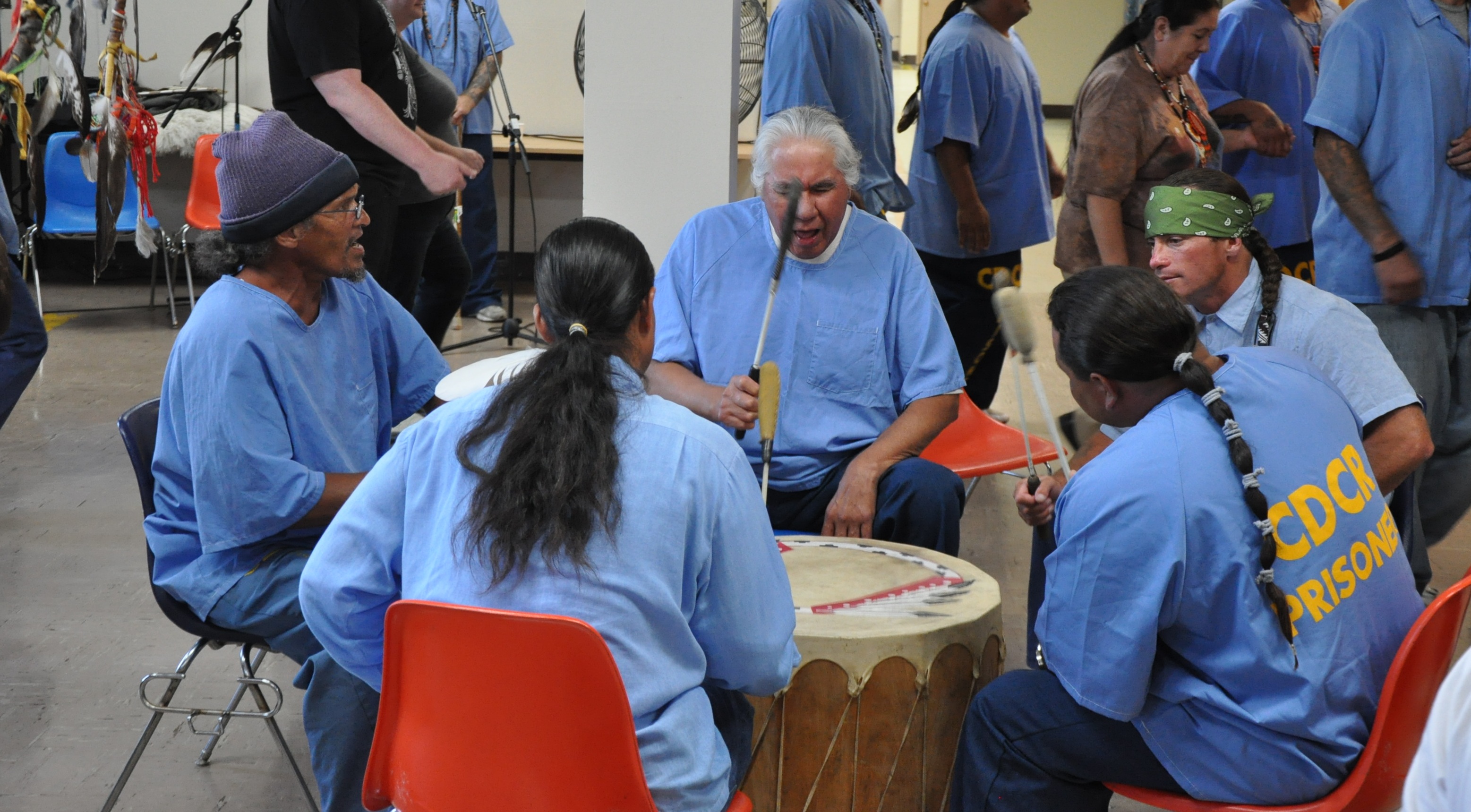
 

The Loving Decision and the Concealed History of Virginia’s Native Peoples

Yesterday was the anniversary of the Pulse nightclub massacre that took place a year ago in Orlando, the largest mass shooting in recent US History.  It was also the fiftieth anniversary of the Supreme Court’s decision in Loving v. Virginia, the case which struck down laws that prohibited marriage across the color line.

You may have seen the beautifully quiet and restrained telling of this story in last year’s Oscar-nominated film that starred Ruth Negga as Mildred Loving and Joel Edgerton as her devoted husband Richard.  The film avoided grandiose speeches, courtroom melodrama, and focused instead on the struggle of a couple, white and black, to hold things together in the Jim Crow south.

There was more to the story, however, for Mildred Loving always claimed that she was Native American, a descendant of Virginia’s native peoples.  This story is told in Sally Jacobs’  piece that appeared on WGBH. You might find Jacobs’ story useful in your classes.

[UPDATE: And you might find it useful for more than just the story.  Arica Coleman, mentioned below, wrote a fantastic book on this subject, and she has accused Jacobs of plagiarizing her work.  You should read Coleman’s criticism here and in the comments section which follows Jacobs’ piece.  Professor Coleman presents a powerful case, and we need to hear Jacobs’ response. MLO]

Mark Loving, Mildred’s grandson, contacted the Virginia Department of Historical Resources because he objected to the description of his grandmother on a state historical marker as “a woman of African-American and Virginia Indian descent.” So said Jacobs in her piece for WGBH. Mark Loving objected to the suggestion that Mildred Loving was anything other than a Native American woman.  “I know during those time that there were only two colors,” he said in an interview from last November, “but she was Native American.  Both her parents were Native American.  Mildred herself insisted in 2004 that she had no black relatives, according to Arica Coleman, who interviewed her for the fantastic book she wrote on mixed-race marriage.

Race is never simple, and Virginia’s history is a messy one.  In 1924, for instance, the Virginia legislature passed its “Racial Integrity Act” which defined white people as having “no trace whatever of any blood other than Caucasian.” The act included the so-called “Pocahontas exception,” stating that “persons who have one-sixteenth or less of the blood of the American Indian and have no other non-Caucasic blood shall be deemed white persons.”  Many Virginians, blissfully unaware that some of Pocahontas’s descendants had sired children with slaves, attempted to tie themselves firmly to Virginia’s romantic past by claiming descent from Pocahontas. Their interests had to be protected. Anyone who was not white, under the provisions of the law, was “colored.”

I take some time with laws like these in my classes in order to explain to them how nonsensical and ridiculous all of this is at a fundamental level.  Race is a construction, an invented category. The blood that flowed through one’s veins did nothing to effect culture and belief and values and behavior.  Still, Virginians enforced the Racial Integrity Act with a vengeance, and the Commonwealth’s first registrar of the Bureau of Vital Statistics, Walter Ashby Plecker, was a true believer.  “Let us turn a deaf ear,” he wrote revealingly in 1925, “to those who would interpret Christian brotherhood as racial equality.”  Virginia Indians, he believed, were not real Indians: they had been mongrelized, mixed with peoples of African descent, and as such he ordered his employees to alter the birth certificates of Indian children.  This was erasure, an attempt at extermination carried out with pens and paper. The certificates now would read “colored.”  Plecker claimed that he had science on his side—the same “eugenics” that later fueled the Nazi holocaust—but he admitted to close friends that he routinely changed racial designations from Indian to colored without any evidence.

Plecker’s racist crusade made it difficult for many native peoples in Virginia to prove that they were Indians.  The vital records upon which such a designation relied, after all, had been altered.  Native peoples in Virginia asserted a third racial identity in a biracial society.  They did not attend black schools because they felt no necessity to accept Plecker’s logic.  Many wanted access to the better facilities available to white Virginians.  Some of those who could pass as white did so, but many of Wahunsonacock’s descendants struggled in the face of this racist legal code.

During the Second World War, Commissioner of Indian Affairs John Collier complained about Plecker’s strict enforcement of Virginia’s racist legal code but Plecker was convinced that thousands of “mulattoes” in Virginia “are striving to pass over into the white race by the Indian route.” Plecker determined to keep the races pure, and the lines between them distinct.  When a draft board in Richmond ordered three Rappahannock men to report to an induction station for African American soldiers in Maryland, they refused. Authorities in Virginia prosecuted the men and sentenced them to six months in prison.  The government allowed Chickahominy soldiers to serve in white units only after the tribe demonstrated its own racism toward African Americans:  Chickahominies who married black people faced expulsion from the community; they tried to keep African American farmers away from the reservation, and prohibited black doctors and preachers from visiting their communities.  Most of the Virginia Indians who served did so in white units, but not without an enormous struggle.

There were solid historical reasons for Mildred Loving’s family to claim to be Indians.  But people on the margins intermarried throughout the South.  They always did, and racial identity could be fluid on the marchlands of the empires and the colonial state.

As Jacobs shows, in Virginia, along Passing Road, where the Lovings lived and loved, there is today debate about Mildred Loving’s identity.  Who she is still is debated.  In an attempt to navigate these troubled waters, Jacobs reported, “the state of Virginia rewrote its highway marker to describe the Lovings simply as an interracial couple and removed all mention of her being either African-American or Native-American. But that didn’t quell the controversy.”

In the face of local opposition, the state last week moved the location of the highway marker away from a roadside several miles from the Lovings’ gravesite. It’s now to be near the former Virginia Court of Appeals in Richmond, where the Loving case was once heard, over an hour’s drive away. Despite the controversy, Virginia Governor Terry McAuliffe is set on Monday to dedicate the marker, which has been in storage for over a year.

That some of your students likely will have some familiarity with the recent film version of the Lovings’ story, and the recent salutary discussion across the country of how love must trump hatred, bigotry and racism, it might be useful to discuss this important case in Native American history classes.  And if not the Lovings’ story, there are similar cases throughout the American South, and throughout Native America.