
Tag Archives: Gun Control

I Am So Angry

Several years ago my daughter texted me to tell me there was an active shooter on her college campus. I wrote about the experience on this blog.

I immediately texted her back.  And called, but realized that was probably a mistake.  What if she were hiding and her phone vibrated or rang and that gave her away. She was in a safe location, and let me know that, but still, I told her to stay there until she saw someone with a badge telling her it was safe to exit. 

No shooter menaced the Loyola Marymount University Campus.  It was a false alarm. But the experience left me rattled. I was terrified. And angry. I was so angry that evening that I could not speak.

I have listened to politicians speak in the aftermath of the slaughter at a Buffalo supermarket and an elementary school in Uvalde, Texas, and that anger has resurfaced again. Republicans, and a few feckless Democrats, have suggested that tougher gun laws are not the answer.  You may want your representatives to enact legislation to regulate the use of weapons in the United States, they say. You may want your representatives to enact a law “attacking the 2nd Amendment.”  But you won’t win. From Ted Cruz to Lauren Boebert, our leaders say that your laws will not do any good.  You are powerless to stop this, they said.  Evil people do evil things. You would be better off agitating for better mental health care, because the guys who slaughtered the kids in Texas and the elderly in Buffalo were bullied and picked on.  The problem is not us, Cruz said, and it is not the guns. He spoke cynically of “American Exceptionalism,” of how great this country is.  The guns are not the problem. You are better off buying a gun of your own, to protect you from, you know, the criminals, and the Mexicans and the Terrorists and Antifa.  The NRA, we must remember, is a trade group.

Your fear is good for their bottom line.

In the days after the massacre in Uvalde, I have heard pro-death, conservative lawmakers and religious leaders suggest that the shooting might not have happened if there were prayer in schools, even though Texas has a moment of silence at the beginning of the day and prayers at school functions like sporting events.   Others have trotted out equally spurious, but predictable explanations for the carnage:  violent movies, violent video games, homosexuality and the presence of transgendered people, broken families, and Critical Race Theory (somehow). 

I do not think any of these explanations are funny.  They are either dishonest or dangerously and obscenely stupid.  They are blood-drenched and dangerous.  I do not care why you want to kill. It does not matter to me in the slightest.   A white nationalist and a racist? An “Incel”? A Nazi, or a revolutionary or an End-of-Timer or a sullen kid or a sociopath? I could not care less.  Because no matter who you are, and no matter who you hate, I do not believe you should have a weapon of war at your disposal.  You have no right to kill, and no matter your irrational fears, your macho fantasies, your martial cosplay, or your fevered dreams, there is nothing you can say to convince me that there is a place for killing machines in a civil society.  Some of you will trot out the 2nd Amendment, but bearing arms does not mean what you think it does. It never has. Some of you will invoke your Christianity.  Show me if you can one line, from the first verse of the first chapter of Matthew to the last line of Revelation, that in any way justifies violence.

Look around the world. There are violent video games and violent movies all over the place.  There are many countries where almost nobody prays, where far more people identify as Atheists than in the United States.  They do not have mass killings.  40,000 people die from gunshot wounds in the United States each year, whether from suicide, accident, or homicide.  Many thousands more have their bodies torn, lacerated, chewed up and spit out by these weapons that have one purpose and one purpose only: to kill. How many more crimes are committed with these weapons, or people threatened and frightened? It boggles the mind. To those who say nothing needs to be done, that your rights are sacred, and that guns are not the problem, I ask you how many more deaths will it take before you concede that this is wrong.  50,000? 100,000? A million? When and where will it end? If murdered children will not get you to act, maybe there is no hope.

Guns end conversation. They end debate.  The create a climate of fear.  Guns are inconsistent with freedom, whatever the death-dealers at the National Rifle Association tell you, because they force us to live in fear.  They menace. They threaten, they frighten, and they kill.  They were invented only to kill. Ours is a country steeped in racism, built on stolen land with labor from stolen and enslaved black bodies.  The better angels of our nature have appeared from time to time, but they have never banished the fundamental evil at the heart of our history.   We cannot make claims about this country’s greatness when every fourteen minutes another American dies from a gunshot wound.  We need to choose to live our lives free from fear.  And we need to rid our communities of the killing machines that are too readily available to too many people, even in states with the toughest of gun regulations.

So many political leaders have offered their thoughts and prayers.  They tell us that they hold in their hearts the victims of Buffalo, Uvalde, and on and on and on. Thoughts and prayers.  The words of Isaiah come to me, as he confronted the hypocrites whose empty prayers, he said, meant nothing to an angry God. 

When you spread forth your hands,

I will hide my eyes from you;

even though you make many prayers,

I will not listen;

your hands are full of blood.

Wash yourselves; make yourselves clean;

remove the evil of your doings

from before my eyes;

cease to do evil,

learn to do good;

seek justice,

correct oppression;

defend the fatherless,

plead for the widow.

Ours is a broken, amoral, and violent society.  Our leaders have chosen this, either through their actions or their complicit cowardice. I have no faith in their ability to fix us.
Manifesto

We are historians.

No document is sacred. We are impatient with slogans, patriotic hymns, dogmas, ideas held but unexamined and unchallenged.

There is no text that cannot be analyzed, no claim that can not be challenged. Your comforting myths will find no succor here.  There is no assertion we will not check, no argument we will not dissect, no matter we will take on faith.

We will question you. You will feel like it is getting hot in here.  You will sweat.

We respect only the discipline of history–the craft we have learned and refined, the diligence and the thoroughness and the honesty and the hard work that goes into answering questions about the past in a systematic manner.

It is not a science, but it is a discipline, a way of thinking, doing, and being.

We take it all very seriously.

We will make you uncomfortable.

We will be, in your view, assholes and inquisitors, for we will demand of you your evidence. You would rather we study STEM. You see less value in the liberal arts and humanities in direct proportion to the pressure you feel we put upon you to think critically, to reason soundly and honestly.  We will expect you to be able to explain how your reasoning follows from your premises and, assuredly, we will ask you for proof. Maybe you will convince us.  Maybe not.  We will know what you have said before. We will ask you questions you have not considered. We will ask you why you did not consider our questions, and we may feel, as you might, that you are not asking the right questions at all, that they are not good questions that you are asking.

We will ask you what you have read, and why this and not that and what you think about this other thing. We will ask you how you know what you claim to know. If you have nothing to say, we might think that you have more work to do, or that you have not been fully honest, with yourself or us, about your own prejudices and biases.  We will think that you are more interested in advancing an agenda, in scoring political points, than in the truth.

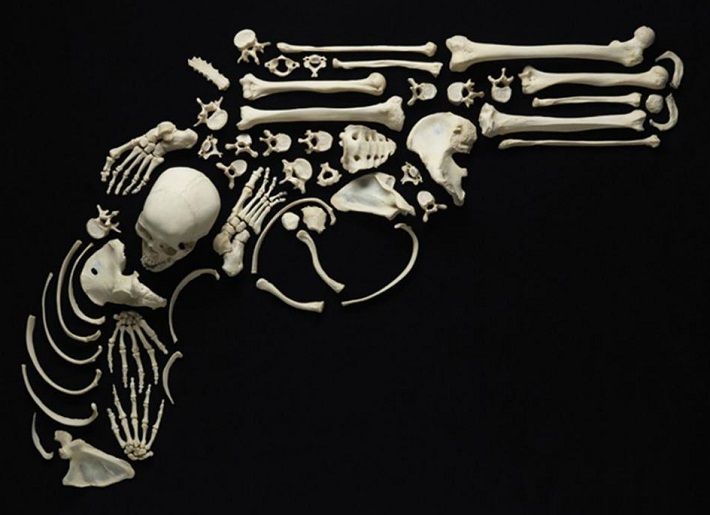
And so we will judge you, and your work. We will judge what you say and what you write, though we will usually be polite. And we will judge you harshly when you mouth platitudes and talking point that you know to be half-truths, and when you attempt to wriggle away from the harsh reality you helped concoct, by saying “it’s not time.” We will listen to you, the mouthpieces of the NRA, and the craven politicians who do their bidding, and the fringes of the media where such dark ideas dwell.Image result for anti-gun art

And when you call us “politically correct,” or view us as part of a menacing “Left,” or as “Libtards”; when you mock us for being “woke” or fragile “snowflakes,” or “European socialists,” we will conclude that you are ill-informed, ignorant, or a coward and a wilful liar.  Or that you have nothing much to say at all. That all your Hannity vanity and wreckless Bannon is nothing but air.  We have a name for that sort of conduct, and we will use it to describe you.

We students of the liberal arts and humanities do not always agree. Sometimes we argue and sometimes feelings get hurt.  Criticism stings. But the give-and-take, the dialogue and debate, it is what we love.  It drew us into this world, this life’s work.

We listen and we learn. We re-write our lectures and redesign our courses, when we uncover something new. When a new interpretation, a “revisionist” work arrives, we consider it.  We think it over.  We take notes. We think some more. We stay up on our fields.  We devour new scholarship. We are honest, and we work hard.  We work longer hours than you will expect. We have high standards. We do not fear these at all. We agonize about what we write and teach, and we strive, imperfectly, to get things right. We spend a lot of time alone, reading, thinking, researching, writing. No, we will not carry weapons.

We hold ourselves to high standards. But we will hold you to high standards, too. And though we are quick to smell a rat, and good at detecting lies, and we are willing to dig like terriers for answers, we are patient and we will listen to you. And we listen closely.

It has been a bad couple of days.  I say that as a historian and as a human being.

There is a novel I love.

I have not read it in a long time. I may have lost my copy. I gave it away to someone but I cannot remember who that was, or I lost it on one of my many moves. It is called Waterland, and the author was Graeme Swift. The main character was a history teacher named Tom Crick. He taught his students about the French Revolution, about the history of Europe. But Tom Crick’s life was falling apart, personally and professionally.

And one day, challenged by a frightened student, a boy who could not see the point in studying the past when the future looked so bleak, and who asked his teacher why should we bother studying history, Crick provided his answer.

Why, Crick said, is the question that makes us human, and the word that blares in the historian’s ear like a siren in the night.  Why? If only…But why?

I think about that novel a lot.  History. And regret.  They go together.

Like gunshots and grief.

So, again, why?

Why did this screwed-up kid with a screwed-up life do this screwed-up thing in Florida the other day. I rarely watch the news anymore, but I watched a lot after I heard that yet another school shooting was underway.  These stories hit me hard. I wrote some words for the local paper, and have thought a lot about this story of this screwed-up thing. I listened to the Republicans talk about it.  One of them said that he did it because he was a screwed-up kid with a screwed-up life, which does not help me.  It is circular.  And I have known other screwed-up  kids with screwed-up lives who could not hurt a fly. Maybe the society is sick, as one person said, or it’s because of I-pads, somehow, or because of violent video games, or too many guns in the movies.  Maybe it happened because we have removed God from the schools and because there are, one said, homosexuals everywhere.  This kid had no parents. Maybe it is a product of bad parenting. Or the cops.  Maybe it happened because the cops chickened out and would not go into that school that had become a charnel house, one fueled by the easy availability of weapons of war.

Or maybe it is because when a bad, screwed-up person is determined to do a bad, screwed-up thing, there is really nothing you can do to stop them. I heard one political leader say that. And that is fatalism.  It is not an explanation. It is an abdication.

Shoddy reasoning.  Fallacious reasoning.  I have heard a lot of it.  I have read it in some of the nasty notes I have received after my editorial appeared in the paper. But people like me? We are patient.  We are teachers. And we will reason with you and engage with you. We can take the heat.  How about the guns, we will ask you.  Maybe it happened because it is so easy to obtain weapons here, and to use them while the nation’s leader stirs up unthinking anger and undiscerning resentment.

Why did this happen? It is a historical question, you see, because asking it forces us to ask why it happens in this country so frequently.  It has become a uniquely American thing: like women’s basketball and the mass incarceration of people of color, it is one of those things in which America leads the world. (MAGA!)

We who think, read, reason, and we who are moved by the suffering, we will point out that there is plenty that might be done to reduce the likelihood of events like this from repeating again, and again, and again. And we, who think, read, and reason, and who feel the weight of the past, and who demand evidence, will call you out when you repeat the talking points handed out by the terrorist death cult that claims your allegiance as you race towards the Eighth Circle of Hell. And when your evidence is cherry-picked, fabricated, and is the sort of complete and utter bullshit that seemingly excuses the slaughter of children as the price of freedom, we will denounce you for your amorality and your cowardice and your utter and absolute evil.

Because thirty thousand people die every year from gunshot wounds, whether from suicide, homicide, or accident.  Many thousands more have their bodies torn, lacerated, chewed up and spit out by these weapons that have one purpose and one purpose only: to kill. How many more crimes are committed with these weapons, or people threatened and frightened? It boggles the mind.

You can stop this. You can do something or you can remain complicit. If you choose to do nothing, the blood is on your hands. We will say that, out loud and to your face.

We will remember you and we will be among those who judge you.  And we judge harshly.

A sick society?  No. There is sickness, but there is also good. I know you saw those kids in Florida.  They are coming to Washington. Marching.  None of you,  I expect, will have the stones to come out and meet them. You will try to co-opt the movement, but we are angry.  And, as historians, we can tell you that if you ignore evil for too long, it will explode. And those who rise up against the evil, they become history’s heroes.