
All posts by admin

What You Need to Read, September 2024

Welcome to the new school year. I hope you all had a restful or productive summer, which ever you prefer. Here is your third reading list for the year. A lot of exciting stuff on this list, with more items than my busy schedule will permit me to look at. If I have missed something that you would like me to look at, please reach out.

Adams, Todd, Gary Clayton Anderson and R. David Edmunds, A Reservation Undiminished: The Saginaw Chippewa Case and Native Sovereignty, (Norman: University of Oklahoma Press, 2024).

Bales, Kevin and Christine Annerfalk, “Introducing the Euro-Invasion Conflict Database, 1513-1901,” Western Historical Quarterly, 55 (Summer 2024), 127-146.

Ballew, Zada “’The Indian Side of the Question’: Settling the Story of Potawatomi Removal in the Twentieth Century Midwest,” Journal of the Gilded Age & Progressive Era, 23 (April 2024), 170-189

Bess, Jennifer. “The ‘Crisis’ of Native American Mobility: Border Crossing and the Influence of International Relations on Indian Policy, 1896-1898,” Pacific Historical Review, 93 (Spring 2024), 169-201.

Brownstone, Arni. Indigenous War Painting on the Plains: An illustrated History, (Norman: University of Oklahoma Press, 2024).

Canessa, Andrew and Manuela Lavina Picq, Savages and Citizens: How Indigeneity Shapes the State, (Tucson: University of Arizona Press, 2024).

Coats, Cathy. To Banish Forever: A Secret Society, the Ho-Chunck, and Ethnic Cleansing in Minnesota, (St. Paul: Minnesota Historical Society, 2024).

Dennison, Jean. Vital Relations: How the Osage Nation Moves Indigenous Nationhood into the Future, (Chapel Hill: University of North Carolina Press, 2024).

Dennison, Jean. “Beyond #LandBack: The Osage Nation’s Strategic Relations,” American Indian Culture and Research Journal, 47 (No. 2, 2024).


Fawcett, R. Ben, Ryan Walker and Yale Belanger, “Liminal Spaces and Structural Limitations of First Nation Urban Reserves,” International Indigenous Policy Journal, 15 (April-June 2024), 1-25.

Fixico, Donald L. The State of Sequoyah: Indigenous Sovereignty and the Quest for an Indian State, (Norman: University of Oklahoma Press, 2024).

Fixico, Donald L. Chitto Harjo: Native Patriotism and the Medicine Way, (New Haven: Yale University Press, 2024).

Fixico, Donald L. Indian Treaties in the United States: An Encyclopedia and Documents Collection, (New York: Bloomsbury, 2024).

Gray, Kathryn N. and Amy M. E. Morris, Mataoka, Pocahontas, Rebecca: Her Atlantic Identities and Afterlives, (Charlottesville: University Press of Virginia, 2024).

Gross, Stephen and Elizabethada A. Wright, “Unorthodox Pleas for Contract Schools: Mother Mary Joseph Lynch and the Boarding School for Native Students in Morris, Minnesota, Catholic Studies, 135 (Summer 2024), 23-49.

Hall, Ryan. “Patterns of Plunder: Corruption and the Failure of the Indian Reservation System, 1851-1887,” Western Historical Quarterly, 55 (Spring 2024), 21-38.

Her Many Horses, Emil, et al., Unbound: Narrative Art of the Plains, (Washington: National Museum of the American Indian, 2024).

Hughes, Sakina M. Music, Muscle, and Masterful Arts: Black and Indigenous Performers of the Circus Age, (Chapel Hill: University of North Carolina Press, 2025).

Jaratt-Snider, Karen and Marianne O. Nielsen, eds., Indigenous Health and Justice, (Tucson: University of Arizona Press, 2024).

Keeler, Kasey. “Beyond the White Picket Fence: American Indians, Suburbanization, and Homeownership,” American Indian Culture and Research Journal, 47 (no 2, 2024), 97-115.

Kiser, William. The Business of Killing Indians: Scalp Warfare and the Violent Conquest of North America, (New Haven: Yale University Press, 2024).

Konkle, Maureen. What Jane Knew: Anishinaabe Stories and American Imperialism, 1815-1845, (Chapel Hill: University of North Carolina Press, 2024).

Lannutti, Lena. “’We Have No Tribes’: How Indigenous Boys Helped Close Philadelphia’s Indian Boarding School,” Pennsylvania Magazine of History and Biography, 147 (January 2024), 54-76.

Lavine, Lucianne and Elaine Thomas, eds., Our Hidden Landscapes: Indigenous Stone Ceremonial Sites in Eastern North America, (Tucson: University of Arizona Press, 2023.

La Vere, David. “Making War on the Deer: Deer Hunting and Deerskins in Colonial North Carolina,” North Carolina Historical Review, 101 (January 2024), 24-48.

McLerran, Jennifer. A New Deal for Navajo Weaving: Reform and Revival of Diné Textiles, (Tucson: University of Arizona Press, 2024).

Mihesuah, Devon A. The Bone Picker: Native Stories, Alternate Histories, (Norman: University of Oklahoma Press, 2024).

Morman, Todd Allin. Many Nations Under Many Gods: Public Land Management and American Indian Sites, (Norman: University of Oklahoma Press, 2024).

Mott, Carrie. “’The Last Victims of the Indian War’: Celilo Falls, the Dalles Dam, and Infrastructural Colonization,” Annals of the American Association of Geographers, 114 (Issue 1), 91-106.

Parkhurst, Melissa. “Thematic Analysis of Music-Making in US Residential Schools: Navigating Colonial Archives and Honouring Indigenous Perspectives,” History of Education, 53 (January 2024), 174-188.

Rankin, Charles. “A Western Pocahontas: Myth, Reality, and Memorialization for Spotted Tail’s Daughter, Mni-Akuwin,” Western Historical Quarterly, 55 (Summer 2024), 105-226.

Rapaport, Moshe, ed., Salish Archipelago: Environment and Society in the Islands Within and Adjacent to the Salish Sea, Asia-Pacific Environment Monographs, (Canberra: Australian National University Press, 2024).

Round, Philip H. Inscribing Sovereignties: Writing Community in Native North America, (Chapel Hill: University of North Carolina Press, 2024).

van de Logt, Mark. Between the Floods: A History of the Arikaras, (Norman: University of Oklahoma Press, 2024).

Vaughn, Bill. The Plot Against Native America: Uncovering the Fateful Legacy of the Native American Boarding Schools, (New York: Pegasus Books, 2024).

Voight, Matthias Andre, Reinventing the Warrior: Masculinity in the American Indian Movement, 1968-1973, (Lawrence: University Press of Kansas, 2024).

Whitman, Kyle. “Indians Fish Just Because It Is Their Right to Fish: Michigan Native Americans and the Battle for Fishing Rights,” Michigan Historical Review, 50 (Spring 2024), 45-63.

Zimmer, Eric Steven. Red Earth Nation: A History of the Meskwaki Settlement, (Norman: University of Oklahoma Press, 2023).

What You Need To Read, June 2024


Althoff, Joshua A. McGonagle, “Managing Settlers, Managing Neighbors: Renarrating Johnson v. McIntosh Through the History of Piankashaw Community Building,” Journal of American History, 110 (March 2024), 625-642.

Aus, Roger David, “The Great Annual Sioux Rendezvous on the James River,” South Dakota History, 54 (Spring 2024), 1-36.

Bales, Kevin and Christine Annerfalk, “Introducing the Euro-Invasion Conflict Database, 1513-1901,” Western Historical Quarterly, 55 (Summer 2024), 127-146.

Bess, Jennifer. “The ‘Crisis’ of Native American Mobility: Border Crossing and the Influence of International Relations on Indian Policy, 1896-1898,” Pacific Historical Review, 93 (Spring 2024), 169-201.

Calloway, Colin. Hard Neighbors: The Scotch-Irish Invasion of Native  America and the Making of an American Identity, (New York: Oxford University Press, 2024).

Dennison, Jean. Vital Relations: How the Osage Nation Moves Indigenous Nationhood into the Future, (Chapel Hill: University of North Carolina Press, 2024).

Hall, Ryan. “Patterns of Plunder: Corruption and the Failure of the Indian Reservation System, 1851-1887,” Western Historical Quarterly, 55 (Spring 2024), 21-38.

Johnson, Amanda. “Ganienkeh, Out of the City and Away from the Reservation: The Making of an Indigenous Space, 1974-1979,” Ethnohistory, 71 (April 2024), 271-291.

Kuethe, Allan J. and José Manuel Serrano, “New Light on Presidio San Luis de las Amarillas,” Southwestern Historical Quarterly 127 (April 2024), 393-420.

Lipman, Andrew. Squanto: A Native Odyssey, (New Haven: Yale University Press, 2024).

Lutz, John Sutton, “The Smallpox Chiefs: Bioterrorism and the Exercise of Power in the Pacific Northwest,” Western Historical Quarterly, 55 (Summer 2024), 87-104.

McCoy, Meredith L. On Our Own Terms: Indigenous Histories of School Funding and Policy, (Lincoln: University of Nebraska Press, 2024).

Morman, Todd Allin. Many Nations Under Many Gods: Public Land Management and American Indian Sacred Sites, (Norman: University of Oklahoma Press, 2024).

Moves Camp, Richard. My Grandfather’s Altar: Five Generations of Lakota Holy Men, (Lincoln: University of Nebraska Press, 2024).

Rankin, Charles E. “A Western Pocahontas: Myth, Reality, and Memorialization for Spotted Tail’s Daughter, Mni-Akuwin,” Western Historical Quarterly, 55 (Summer 2024), 105-126.

Voight, Matthias Andre. Reinventing the Warrior: Masculinity in the American Indian Movement, 1968-1973, (Lawrence: University Press of Kansas, 2024).

West, Cane. “Doctoring Removal: Southern Medicine, Indian Removal, and the Cholera Epidemic of 1832-1834 in Arkansas Territory,” Journal of Southern History, 90 (May 2024),249-284.

Wheeler, Winona. Indigenous Oral History Manual: Canada and the United States, (New York: Routledge, 2024).

Whitman, Kyle. “Indians Fish Just Because It Is Their Right to Fish: Michigan Native Americans and the Battle for Fishing Rights,” Michigan Historical Review 50 (Spring 2024), 45-63.


Rules for Historical Writing.

I am marking some final papers this semester. Research. It is such a difficult thing to do, harder even than the students know. To start from nothing, and over the course of 15 weeks read enough to frame a meaningful question, to dive into secondary works that might be difficult for students to read, and, of course, primary sources, which can be extremely challenging. I tell them how difficult the process is. I tell them, half jokingly, that because we give ourselves seven years to write something meaningful and they have just a couple of months, in a way we hold our students to standards higher than we hold ourselves, especially as the demand on faculty to publish has become, sadly and apparently, old school. So some advice. This is not exhaustive. You might not like it. You might find it really helpful. If you want, place your own suggestions in the comments. I would love to read about how you help your students do this difficult work.

  1.  All historical writing begins with a question.  All good historical writing answers that question.  All good historical writing contains a thesis or an argument.  A sound thesis will provide an answer to the question under investigation briefly, in a sentence or two.  The rest of the text, whether it is a term paper, a dissertation, an article or a book, will demonstrate how that one sentence thesis is true.
  2. Some questions are better than others. Ideally, you will ask a new question, or answer an old question in a new way, or apply a broad question to a more narrow case where you can become an expert over that small piece of a larger whole. We value your perspectives and trust your creativity. When we read your papers, we hope to learn from you.
  3. All good historians read the footnotes or endnotes. Indeed, we are the people who read the notes.  We take notes on the footnotes, making sure we record sources, primary and secondary, that may be useful to us in our own work. We like footnotes to a degree that it makes some people uncomfortable.
  4. All good historians are interdisciplinary, or willing to become interdisciplinary. Historians are willing to do the grunt work for the other social science and humanities disciplines that are related to our fields.  
  5. Historians question nearly everything about the work of other historians. Historians are prone to disbelief—we are critical readers, and we should be ready to question all assumptions.
  6. Historians are relentless in their quest for sources, secondary and primary, and they recognize that the work of gathering sources and creating a bibliography is one that is never completely finished.
  7. No, you do not yet have enough sources.
  8. When your professor tells you to check out one source or another, you are obligated to do so.  It is not an option.  If you look at that source, and do not know how to make sense of it, it is your responsibility to learn, or to ask for help from your professor or from a library professional who might assist you. Those of us who are decent people love to talk to you about sources. Some of us especially love when you can explain why a source we recommend to you is not helpful. See? You are teaching us new stuff.
  9. Do not quote secondary sources unless your source says something so astoundingly clever that you cannot possibly do without it.  Leave historians in the footnotes. Some academic disciplines are really into quoting scholars. “As Dirk Broadaxe said in Logjam, his seminal monograph about lumberjacks…” and so on. It’s pretentious, does not read well, and, you know, footnotes. They are right there at the bottom of the page.
  10. History is a discipline.  There are rules.  Research papers should be formatted according to standards included in the Turabian Manual. If you do not know what the Turabian Manual is, you must learn.  Even if it seems to you that it is stupid. We are members of an undisciplined discipline, but you need to conform to some of these base level expectations. You must take the time to learn to format your footnotes and bibliography according to Turabian’s standards.  This is not optional.  It is required.
  11. As Collingwood said, (see above, No. 9), “nothing capable of being memorized is history.”
  12. Treat words like they cost you money.
  13. People with bad grammar hate America.
  14. The past tense of the verb “to lead” is “led.” There is no reason ever for you to use the word “plethora.”
  15. To use Chat GPT and similar applications to construct your research project is so much worse than dishonest. It is environmentally irresponsible, lends support to corporate overlords and soulless tech bros who value neither labor nor the life of the intellect, and deprives you of a chance to learn a craft that is, at the most fundamental level, the antidote to the worst qualities of artificial intelligence. Remember, good historians are honest. Good historians are not afraid of hard work and answering difficult questions.

What You Need to Read, March 2024

I will get back to telling the story of the stolen lands upon which New York is built. Today, however, it is time for another edition of the quarterly bibliography I have been posting here for the past several years. Some of these books are not out yet. Some of them are too expensive for me to buy. But all of them look interesting. As always, if I have missed something, I hope you will let me know

Anderson, Scott W. Pricing the Land: The Buying and Selling of Frontier New York and the Cayuga Reservation, (Ithaca: Cornell University Press, 2024).

Beck, David R. M. Bribed with our Own Money: Federal Abuse of American Indian Funds in the Termination Era, (Lincoln: University of Nebraska Press, 2024).

Betke, Tyla. “’Not a Shred of Evidence’: Settler Colonial Networks of Concealment and the Birtie Indian Residential School,” Canadian Historical Review, 104 (December 2023), 519-544.

Blaakman, Michael A. Speculation Nation: Land Mania in the Revolutionary American Republic, (Philadelphia: University of Pennsylvania Press, 2023).

Bottinger, Patrick. “Fertile Grounds: Knowledge, Ceremony, and the Intensification of Maize,” Agricultural History, 97 (November 2023), 513-546.

Brewer, Susan. The Best Land: Four Hundred Years of Love and Betrayal on Oneida Territory, (Ithaca: Cornell University Press, 2024).

Broadwell, George Aaron and Alejandra Dubcovsky, “Chief Manuel’s 1651 Timucua Letter: The Oldest Letter in a Native Language of the United States,” Proceedings of the American Philosophical Society, 164 (November 2023), 225-267.

Brownstone, Arni. Indigenous War Painting of the Plains: An Illustrated History, (Norman: University of Oklahoma Press, 2024).

Byers, A. Martin and DeeANne Wymer, eds., Hopewell Settlement Patterns, Subsistence and Symbolic Landscapes, (Gainesville: University Press of Florida, 2024).

Cable, John H. Southern Enclosure: Settler Colonialism and the Postwar Transformation of Mississippi, (Lawrence: University of Kansas Press, 2023).

Calloway, Colin. Hard Neighbors: The Scotch-Irish Invasion of Native America and the Making of American Identity, (New York: Oxford University Press, 2024).

Chase, Adrian S. Z, Arlen F. Chase, and Diane Z. Chase, eds, Ancient Mesoamerican Population History: Urbanism, Social Complexity, and Change, (Tucson: University of Arizona Press, 2024).

Clough, Joshua. Resisting Oklahoma’s Reign of Terror: The Society of Oklahoma Indians and the Fight for Native Rights, 1923-1928, (Lincoln: University of Nebraska Press, 2024).

DeJong, David H. Damming the Gila: The Gila River Indian Community and the San Carlos Irrigation Project, 1900-1942, (Tucson: University of Arizona Press, 2024).

Elliott, C. R. “’Through Death’s Wilderness’: Malaria, Seminole Environmental Knowledge, and the Florida Wars of Removal,” Ethnohistory, 71 (January 2024), 3-25.

Evans, Laure E. “The Strange Career of Federal Indian Policy: Rural Politics, Native Nations, and the Path Away from Assimilation,” Studies in American Political Development, 37 (October 2023), 89-110.

Fixico, Donald Lee. Indian Treaties in the United States: An Encyclopedia and Documents Collection, (New York: Bloomsbury, 2024).

Gone, Joseph P. “Indigenous Historical Trauma: Alter-Native Explanations for Mental Health Inequities,” Daedalus, 152 (Fall 2023), 130-150.

Hall, Ryan. “Patterns of Plunder: Corruption and the Failure of the Indian Reservation System, 1851-1887,” Western Historical Quarterly, 55 (Spring 2024), 21-38.

Harvey, Caitlin “University Land Grabs: Indigenous Dispossession and the Universities of Toronto and Manitoba,” Canadian Historical Review, 104 (December 2023), 467-493.

Jarratt-Snider, Karen and Marianne O. Nielsen, eds., Indigenous Health and Justice, (Tucson: University of Arizona Press, 2024).

Jenkinson, Clay. “On the Future of the Doctrine of Discovery,” We Proceeded On, 49 (November 2023), 1-53.

Kidder, William L. Defending Fort Stanwix: A Story of the New York Frontier in the American Revolution, (Ithaca: Cornell University Press, 2024).

Klann, Mary. Wardship and the Welfare State: Native Americans and the Formation of First-Class Citizenship in Mid-Twentieth Century America, (Lincoln: University of Nebraska Press, 2024).

Lloyd, Dana. Land is Kin: Sovereignty, Religious Freedom, and Indigenous Sacred Sites, (Lawrence: University of Kansas Press, 2023).

Lowery, Melinda Maynor and Christina Snyder, “The Native South and Eleventh-Hour History: Reconceptualizing Early America,” William and Mary Quarterly 81 (January 2024), 103-114.

McCreary, Tyler and Rebecca Hall. “The Healer, the Witch and the Law: The Settler Magic that Criminalized Indigenous Medicine Men as Fraud and Normalized Colonial Violence as Care,” Annals of the Association of American Geographers, 114 (2024), 352-368.

Martinez, David. “A City Upon Stolen Land: Westward Expansion, Indigenous Intellectuals, and the Origin of Resistance,” Journal of the Early Republic, 43 (Winter 2023), 607-617.

Morelock, Jerry. “Custer’s Last Decision,” MHQ: Quarterly Journal of Military History, 36 (Winter 2024), 38-47.

Morman, Todd Allin. Many Nations Under Many Gods: Public Land Management and American Indian Sacred Sites, (Norman: University of Oklahoma Press, 2024).

Moves Camp, Richard. My Grand-Father’s Altar: Five Generations of Lakota Holy Men, (Lincoln: University of Nebraska Press, 2024).

Owens, Robet M. “Field of Corpses: Arthur St Clair and the Death of an American Army,” Indiana Magazine of History, 120 (March 2024).

Owens, Robert M. Killing Over Land: Murder and Diplomacy on the Early American Frontier, (Norman: University of Oklahoma Press, 2024).

Parmenter, Jon. “Confronting Cornell University’s Origins in Indigenous Dispossession,” William and Mary Quarterly, 81 (January 2024), 123-124.

Peach, Steven. Rivers of Power: Creek Political Culture in the Native South, 1750-1815, (Norman: University of Oklahoma Press, 2024).

Perez, Erika.  “Voices from California: Spanish-Mexican and Indigenous Women’s Interventions on Empire and Manifest Destiny,” Journal of the Early Republic, 43 (Winter 2023), 659-668.

Rakita, Gordon F. M and Maria Cecilia Lozada, Exploring Ontologies of the Precontact Americas: From Individual Bodies to Bodies of Social Theory, (Gainesville: University Press of Florida, 2024).

Randolph, Ned. Muddy Thinking in the Mississippi River Delta: A Call for Reclamation, (Berkeley: University of California Press, 2024).

Stevenson, Christopher, Madeleine Gunter-Bassett, Laure Dussubieux, “Exploring the Seventeenth-Century Copper Trade: An Analysis of Smelted Copper from Sites in Virginia and North Carolina,” American Antiquity, 89 (January 2024), 119-132.

Van Last, Emily C. and Carlton Shield Chief Gover, Indigenizing Archaeology: Putting Theory into Practice, (Gainesville: University Press of Florida, 2024).

Varley, Molly K. Americans Recaptured: Progressive Era Memory of Frontier Captivity, (Norman: University of Oklahoma Press, 2024).

Wheeler, Winona, et. al., The Indigenous Oral History Manual, (New York: Routledge, 2024).

Winkler, Albert. “The Fetterman Disaster: A Swiss-American Officer Leads His Men to Disaster,” Swiss American Historical Society Review, 60 (February 2024), 1-83.

Dear Members of the Hiring Committee…

Please, have some class.  Please keep in mind that there are scores of people who probably could do your job just as well as you do in the eyes of your students, but who will never get the chance because of the cruelties of the academic job market.  I have some former students and friends applying now, and the callousness with which they are treated is truly appalling.

When I began applying for jobs a long time ago, the system was very different from today. Credentials stuck in files at the AHA, or mailing in letters and a CV with letters of recommendation to follow. All carried out through the U.S. Mail. Administrators and their so-called efficiencies have changed the way we conduct searches.

My campus, like many, uses an online employment system. Applicants upload the documents we ask for (a letter, a CV, and a statement of teaching philosophy). The system generates automatic emails acknowledging receipt of the applicant’s materials. If we let it, the system will also generate automatic emails informing applicants that they did not get the job. This is the default setting, and too many of you choose to operate that way.  Think for a second how you would like to be treated.

It seemed so harsh and disrespectful to me, and so inhumane, that I chose to buck the system the last time I had an opportunity to conduct a search. These spineless robo-mails, or no message at all, have become the norm, after all. Applicants can be forgiven for feeling chewed up and spitted out, scorned and abused. It takes a lot of work to apply for an academic job. The opportunities are few and the stakes are high. An automatic email seems an unnecessarily callous ending in a world filled with callousness.

We must do better.

So as our last search reached its conclusion, I sent sixty-one emails personally, one to each of the applicants. It took a bit of time, but not much. I wanted the applicants to know that I appreciated the time and effort they put into their applications. I acknowledged the rottenness of the job market, and how I wished we could have interviewed more people. I told them how impressed my colleagues and I were with their credentials, and how difficult a time we had narrowing the applicants to a number of candidates we could meaningfully interview.

I expected nothing in response, but thirty-one of the applicants replied to my email. This surprised me. Though one was gently and reasonably critical of the time the search took, all were appreciative and thanked me for treating them with courtesy and respect. All of them either said, or strongly implied, that such minimal courtesy is all but unheard of in today’s academia.

I spend a fair amount of time on social media, so I read a lot from recent Ph.D recipients describing their searches for a tenure-track job. I hear from former students and friends. These are tales of desperation, despair and depression, and frustration and anger, with not a few instances of shabby treatment by hiring institutions along the way. We who are lucky enough to be tenured or on the tenure track must, and can, do better. Writing a personal message is only the start.

Decency matters.

Decency matters so much that it is worth the extra effort to treat job applicants as you would like to be treated. Yes, the market was brutal when I went out thirty years ago, but it is much worse now. Believe recent graduates when they tell you that.

We must recognize that we are so fortunate to have the jobs we have. Colleges and universities, I know, as workplaces can vary widely in quality. I spent the first four years of my career at a dysfunctional hellhole in Billings, Montana. But even in the midst of the shit-show that was that college, I enjoyed my students, the teaching, and the advising. I enjoyed the moments I squirreled away to work on my first book. Once I closed the classroom door or my office door, I was happy.

And even if you feel justified in whining about your place of employment, remember this: there are literally hundreds of people who would like to do what you are doing, but will never get that chance. This brutal reality imposes upon all of us the obligation to be the best historians and teachers we can be. You must remember, no matter how good you think you are at this work, no matter how paradigm-shattering you consider your research, it is almost certain that there is someone better than you, shut out by the brutality of the academic job market. One of my colleagues at the dysfunctional hellhole, who doubled as an associate pastor at a local Missouri Synod Lutheran Church, told me during my on-campus interview that being a college professor was the best part-time job in the world. I suspect that we all know people who take this approach to academia, who do not produce or take their teaching seriously, but I can think of no attitude more loathsome and disrespectful to the many hundreds of talented historians who will never get a chance.

We cannot undo all the macroeconomic changes in higher education. I recognize the magnitude of the fiscal challenges facing colleges and universities. But let’s push back against the increasing bureaucratization of the job search and the increasing role played by computers in the hiring process. Perhaps you have an Ivy-League pedigree, and you feel your research is so important that you cannot be bothered to pay attention to the lowly peons who want to join your department. Perhaps you went to a second-tier school and never looked back. Whoever you are, wherever and whatever you studied, there is no excuse for not being kind. Resist every institutional protocol, and every barrier, that keeps you from treating job applicants the way you would like to be treated. If you are that barrier, and find that you cannot find the time to treat applicants with decency, perhaps you ought to step aside. Be kind and be decent. Most of all, show compassion. It matters.

What You Need to Read, December 2023

The fall semester has come to a close. There is a brief respite between the madness of the holidays and the beginning of the spring semester to take stock, see what is out there, and decide what to place on the reading list. As always, each quarter I can find plenty of stuff that interests me. I hope you find some interest in what is included here, and if I have missed something you think should be on the list, please let me know.

Abram, Susan. “Chess, Not Checkers: The Complexities of Historic Creek Diplomacy,” Diplomatic History, 47 (November 2023), 890-893.

Allread, W. Tanner. “The Specter of Indian Removal: The Persistence of State Supremacy Arguments in Federal Indian Law,” Columbia Law Review, 123 (October 2023), 1533-1610.

Archer, Seth. “Vaccination, Dispossession and the Indigenous Interior,” Bulletin of the History of Medicine, 97 (Summer 2023), 255-293.

Carlos, Ann M. “They Country They Built: Dynamic and Complex Indigenous Economies in North America before 1492,” Journal of Economic History, 83 (June 2023), 319-358.

Cooke, Jason: “Savagery Repositioned: Historicizing the Cherokee Nation,” American Indian Quarterly, 47 (Spring 2023).

Dorries, Heather and Michelle Daigle, Land Back: Relational Landscapes of Indigenous Resistance Across the Americas, (Cambridge: Harvard University Press, 2024).

Dubcovsky, Alejandra. Talking Back: Native Women and the Making of the Early South, (New Haven: Yale University Press, 2023).

Dwider, Maraam A. and Kathleen Marchetti, “Tribal Coalitions and Lobbying Outcomes: Evidence from Administrative Rulemaking,” Presidential Studies Quarterly, 53 (September 2023), 354-382.

Evans, Laura E. “The Strange Career of Federal Indian Policy: Rural Politics, Native Nations, and the Path Away from Assimilation,” Studies in American Political Development, 27 (October 2023), 89-110.

Fitz, Caitlin. “The Monroe Doctrine and the Indigenous Americas,” Diplomatic History, 47 (November 2023), 802-822.

Fixico, Donald L. “That’s What They Used to Say’: Reflections on American Indian Oral Traditions, (Norman: University of Oklahoma Press, 2023).
Foxworth, Raymond, and Carew Boulding, “How Race, Resentment, and Ideology Shape Attitudes about Native American Inherent Rights and Policy Issues,” Political Research Quarterly, 76 (December 2023), 1843-1856.

Goeman, Mishauna. Settler Aesthetics: Visualizing the Spectacle of Originary Moments in The New World, (Lincoln: University of Nebraska Press, 2023).

Gone, Joseph P. “Indigenous Historical Trauma: Alter-Native Explanations for Mental Health Inequities,” Daedalus, 152 (Fall 2023), 130-150.

Gonzalez, Michael. “The Enduring Flame: Stress, Epigenetics, and the California Indian, 1769-2000,” American Indian Quarterly, 46 (Fall 2022).

Haefeli, Evan. “The Great Haudenosaunee-Lenape Peace of 1669: Oral Traditions, Colonial Records, and the Origin of Delaware’s Status as Women,” New York History, 104 (Summer 2023), 79-95.

Harris, Craig. Rise Up! Indigenous Music in North America, (Lincoln: University of Nebraska Press, 2023).

John, Randy H. and Alicia Puglionesi, “The Most Valuable Lands: Seneca Oil, Seneca’s Oil, and the Struggle for Land Rights at the Birthplace of an Industry,” American Indian Culture and Research Journal,  46 (no. 2, 2023), 1-28.

Johnson, Tai Elizabeth. “The Shifting Nature of Subsistence on the Hopi Indian Reservation,” Agricultural History, 97 (April 2023), 215-244.

Kantrowitz, Stephen. Citizens of a Stolen Land: A Ho-Chunk History of the Nineteenth-Century United States, (Chapel Hill: University of North Carolina Press, 2023).

Kenmille, Agnes Oshanee. Agnes Oshanee Kenmille: Salish Indian Elder and Craftswoman, (Lincoln: University of Nebraska Press, 2023).

Krupat, Arnold. From the Boarding Schools: Apache Students Speak, (Lincoln: University of Nebraska Press, 2023).

Lee, Wayne E. The Cutting-Off Way: Indigenous Warfare in Eastern North America, 1500-1800, (Chapel Hill: University of North Carolina Press, 2023).

Leroux, Darryl, “State Recognition and the Dangers of Race Shifting: The Case of Vermont,” American Indian Culture and Research Journal, 46 (No. 2, 2023), 53-84.

Lloyd, Dana. “Haaland v Brackeen and the Logic of Discovery,” U.S. Catholic Historian, 41 (Summer 2023), 95-115.

Marshall, Stuart. “Dividing the Carolinas: Indians, Colonists and Slaves in the Prerevolutionary Boundary Dispute, 1763-1773,” Early American Studies, 21 (Winter 2023), 42-86.

May, Roy H., “’I Did Get Along with the Indians’: Joseph Hugo Wenberg, Missionary to the Aymara, Ponca, and Oneida, 1901-1950,” Methodist History, 61 (no. 1, 2023), 22-34.

McCutchen, Jennifer Monrie. “’They Will Know in the End that We are Men’: Gunpowder and Gendered Discourse in Creek-British Diplomacy, 1763-1776,” Ethnohistory, 70 (July 2023).

Midtrød, Tom Arne. “’A People Before Useless’: Ethic Cleansing in the Wartime Hudson Valley, 1754-1763,” Early American Studies, 21 (Summer 2023), 428-459.

Miron, Rose. Indigenous Archival Activism: Mohican Interventions in Public History and Memory, (Minneapolis: University of Minnesota Press, 2024).

Murray, Laura J. “’We are the Ones that Make the Treaty’: Michi Saagiig Lands and Islands in Southeastern Ontario,” Ethnohistory, 70 (July 2023).

Olson, Greg. “A ‘Rebellious District and Dangerous Locality’: Cherokee Soldiers and Refugees in Neosho, Missouri, 1862-1863,” Missouri Historical Review, 117 (July 2023), 235-253.

Peterson, Anna “’A Desire to Learn’: Native American Experiences in Lutheran Colleges, 1945-1955,” American Indian Quarterly, 47 (Winter 2023), 26-69.

Riggs, Brett H. “The Return of Standing Wolf,” North Carolina Historical Review, 100 (April 2023), 157-187.

Shannon, Timothy J. “In the Bushes: The Secret History of Anglo-Iroquois Treaty Making,” New York History, 104 (Summer 2023), 53-78.

Shrake, Peter. “Stambaugh’s Treaty,” Wisconsin Magazine of History, 106 (Spring 2023), 24-37.

Smith, Lindsey Claire. Urban Homelands: Writing the Native City from Oklahoma, (Lincoln: University of Nebraska Press, 2023).

Stockel, H. Henrietta. Salvation Through Slavery: Chiracahua APaches and Priests on the Spanish Colonial Frontier, (Albuquerque: University of New Mexico Press, 2023).

Theobald, Brianna, “Dobbs in Historical Context: The View from Indian Country,” Bulletin of the History of Medicine, 97 (Spring 2023), 39-47.

Van de Logt, Mark. Between the Floods: A History of the Arikaras, (Norman: University of Oklahoma Press, 2023).
Vigil, Kiara. “Language, Water, Dance: An Indigenous Meditation on Time,” Frontiers: A Journal of Women Studies, 44 (no. 1, 2023), 168-182.

Voigt, Matthias Andre. “Warrior Women: Indigenous Women, Gender Relations, and Sexual Politics within the American Indian Movement and at Wounded Knee,” American Indian Culture and Research Journal, 46 (no. 3, 2023), 101-130.

Trauma-Informed Teaching in Native American History

In conversations with colleagues across the country at the American Society for Ethnohistory meeting in Tallahassee, one thing we all agreed on was that our students seem to be reading less, and reading less closely. Participation in class discussions had declined, as had attendance.  I was disappointed in myself in that I had not succeeded in breaking through, in getting students to engage with the material and do the reading, but I was reassured, I guess, that I as not alone. Still, I had to try something new. 

It went really, really well.

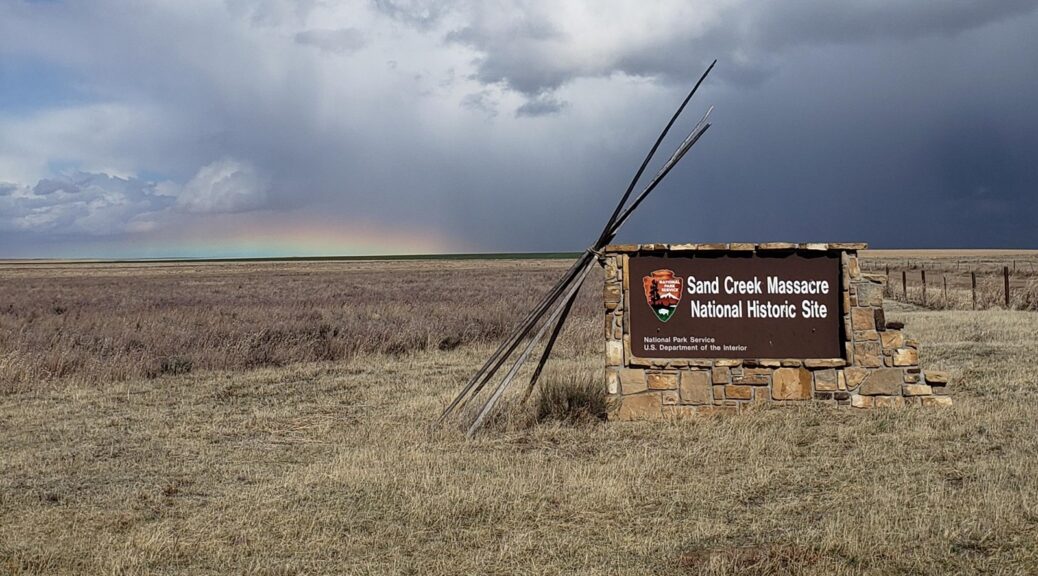
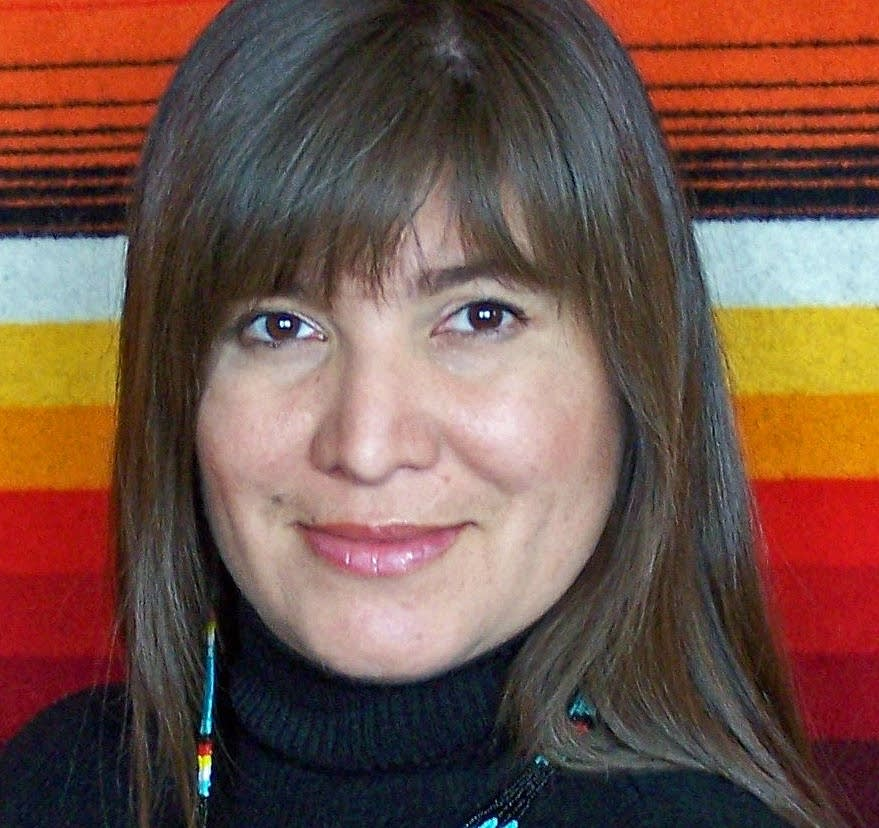
We were discussing some particularly brutal stories from the Plains Wars during the Civil War Years, beginning with the Dakota Uprising in Minnesota and closing with the Sand Creek Massacre in Colorado. They could read about both events in Native America, but I wanted them to go deeper into the material.  I recently read a fantastic article by historian and artist Taylor Spence called “Rethinking the Colonial Encounter in the Age of Trauma.” He is a great historian. His essay appeared in a really useful volume entitled The Routledge Companion to Global Indigenous History. Both the article and the book are well-worth your time. Spence suggested to me a new way to teach this subject, a trauma-informed approach that could lead students to feel deeply the impact of the events they were reading about.  Following Spence’s lead, I assigned them Waziyatawin’s “Grandmother to Granddaughter: Generations of Oral History in a Dakota Family,” which appeared in the American Indian Quarterly back in 1996. Waziyatawin (Angela Cavender Wilson) wrote a searing piece of family history. I suggest you try it in your courses.

Waziyatawin’s grandmother, Elsie Cavender, had received a story from her grandmother that she shared late in life.  She told Waziyatawin of the family’s forced march after the Dakota Uprising, and how soldiers, in an act of irrational and senseless violence, murdered Elsie’s great-great-grandmother. It’s a brief essay, and Elsie Cavender’s account is roughly a page and a half.  I asked my students to tell me what happened. They gave me a competent summary of the story.  The Dakotas were marching towards imprisonment at Fort Snelling.  They confronted white people in towns “where the people were real hostile to them.” They white people threw rocks, and poured scalding water on them.  They camped at night, living on rotten provisions provided by the army.  They marched onward. They moved too slowly.  The soldiers grew angry, and stabbed Elsie’s Grandmother’s grandmother with a saber. She bled to death on a bridge. When her family returned later, the body was gone, but they saw dried blood on the wooden planks.

I told the students I wanted more. Go deeper. Summarizing what you read, after all, is no great achievement. Spence suggested that the students attempt to imagine deeply what it would have been like to be present when those soldiers murdered an elderly woman for no reason at all. So I told them to think of their senses. If they were on the bridge where the killing took place that day, what would they have seen, heard, smelled, tasted or felt?

My students jumped into the assignment. You would smell the rotten provisions the soldiers distributed, one student observed. The relentlessly irritating sound of the squeaky wagon wheel, another pointed out. They would have heard that. The dust, the sight and smell and sound of the cattle would have been difficult to miss.  They were rolling now, but they were staying away from the violence.  It took them a bit, but they got there. The soldiers’ profanities, their angry, barking orders in a language the Lakotas did not understand; the screams in response to unbelievable and senseless violence; the blood pouring from a mortal wound.

Waziyatawin

We had spoken early that day about the reliability of oral testimony as evidence. One student predictably and appropriately suggested that it might be like the old game of Telephone, as a story changes as it is passed from one hearer to another. But think of each of the sensory events you just identified, I told the students.  I asked them to think of their earliest memories. What made those memories particularly powerful? Each of them, individually, affected the senses in a memorable fashion.  Each was easily capable of etching itself into the minds of successive generations of storytellers. The events that Waziyatawin recalled for us, I suggested, were of the sort that would not be easily forgotten.

We are not supposed to teach history in a way that makes our students feel bad about who or what they are. We should not make them feel guilty or uncomfortable about the past. That is what lawmakers in a growing number of red states have demanded. They have proscribed the teaching of certain topics. They have singled out the 1619 Project, and the histories of slavery, and racism, as topics that should not be taught in ways that make white people feel uncomfortable. These right-wing politicians have said much less about Native American history, but clearly they would be bothered by things I teach in my classes: the Paxton Boys, for instance, or the massacre at Gnadenhutten. These politicians are calling for an education fit for sociopaths. They want students to feel nothing but love of country.

My students felt badly about the history they read that day.  Again, some of them had tears in their eyes. When they read Silas Soule’s account of Sand Creek, in which he describes the mutilation of dead Cheyenne and Arapaho women and children, well, they felt this as well.


            But here’s the thing. They felt badly, to be sure, but they did not feel ashamed of their race. They did not feel guilty or responsible for the crimes of the past. This is what the Republican dingbats miss.  My students felt connected to people very different from them who lived a century and a half ago. They understood the meaning a past event at a much deeper level than they may have done previously, and the emotions were heavy indeed.  They grieved. They had, I would argue, learned a lot.  I sent a message to Dr. Spence to tell him how well his class exercise went, how much my students learned, and how thankful I was for his good work.

Let’s say you are walking down a crowded city street.  Your foot catches a person walking in front of you, and they trip and almost fall. Without thinking, if you are a decent person, you apologize. You are not debasing yourself when you do this. You worried that you might have hurt somebody, that they could have fallen and been injured. It’s not about you. You apologize because you are not a dick, because you care about other people, because you worry that your actions could have caused for someone pain or sorrow. You say you are sorry because you felt sorrow.

I have thought about this a lot when I teach. Why do we say sorry? I want my students to appreciate the past on its own terms, to feel a connection to the people they read about.  The students in my class obviously could not undo the past.  They could not apologize or express their sorrow to the Dakota woman murdered on that bridge. But they did understand something at a deeper level than they might otherwise have done, and that made them wiser and more capable of understanding other people.  They felt empathy. And they cared about this particular piece of the past more deeply that they would have done if I had merely told them about the Dakota Uprising and Sand Creek. They may not remember much of my class a couple of years from now but I am confident that they will remember this.

What You Need to Read, September 2023

I hope this finds you well. Classes have begun at Geneseo, the students are back on campus, and now it is time to begin balancing all the tasks facing the college professor.  This is your quarterly installment of “Things You Need to Read.” Hope you find this helpful.  As always, if I have missed anything, please do not hesitate to let me know about that.

Aune, Stefan. Indian Wars Everywhere: Colonial Violence and the Shadow Doctrines of Empire, (Berkeley: University of California Press, 2023).

Brown, Hana E. “Administrative Burden and the Reproduction of Settler Colonialism: A Cast Study of the Indian Child Welfare Act,” RSF: The Russell Sage Foundation Journal of the Social Sciences, 9 (September 2023), 232-251.

Carlose, Ann M. “The Country They Built: Dynamic and Complex Indigenous Economies in North America before 1492,” Journal of Economic History, 83 (June 2023), 319-358.

Collar, Amanda. “Indigenous Peoples’ Limited Access to Reproductive Care,” Annals of Internal Medicine, March 2023.

DasSarma, Anjali and Lindford D. Fisher, “The Persistence of Indigenous Unfreedom in Early American Newspaper Advertisements, 1704-1804,” Slavery and Abolition, 44 (June 2023), 267-291.

Davis, Elisabeth. “’Any Violation of this Arrangement’: Catholic Negotiations at the Carlisle Indian School, 1883-1918,” Pennsylvania History, 90 (Summer 2023), 321-443.

Dwider, Maraam A and Kathleen Marchetti, “Tribal Coalitions and Lobbying Outcomes: Evidence from Administrative Rulemaking,” Presidential Studies Quarterly, 53 (September 2023), 354-392.

Edmunds, R. David. Voices in the Drum: Narratives from the Native American Past, (Norman: University of Oklahoma Press, 2023).

Friedman, Joseph, Helena Hansen and Joseph P. Gone. “Deaths of Despair and Indigenous Data Genocide,” The Lancet, 401 (March 2023).

Glancy, Diane and Linda Rodriguez, eds., Unpapered: Writers Consider Native American Identity and Cultural Belonging, (Lincoln: University of Nebraska Press, 2023).

Hoagland, Serra J. and Albert Steven, Wildlife Stewardship on Tribal Lands: Our Place is in Our Soul, (Baltimore: Johns Hopkins University Press, 2023).

Keeler, Kasey R. American Indians and the American Dream: Policies, Place and Property in Minnesota, (Minneapolis: University of Minnesota Press, 2023).

Kiser, William S. “The Business of Killing Indians: Contract Warfare and Genocide in the U.S-Mexico Borderlands,” Journal of American History, ## (June 2023), 15-39.

Krupat, Arnold. “The Wheelocks and the Clouds at Odds: Some Differences Among Red Progressives in the Early Twentieth Century,” American Indian Quarterly, 46 (Fall 2022).

Leroux, Darryl, “State Recognition and the Dangers of Race Shifting,” American Indian Culture and Research Journal, 46 (no. 2, 2023), 53-84.

Mauro, Hayes Peter. The Art of Americanization at the Carlisle Indian School, (Albuquerque: University of New Mexico Press, 2023).

Midtrød, Tom Arne. “’A People Before Useless’: Ethnic Cleansing in the Wartime Hudson Valley, 1754-1763.” Early American Studies, 21 (Summer 2023), 428-459.

Monnett, John H. “The Collapse of Cheyenne Supremacy on the Central Plains,” Nebraska History, 104 (Fall 2023), 128-145.

Olson, Greg. “A ‘Rebellious District and Dangerous Locality’: Cherokee Soldiers and Refugees in Neosho, Missouri, 1862-1863,” Missouri Historical Review, 117 (July 2023), 235-253.

Parins, James W. Literacy and Intellectual Life in the Cherokee Nation, 1820-1906, (Norman: University of Oklahoma Press, 2023).
Peyton, John T. “’The Land We Have We Wish To Keep’: Miami Autonomy and Resistance to Removal in Indiana, 1812-1826,” Indiana Magazine of History, 119 (June 2023), 139-176.

Schmader, Matthew F. “Pueblo Resistance and Inter-Ethnic Conflict: The 1540-1542 Vazques de Coronado Expedition to the Middle Rio Grande Valley, New Mexico,” Kiva, 89 (June 2023), 167-191.

Stockel, H. Henrietta. Salvation Through Slavery: Chiricahua Apaches and Priests on the Spanish Colonial Frontier, (Albuquerque: University of New Mexico Press, 2022).

Toups, Eric. “Indian Men and French ‘Women’: Fragile Masculinity and Fragile Alliances in Colonial Louisiana, 1699-1741,” Early American Studies, 21 (Summer 2023), 353-379.

Treuer, Anton. Everything You Wanted to Know about Indians but were Afraid to Ask, (St. Paul: Minnesota Historical Society Press, 2023).

Van de Logt, Mark. Between the Floods: A History of the Arikaras, (Norman: University of Oklahoma Press, 2023).
van Deusen, Nancy E. “In the Tethered Shadow: Native American Slavery, African Slavery, and the Disappearance of the Past,” William and Mary Quarterly, 80 (April 2023), 355-388.

Van Gorder, Megan. “Uncovering Comparative Indigenous Inquiries at the Homewood Boarding School in Peoria County,” Illinois Heritage, 26 (July/August 2023), 11-12.

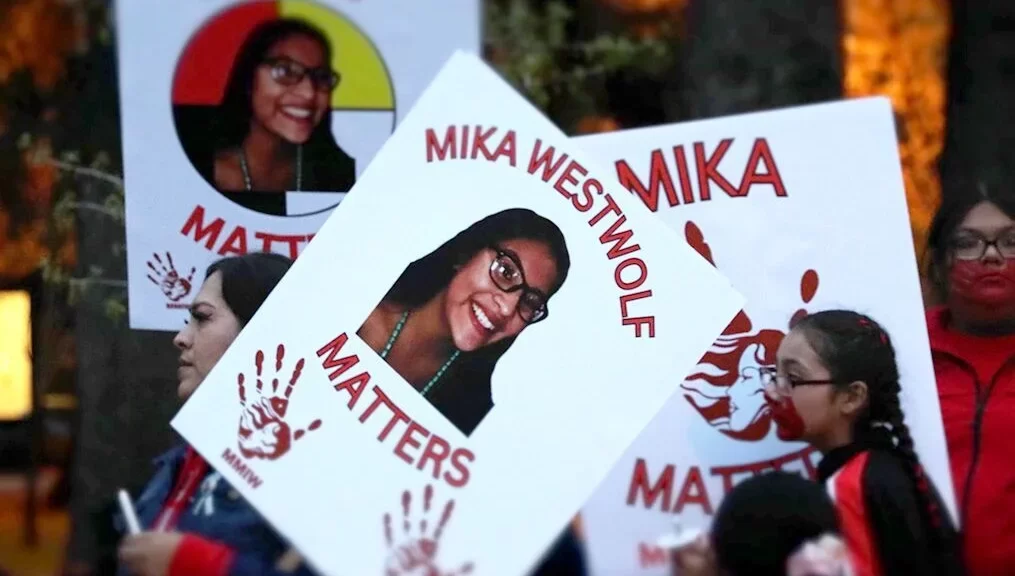
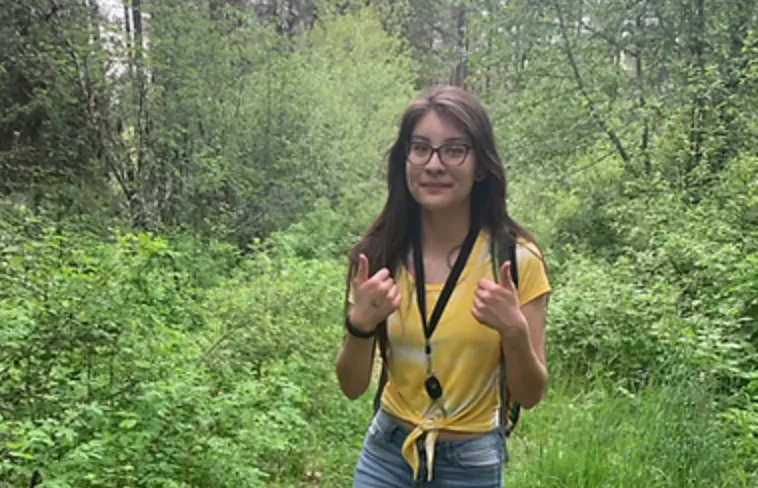
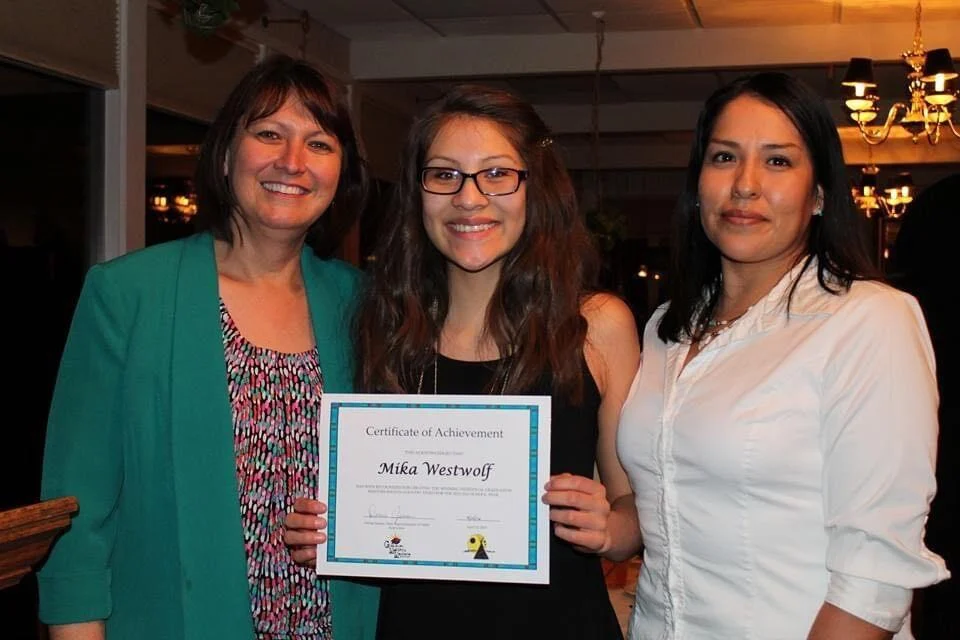
Did Sunny White Murder Mika Westwolf? (Updated)

A bit more than two months ago, 22-year-old Mika Westwolf was struck by a Cadillac Escalade cruising along Highway 93 near the Flathead Indian Reservation in Montana.  Tribal police found Westwolf’s body on the side of the road around 4:00AM.  She was pronounced dead at the scene. The vehicle, driven by a non-Indigenous woman named Sunny White, did not stop after the accident. There is a march scheduled next week to shed awareness about Mika, and the broader scourge of Missing and Murdered Indigenous women. According to a story in the Daily Mail, 239 people have been killed along this stretch of road since 2021. That is an incredible figure.

            Westwolf, an enrolled member of the Blackfeet Nation, was a talented and bright young woman. She was an athlete, an artist, and an advocate for Indigenous peoples, one of four selected from her nation to visit a Sherpa community in Nepal as part of a cultural exchange program. She had been walking along the side of the road, a bit north of the town of Arlee. She had been at a bar called the 4-Star Bar, but had left to retrieve her cell phone, which she believed she had left at home (it actually was in her brother’s car).  Her family wants answers, but they have found little reassurance from the Montana Highway Patrol. The lead investigator, Trooper Wayne Bieber, left Mika’s family convinced that her case was not in good hands. Trooper Bieber seemed not to know the basic facts of the case, and seemed inclined to believe that whatever happened that night, Mika was at fault.  Bieber told the family that walking along the shoulder of a road while intoxicated was illegal in Montana. The state police seemed uninterested in investigating Sunny White at all. She had been arrested shortly after the accident, but released soon after, pending toxicology reports. Bieber assumed that Mika was drunk, and that therefore Sunny White did not commit a crime. That first assumption has not been confirmed, and the second one is absolutely false.

            I stumbled across Mika’s story during a summer when I have been trying to complete a history of the Onondaga Nation, which I have been working on now for several years. I could not help but notice the parallels between Mika’s death and the deaths of so many Onondagas over so many years on the Onondaga Nation Territory. Like the road Mika traveled, the routes through the Onondaga Nation territory were dangerous. Onondagas died with disturbing regularity on the roadways passing through their Nation. George Van Every, for instance, one of the oldest of the Nation’s chiefs, was killed in September 1933 when a bus struck his horse-drawn buggy. He was an important figure on the Nation’s history.  Too many Onondagas were struck and killed by too many inattentive drivers.  Jesse Lyons told the House Indian Affairs Committee that “since we allowed them to build highways across our reservation, 30 Indians have been killed by automobiles and not a white man has been prosecuted.”That was in 1935.  Louis Beckman, a veteran who had just received his honorable discharge after serving in World War II, and his friend Olive Sullivan, were killed walking along South Salina Street in the very early hours of one morning in February 1946. The driver who struck them was not charged.  Anna Mae and Alice Jones, aged seven and eleven, received a total of $5750 in damages after a negligent driver passing through the Nation struck them that same year.  Howard Hill, a Carlisle alum, died after a car driven by his neighbor Andrew Pierce struck and killed him in 1950.  And in November 1950, 68-year-old Jamison Thomas died after a car struck him as he pulled a wood-laden cart along a road in Nedrow, near the reservation.  He had joined the circus at the age of fourteen, was a skilled horseman. He lived alone, a life-long bachelor. He followed the traditional religion and instructed many of his neighbors on its central tenets. The men who bore his coffin to the burying ground read like a who’s who of important Onondaga leaders. Many had attended boarding school. Theodore Thomas, the Tadodaho George Thomas, Ike Lyons, Albert White, and Henry Homer.  They were old men now, and they felt his loss. And it just goes on. Oren Lyons, 47, was killed when hit by an automobile driving on Route 11A on the Nedrow reservation. Martin Moses, a 6 year old, was killed on September 5th, 1957 “when struck by an automobile on a road in the Onondaga Reservation south of Syracuse.”

            With the one exception when damages were paid, no one was ever punished in these accidents.  They were deemed natural, part of the normal course of business. Poor people walked. People with more money drove. Sometimes the latter struck the former, and sometimes the former died. Nothing to see here, the authorities seemed to suggest. Best to not be poor. Best to not walk along the roadway.

           And that is what seems to be the case in the Mika Westwolf case. Nothing criminal, in the eyes of the state police, has occurred.  If Westwolf was intoxicated, as the Trooper Bieber seemed to suggest, she may as well have had it coming. It’s infuriating.

I lived in Montana for four years in the middle of the 1990s. I was struck during my time there by how casually racist statements about Indigenous people were made. Native Americans were drunks and reprobates. Their deaths and their disappearance seemed natural, and certainly it was beyond the power of white people to prevent it from happening. The racist attitudes held by many Montanans toward Indigenous peoples could justify their deaths. An Indian woman hit by a car late at night? Of course she was intoxicated, because Indians drink too much. The logic is reductive and violent.

Despite the racism, I had a great fondness for Montana. I learned to teach there. For the first time in my career, I had a significant number of Native American students. I still follow news from the state. And I have read, frequently over the past years, about the number of MMIW cases that have taken place in Montana. The state remains a dangerous place to be Indian. This pains me greatly.

            And it also stinks to high hell, because you do not have to read very much to determine that Sunny White is a monster. Although law enforcement officers have resisted drawing what seems like so real a possibility, this case could easily be a hate crime. Of course accidents happen. Sometimes they truly are tragic, terrible events beyond anyone’s control. But Sunny White was a reputed drug user with a criminal record, and an avowed White Nationalist.  To dispel any doubt about this, she named her two children “Aryan” and “Nation.” That a hateful racist could hit a young Indigenous woman with her car and keep going is sickening, but it should not surprise any of us.


The death of Mika Westwolf underscores the urgent need for even more decisive action on the part of federal authorities to address the continuing crisis of Missing and Murdered Indigenous persons. In this case, it is hard to escape the conclusion that the state police are incompetent or, worse, that they are covering up a terrible crime. We need more data, to be sure, but beyond that, we need a commitment to the simple principle that the lives of Indigenous people, whatever the racists and the dingbats and the goons believe, are as valuable as the lives of any one else. In Montana, certainly, that this principle is widely held remains very much in doubt. There is a Go Fund Me Page established by Mika’s family. Help if you can.

What You Need to Read, June 2023

Happy June! The campus is closed, the end of the kids’ school year approaches, and the weather is wonderful. Seems like a waste to be sitting in a basement office trying to catch up on all the things I would like to have done during the year. But service beckons. For those of you hoping to keep your teaching up to date, or researching a new project, or trying to dream up ways not to be replaced by an AI application, here are some readings for you to think about. Enjoy, and if you think I missed something, please feel free to let me know.

Ablavsky, Gregory and W. Tanner Allread. “We the (Native) People?: How Indigenous Peoples Debated the U.S. Constitution,” Columbia Law Review, 123 (March 2023), 243-318.

Bennett, Zachary M. “’Canoes of Great Swiftness: Rivercraft and War in the Northeast,” Early American Studies, 21 (Spring 2023), 205-232.

Booss, John. “Fear and Betrayal: Smallpox and the Turning Point of the French and Indian War,” New York History, 103 (Winter 2022/2023), 246-269.

Brablec, Dana and Andrew Canessa, eds., Urban Indigeneities: Being Indigenous in the Twenty-First Century, (Tucson: University of Arizona Press, 2023).

Crossley, Laura. “’An Exhibit as Will Astonish the Civilized World’: Seeking Separate Statehood for Indian Territory at the 1904 Louisiana Purchase Exposition,” Journal of the Gilded Age & Progressive Era, 22 (no. 1, 2023), 20-40.

Dixon, Brad. “’In Place of Horses’: Indigenous Burdeners and the Politics of the Early American South,” Ethnohistory, 70 (no. 1, 2023), 1-23.

Downey, Allan. “Indigenous Brooklyn: Ironworking, Little Caughnawaga, and Kanien’kehá:ka Nationhood in the Twentieth Century,” American Quarterly, 75 (March 2023), 27-50.

Edmunds, R. David. Voices in the Drum: Narratives from the Native American Past, (Norman: University of Oklahoma Press, 2023).
Finn, S. Margot. “The Sioux Chef’s Indigenous Kitchen: Bringing Indigenous and Homesteader Foodways into the Contemporary Kitchen,” Indiana Magazine of History, 119 (March 2023), 83-89.

Fixico, Donald L. “The Crazy Snake Movement and the Four Mothers Society,” Chronicles of Oklahoma, 100 (Winter 2022/2023), 388-409.

Flaherty, Anne F. Boxberger, Presidential Rhetoric and Indian Policy: From Nixon to the Present, (New York: Routledge, Taylor and Francis Group, 2023).

Glancy, Diane and Linda Rodriguez, eds., Unpapered: Writers Consider Native American Identity and Cultural Belonging, (Lincoln: University of Nebraska Press, 2023).

Gonzalez, Michael. “The Enduring Flame: Stress, Epigenetics, and the California Indian, 1769-2000,” American Indian Quarterly, 46 (Fall 2022), 299-322.

Jacobs, Michelle R. Indigenous Memory, Urban Reality: Stories of American Indian Relocation and Reclamation, (New York: New York University Press, 2023).

Johnson, Tai Elizabeth, “The Shifting Nature of Subsistence on the Hopi Indian Reservation,” Agricultural History, 97, (no. 2, 2023), 215-244.

Kane, Maeve. Shirts Powdered Red: Haudenosaunee Gender, Trade, and Exchange Across Three Centuries, (Ithaca: Cornell University Press, 2023).

Keeler, Kasey R. American Indians and the American Dream: Policies, Place and Property in Minnesota, (Minneapolis: University of Minnesota Press, 2023).

Kelly, Elias. My Side of the River: An Alaska Native Story, (Lincoln: University of Nebraska Press, 2023).

Krupat, Arnold. “The Wheelocks and the Clouds at Odds: Some Differences Among ‘Red Progressives’ in the Early Twentieth Century,” American Indian Quarterly, 46 (Fall 2022), 271-298.

Kugel, Rebecca. Making Relatives of Them: Native Kinship, Politics, and Gender in the Great Lakes Country, 1790-1850, (Norman: University of Oklahoma Press, 2023).

Lavin, Lucianne and Elaine Thomas, eds., Our Hidden Landscapes: Indigenous Stone Ceremonial Sites in Eastern North America, (Tucson: University of Arizona Press, 2023).

Martini, Elspeth. “Dangerous Proximities: Anglo-American Humanitarian Paternalists in the Era of Indigenous Removal,” Western Historical Quarterly, 53 (Winter 2022), 379-404.

Metcalf, R. Warren. “Lambs of Sacrifice: Termination, the Mixed-Blood Utes, and the Problem of Indian Identity,” Utah Historical Quarterly, 91 (no. 1, 2023), 23-36.

Newell, Margaret Ellen. “’The Rising of the Indians’: Or, The Native American Revolutuon of (16)’76,” William and Mary Quarterly, 80 (April 2023), 287-324.

Nielsen, Marianne O. and Barbara M. Heather, Finding Right Relations: Quakers, Native Americans, and Settler Colonialism, (Tucson: University of Arizona Press, 2023).

Pluth, Edward J. “The White Red Men: The Improved Order of Red Men in Minnesota, 1875-1920,” Minnesota History, 68 (Winter 2022-2023), 134-143.

Ray, Kristofer. Cherokee Power: Imperial and Indigenous Geopolitics in the Trans-Appalachian West, 1670-1744, (Norman: University of Oklahoma Press, 2023).

Rivaya-Martinez, Joaquin, “The Unsteady Comanceria: A Reexamination of Power in the Indigenous Borderlands of the Eighteenth-Century Southeast,” William and Mary Quarterly, 80 (April 2023), 251-286.

Rivaya-Martinez, Joaquin, ed., Indigenous Borderlands: Native Agency, Resilience, and Power in the Americas, (Norman: University of Oklahoma Press, 2023).

Roberts, Alaina. “Black Slaves and Indian Owners: The Continuous Rediscovery of Indian Territory,” Journal of the Civil War Era, 13 (March 2023), 87-104.

Steinke, Christopher, “Indigenous Waterways and the Boundaries of the Great Plains,” Journal of the Early Republic, 42 (Winter 2022), 1-27.

Steppenoff, Bonnie. “Banishment and Loyalty: Jesuit Priests in Early Ste. Genevieve, 1759-1785,” Missouri Historical Review, 117 (October 2022), 1-13.

Taylor, Jessica. Plain Paths and Dividing Lines: Navigating Native Land and Water in the Seventeenth-Century Chesapeake, (Charlottesville: University of Virginia Press, 2023).

Teeters, Lila. “’A Simple Act of Justice’: The Pueblo Rejection of U. S. Citizenship in the Early Twentieth Century,” Journal of the Gilded Age & Progressive Era, 21 (October 2022), 301-318.

Theobald, Brianna, “Dobbs in Historical Context: The View from Indian Country,” Bulletin of the History of Medicine, 97 (Spring 2023), 39-47.

Van de Logt, Mark. Between the Floods: A History of the Arikaras, (Norman: University of Oklahoma Press, 2023)

Vigil, Kiara M. “Language, Water, Dance: An Indigenous Meditation on Time,” Signs: A Journal of Women Studies, 44 (no. 1, 2023), 168-182.

Wakefield, Kyler J. “Native American Voting Rights in Utah: Federal Policy, Citizenship, and Voter Suppression,” Utah Historical Quarterly, 91 (2023), 4-22.

Whitt, Sarah A. “’An Ordinary Case of Discipline’: Deputizing White Americans and Punishing Indian Men at the Carlisle Indian Industrial School, 1900-1918,” Western Historical Quarterly, 54 (Spring 2023), 51-70.