Two stories. Both of them are true. One the Trump administration has chosen to commemorate as part of the American nation’s 250th birthday celebration; the other it wants unremembered, proscribed, and erased. Let’s see if you can guess which one is which.
In the winter of 1777-1778, George Washington’s army camped at Valley Forge. A short distance away, the British occupied Philadelphia, living in relative comfort. The Continental Army, meanwhile, was starving, and its morale reached rock-bottom. The patriot’s revolution was in grave danger.
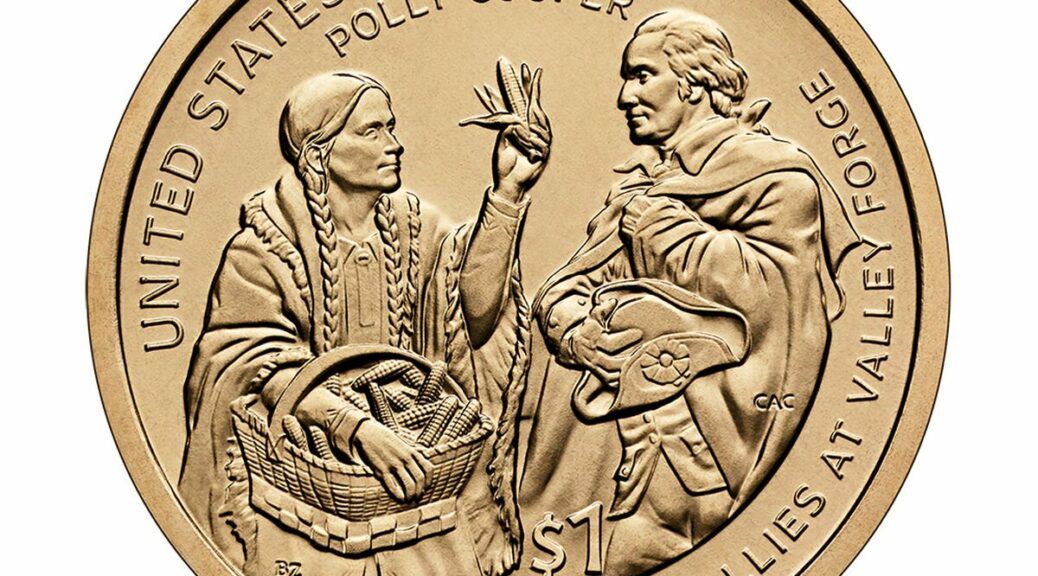
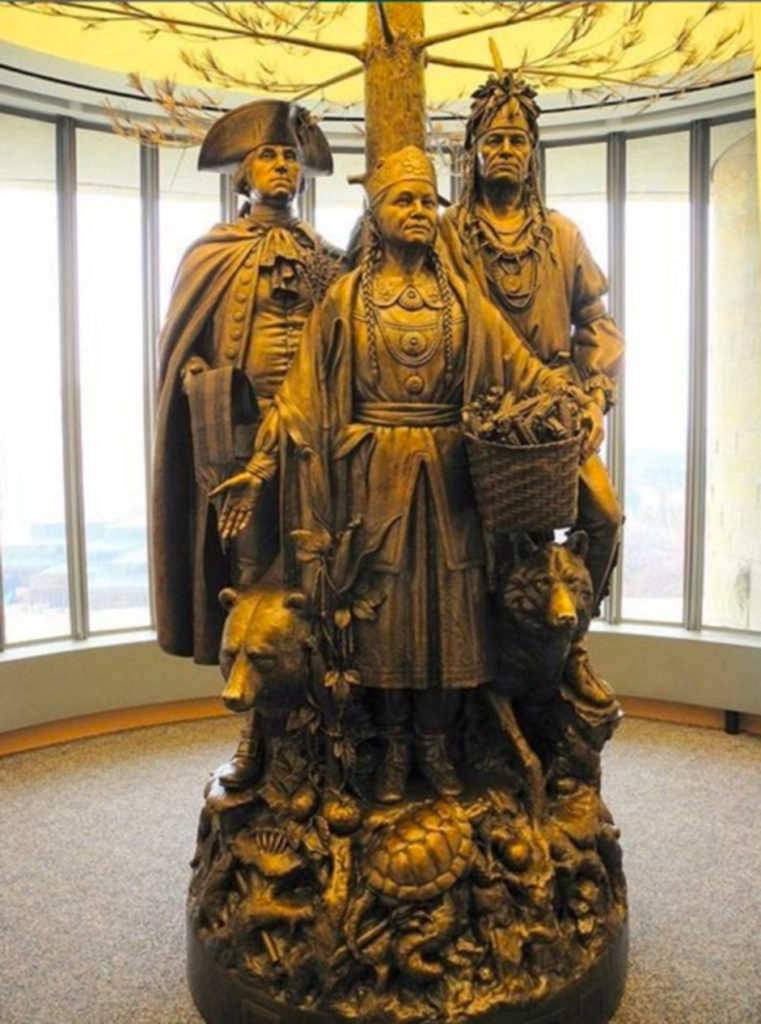
In the spring, help arrived. Forty-seven Oneidas, including the redoubtable Polly Cooper, arrived from what is today central New York. They brought with them bushels of Iroquois corn. According to Georgia Halbritter, relating Oneida oral history, “Cooper worked for George Washington, showing the Americans how to cook the corn properly.” Washington wanted to pay Cooper, the story goes, but she refused because, Halbritter said, “it was her duty to serve her country.” So, after the war, Washington sent his wife Martha, along with Polly, on a shopping trip in Philadelphia. The future first lady bought Cooper a black shawl, a hat, and a bonnet. As historian Karim Tiro pointed out, “the documentary record bears out some of the story’s details but is silent in regard to others.” Still, he suggested, it’s a powerful metaphor for the Oneidas’ costly yet highly significant contribution to the patriot cause.
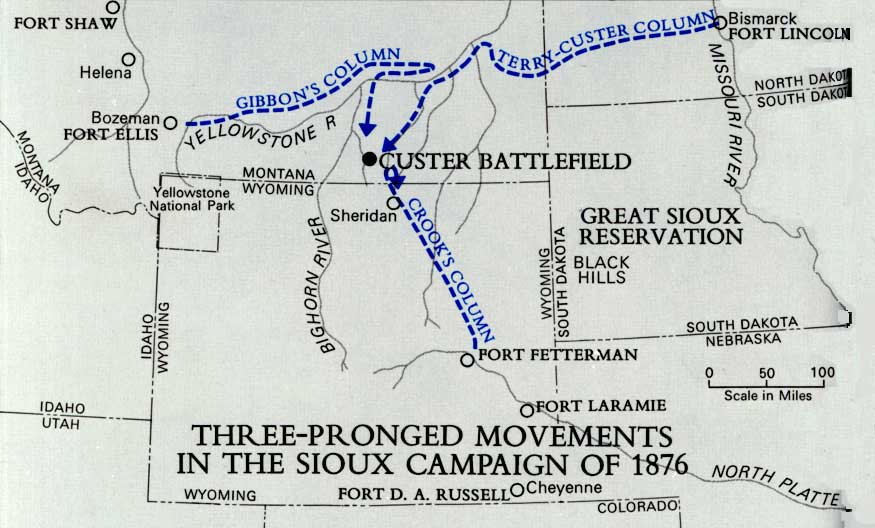
FAR TO THE WEST of the Oneida homeland, the so-called “Great Sioux War” began in America’s centennial year. Many Lakota Sioux spent part of the year on the Great Sioux Reservation but moved out onto the Plains of eastern Montana to hunt in the spring and summer. They resented the American failure to adhere to the terms of the Fort Laramie Treaty of 1868, which guaranteed them exclusive control of their land, and especially the hordes of prospectors who began to intrude into the Black Hills following gold strikes there in 1874. The Lakotas ignored demands that they return to their reservation—why should they honor a treaty that the white people had ignored—and by the spring of 1876, four army columns began marching toward the Powder River Country to force the Sioux to return.
Much of the fighting that followed took place in Crow country in eastern Montana. With the removal of the forts along the Bozeman Trail several years earlier, no American military presence remained to prevent Sioux encroachment on lands to their west. Conflict between the Sioux and the Crows increased, and the size and scope of this warfare intensified. Plenty Coups, the great Crow leader who oversaw his people’s adjustment to reservation life, remembered that he and his followers “knew the white men were strong, without number in their own country, and that there was no good in fighting them.” The Crows calculated their best interest, and that meant assisting the American forces. “Our leading chiefs,” Plenty Coups said, “saw that to help the white men fight their enemies and ours would make them our friends.” Already at war with the Sioux and their allies, they might as well fight them now with the assistance of the Americans. “Our decision was reached,” Plenty Coups concluded, “not because we loved the white man who was already crowding the other tribes into our country, or because we hated the Sioux, Cheyenne and Arapaho, but because we plainly saw that this course was the only one which might save our beautiful country for us.”
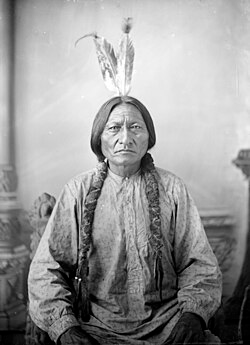
The Crow leaders recognized that the Americans faced a formidable enemy. Large numbers of Sioux and Cheyenne warriors gathered in the Little Bighorn Basin, led by such stalwart leaders as Crazy Horse, Sitting Bull, Gall, Hump, and Lame Deer. On June 17, 1876, warriors led by Crazy Horse forced the American column led by General George Crook to withdraw at the Battle of the Rosebud. Crow horsemen formed a screen that shielded Crook’s men from Crazy Horse’s warriors and bought them the time they needed to withdraw. Eight days later, an American force led by Lt. Col. George Armstrong Custer foolishly attacked the village along the Little Bighorn. Two thousand warriors camped there. They determined to defendthemselves and their families. Custer had no idea what he had stumbled into. Depicted so often in American myth as a famous “Last Stand,” Custer’s defeat was a rout. The Sioux and their Cheyenne allies mowed them down as they fled from a village so much larger than they had anticipated. The Sioux wiped out Custer’s command in the time, one Sioux observer later noted, that it took a hungry man to eat his dinner. Only Custer’s Crow and Arikara scouts, who recognized the power of the Sioux, survived.
The Lakotas won the battle, but they lost the war. Once again, winter campaigns drove the Sioux and their allies back the reservation. By the spring of 1877, most had returned. Crazy Horse surrendered at the Red Cloud Agency in May. He died four months later, stabbed to death during a guardhouse scuffle. Sitting Bull, who had fled across the border into Canada, held out until 1881, before he returned.
THE ONEIDAS were the Americans’ most important Indigenous ally, but they benefited little from their alliance. While the United States, in the 1784 treaty with the Six Nations at Fort Stanwix, promised to protect the Oneidas, the state of New York moved expeditiously to dispossess them. No holds were barred. The records of state treaty councils, where this dispossession took place, show clearly evidence of fraud and deceit. By the middle of the 19th century, the Oneidas retained only a couple of dozen acres of land and many of their people had accepted “removal” to new homes in Wisconsin where they hoped to avoid the racists and land grabbers who would take whatever the Oneidas refused to sell.
None of that sordid history has kept the US Mint from placing Polly Cooper, shown presenting corn to General Washington, on the tails side of the 2026 Sacagawea dollar. The Native American $1 Coin Collection was authorized by Congress in 2007 to commemorate the historic contribution of Indigenous nations and individuals to American culture. As Cherokee Nation member and Republican senator Markwayne Mullin put it, the coins are intended to celebrate “those who helped establish a country grounded in freedom and self-determination.”
Representative of the Oneida Indian Nation Ray Halbritter said that “Polly Cooper symbolizes courage that is not just found on the battlefield, but in compassion and willingness to help others, which is just a part of Oneida culture and hospitality.” Cooper, he continued, was an important forgotten ally. “The whole country,” Halbritter said, “reaps the benefit of Polly Cooper’s conduct because we won the conflict and the United States was born.” That, it went without saying, was a story worthy of commemoration.
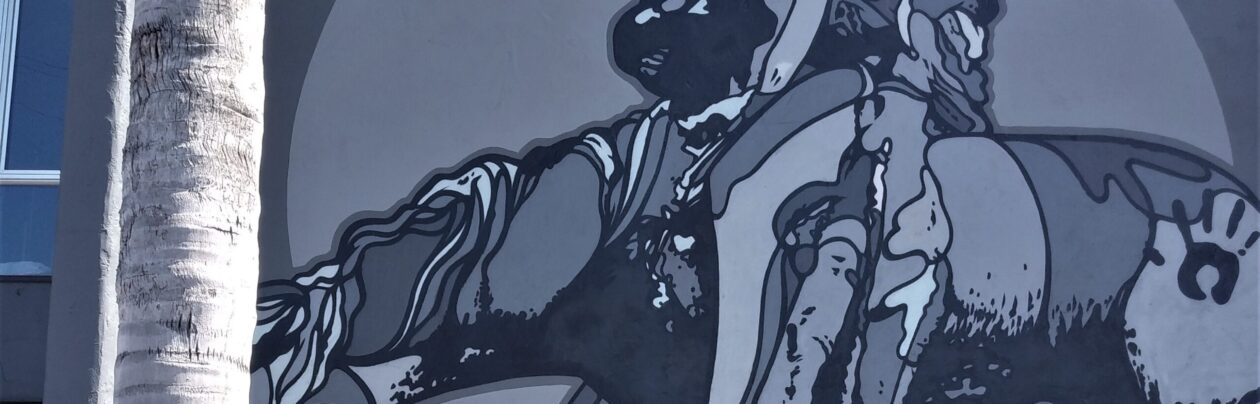
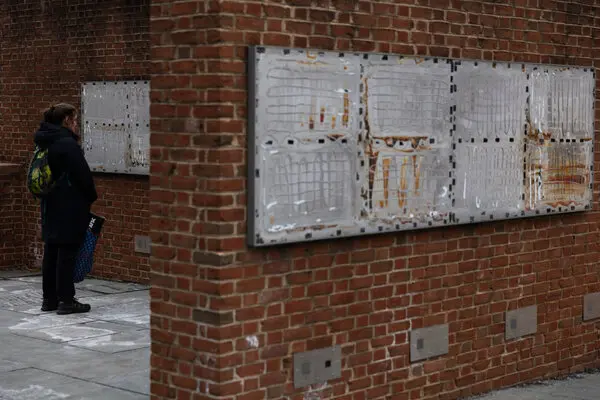
I HAVE BEEN TO LITTLE BIGHORN NATIONAL MONUMENT many times. When I taught in Billings, I could get there in just over an hour. As many as 350,000 people visit the site of Custer’s “Last Stand” every year. The talented National Park Service employees who work there have attempted over the years to provide more of the Indigenous side of the story. And that always has met with resistance. According to reporting that originally appeared in the Washington Post, signage at Little Bighorn that described American land hunger, territorial encroachment by gold-seeking whites on reservation land, and a federal boarding school system that “violently erased cultural identities and language” was removed because it did not comply with President Trump’s executive order from March of last year intended to restore “truth and sanity to American History.” In particular, Trump denounced a “revisionist movement” led by radical leftists who sought “to undermine the remarkable achievements of the United States by casting its founding principles and historical milestones in a negative light. Under this historical revision,” Trump continued, “our Nation’s unparalleled legacy of advancing liberty, individual rights, and human happiness is reconstructed as inherently racist, sexist, oppressive, or otherwise irredeemably flawed.” Last week signage in Philadelphia outside the home where George Washington stayed during the Constitutional Convention describing the important role of slavery in the first President’s life was taken down as well.
We must not think bad thoughts.
And the sins we choose to forget can never be forgiven.
SOMETIMES I THINK THE UNITED STATES hates Indigenous peoples. It does so in ways that it does not fully comprehend. Americans may celebrate Indigenous contributions to America’s greatness. Both political parties express their support for “self-determination.” Many good people work for the federal government, and they do much good work even as fascists have seized control, who may talk of collaboration, but only to the point where it begins to cost them something. Colleges and universities, meanwhile, revel in empty gestures, supporting a shallow “diversity” while reading “territorial acknowledgments” in rooms filled with white people. Too often they fall victim to ethnic frauds and “Pretendians”: Elizabeth Warren, Andrea Smith, Thomas King, and Lisa Brooks are just a handful of recent examples. They routinely fail to put their money where their mouths are, to match their words with deeds. When too many of your allies are at best crusaders on the cheap, and your enemies are the white supremacists who control all three branches of the federal government, it is easy to see the magnitude of the problem. So the United States will celebrate Polly Cooper, who is historically significant–and acceptable to white Americans–primarily because she helped carry some corn to a starving army that fought the British, we must remember, at least in part out of their anger that King George III unleashed the “merciless Indian savages” upon American frontiers. Try to talk about violence and dispossession, how the Oneidas’ neighbors transformed New York into the Empire State through a systematic program of Indigenous dispossession, and you will find yourself in trouble. So teachers in very blue New York State are allowed and encouraged to tell their students about the Cherokees’ expulsion from Georgia, but not how their own state used bribery, coercion, and deceit to steal a homeland. They will never consider that their families have benefited from dispossession. It’s a problem bigger than liberals and conservatives, Democrats and Republicans. As Onondaga sachem Irving Powless, Jr. put it more than fifty years ago to a state legislative committee that visited his Nation, “the Indian problem is the white people.”
One cannot truly and meaningfully comprehend the history of this continent without considering Indigenous peoples’ histories, across a vast and diverse chronological and spatial expanse. But unless these stories make white people feel good about themselves, teaching them is proscribed. Do not dare suggest that what this country has gained came at the expense of Indigenous peoples.
It’s all so screwed up. The Trump regime acts like a wife beater, a domestic abuser. ICE invades American cities and blames the protestors for the beatings its agents deliver. They don’t show proper respect, we are told. Indigenous peoples, who have been stopped by ICE agents because of the mere color of their skin, are welcome to the national dialogue, but only if they refuse to remind the majority of the sins of its ancestors, and its own. Democrats, meanwhile, act like they disapprove of the beatings their neighbor gives his wife and kids, but are too afraid to do what they know is right. White Americans, meanwhile, nearly sixty percent of whom voted for Trump in 2016, 2020, and, incredibly, in 2024, mostly continue to express their sympathy for the guy who hurt his fist because he punched his wife.
