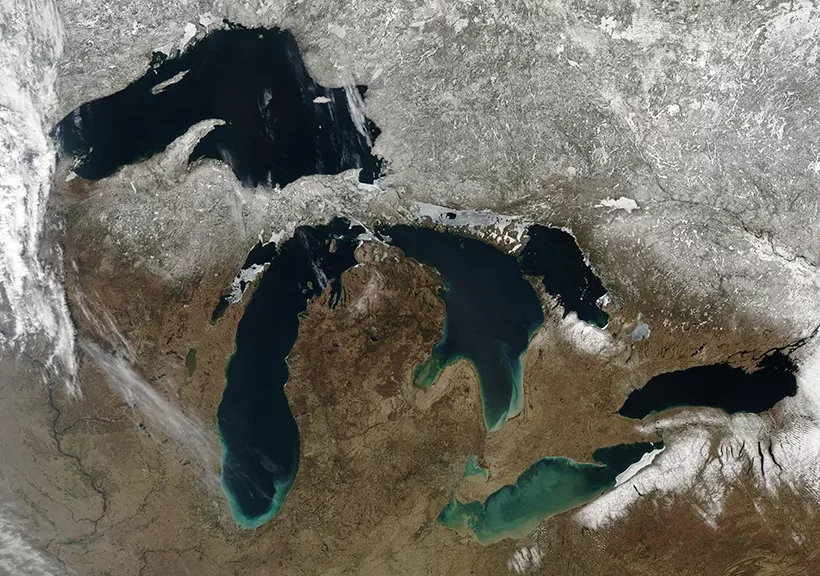
Does water have natural rights? New York State Assemblyman Patrick Burke of West Seneca thinks so, and if his bill to create a Great Lakes Bill of Rights passes, those of us who are not toxic polluters will certainly benefit.
Burke’s bill asserts that “the Great Lakes, and the watersheds that drain into the Great Lakes and their connecting channels, as well as the watersheds and ecosystems throughout” the State, “shall possess the unalienable and fundamental rights to exist, persist, flourish, naturally evolve, regenerate, and be restored by culpable parties, free from human violations of these rights and unencumbered by legal privileges vested in property, including corporate property.” From this, it follows that “the people and the natural environment, including each ecosystem and watershed within the state of New York shall possess the right to a clean and healthy environment, which shall include the right to clear and healthy Great lakes and the Great Lakes ecosystem.”
Burke’s bill also recognizes a right “to freedom from toxic trespass.” People living in New York and the Great Lakes Ecosystem and all the waters in the state “possess a fundamental and unalienable right to the integrity of their bodies, ecosystems, and physical aspects, and to be free from toxic trespasses upon or within them.” These waters belong to everyone. These waters “possess the unalienable and fundamental rights [to] not be owned, privatized or monetized.”
Burke’s bill asks New Yorkers to shift their thinking, not only about the meaning of rights, but also about the type of world in which they would like to live. Americans claim a powerful commitment to individual rights, and under law they recognize corporations as individuals, as Mitt Romney infamously pointed out several years back. Those individual rights involve the capacity of owners to use their private property with only the most minimal concern for others. Water is a “resource” that owners feel they can treat as they see fit.
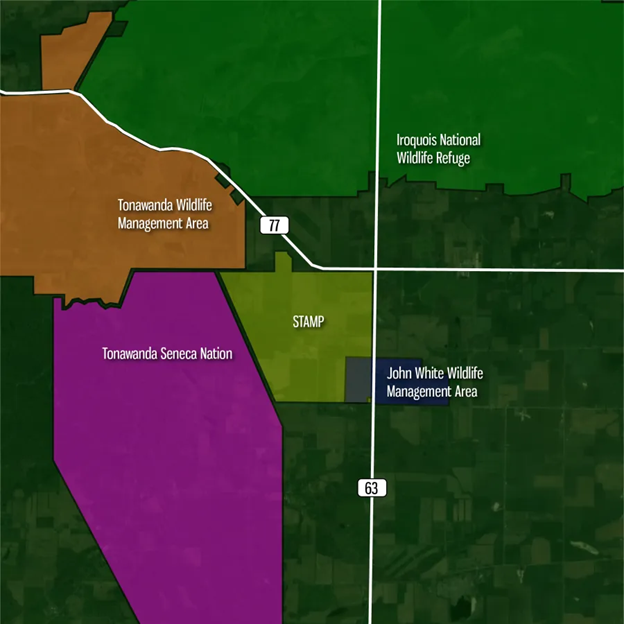
I hope Burke’s bill moves forward, and that at a minimum, the Assembly and State Senate discuss and debate the important questions it raises. To study the Indigenous history of New York State is, in part, to study water, and the damage non-Indigenous people have done to it over many generations. I began my research into Onondaga history long ago by investigating the history of pollution in Onondaga Lake in Syracuse, for a time the most toxic body of water in North America. Though remediation has unquestionably improved the quality of the water, the clean-up process did not satisfy the Onondaga Nation, and I certainly would not touch the water there. Onondaga Creek, where it flows through Syracuse, has been a toxic cesspool for more than one hundred and fifty years. Upstream, where the creek flows through the Onondaga Nation, the water once ran cool and clear, with good fishing for clean water fish like trout. Now it is a murky brown that looks like chocolate milk, caused by the “mud boils” at Tully, a product of salt brine extraction which has damaged the underlying bedrock deep below the creek bed. Federal projects like the construction of the St. Lawrence Seaway, power plants along the Niagara River, and a dam on the Allegheny River, led to significant loss of land by the Mohawks, Tuscaroras, and Senecas at Allegany respectively. Even today, the STAMP Industrial Development boondoggle in Genesee County threatens waters flowing through the Tonawanda Seneca Nation. The “Green” part of this “green manufacturing mega-site” is money. Millions and millions have been invested in this already failed project.
Haudenosaunee people have over many years called upon state leaders to treat the natural world with respect. In the Thanksgiving Address, Haudenosaunee people “give thanks to all the waters of the world for quenching our thirst and providing us with strength.” As they say, “water is life,” and “we know its power in many forms—waterfalls and rain, mists and streams, rivers and oceans.” It cannot be lived without.
The likelihood of Burke’s bill passing I suspect is slim. No other members of the Assembly signed on to co-sponsor his bill. With a Republic regime tearing down environmental enforcement on the grounds, incredibly, that it is possible for water to be too clean, and a Democratic Party in New York State that will fawn over any corporate entity that promises to create even a few jobs, Burke’s bill is nonetheless an important intervention. Call your assemblyperson if you are a resident of New York State, and your state senator as well. Let’s have a discussion and a debate. Let’s make our political leaders explain why they will not support this bill. Water is life. We are fortunate to have so much of it here in New York. Let’s come together, recognize our interdependence with each other and the waters that flow around us. Join me in supporting Assemblyman Burke’s important bill.
