I regularly teach a course called Indigenous Law and Public Policy, but I have little faith in the American legal system. Even when the law clearly recognizes an Indigenous right, the United States seems to work at times hand-in-hand with the court system to find a way around whatever legal obligations stand in its way. The law was not written by Indigenous peoples, and it is safe to assume that its fundamental premise is to protect the interests of the white majority. In this racist, settler state, built on Indigenous land, state and federal governments will only support the rights of Indigenous nations and individuals to the point where it begins to cost them something or when it is in their interest to do so.
Thus I found it entirely unsurprising when former Attorney General Bill Barr penned an op-ed in the Wall Street Journal earlier this month in support of a multinational mining operation’s drive to destroy Oak Flat, a site sacred to many Apaches in Arizona. The proposed copper mine will create a massive crater and bring environmental devastation to a significant swath of territory. Nobody disagrees that the mine will infringe upon the Apaches’ constitutionally-protected right to the “free exercise” of their religion.

Barr said not a word about the damage the mine will do to the land, sky, and water. He trotted out a series of familiar arguments, derived largely from a 1988 Supreme Court decision called Lyng v. Northwest Indian Cemetery Protective Association (1988), which held that the government did not need to respect minority religious rights when it had an overriding “rational basis” for doing so. (A higher standard, the “compelling interest test,” Barr also believes the government would pass). Dismissing the Apaches’ case as a “dubious” claim to religious liberty, Barr argued that all Americans have the right to practice their religion in the privacy of their own home or personal place of worship. But no one, he said, has the right “to demand perpetual access to federal property, for religious worship or any other purpose.” Oak Flat, Barr continued, is not all that special anyways, because some Apaches have said so. Indigenous peoples, Barr suggests, must unanimously agree that a place is sacred if they are to have any chance to prevent its destruction. A few Indians, he said, should not be allowed to block needed infrastructure projects, like the mine proposed by Resolution Copper, that “are essential to the American economy.”
There are so many problems with this argument. No similar burden is placed on Christians, for example, when they deem a site sacred. If Catholics think a site is sacred, their views are not considered illegitimate because Protestants do not feel the same way. And what happens when the site slated for destruction IS the place of worship? Oak Flat is unique. Indeed, if you get a chance to visit it you will see this. The Apaches who worship there literally cannot hold their rites anywhere else. Would Barr favor the destruction of St. Patrick’s Cathedral if a rich vein of copper were found underneath? Of course not, even though Catholics could trot down the street to the nearest Catholic church and practice the exact same rituals. Barr, like so many pro-corporate leaders in the past, argues that the copper that will be torn from the earth at Oak Flat is so valuable to the corporation that the United States government has a “rational basis” for supporting its extraction, even if that corporation is based overseas and most of the copper will leave the US. His arguments are racist, ugly, and colonial.
And also so short-sighted. Several years ago Apache Stronghold leader Dr. Wendsler Nosie gave the annual Great Day lecture at my college. He placed the destruction of Oak Flat in a larger context framed by considerations of extractive industry and environmental destruction. You want AI? You want batteries that can power your electric vehicle? You want a green economy? You need copper. However, as Dr. Nosie pointed out, the dangerous addictions of western society to ripping valuable resources from the soil will destroy us all eventually.
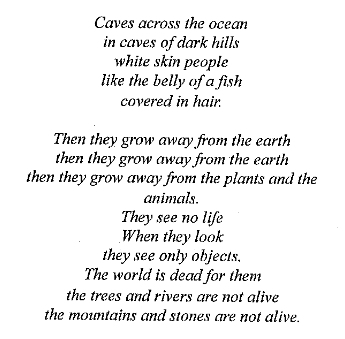
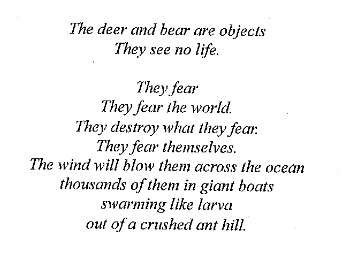
The law may very well support Barr’s position. That law functions to protect corporate wealth and its Democratic and Republican allies. But is it not obvious how short-sighted and destructive this is? I think of the witchery described in Leslie Marmon Silko’s Ceremony. White people, the most frightening witch warns, emerge from :
It was during a long flight home from California that I thought about Barr’s essay. I had been reading through Thomas Blackburn’s December’s Child: A Book of Chumash Oral Narratives. Blackburn sifted through the massive collection of oral accounts assembled by J. P. Harrington early in the twentieth century. In Blackburn’s retelling, it was an enormous undertaking. One of Harrington’s sources told a story that struck me in terms of our failed political system, or dying planet, our insensitivity to the beauty that surrounds us. Fernando told Harrington about an interconnected world in which “all the animals are related.”
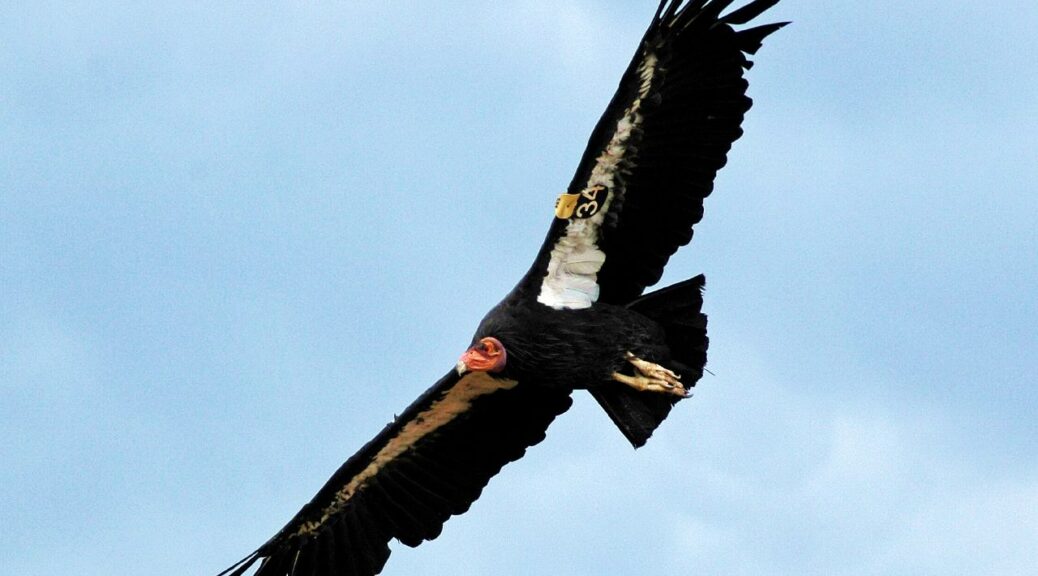
The horned toad is the wot of all beasts, the swordfish of all fish, and the slo?w of all birds. The bear is the older sibling of all the animals. The eagle, condor, and buzzard are said to remove the foulness of the world. I told Fernando of the San Gabriel belief that the condor rips up carcasses for the buzzard—that they are first cousins. Fernando replied that an old man told him that we are all brothers, and our mother is one: this mother earth. He has always believed what the old people told him when he was a boy—that the world is God.
The destruction that will be done to Oak Flat has been ably described by my friend and colleague Joel Helfrich. Barr never mentions any of this. He relies on a legal system that permits the United States to enable an atrocious moral wrong.
