As I make plans to teach my Indigenous Law and Public Policy course in Australia in December and January of 2026-2027, I have been reading what I can on the history of its Indigenous peoples. I have learned a lot, benefited from the reading, and become aware of parallels in the history of Indigenous peoples in North America and Oceania which are new to me. I am glad I am doing this work. It is good to be learning something new. Perhaps because I have spent so much more time this summer on the Pacific coast, my interests have been pulled westward.
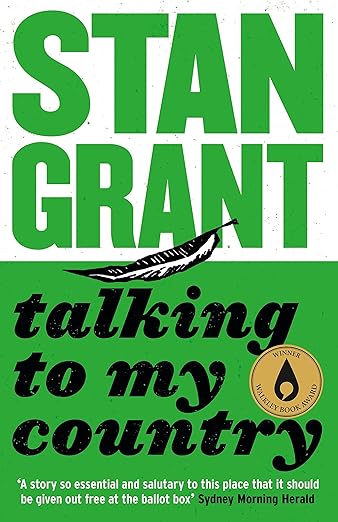
One of the books that has stuck with me is Stan Grant’s Talking to My Country, first published back in 2016. A former CNN journalist, well-respected in Australia, Grant came of age in a nation carved from the lands of aboriginal peoples it had murdered and otherwise attempted to erase. He wrote as Australia confronted, incompletely, its past and moved slowly towards “reconciliation,” itself a fraught and contested topic.

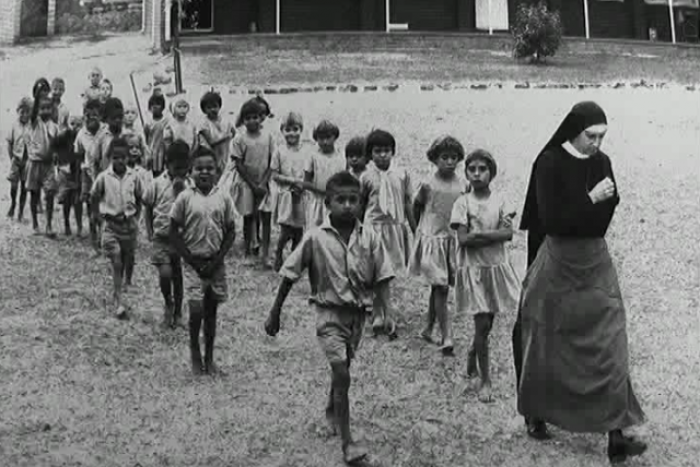
Grant hoped to explain to Australians how he viewed “the Australian Dream.” At its worst, he wrote, it is a story of “babies buried in the sun and decapitated, women raped, men killed as they hid in the forks of trees, waterholes poisoned, flour laced with arsenic.” His ancestors faced genocidal violence. But they also faced the attempts to erase those who survived the slaughter and the epidemics. After the initial invasion, he wrote, “the Australian Dream abandoned us to rot on government missions, tore apart families, condemned us to poverty.” Grant recalls his community’s struggles in terms that are clear and urgent. “There was no place for us in this modern country and everything we have won has come from dissent, it has been taken from the reluctant grasp of a nation that for much of its history hoped that we would disappear”(25-26).
Saying this in an American classroom in the dark age of Trump could get a teacher in trouble. The conditions Grant describes clearly transcend Australia’s bounds. “Being good and great,” he writes, “does not absolve you from a terrible sin, and a pain inflicted on a people who did nothing to deserve it. Remember that: the first people of this land, who have suffered for your greatness did nothing to deserve it.” And, Grant says, “a truly great country—if we truly believe that—should be held to great account”(26).
He’s right. It’s one of many ways that MAGA movement is doing nothing to make the United States great. I would love to see American leaders engage with so powerfully stated an argument.
Australians, like Americans, tell lies about their country’s past. Students learn stories in both countries of white people’s bravery and conquest of a wilderness but not the costs extracted from those in colonialism’s line of fire. The records to tell the truth about the Australian past, as in the US, are not hard to find. The accounts are clear and available. Grant discusses the work of some of the first Australians who described the Indigenous people the settlers encountered. They reveal the barbarism with which white people treated Australian natives: “food left out to lure the blacks who were then gunned down; hunting parties formed to drive black men, women and children over cliffs to their deaths. White observers, in Australia as in the United States embraced “the slow certainty of expected extinction” when they wrote about aboriginal peoples.
Americans still tend to view Indigenous peoples as part of the past. Donald Trump’s efforts to stir up white resentment by protecting Native American mascots in Massapequa and, more recently, in a discussion that mentioned the Cleveland Guardians and Washington Commanders, makes this intractable problem even worse. And viewing Indigenous people as part of the past makes it more difficult for uninformed Americans to take seriously their very real grievances in the present. Australian and American historians are doing wonderful work to uncover the past and make connections with the present, but so little of this is taught in schools in the two countries, and the public has been slow to absorb this knowledge.
Grant wants his readers to know what it has been like. He has written “a story so essential and salutary to this place that it should be given out free at the ballot box,” according to the Sydney Morning Herald. His family, Grant wrote, has “felt the brutality of Australia.” Indigenous people in North America would nod their heads in agreement, I believe.
“We have had our land—our inheritance—stolen. Our language was banned. Our children have been taken away. We have been herded onto missions. We have been forced onto the margins of society. We have lived in tin humpies and tents. We have been powerless before the state. Welfare officers and police have invaded our lives at will.”
Grant continues. “The weight of history in Australia suffocated us,” he wrote. “Our history leaves its marks on our bodies and our souls.” He is not the first person to make this observation. When I have taught this class in the past I have used Thomas King’s The Inconvenient Indian and Harold Napoleon’s Yuuyaraq. But he makes that point very, very well.
It is so easy to walk through Australia and be blind to all of this, Grant writes, and he remains surprised by how often people approach him to say that they just did not know. If you teach or write about Native American history, you likely have heard similar things. Sometimes the people who say this are angry and feel betrayed by an educational system that has lied to them in the name of serving the interests of a nation jaggedly carved from Indigenous land. Others seek some sort of absolution. I did not have anything to do with it, they may as well say, even though the evidence is right there in front of them if they choose to look, and even though they remain the beneficiaries of their nation’s original sins.
