Bret Stephens wrote a piece in the New York Times a while back in which he asserted that what Israel is doing to Palestinians, despite its violence and the enormous loss of life, does not constitute genocide. Stephens’ logic is familiar to those of us who teach Native American history. Written under a headline that reeks of condescension, (“No. Israel is Not Committing Genocide in Gaza”) Stephens mounts several familiar arguments.
If the Israelis really were acting with genocidal intent, why hasn’t their offensive in Gaza “been more methodical and vastly more deadly?” If it wanted to, Stephens argued, Israel could wipe Gaza off the map. It hasn’t, he says. “In short,” he writes, “the first question the anti-Israel genocide chorus needs to answer is: why isn’t the death count higher?”
Stephens can’t help himself. You see it, don’t you? He cannot write without dismissing the seriousness of the other side’s views. What he calls the “anti-Israel genocide chorus,” to others might more accurately be called “humanitarians,” or “people who think it is wrong to murder children or starve civilians.” He does not care about what you think.
Stephens next tries to make his case by relying on a strictly literal reading of the United Nations Convention on Genocide, which says that genocide is “the intent to destroy, in whole or in part, a national, ethnical, racial, or religious group as such”. Genocide, Stephens argues, does not mean “too many civilian deaths,” which he sees as just another unfortunate consequence of warfare. Genocide, Stephens argues, is what the Nazis and Hutus of Rwanda did—they systematically tried to kill every person in a certain target population. Israel is not doing that, he says, but Hamas surely did when it attacked young Israelis attending a music festival. There are no death camps in Gaza, Stephens seems to suggest, and because of that, the Israelis cannot be considered guilty of genocide.
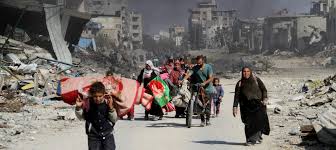
Stephens next dismisses what he sees as a “handful of remarks by a few Israeli politicians dehumanizing Gazans and promising brutal retaliation,” as inadequate to prove genocidal intent. But it wasn’t a handful of statements, a fact of which Stephens is surely aware. It was five hundred statements. Defense Minister Yoan Gallant called the Palestinians “animals.” Prime Minister Benjamin Netanyahu called Gaza “a city of evil,” its residents “monsters.” “This is a battle, not only of Israel against these barbarians, it is a battle of civilization against barbarism.” Nor is it only a matter of Israel’s words. The U.N. Convention, created after the World War II, saw genocide as more than killing, but also an attempt at “causing serious bodily and mental harm to members of the group,” or inflicting “conditions of life calculated to bring about its physical destruction in whole or in part.” You cannot watch the news and not see actions that meet these definitions. Gaza has been destroyed, its population is dead, gone or starving.
And here’s another point. Stephens does not believe Israel is committing genocide. Many politicians in both parties would agree with him. Those people would also be unwilling to admit that America’s historic treatment of Indigenous people was genocidal. They quote the UN Convention. They think of what the Nazis did. Nope, they say, this is not that.
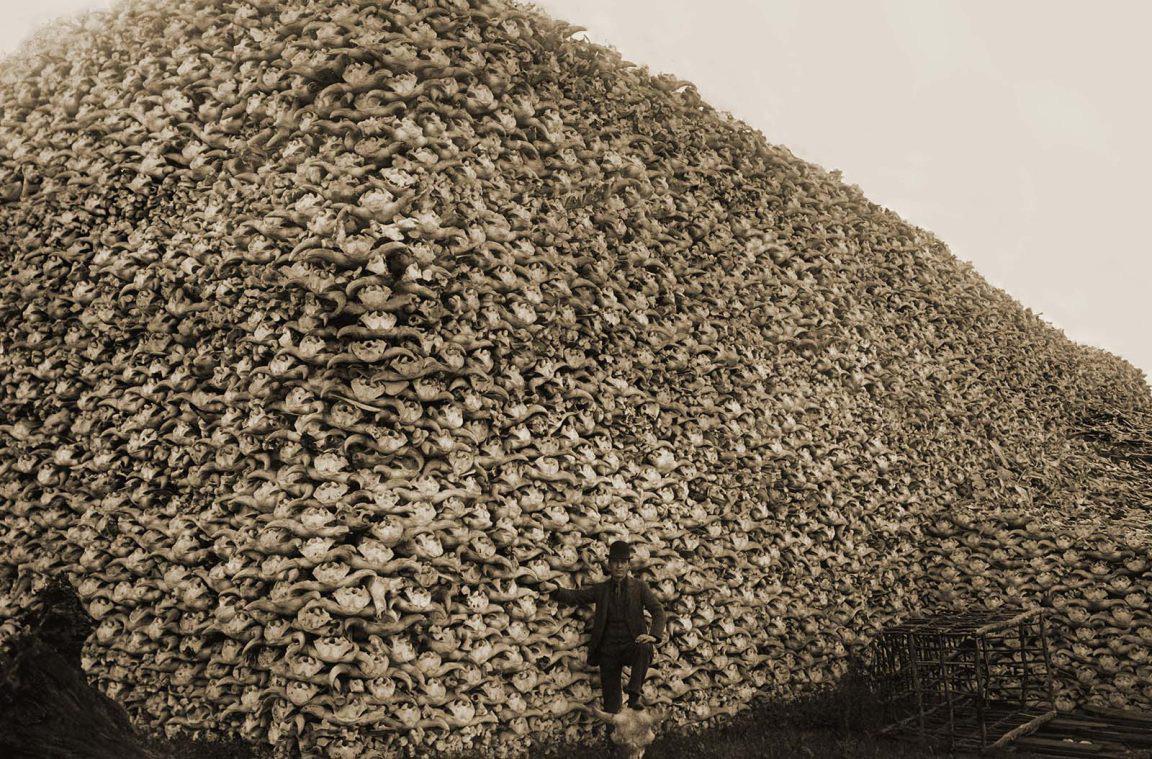
I have a different approach. At the American Society for Ethnohistory Conference in Florida in November of 2023, a colleague who I respect deeply asked me, quietly, “you’re going to talk about it, aren’t you?” Israel had just begun its campaign of retaliation, and we both heard how familiar the Israeli statements sounded. What Israelis said, blood-thirsty Americans said as well, before they launched their assaults on Indigenous people. So in my Native American survey course, we talk about genocide. How could we not? My students read Jeff Ostler’s fantastic essay that appeared in the William and Mary Quarterly back in 2015. Ostler cut through much of the debate over whether American conduct towards Indians was genocidal or not. Listen to Indigenous peoples, Ostler said. They believed that the British, and then the Americans, operated with genocidal intent. Americans said it again and again, and they acted on those words just enough to make the belief that white people wanted to kill all Indians plausible.
My plea is for people like Stephens to listen less to the perpetrators of violence, and certainly to take seriously those who denounce the actions of Israeli forces. Listen to those on the receiving end. Take what they say to heart. Stephens and those who share his views can strictly scrutinize the UN Convention, and quibble over the meaning of words, or they can simply listen to the people living in Gaza. I do not feel myself bound by the UN definition, written almost seventy-five years ago as people tried to make sense of a form of evil that remains still too common. Like so many Indigenous peoples in the Americas, the Gazans are saying that the Israelis are killing us, with bullets, bombs, and now starvation. “They are killing us,” people in Gaza say. “They want us dead.” Who, watching what has happened over the past two years, can say that is an unreasonable assessment of their reality. Israel is doing in Gaza what historians of Indigenous America have seen before. There is no excuse. It is vicious. And it needs to stop now.